No Author Selected

Restoring a young patient’s smile with composite

Case by Dr. Onur Alp Yünük 


COMBINING HIGH-PERFORMANCE TOOLS AND MATERIALS FOR A PREDICTABLE OUTCOME

Direct composite restorations are a high-quality treatment option even when large amounts of tooth structure need to be replaced. This is due to recent advancements in resin composite materials and adhesive technology. By selecting appropriate materials and layering techniques combined with modern digital tools for colour difference evaluation, it is possible to predictably produce highly aesthetic outcomes, as demonstrated in the following case example.


The challenge

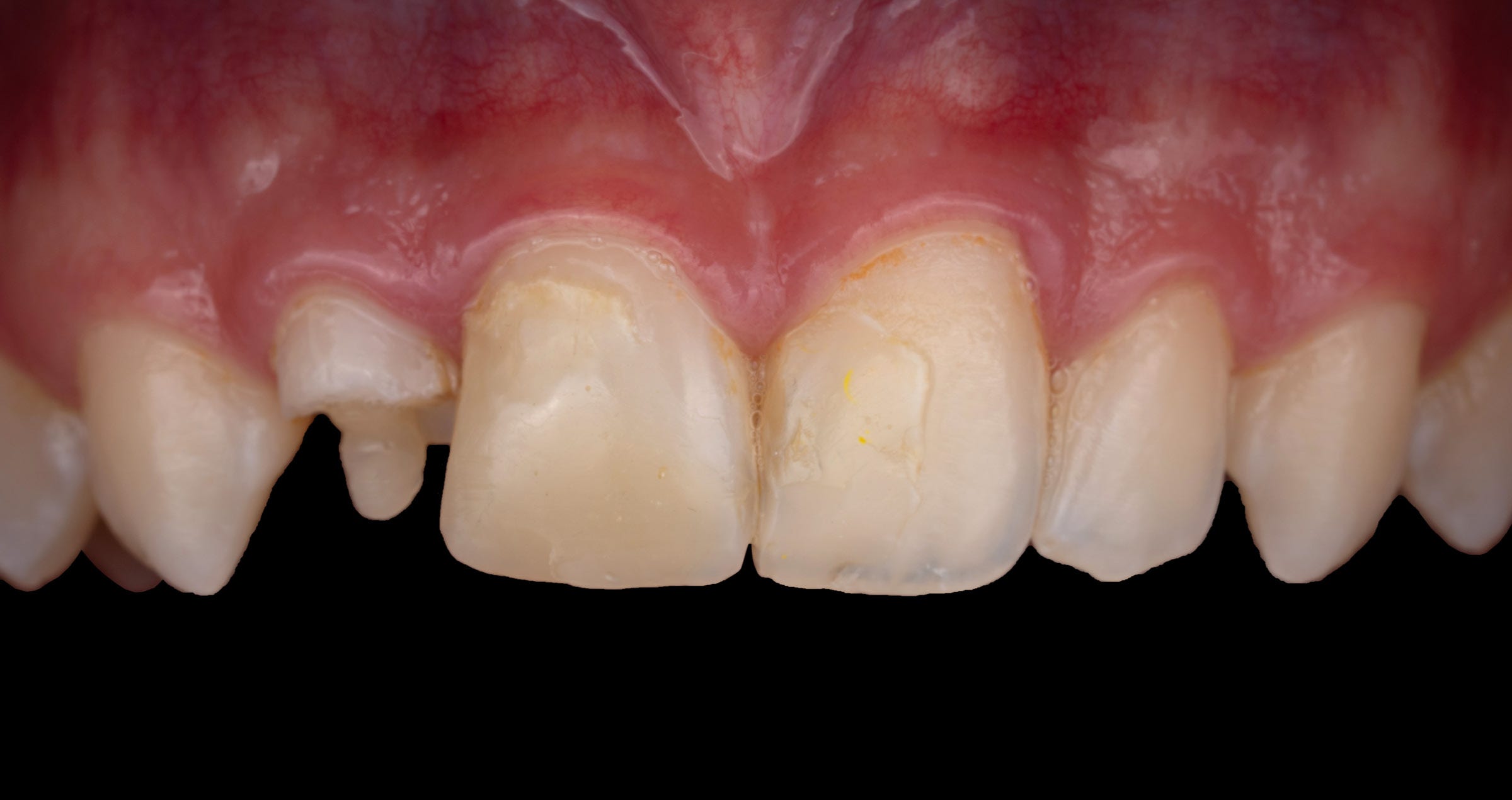
A young male patient presented to our clinic requesting the replacement of his existing composite restorations on his maxillary incisors (teeth #12 and #11 according to the FDI notation). Clinical examination revealed extensive restoration loss on the lateral incisor. Furthermore, anatomical irregularities, discolouration, and loss of surface gloss were observed on tooth #11. The adjacent central incisor exhibited similar issues regarding colour and surface polish.


In consultation with the patient, it was decided to replace the existing restorations using a modern composite material specifically developed for dual-shade layering – CLEARFIL MAJESTY™ ES-2 Premium (Kuraray Noritake Dental Inc.). For an exact shade analysis, photographs were taken with and without a cross-polarized filter (Figs. 1 to 4).


Fig. 1: Frontal view of the teeth  with extensive restoration loss on the maxillary left lateral incisor.


Fig. 2: Cross-polarized photograph of the teeth allowing for a detailed analysis of the shade irregularities.


Fig. 3: Lateral view of the teeth.


Fig. 4: Lateral view – cross-polarized photograph.


The solution

Following removal of the existing restorations, rubber dam was placed for working field isolation. A self-etching adhesive (CLEARFIL™ SE Bond 2, Kuraray Noritake Dental Inc.) was applied in the selective enamel etching mode before establishing the palatal shell using CLEARFIL MAJESTY™ ES-2 Premium in the shade A1E (Figs. 5 and 6). The mamelon structures were reconstructed with CLEARFIL MAJESTY™ ES-2 Premium in the shade A1D, while the translucent shade Blue was applied  to the opalescent zone. Finally, yellow and white tints were used for characterization. Fig. 7 illustrates the appearance before,  Fig. 8 after finishing and polishing.


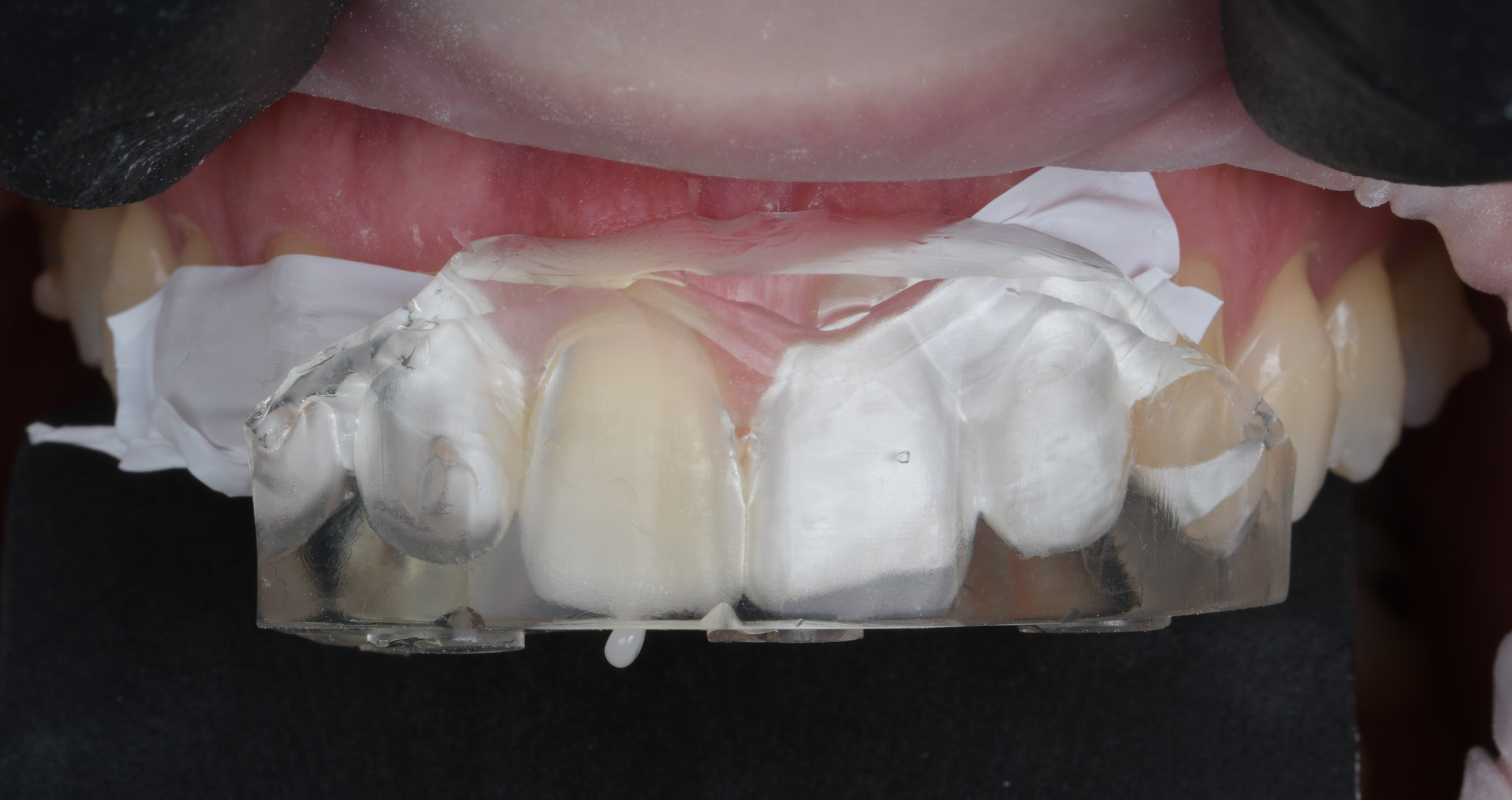
Fig. 5: Palatal shell established with the enamel shade A1E of the selected composite.


Fig. 6: Lateral view of the teeth during the restoration procedure.


Fig. 7: Restoration before finishing and polishing.


Fig. 8: Appearance of the restorations after finishing and polishing.


The outcome

To evaluate the final colour integration, another photograph was taken with a cross-polarized filter, holding a grey reference card in place for calibration (Figs. 9 and 10). The lateral view of the restored teeth (Fig. 11) reveals that not only the right colour combination, but also a natural surface texture is required for a highly aesthetic outcome.


Fig. 9: Frontal view of the restored teeth taken with a cross-polarized filter.


Fig. 10: Gray reference card calibration and the resulting L*a*b* coordinates of the restoration.


Fig. 11: Lateral view of the restored teeth stressing the importance of surface texture.


DISCUSSION AND CONCLUSION

Observation, supported by modern tools for photography and image analysis (like polarized filters and L*a*b* coordinates), is  an important skill needed for the lifelike reconstruction of teeth with direct composite materials. By combining this skill with a highperformance composite system that offers fixed shade combinations and innovative light diffusion technology for a nice blend-in  with the surrounding tooth structure, creating beautiful restorations becomes a predictable business.

In the case presented, the patient was very satisfied with the outcome in terms of aesthetics and function. At regular recalls, the quality of the restorations is checked – they still offer a very nice functional and aesthetic integration.


Dentist:

About the author 


Dr. Onur Alp Yünük completed both his undergraduate and doctoral education at Istanbul University. He currently serves as an Assistant Professor in the Department of Restorative Dentistry at the Istinye University Faculty of Dentistry. His work primarily focuses on direct composite restorations of anterior teeth and on polychromatic layering systems.


restaurering af en ung patients smil med plast

Case af Dr. Onur Alp Yünük.


KOMBINATION AF VÆRKTØJER OG MATERIALER MED HØJ YDEEVNE FOR ET FORUDSIGELIGT RESULTAT

Plastfyldninger er en behandlingsmulighed af høj kvalitet, selv når store mængder tandsubstans skal erstattes. Dette skyldes de seneste fremskridt i plastmaterialer og adhæsivteknologi. Ved at udvælge velegnede materialer og lagdelingsteknikker, kombineret med moderne digitale værktøjer til vurdering af farveforskel, er det muligt at skabe forudsigelige højæstetiske resulter som demonstreret i følgende case.


Udfordringen

En ung mandlig patient henvendte sig til vores klinik med ønske om udskiftning af hans eksisterende plastfyldninger på overkæbeincisiverne (2+, 1+ ad modus Haderup). Den kliniske undersøgelse viste en tabt fyldning på den laterale incisiv. Derudover sås anatomiske afvigelser, misfarvning og tab af overfladeglans.

I samråd med patienten blev det besluttet at erstatte de eksisterende fyldninger ved brug af moderne plastmaterialer specifikt udviklet til tofarvet lagdeling – CLEARFIL MAJESTY™ ES-2 Premium (Kuraray Noritake Dental Inc.). For at få en præcis farveanalyse blev der taget fotos med og uden krydspolariseringsfilter (Fig. 1 til 4).


Fig. 1: Frontal visning af tænderne med omfattende fyldningstab på den laterale incisiv i overkæben.


Fig. 2: Krydspolariseret fotografi af tænderne som muliggør en detaljeret analyse af farveafvigelserne.


Fig. 3: Lateral visning af tænderne.


Fig. 4: Lateral visning – krydspolariseret fotografi.


Løsningen

Efter fjernelse af de eksisterende fyldninger blev kofferdam anlagt til isolation af arbejdsfeltet. En selvætsende adhæsiv (CLEARFIL™ SE Bond 2, Kuraray Noritake Dental Inc.) blev påført til selektiv emaljeætsning før etablering af den palatinale væg med CLEARFIL MAJESTY™ ES-2 Premium i farven A1E (Fig. 5 og 6). Mamelonerne blev rekonstrueret med CLEARFIL MAJESTY™ ES-2 Premium i farven A1D, mens den translucente farve Blue blev påført til den opalescente zone. Til sidst blev gule og hvide karakteriseringsfarver anvendt til individualisering. Fig. 7 illustrerer udseendet af fyldningerne før og Fig 8. efter finishering og polering.


Fig. 5: Palatinal væg etableret med emaljefarven  A1E af den valgte plast.


Fig. 6: Lateral visning af tænderne under fyldningsproceduren.


Fig. 7: Fyldning før finishering og polering.


Fig. 8: Fyldningernes udseende efter finishering  og polering.


Resultatet

For at evaluere den endelige farveintegration blev der taget endnu et foto med krydspolariseringsfilter, mens der blev holdt et gråt referencekort på plads til kalibrering (Fig. 9 og 10). Den laterale visning af de fyldte tænder (Fig. 11) viser ikke blot den rigtige farvekombination, men også en naturlig overfladetekstur som kræves for et højæstetisk resultat.


Fig. 9: Frontal visning af de fyldte tænder taget med et polarisationsfilter.


Fig. 10: Kalibrering med gråt referencekort og de resulterende CIELAB koordinater af fyldningen.


Fig. 11: Lateral visning af de fyldte tænder der understreger vigtigheden af overfladetekstur.


DISKUSSION OG KONKLUSION

Observering, understøttet af moderne værktøjer for fotografi og billedanalyse (som polarisationsfiltere og CIELAB koordinater), er en vigtig evne, som er nødvendig for naturtro rekonstruktion af tænder med plastmaterialer. Ved at kombinere denne evne med et højtydende plastsystem, der byder på faste farvekombinationer med innovativ lysdiffusionsteknologi, som giver en god evne til at blende ind med den omgivende tandsubstans, bliver dét at skabe smukke fyldninger en forudsigelig proces.

I den præsenterede case var patienten meget tilfreds med resultatet både i forhold til æstetik og funktion. Ved de regelmæssige eftersyn blev kvaliteten af de fyldte tænder kontrolleret – de udviser stadig en meget fin funktionel og æstetisk integration.


Dentist:

Om forfatteren


Dr. Onur Alp Yünük gennemførte både sin kandidatuddannelse og ph.d. på Istanbul University. Han er på nuværende tidspunkt ansat som Assistant Professor i the Department of Restorative Dentistry på Istinye University Faculty of Dentistry. Hans arbejde fokuserer primært på fortandsplast og polykromatiske lagdelingssystemer.


Full adhesive workflow with PANAVIA Veneer LC

By Dr Wiktor Pietraszewski BSC(HONS) DMD


INTRODUCTION

According to personal experience, the cementation of glass ceramic veneers is one of the most stressful and technique-sensitive procedures in restorative dentistry. This is not only due to the minimal margin for error, but also the high aesthetic standards that must be met to deliver a result satisfying both clinician and patient. Modern protocols emphasize conservative preparation, ideally remaining entirely within enamel, or at the very least, minimising extension into dentin. It is essential to understand that both preparation design and extent should not be planned in isolation. Instead, they must be carefully co-planned through thorough communication and collaboration between clinician and technician, ensuring the final result is both biologically respectful and aesthetically predictable.


THE CASE

The case to be discussed today is rather unique in that it arose unexpectedly, without the luxury of typical pretreatment planning steps such as a diagnostic wax-up or mock-up. These were omitted due to time and budget constraints on the patient’s part — a reality many clinicians can relate to. The rationale behind this approach will become clearer as we progress through the case. The patient is a 70-year-old retiree, whom I have been managing for several years. Treatment thus far has focused on stabilising and gradually improving her posterior restorations, with the longer-term aim of addressing the anterior dentition to enhance both function and aesthetics.


Nowadays, financial considerations often pose a significant barrier to patients accepting comprehensive treatment plans from the outset. As such, effective communication and phased treatment planning become essential tools in fostering patient trust and long-term commitment. This particular visit was an emergency appointment, with the patient presenting with a fractured porcelain veneer on her maxillary left central incisor — tooth 21 according to the FDI notation (Fig. 1). Fortunately, because of the existing phased approach to her care, we were well-positioned to transition into an aesthetic restorative phase with minimal resistance or hesitation from the patient.


Fig. 1. Pre-operative view - emergency: Chipped existing ceramic veneer.


Fig. 2. The plan - Digital Smile Design - 4 x porcelain veneers - 4 x direct composite restorations.


THE PLAN

After careful discussion, it was decided to remove and replace the four existing porcelain veneers and to replace four existing Class V stained composite restorations with fresh new direct composite (Fig. 2). Everyone involved was happy with the plan, sure it would adequately fulfil the patient’s aesthetic expectations and even surpass them. At the emergency appointment, time was so limited that only the temporary restoration of the chip with direct composite was feasible. Time was an important factor going forward: the patient wanted to proceed and have the case completed as soon as possible.


Main features of the Digital Smile Design (DSD) plan

1. Lengthening - central incisors – incisal edges to reflect the length of the canine tips
2. Equal gingival zeniths
3. Masking of the cervical defects


PREPARATION, SCAN & TEMPORISATION

The first step involved building up the teeth using a flowable composite to create a rough direct mock-up (Fig. 3), guided by the DSD plan (Fig. 2). This mock-up provided a visual and functional prototype, of which an impression was taken to aid in the fabrication of interim temporary restorations for the provisional phase of treatment.


Preparations were carried out using OptraGate isolation. The existing veneers were first removed using high-grit diamond burs at high speed. Once the bulk of the old material was cleared, gingival retraction was achieved using retraction cord, allowing for improved visibility and access. The preparations were then refined with lower-grit diamond burs at a reduced speed to ensure precision and tissue safety. The primary objectives of the preparation phase were to establish harmonious gingival zeniths and to adequately cover the cervical defects that were evident in the previous restorations (Figs. 4 and 5).


Fig. 3. Mock-up made of flowable composite.


Fig. 4. Class V composite restorations replaced on teeth 13, 23, 24 and 25.


Fig. 5. Situation after preparation of the maxillary incisors.


CEMENTS

Traditionally, glass ceramic veneers have been cemented successfully using a vast array of different luting resins available on the market.


Recently, a trend towards the use of flowable resin or heated composite to cement glass ceramic restorations has emerged. Like the abovementioned approach, this option is viable and literature-supported. The benefits of using flowable resin or a heated paste-type composite resin have been widely documented. The probably biggest advantage of this approach arises from the fact that the user is already familiar with the shades of the material used for cementation. Composite shades are often specified using the VITA classical A1 - D4 system, which dental professionals tend to be more accustomed to than to shade descriptions used for resin cements, like Warm, Light, Neutral and the like.


Some resin cement systems offer try-in pastes corresponding to the shades of the cement to overcome this obstacle and allow for precise shade evaluation at try-in to accurately aid in selecting the best cement shade available. PANAVIA™ Veneer LC is a popular example, as it matches the shades of PANAVIA™ V5 Try-In Pastes (Fig. 6).


Fig. 6. PANAVIA ™ V5 Try-in Paste Universal (A2).


Using a cement shade that matches the intended final appearance is crucial when bonding glass-ceramic veneers, as it decisively affects both immediate and longterm aesthetics. This is especially important due to the light-diffusion properties of glass-ceramic materials such as IPS e.max CAD or IPS e.max Press (Ivoclar Vivadent). Restorations can be as thin as 0.3 mm in minimally invasive cases. The thinner the restoration, the more translucent the material, and the greater the cement’s appearance will influence the final outcome.


Of course, the shade of the prepared tooth substantially influences cement shade selection, as well as decisions about the final restoration thickness (and thus preparation depth) and the ceramic translucency selected (IPS e.max, for example, is available in three translucency levels – LT [Light], MT [Medium], and HT [High]; Fig. 7). When the abutments are dark and a bright, white appearance is desired for the final restorations, it is wise to use a ceramic block with lower translucency. This is why taking a photograph of the prepared teeth and sending it to the ceramist is so important. In the present case, the pepared tooth structure appeared quite dark in the incisial third, so that the medium translucency variant of IPS e.max CAD in the determined shade A1 was selected, which would allow for a minimal thickness and a natural outcome.

Fig. 7. Whitewash photograph used to demonstrate the translucent properties of glass ceramic veneers.


PANAVIA™ VENEER LC

PANAVIA™ Veneer LC is a light curing resin cement. Therefore, it is indicated for ceramic and composite restorations with less than 2mm thickness. It comes in four shades – Clear, White, Universal (A2) and Brown (Fig. 8) – with matching PANAVIA™ V5 Try-In Pastes. These pastes facilitate the simulation of the restorations’ final appearance (Fig. 9). The cement system consists of four components (Fig. 10).


Fig. 8. PANAVIA™ Veneer LC Paste shades.


Fig. 9. Matching PANAVIA™ V5 Try-In Paste shades.


Fig. 10. The kit consists of phosphoric acid etchant, resin cement paste, universal ceramic primer and tooth primer.


TRY-IN

Upon delivery of the four lithium disilicate veneers in the selected translucency and shade (MT A1; Fig. 11), it was time to select the resin cement shade for try-in. As a bright result that would still match the colour of the adjacent teeth was desired, the shade of choice was Universal (A2). Patient and practice team were happy with the simulated treatment outcome (Fig. 12), so that the veneers were cleaned and pre-treated for definitive placement.


Fig. 11. Lab work delivered: Lithium disilicate porcelain veneers - medium translucency, shade A1.


Fig. 12. Try-in with PANAVIA™ V5 Try-In Paste Universal (A2).


CEMENTATION STEPS

For adhesive cementation of the veneers, the teeth were isolated with latex-free rubber dam (Isodam HD in thickness Heavy Gauge; Fig. 13a). Clamps were placed and the veneers tried in to check the fit once more (Figs. 13b and c).


Subsequently, the tooth surfaces were pretreated, starting with the central incisors: Protecting the adjacent teeth with a metal strip, the surfaces were first treated using air abrasion with 35-micron aluminium oxide powder (Fig. 14a). Once the surface was rough (Fig. 14b), phosphoric acid etching gel was applied to the sandblasted surface for 15-30 seconds (Fig. 14c). After thorough rinsing and drying of the etched surfaces, the adjacent lateral incisors were isolated with PTFE tape to facilitate excess cement clean-up during the adhesive luting procedure (Fig. 14d).


Fig. 13a. Isolation with latex-free rubber dam.


Fig. 13b. Further retraction with B4 clamps for dry try-in.


Fig. 13c. Fit check with clamps in place to ensure full seating of the veneers.


Fig. 14a. Air-abrasion with 35-micron aluminium oxide powder.


Fig. 14b. Result of the air abrasion procedure.


Fig. 14c. Total etching with 37% phosphoric acid.


Fig. 14d. PTFE tape placement on lateral incisors to simplify clean-up.


The actual cementation steps included priming of the tooth structure with PANAVIA™ V5 Tooth Primer, which is strong on enamel and dentin (Fig. 15a), leaving it for 20 seconds and then drying with mild air. The veneers’ intaglio surfaces were treated with hydrofluoric acid for 20 seconds and - after complete removal of the etchant - primed with CLEARFIL™ CERAMIC PRIMER PLUS (Fig. 15b) and dried. Now, it was time to apply the cement paste (PANAVIA™ Veneer LC) onto the pre-treated ceramic surfaces and seat the veneers carefully (Figs. 15c and d). During placement, gentle but firm pressure is ideally applied using a soft, padded instrument to ensure accurate seating. When using light-cure (LC) resin cements, tack-curing can often be avoided: Excess cement can be carefully brushed away prior to curing, avoiding flash and reducing clean-up. The resin promotes an excellent marginal blend between tooth and restoration, enhancing both the aesthetic and functional integration of the veneers. For light-curing, the restoration margins were covered with glycerine gel to prevent formation of an oxygen inhibition layer (Fig. 15e).


Fig. 15a. Priming of the tooth structure.


Fig. 15b. Etching and priming of the intaglio surfaces of the veneers.


Fig. 15c. Seating of a veneer with a cushioned instrument.


Fig. 15d. Two veneers simultaneously placed on the central incisors.


Fig. 15e. Restoration margins covered with glycerin gel for thorough light-curing from all sides.


The veneers for the lateral incisors were cemented likewise; however, floss was used instead of clamps for gingival retraction (Figs. 16a and b).


Fig. 16a. Gingival retraction for veneer placement on the lateral incisors.


Fig. 16b. Floss is used for a clampless procedure.


The above-mentioned sequenced placement procedure – starting with the central incisors and then moving on to the laterals - is highly recommended: This protocol gives the practitioner full control over the positioning of the central incisor veneers, which is particularly important as their position has a massive impact on the overall appearance of the smile. When the lateral incisor veneers are cemented first, the risk of positioning errors in the central incisor region and resulting catastrophic aesthetic issues is increased. However, any error with the positioning of the central incisor veneers can also lead to problems like the misfit of the lateral incisor veneers. Therefore, the whole procedure needs to be carried out with utmost care and precision.


A robust curing protocol with palatal, incisal and facial light exposition is crucial to ensure that the resin cement is fully set. Figures 17a to c show the veneers in place. Controlled removal of any residual excess was accomplished with ultrahigh molecular weight polyethylene (UHMWPE) floss (Gorilla Floss) used to avoid damaging the margins. For final polishing of the ceramic-tooth interface, polishing rubbers were employed. Rubber dam remained stable throughout the procedure.


The immediate treatment outcome is shown in Figure 18. It is completely normal for the gums to appear red and feel slightly sore following cementation. This is a temporary response, which should improve quickly as the tissue begins to heal. With a consistent and proper oral hygiene routine, the soft tissues will recover fully over the coming days. This has to be communicated to the patient well following rubber dam removal.


Fig. 17a. Lateral incisor veneers after placement and excess removal.


Fig. 17b. All four ceramic veneers in place.


Fig. 17c. Appearance of the veneers after floss removal.


Fig. 18. Immediate post-operative appearance.


Fig. 19. Check-up after three weeks.


FINAL SITUATION


Fig. 20a. Final photographic records: Frontal view.


Fig. 20b. Final photographic records: Lateral view from the left.


Fig. 20c. Final photographic records: Lateral view from the right.


Fig. 20d. Final photographic records: Occlusal view.


FOLLOW-UP VISIT

A check-up appointment is crucial in that it allows clinicians to assess the state of the soft tissue, which was fully recovered in the present case after three weeks (Fig. 19). Even more importantly, however, it enables us to check how our patients are adapting to their new smiles. This is also the best time to take a final photographic record (Figs. 20a to d). At this appointment, it is also essential to check for any excess material left interproximally: It can result in chronic inflammation, leading to persistent redness and an unaesthetic appearance of the final restorations. By careful inspection of the restorations from the occlusal view, it is possible to make sure all excess is removed and optimal gingival health is maintained.


Would you like to download this clinical case as a PDF? Please leave your email address below.


Dentist:

WIKTOR PIETRASZEWSKI


Dr. Pietraszewski is a general and restorative dentist working in private practice in London. He utilizes biomimetic adhesive protocols in his restorative cases and uses gold standard materials to emulate the natural appearance, bio-mechanical function, and internal structure of teeth when restoring them.


He has a special interest in direct and indirect restorations in the posterior dentition, and his dentistry is fueled by his passion for dental photography.


From The Medical University in Lodz (Poland) to private clinics in Malta and London, his dental journey reflects dedication to excellence.


Materials techniques and technologies for conservative reconstruction in the posterior region

Clinical case by Dr Manuel Tinto


Nowadays, minimally invasive techniques aimed at preserving healthy tooth structure are favoured for the direct restoration of teeth in the posterior region. Universal materials used in this context make it possible to reduce the chair time while supporting high-quality aesthetic and functional results.


The following case example illustrates the combined use of Caries Detector, CLEARFIL™ Universal Bond Quick 2, CLEARFIL MAJESTY™ ES Flow Universal Low and Super Low, and CLEARFIL MAJESTY™ ES-2 Universal (all Kuraray Noritake Dental Inc.) for the treatment of two interproximal lesions on the maxillary right second premolar and first molar (FDI notation: teeth # 15 and 16; Fig. 1).


Fig. 1. Pre-operative photograph.


To guide the selective removal of carious dentin, Caries Detector was used, allowing visual distinction between infected and affected dentin (Figs. 2 and 3). Excavation was performed dry, at low speed, using a Cera-Bur bur until complete removal of the dye. This resulted in clean, non-geometric cavities (Fig. 4).


Fig. 2. Application of Caries Detector.


Fig. 3. The more intense the colour, the more carious the tissue.


Fig. 4. Finished and cleaned cavities.


After matrix placement (Figs. 5 and 6), a universal adhesive (CLEARFIL™ Universal Bond Quick 2) was applied (Fig. 7). This product produces a thin film and offers excellent wettability, making it particularly suitable in the presence of undercuts. We prefer an adhesive approach with selective enamel etching for 15 seconds. CLEARFIL MAJESTY™ ES Flow Universal Low (Fig. 8) was placed on the cavity floor to level out irregularities, followed by reconstruction of the interproximal walls using CLEARFIL MAJESTY™ ES-2 Universal paste. The Quad Matrix system allows both walls to be shaped simultaneously.


Fig. 5. Matrices in place and double-ended wedge (Quad Matrix) to improve the cervical seal on both matrices.


Fig. 6. Quad Matrix ring in position.


Fig. 7. Application of CLEARFIL™ Universal Bond Quick 2 after selective enamel etching (15 s).


Fig. 8. Placement of CLEARFIL MAJESTY™ ES Flow Universal (U) Low as a cavity liner.


The Class I cavity was completed by layering two materials:


Fig. 9. Restorations carried out using a combination of flowable composite and paste composite.


Fig. 10. Finished restorations refined and polished under rubber dam.


Fig. 11. Finished restorations after checking of the occlusal contacts.


FINAL CONSIDERATIONS

Caries Detector allows selective removal of infected dentin while preserving healthy tooth structure. CLEARFIL™ Universal Bond Quick 2 provides for optimal penetration even in complex cavities. The combination of CLEARFIL MAJESTY™ ES-2 and ES Flow materials provides precise filling, natural aesthetics and long-term durability. Finally, the utilization of universal materials simplifies the clinical protocol, resulting in predictable, minimally invasive and long-lasting restorations.


Dentist:

MANUEL TINTO


In 2019, Manuel Tinto obtained his degree in Dentistry and Dental Prosthetics with a thesis on guided implant surgery at the School of Medicine and Surgery of the University of Milano-Bicocca. In 2019, he completed the postgraduate course “Problem solving in periodontology” at the University of Ferrara.


In 2021, he completed the postgraduate programme in “Aesthetic reconstructive periodontal and peri-implant surgery” at Vita-Salute San Raffaele University.


In daily practice, he focuses on restorative dentistry, adhesive prosthodontics, periodontology and the treatment of temporomandibular disorders.


Universal Excellence in restorative dentistry

USER FEEDBACK ON PROCEDURES AND OUTCOMES

The use of universal products – whether solitary or combined – offers practical benefits, which are experienced differently depending on the clinical context, techniques selected and each user’s individual preferences. Key advantages include reduced treatment time, lower costs, fewer components and steps, fewer potential errors and ultimately more satisfied patients. The following compilation of statements from experienced dental practitioners on the universal concept and the products offered by Kuraray Noritake Dental Inc. in general will help you assess in what way they might allow you to elevate your workflows.


RATIONALIZING CLINICAL WORKFLOWS

Streamlining or rationalizing clinical workflows in restorative dentistry is always worth striving for. Procedures are often complex and materials demand strict adherence to recommended protocols, so that using universal solutions with standardized protocols for a wide range of indications is a promising approach. Dr José Ignacio Zorzin, Associate Professor at the Department of Operative Dentistry and Periodontology at the Friedrich-Alexander-University of Erlangen-Nürnberg in Erlangen, Germany, stated in an article: “Rationalizing clinical workflows: This is the main reason for the use of universal products in adhesive dentistry. They are suitable for a wide range of indications and different application techniques, fulfil their tasks with fewer components than conventional systems and often involve fewer steps in the clinical procedure.”


INCREASING PREDICTABILITY AND EFFICIENCY

Predictability and efficiency in direct posterior restoration procedures are the main reasons for Dr Koray Kendir, the co-founder of a private dental clinic in İzmir, Turkey to choose universal adhesives and composites. In a case report, he stated that “the combination of CLEARFIL™ Universal Bond Quick 2 and CLEARFIL MAJESTY™ ES Flow Universal allows clinicians to perform predictable, efficient posterior restorations. Their universal applicability and handling properties align with the “Universal Excellence” concept, supporting simplified, yet reliable daily practice.”


Fig. 1. Clinical image from the case report of Dr Koray Kendir: Cavities ready for the restorative procedure.


Fig. 2. Clinical image from the case report of Dr Koray Kendir: Occlusal view of the teeth restored with a universalshade flowable composite with super-low flowability.


GETTING A GRIP ON COSTS


Dr Alessandro Devigus, the owner of a private practice in Bülach, Switzerland, shared in an interview that the cost factor is most important for him: “In the first place, using fewer products and components that are easy and quick in their application allows me to get a grip on costs. With fewer steps and fewer bottles, shortened application times and standardized workflows, the time a patient needs to sit in the chair is reduced, which allows me to save the most valuable factor in the office: my time.” And there is even more to it: “At the same time, material storage and order management are streamlined, so that it is much easier to keep track of dates of expiry, hence saving material costs as well. And the best thing about it is that all these savings are possible without compromising treatment quality,” he continued.


If you would like to benefit from the described workflow enhancements, it is probably worth giving universal excellence products from Kuraray Noritake Dental Inc. a try. For those who prefer to start with a single universal solution instead of transforming whole procedures immediately, the following feedback from clinicians may be enlightening.


UNIVERSAL CLEANER: SUITABLE EVEN FOR USE IN THE PATIENT’S MOUTH

The probably most special feature of KATANA™ Cleaner is its universal applicability. It cleans not only virtually every restorative material very well, but also works intra-orally to clean enamel and dentin after tooth preparation. Dr Richard Young from San Bernadino, CA, USA, uses it intra- and extra-orally, stressing that it “contains MDP based surfactant that breaks down blood and saliva – removing contamination.”


Fig. 3. Extra-oral application of KATANA Cleaner to remove contamination from a lithium disilicate crown by Dr Richard Young.


Fig. 4. Intra-oral application of KATANA Cleaner to remove contamination from the prepared tooth by Dr Richard Young.


UNIVERSAL ADHESIVE: SKIPPING THE WAITING TIME

Zero waiting time is probably the most striking feature of CLEARFIL Universal Bond Quick 2. While other universal adhesives need to be rubbed into any surface extensively, the product is applied within a few seconds. This reduces the risk of contamination and saves time. Based on his clinical experience, Dr Kendir confirmed that it works well: “In this case, CLEARFIL Universal Bond Quick 2 provided strong adhesion with minimal application time.”


Talking about universal adhesives in general, Dr Zorzin stressed that adhering to the protocols described in a material manufacturer’s instructions for use is particularly important: “Universal adhesives contain lots of different technologies in a single bottle. While this fact indeed allows users to rationalize their clinical procedures, it also requires some special attention. As every highly developed material, universal adhesives need to be used according to the protocols recommended by the manufacturer.” For CLEARFIL Universal Bond Quick 2, this protocol is particularly easy.


UNIVERSAL COMPOSITES: GREAT SHADE-MATCHING PROPERTIES

Lately, an experienced user of CLEARFIL MAJESTY™ ES Flow, Dr Michał Jaczewski from Legnica in Poland, tested the universal-shade option CLEARFIL MAJESTY ES Flow Universal – also in the low flowability variant. He confirmed that the reduced number of shades works well: The product “offers properties which are – from a personal perspective – ideal for the flowable injection technique. The shadematching properties are astonishing; the translucency is quite high when placed in thin layers (so that enamel is very well imitated), and the polishability is as good as that of CLEARFIL MAJESTY ES Flow. For virtually effortless, bubble-free injection, the product comes in a nicely designed syringe. And last but not least, the product’s mechanical properties provide peace of mind even in the posterior region.”


Fig. 5. Clinical image from the report of Dr Michał Jaczewski: Flowable composite injected into the transparent index.


Fig. 6. Clinical image from the report of Dr Michał Jaczewski: Central incisors beautifully restored.


According to Dr Jusuf Lukarcanin, MEDICANA International Hospital Izmir, Turkey, the same is true for the universal paste-type composite CLEARFIL MAJESTY™ ES-2 Universal. He states: “My first reaction to this material was: This is a Game-Changer. The results are magical. Smoother and easy handling properties, high-gloss, more natural light distribution and the process is simple. Aside from being able to skip the shade selection step, your workflow remains the same as with traditional composites. At first, I might have been a little sceptical about replacing all the different colours of composites we use in office every day. But after a couple of tries I found out that it indeed works every time, in some cases even without the use of a blocker. Simply ingenious!”


Fig. 7. Clinical image from Dr Jusuf Lukarcanin: Diastema closure in a 28-year-old female patient - initial clinical situation.


Fig. 8. Clinical image from Dr Jusuf Lukarcanin: Diastema closure in a 28-year-old female patient - upper anteriors treated with CLEARFIL MAJESTY ES-2 Universal in the shade UW.


UNIVERSAL RESIN CEMENT: NO PRIMER NEEDED

Primer for tooth structure, cement paste, ceramic primer and silane: PANAVIA™ SA Cement Universal has it all in a single syringe. With no extra bottles needed, it provides for streamlined cementation procedures. That is why Dr Devigus uses it as his standard solution for definitive placement of CEREC overlays and crowns: “It bonds to virtually every surface including lithium disilicate without a separate primer and offers a good flowability that facilitates restoration placement. An additional feature contributing to a quick and stress-free clinical procedure is its easy and gingiva-friendly excess removal after tack curing.”


Watch the video to hear what exactly Dr Alessandro Devigus says about PANAVIA SA Cement Universal:


CONCLUSION

Experience shared by clinicians from different clinical environments demonstrates that universal solutions can make restorative dentistry more efficient, predictable and economical. By reducing the number of materials, steps and technique sensitivities, universal products help streamline workflows while maintaining high clinical performance.


Why Did CLEARFIL MAJESTY ES Flow Universal Win Top Honours?

Smooth and efficient procedures, easy shade matching, and great clinical outcomes are key expectations in modern restorative dentistry. Kuraray Noritake Dental Inc. continues to support these needs through ongoing innovation in advanced dental materials. Building on the success of CLEARFIL MAJESTY™ ES Flow, with its multiple flowabilities and extensive shade range, a flowable composite with a simplified universal shade concept was developed.


Launched in Europe in 2025, CLEARFIL MAJESTY™ ES Flow Universal is available in two flowabilities – Super Low and Low. It is a highly filled flowable composite featuring submicron fillers (Super Low: 78% and Low: 75% by weight, respectively) and light diffusion technology.


Its universal shade system allows one shade (U) to cover the VITA classical A1-D4 system shades. For cavities in darker teeth (B3 and darker shades) with limited surrounding tooth structure – such as Class III and IV cavities – a second darker shade (UD) is available.


While the material is available in two flowabilities in Europe, Super Low is the variant offered in the United States and tested by the Dental Advisor.


CLEARFIL MAJESTY ES Flow Universal is gaining increasing clinical acceptance thanks to:

  • A simplified two-shade concept
  • Excellent handling properties
  • High mechanical strength – comparable to paste-type composites
  • Easy polishing and long-lasting gloss
  • A well-designed syringe and tip system that helps minimise voids and dripping


DENTAL ADVISOR RESEARCH AWARD

Laboratory tests confirm strength, stability, and efficient placement

Independent in-vitro testing conducted at the Dental Advisor Biomaterials Research Center demonstrated that CLEARFIL MAJESTY ES Flow Universal (Super Low) delivers some of the highest physical property values within its class, including flexural strength, fracture toughness, and compressive strength.


The material also showed excellent shade matching across a broad range of tooth shades when compared with other universal-shade composites. Radiographic analyses further confirmed that the syringe and tip design contribute to minimal void formation, supporting reliable and efficient placement. Viscosity testing revealed a low-flow, no-slump consistency, allowing precise anatomical sculpting and controlled cusp build-up.


These results were key factors in earning the Dental Advisor Research Award, which recognizes outstanding physical property testing and a strong commitment to research-driven product development.


Dental Advisor Top Product Award

Clinicians praise handling, translucency, and blend-in ability

Beyond laboratory performance, CLEARFIL MAJESTY ES Flow Universal (Super Low) also excelled in clinical practice, which was a key factor in earning a Dental Advisor Top Product Award. Evaluators highlighted its ideal viscosity and impressive blend-in ability achieved through optimised translucency, light diffusion technology and fine-tuning of the chroma.


The simplified shade system and delivery design translated into confident, predictable results in daily practice, as reflected in evaluator feedback such as: "Excellent shade matching and no air bubbles." These attributes make the material well suited for a wide range of restorative applications in both anterior and posterior regions.


Scientific excellence and clinical practicality smartly combined

By receiving both the Dental Advisor Research Award and the Top Product Award, CLEARFIL MAJESTY ES Flow Universal (Super Low) demonstrates a strong balance of scientific excellence and clinical practicality. Its combination of simplified shade matching, high mechanical performance, and convenient handling makes it a versatile solution for clinicians seeking efficiency without sacrificing aesthetics or strength.


Part of Expanding Universal Excellence Portfolio

At Kuraray Noritake Dental Inc., we understand the demands of modern dental practices. Balancing complex procedures, tight schedules, and patient care is no easy task. That is why we have spent years refining our materials—so you can focus on what matters most: your patients.


Our Universal Excellence portfolio streamlines your workflows, offering you high-quality materials and tools that work seamlessly with your expertise.


CLEARFIL MAJESTY ES Flow Universal is the latest resin-based addition to our universal portfolio. Being suitable for a wide range of applications within direct and indirect restorative workflows, it is a valuable complement to existing universal paste-type composite CLEARFIL MAJESTY™ ES-2 Universal and universal resin cement PANAVIA™ SA Cement Universal.


For more information, visit Dental Advisor and the Kuraray Noritake Dental Europe website.


Universal Excellence: smart, streamlined solutions for modern restorative dentistry

Today's dental practitioners are expected to deliver highly aesthetic, minimally invasive treatments that last – often within tighter schedules, with fewer assistants and under increasing financial and operational pressure. These factors can lead to elevated stress levels. With high patient expectations and a multitude of treatment options available, clinicians must make numerous decisions while the complexity of clinical procedures continues to increase.


Being aware of these dynamics and the associated challenges, Kuraray Noritake Dental Inc. has developed materials designed to make the clinician's work easier in many respects.


ADHESIVE DENTISTRY: OPPORTUNITIES AND CHALLENGES

To better understand this approach, let us take adhesive dentistry as an example. Being the driving force behind less invasive tooth preparations and the use of highly aesthetic tooth-coloured materials such as composites and ceramics, adhesive dentistry has significantly improved restorative dental care.


At the same time, the need to establish a strong and durable chemical bond between tooth structure and restorative material has made clinical procedures more complex than ever. Daily challenges include selecting the appropriate material and technique, preparing tooth structure correctly, controlling moisture and contamination, managing etching and pre-treatment protocols for each restorative material, and layering restorations predictably.


Intelligent simplification: Reducing complexity without compromising quality

The solutions Kuraray Noritake Dental Inc. has developed in recent years are materials that adapt to multiple indications, techniques and substrates – without adding procedural burden. The focus is not simply on innovation, but on meaningful innovation, leading to materials that genuinely streamline and simplify workflows.


While individual universal materials already offer flexibility, the thoughtful combination of compatible products can truly transform clinical procedures. When materials are designed to work together seamlessly, efficiency increases and variability decreases.


Universal product combinations from Kuraray Noritake Dental Inc. are designed to:

  • Reduce the number of clinical steps
  • Decrease technique sensitivity
  • Improve workflow efficiency
  • Simplify inventory management
  • Reduce overall costs
  • Support consistently high-quality treatment outcomes


The goal is not simplification for its own sake. Instead, the aim is to reduce complexity while maintaining the high performance required for predictable and durable clinical outcomes.


By aligning product features with proven clinical protocols, Kuraray Noritake Dental Inc. enables practices to work smarter, not harder.


Universal Excellence: product portfolio for simplified restorative procedures

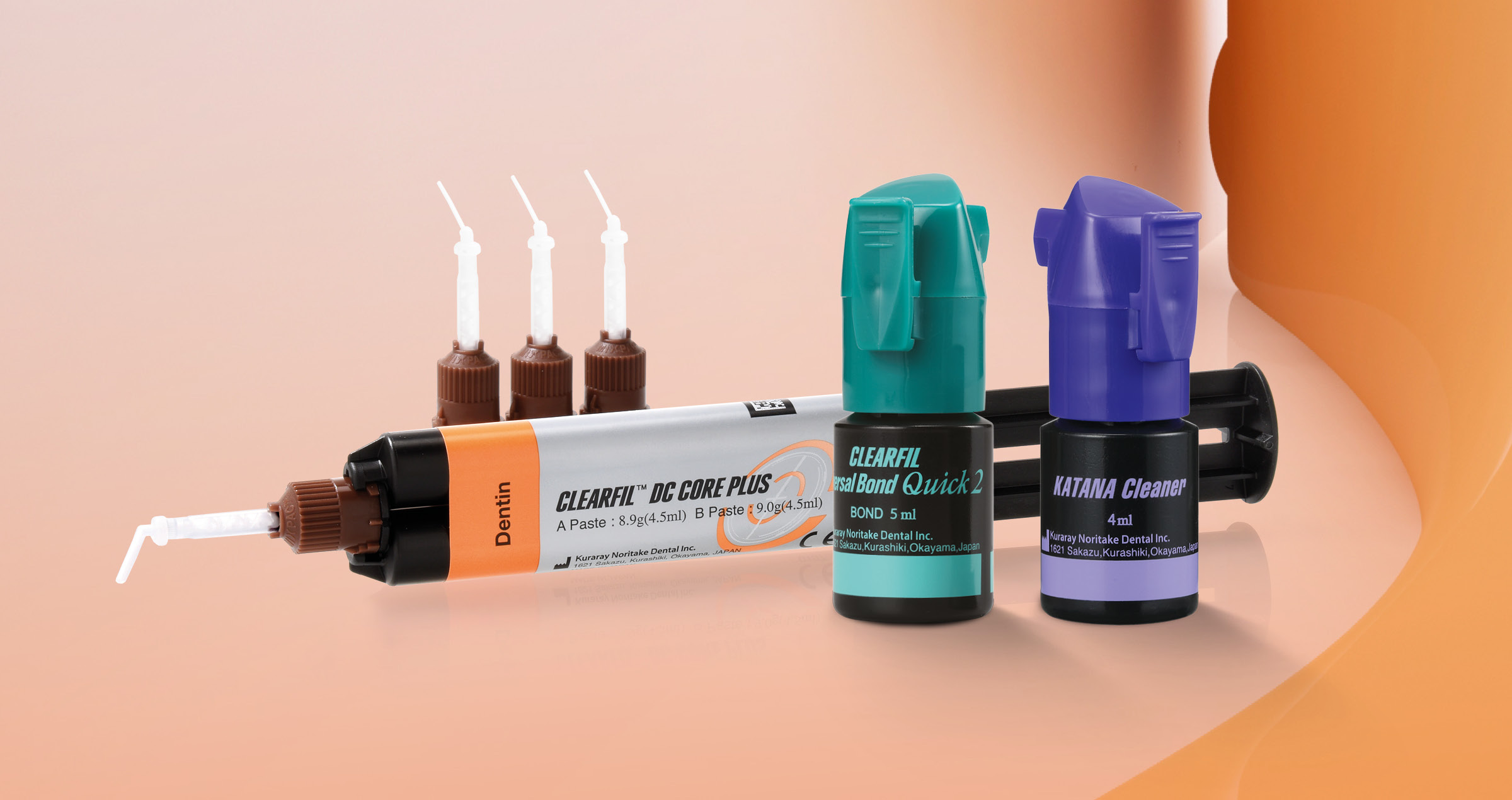
The universal product portfolio of Kuraray Noritake Dental Inc. consists of five core products: The universal bond CLEARFIL™ Universal Bond Quick 2, the paste type composite CLEARFIL MAJESTY™ ES-2 Universal, the flowable alternative CLEARFIL MAJESTY™ ES Flow Universal, the universal resin cement PANAVIA™ SA Cement Universal and KATANA™ Cleaner as a universal cleaning solution designed for intra- and extra-oral use.


The focus is not simply on innovation, but on meaningful innovation, leading to materials that genuinely streamline and simplify workflows.


Product 1

CLEARFIL Universal Bond Quick 2

Dependable Bonding Accelerated

Bonding should be reliable, fast and straightforward. CLEARFIL Universal Bond Quick 2 is a single bottle adhesive designed to adapt seamlessly to self-etch, total-etch or selective-etch techniques.


Why it stands out:

  • Quick and straightforward procedure: No waiting time and no need for active rubbing, reducing the risk of contamination
  • Minimized risk of adhesive pooling: A consistently thin bonding layer maintains the original morphology of the preparation
  • Consistently strong and durable bonding due to Rapid Bond Technology


Key benefit: One bottle, multiple possibilities and no need to wait – adding flexibility and speed without complexity.


Product 2

CLEARFIL MAJESTY ES Flow Universal

Intuitive shade matching goes flowable

Shade selection can be time-consuming, modelling and adaptation technique-sensitive. CLEARFIL MAJESTY ES Flow Universal simplifies the former process with just two versatile shades designed for intuitive shade matching. Its flowability is responsible for easy modelling and great adaptation to underlying structures – without compromising strength.


Clinical advantages:

  • Two shades with natural blending for exceptional aesthetic outcomes
  • Pleasant flow behaviour for easy dispensing and effortless sculpting
  • Mechanical properties that rival paste-type composites, enabling a wide range of indications
  • Clever syringe design that reduces air bubbles and dripping


CLEARFIL MAJESTY ES Flow Universal

Low

Flexural strength 151 MPa

Compressive strength 373 MPa

Filler load 75 wt/% / 59 vol%

Radiopacity 140 % Al

Super Low

Flexural strength 152 MPa

Compressive strength 374 MPa

Filler load 78 wt/% / 60 vol%

Radiopacity 150 % Al

Data source: Kuraray Noritake Dental Inc.


Key benefit: The strength of a paste-type composite with the ease of a flowable – outstanding choice for a wide range of indications.


Product 3

CLEARFIL MAJESTY ES-2 Universal

Elevating single-shade restorations

Shade determination and aesthetic layering can be challenging. With the CLEARFIL MAJESTY ES-2 Universal line-up consisting of just two shades for the anterior region and a single shade for posterior restorations, this challenge is greatly simplified. The materials blend naturally with the surrounding tooth structure, making shade selection straightforward and multi-shade layering unnecessary.


Clinical advantages:

  • Brilliant aesthetics with minimal effort: reduced number of shades that blend seamlessly, eliminating the need for a blocker in regular cases thanks to Light Diffusion Technology
  • Convenient, stress-free handling: easy sculptability and polishing, non-stick behaviour and extended working time
  • Excellent long-term performance: high gloss retention, minimal shrinkage and low wear


Key benefit: Quick, intuitive shade matching that reduces procedural complexity and simplifies inventory.


Product 4

PANAVIA SA Cement Universal

Easy workflow without primers

Multiple primers and additional bottles can complicate adhesive cementation. PANAVIA SA Cement Universal simplifies the procedure. Containing the original MDP and the LCSi monomer, it establishes a strong chemical bond to tooth structure and restorative materials, including zirconia and even lithium disilicate – as a true one-step solution!


What makes it universal:

  • One-step cementation that eliminates the need for separate primers
  • Effortless application and easy excess removal
  • Additional flexibility: bond strength to tooth structure can be further enhanced by applying CLEARFIL Universal Bond Quick 2


Key benefit: Simplified cementation of indirect restorations including lithium disilicate with strong, lasting results.


Product 5

KATANA Cleaner

Clean with confidence, every time

Contamination is one of the most common causes of adhesive failure. KATANA Cleaner helps prevent this by quickly removing blood, saliva and other contaminants from tooth surfaces and restorations.


Why use it:

  • Quick and effective cleaning that prepares surfaces for bonding within seconds
  • Suitable for intra-oral and extra-oral use, enabling a wide range of applications
  • Compatible with various restorative substrates


Key benefit: A fast and effective cleaning solution that protects the integrity of the entire restorative procedure.


UNIVERSAL PORTFOLIO: THE POWER OF SMART COMBINATIONS

Used individually, each of these five universal products increases clinical efficiency and reduces the number of required steps. When combined strategically, however, they can significantly streamline clinical procedures.


Direct restorations

For direct composite restorations, clinicians may opt for a workflow involving KATANA Cleaner, CLEARFIL Universal Bond Quick 2 and CLEARFIL MAJESTY ES-2 Universal or ES Flow Universal. In this workflow, KATANA Cleaner is responsible for contamination-free surfaces, CLEARFIL Universal Bond Quick 2 provides rapid and durable adhesion, and the CLEARFIL MAJESTY ES composites support intuitive shade selection and aesthetic restorations.


Indirect restorations

For indirect restorations, the combination of KATANA Cleaner and PANAVIA SA Cement Universal offers clear advantages. The cleaner can be used both intra-orally and extra-orally to remove blood and saliva from bonding surfaces. PANAVIA SA Cement Universal is then applied to create a strong and durable bond between the tooth and the restoration in a simple, efficient manner. To maximize bond strength to tooth structure, CLEARFIL Universal Bond Quick 2 may be applied.


OUR VISION: MATERIALS THAT WORK SEAMLESSLY IN YOUR HANDS

Our vision is clear: a world where materials and tools work seamlessly in your hands. A world where complexity is minimized and valuable time is freed up to focus on what matters most – the individual needs of every patient.


Based on decades of experience and extensive feedback from clinicians, we have developed a system of universal materials designed to meet these expectations. Working seamlessly together, these materials help transform dentistry into a discipline not only more efficient, but also more predictable, more durable and ultimately more excellent.


How can surface cleaning improve bond strength in restorative dentistry?

DENTAL ADVISOR HIGHLIGHTS THE SUITABILITY OF KATANA Cleaner FOR INTRA-ORAL USE

Clean surfaces – whether tooth structure or restorative materials – are essential for reliable and long-lasting adhesion in restorative dentistry. To achieve this, clinicians require a cleaning agent that removes contaminants such as blood or saliva efficiently and thoroughly, without adding complexity to the workflow. KATANA™ Cleaner was developed by Kuraray Noritake Dental Inc. to meet these clinical demands.


Recognized with a 2026 Research Award in the category Research – Restoration Cleaner, KATANA Cleaner is a truly universal cleaning solution for both restorations and tooth structure. Designed for intra-oral and extra-oral use, it contains MDP salt, which effectively removes contamination from a wide range of surfaces, supporting bond integrity during adhesive procedures.


Key benefits of KATANA Cleaner include:

  • High cleaning efficacy based on the surface-active characteristics of MDP salt
  • Mild pH value (4.5), allowing effective intra-oral application
  • Simple, time-efficient application requiring just ten seconds of surface rubbing 


DENTAL ADVISOR RESEARCH AWARD: RECOGNITION FOR CLEAN SURFACES THAT SUPPORT OPTIMAL BOND STRENGTH

The Dental Advisor Research Team conducted in-vitro testing to evaluate the cleaning performance of KATANA Cleaner and its impact on bond strength with indirect restorative substrates. In these studies, zirconia and lithium disilicate surfaces were contaminated with saliva and subsequently treated with KATANA Cleaner. SEM analysis revealed virtually perfect surface cleanliness, which contributed to optimal bond strength levels. The Research Team also noted that KATANA Cleaner is “one of the few products commercially available that can be used intra-orally...


SUITABLE SOLUTION FOR MANAGING CONTAMINATION

With its universal applicability, gentle yet highly effective cleaning effect and proven ability to restore optimal bond strength, KATANA Cleaner offers clinicians an excellent solution for managing contamination in adhesive dentistry. Its recognition with a 2026 Dental Advisor Research Award underscores its relevance and highlights its suitability for a wide range of indications.


PART OF EXPANDING UNIVERSAL EXCELLENCE PORTFOLIO

At Kuraray Noritake Dental Inc., we understand the demands of modern adhesive dentistry. Reliable adhesion depends not only on high-performing bonding materials, but also on proper surface preparation and contamination management throughout the workflow.


That is why KATANA Cleaner is part of our expanding Universal Excellence portfolio. Designed for both intra-oral and extra-oral use, it helps clinicians optimize adhesive procedures by efficiently removing contamination from tooth structure and restorative materials.


Supporting clean bonding surfaces in a simple and time-efficient manner, KATANA Cleaner complements restorative workflows involving products such as CLEARFIL Universal Bond Quick 2 and PANAVIA SA Cement Universal — contributing to predictable and durable adhesion across a wide range of clinical indications.


For more information, visit Dental Advisor at dentaladvisor.com.


Imødekommer dine behov

I den moderne tandlægepraksis er der et stort behov for materialer, der kombinerer praktisk håndtering og effektive procedurer med æstetiske og holdbare resultater. Disse materialer gør det muligt for tandlæger at opnå de ønskede resultater mere effektivt, og giver dem dermed mere tid til personlig patientkontakt.


Når det kommer til direkte restaureringer, har det valgte plastmateriale stor indflydelse på procedurens enkelthed og resultatets kvalitet. Derfor er universelle pastaplast, som CLEARFIL™ MAJESTY ES-2 Universal (Kuraray Noritake Dental Inc.) steget i popularitet. Med CLEARFIL™ MAJESTY ES Flow Universal har den samme virksomhed nu introduceret en flowplast, med tilsvarende fordele, som samles her for at besvare dine centrale spørgsmål.


Hvordan kan du opnå æstetiske og holdbare restaureringer med flydende lethed?

CLEARFIL MAJESTY™ ES Flow Universal er en flowplast med to supplerende farver, som er designet til intuitiv farvematchning, og støtter en bred vifte af fyldningsprocedurer. Den kombinerer praktiske flowegenskaber med avanceret farvetilpasningsevne og uovertrufne mekaniske egenskaber.

Low

  • Bøjestyrke 151 MPa
  • Trykstyrke 373 MPa
  • Fillerindhold 75 vægt% / 59 volumen%
  • Radiopacitet 140% AI

Super Low

  • Bøjestyrke 152 MPa
  • Trykstyrke 374 MPa
  • Fillerindhold 78 vægt% / 60 volumen%
  • Radiopacitet 150% AI


Hvad er CLEARFIL MAJESTY™ ES Flow Universal?

CLEARFIL™ MAJESTY ES Flow Universal er et lyshærdende og radiopakt plastmateriale, som er designet til en række kliniske scenarier, og findes i to viskositeter og to farver. Den har nanofillerteknologi, der giver kontrolleret flow, holdbar glans og restaureringer med et naturligt udseende. Plastmaterialets sømløse farvetilpasning opnås ved en smart kombination af emaljeagtig translucens, dentinlignende farvemæthed og Light-Diffusion-Technology (LDT). Den emaljeagtige translucens tillader lyset af bryde igennem materialet og forbedrer farvetilpasningen med den omkringliggende tandsubstans. LDT får plastfyldningerne til at bryde lyset på en måde, der minder om emalje og dentin. Sammen med den finjusterede farvemæthed, medvirker disse egenskaber til at materialet optisk blender jævnt ind i den omkringliggende tandsubstans.


Hvor kan du bruge CLEARFIL MAJESTY™ ES Flow Universal?

Flowplasten har til formål at imødekomme en bred vifte af fyldningsbehov. Fra klasse I-V fyldninger til pit- og fissurforseglinger samt reparationer: Den er designet til brug i både konservative og omfattende behandlingsplaner.


CLEARFIL MAJESTY™ ES Flow Universal kan  bruges til:

  • Direkte restaureringer af alle kavitetsklasser, cervikale læsioner (f.eks. rodcaries, V-formede defekter), tandslid og -erosion
  • Kavitetsbase / -liner
  • Korrektion af tandstilling og -form (f.eks. diastemalukning, tanddannelsesforstyrrelser)
  • Intraoral reparation af restaureringsfrakturer


Hvordan vælger du farve?

Farvevalg kræver stort set ingen indsats med CLEARFIL MAJESTY™ ES Flow Universal. De to supplerende farver, Universal (U) og Universal Dark (UD), vælges intuitivt – intet behov for en farveskala. U-farven kan bruges til de fleste fortands- og kindtandsfyldninger. UD er bedst egnet til mørkere tænder (B3 og derover) med en lille resttandsubstans, herunder klasse III- og IV-kaviteter. Afhængigt af kavitetsklassen og patientens alder, vælger du den farve der passer bedst.


Farvetilpasning med fortands- og kindtandsfyldninger


Hvad bidrager til CLEARFIL MAJESTY™ ES Flow Universals ydeevne?

Formularen indeholder flere egenskaber, der sigter efter klinisk effektivitet:

  • Nanofillerteknologi: Bibeholder et optimalt fillerindhold for nedsat krympning, forbedret slidstyrke og langtidsholdbar glans.
  • Universel farvetilpasning: Tilbyder en god optisk tilpasning med omkringliggende tandvæv, som støtter strømlinet farvevalg.
  • Tiksotropisk håndtering: Flyder under tryk ved applicering, men forbliver stabil efter placering, hvilket muliggør præcis påføring.


Hvorfor overveje CLEARFIL MAJESTY™ ES Flow Universal?

Klinikere finder CLEARFIL™ MAJESTY ES Flow Universal fordelagtig på grund af dens:

  • Forudsigelige håndtering og påføring
  • Æstetiske resultater i både fortands- og kindtandsfyldninger
  • Modstandsdygtighed overfor slid og forringelse af overfladen
  • Radiopacitet der støtter røntgenanalyse
  • Tilpasningsevne til en række fyldningsbehov


Hvordan påfører man CLEARFIL MAJESTY™ ES Flow Universal?

Påføringen er lige til og passer ind i almene kliniske arbejdsgange:

  1. Præparér og isolér området som krævet.
  2. Påfør en kompatibel adhæsiv (f.eks. CLEARFIL™ Universal Bond Quick 2).
  3. Påfør materialet ved brug af sprøjten og den fine spids.
  4. Lyshærd efter producentens anbefalinger (typisk 20 sekunder, afhængigt af farven og den valgte hærdelampe).
  5. Puds og polér for at færdiggøre fyldningen.


Påføring med sprøjte er bekvemt og støtter kontrolleret applicering.


Direkte restaurering med CLEARFIL MAJESTY™ ES Flow Universal


Er CLEARFIL MAJESTY™ ES Flow Universal blevet evalueret af uafhængige kilder?

Ja. CLEARFIL™ MAJESTY ES Flow Universal (Super Low) er blevet evalueret af professionelle indenfor dentalbranchen gennem tredjepartstest og er fagfællebedømt. For nyligt modtog flowplasten en Research Award 2025 fra Dental Advisor. I deres konklusion skrev bedømmerne fra det amerikanske tidsskrift følgende:


“Tests viser, at denne plast er blandt dem med de bedste fysiske egenskaber for flowplastmaterialer, og konkurrerer med de stærkeste pastakompositter i bøjestyrke og trykstyrke med en ideel radiopacitet.”


Et alsidigt flydende produkt:  CLEARFIL MAJESTY™ ES Flow Universal

CLEARFIL MAJESTY™ ES Flow Universal har til formål at støtte fyldningsprocedurer ved at kombinere kontrolleret håndtering, æstetisk tilpasning og mekanisk holdbarhed. Den kan være et praktisk valg for klinikeren, der søger en troværdig flowplast til en bred vifte af kliniske scenarier.

Lær mere >


Universel Excellence – Smarte Strømlinede Løsninger

Hos Kuraray Noritake Dental Inc. forstår vi behovene i en moderne tandlægepraksis. Det er ingen let opgave at balancere komplekse procedurer, stramme tidsplaner og patientbehov. Derfor har vi været på en utrættelig rejse for at strømline, forbedre og forfine alle trin i dit arbejde over flere årtier. Vores vision er klar: En verden hvor dine materialer og værktøjer fungerer ubesværet i dine hænder, hvor kompleksitet er minimeret og hvor du har tid nok til at fokusere på dét, som betyder mest: hver enkelt patients individuelle ønsker og behov. Det er tandlægebranchens fremtid, og sammen gør vi det muligt.

Opdag >


The Flowable Injection Matrix: An Innovation for predictable and sustainable aesthetics with composite

Clinical case by Dr Luca Alibrandi


In the field of aesthetic dentistry, achieving natural, durable and predictable results requires the use of advanced materials, precise instruments and clinical expertise. Thanks to its versatility and the included innovative technology, CLEARFIL MAJESTY™ ES Flow Universal (Kuraray Noritake Dental Inc.) supports clinicians in standardising aesthetic rehabilitation even in complex cases (Figs 1–3).


Fig. 1. Initial situation with multiple diastemas in the maxillary anterior region. The patient does not wish to undergo indirect veneer therapy.


Fig. 2. Patient with a deep bite and atypical swallowing, which has caused flaring, particularly in the maxillary left anterior region. The patient refuses orthodontic treatment.


Fig. 3. Detail of the maxillary anterior region.


CLEARFIL MAJESTY™ ES Flow Universal is a monochromatic flowable composite that simplifies colour management thanks to its guided shade system, supporting aesthetic harmony without the complexity of multiple shades. Available in two levels of viscosity (Low and Super Low), it offers excellent handling for different restorative areas.


The Low version (75 wt%, 59 vol%) has a flexural strength of 151 MPa and a compressive strength of 373 MPa. It is ideally suited for anterior areas and for injection into IVENEER matrices, thanks to its easy handling and long-lasting gloss. Radiopacity (140% Al) provides for visibility on follow-up radiographs.


The Super Low version, with a filler content of 78 wt% (60 vol%) and radiopacity of 150% Al, has a flexural strength of 152 MPa and compressive strength of 374 MPa. Ideal for posterior sectors, it offers durability and resistance even under high functional loads.


The optimised syringe design supports precise dispensing, reducing waste and facilitating application. Both formulations allow easy polishing and long-lasting shine.


Combined use with IVENEER matrices (Fig. 4) makes it possible to precisely shape incisal morphology, creating an ideal contour and a protected environment that improves surface polymerisation (Fig. 5). The result is a stronger, glossier and more durable restoration. Flowable composites facilitate adaptation of shape and correction of natural proportions, contributing to a harmonious outcome.


The composite veneers can subsequently be refined using subtractive or additive techniques (Figs. 6 to 8), adapting to situations such as wide and irregular diastemata, simplifying the workflow and improving the final result.


Fig. 4. IVENEER in position under rubber dam: these innovative matrices, used with conventional isolation, provide a highly effective seal to prevent contamination during the injection phase.


Fig. 5. Polymerisation is always started on the palatal side to allow resin contraction towards the enamel and to increase adhesion of direct restorations.


Fig. 6. The polishing phase is facilitated by the creation of an environment that helps limit the oxygen-inhibited layer via the matrices. In this case, however, subtractive modelling of the elements is required to recreate overall harmony.


Fig. 7. Post-injection situation.


Fig. 8. Surface texturing with longitudinal morphological characterisations to improve coronal proportions.


Fig. 9. Detailed view of the central incisors after polishing.


FINAL CONSIDERATIONS

The combined use of CLEARFIL MAJESTY™ ES Flow Universal and IVENEER matrices represents a significant advancement in aesthetic incisor restoration. The composite’s properties (strength, handling and gloss), together with the preformed matrices, allow natural, high-quality results to be achieved in reduced treatment times. Thanks to the new technique, even patients with financial limitations can access effective treatments and regain their smile (Fig. 9).


Dentist:

LUCA ALIBRANDI


Luca Alibrandi graduated in Dentistry and Dental Prosthetics from Universidad Europea de Madrid in 2014. From 2015 to 2017, he specialised in Periodontology and Implantology with a full-time, two-year Master’s degree at the same university, completing a thesis entitled “Evaluation of Different Peri-Implant Treatments”, while actively attending the practice of Professor Ricardo Fernandez.


A member of SIPRO, AIOP, SIDP, SEPA, SEPES and ITI, since 2014 he has further developed his professional training by attending the practice of Dr Agostino Scipioni and collaborating at the private practice of Professor Dario De Leonardis.


He attended the annual AIOP Advanced Training Course in Analogue and Digital Prosthetics in 2018/19.


He currently works at the Alibrandi Dental Practice as a specialist in periodontology, implantology and prosthodontics.


Since 2023, he has collaborated as a lecturer for the intraoral scanner company 3Shape, producing educational materials and delivering training events in the field of prosthodontics.