Blog

Le concept de teinte universelle devient l’allié du restauratif fluide

Interview with Takehiro Kameya
Manager of the Technology Division of Kuraray Noritake Dental Inc.


Comment avez-vous identifié le besoin d’un restauratif fluide universel?

Les composites compacts avec un concept de teinte universelle gagnent en popularité dans le monde entier. Nous en avons déduit qu’il y aurait également une demande pour le type fluide. Les utilisateurs bénéficieront eux aussi de procédures simplifiées et d’un nombre réduit de teintes à entreposer, avec un impact positif sur la gestion des stocks. Ainsi, nous avons introduit le composite fluide universel au Japon où il a déjà conquis une belle part de marché. Les utilisateurs y ont eu recours pour divers cas, avec d’excellents retours. Au vu de l’accueil très favorable au Japon, nous nous sommes rapprochés de l’équipe européenne pour étendre la mise sur le marché en Europe, et la décision a été prise de la lancer. Nous avons bouclé la commercialisation dans un laps de temps extrêmement court d’environ un an.


L’utilisation d’un composite fluide universel en plus d’une variante universelle compacte constitue-t-elle vraiment une valeur ajoutée?

Oui, l’ajout d’un composite fluide moderne apporte plusieurs avantages. En effet, contrairement à des produits précédents, la dernière génération de composites fluides offre suffisamment de résistance mécanique pour être utilisée pour les restaurations régulières. Utiliser un composite fluide a notamment pour avantage qu’il s’adapte aux cavités les plus étroites (et complexes) pour un remplissage rapide et facile et à l’interface adhésive pour bien sceller.


Quelles sont les différences entre CLEARFIL MAJESTY™ ES Flow et CLEARFIL MAJESTY™ ES Flow Universal?

CLEARFIL MAJESTY™ ES Flow Universal conserve les caractéristiques spécifiques de CLEARFIL MAJESTY™ ES Flow telles que la commodité de distribution, manipulation et modelage, le polissage extrêmement facile et rapide, la brillance longue durée et les excellentes propriétés mécaniques. Grâce à leur résistance élevée, les deux produits peuvent être utilisés pour les bords, mais aussi pour les procédures de restauration directe régulières. La différence réside dans le concept de teinte. CLEARFIL MAJESTY™ ES Flow Universal introduit un système de teinte universelle, qui lui permet de s’adapter à une vaste palette de tons avec moins de variations de teinte.


Pouvez-vous décrire le concept de teinte de CLEARFIL MAJESTY™ ES Flow Universal ? Combien de teintes sont disponibles et comment sont-elles sélectionnées?

La gamme CLEARFIL MAJESTY™ ES Flow Universal se compose de deux teintes : Universal (U) et Universal Dark (UD). U constitue un excellent choix pour toutes les restaurations postérieures, indépendamment de la couleur visée. Dans les zones antérieure et cervicale (cavités des classes III, IV et V), U est l’idéal pour restaurer des dents dans les teintes A1 à A3 (y compris B1, B2, C1, C2, D2, D2, D3 et D4), alors que UD est la teinte de choix pour correspondre aux teintes cibles A3.5 à A4 (y compris B3, B4, C3 et C4).


Correspondance des teintes avec les restaurations antérieures et postérieures


Pourquoi proposez-vous une teinte supplémentaire pour la zone antérieure?

Les composites à teinte universelle doivent assimiler la couleur de la structure dentaire alentour pour offrir une correspondance parfaite avec une multitude de teintes cibles. Dans la zone postérieure, de grandes quantités de structure dentaire alentour sont généralement disponibles avec plusieurs parois de cavité toujours présentes. Cela facilite l’assimilation de la couleur de dent par rapport aux cavités de la zone antérieure. À cet endroit, la lumière traverse facilement, de sorte que la couleur du composite lui-même est davantage susceptible d’être reflétée. Cela peut limiter la correspondance des teintes. Dans le cas de CLEARFIL MAJESTY™ ES Flow Universal, la teinte U, qui s’est avérée idéale pour la zone postérieure, a montré certaines limites dans la correspondance de teinte pour les dents plus foncées des restaurations antérieures. Nous avons ainsi décidé de prévoir une deuxième option de couleur, spécifiquement conçue pour ces situations. Avec U et UD, CLEARFIL MAJESTY™ ES Flow Universal offre une excellente adaptabilité de couleur du clair au foncé et répond donc au besoin de correspondance de teinte précise, en particulier dans la zone antérieure.


Développer seulement deux teintes de composite pour couvrir autant de teintes cibles de dents semble relever du défi. Comment avez-vous déterminé que les teintes disponibles seraient adaptées dans un environnement clinique?

En effet, il n’a pas été simple de développer la teinte U qui est capable, à la fois pour les dents antérieures et les dents postérieures, de correspondre à une plus grande palette de couleurs de dents que la teinte U de CLEARFIL MAJESTY™ ES-2 Universal. Afin d’évaluer et de perfectionner les teintes que nous avons développées, nous avons réalisé à plusieurs CLEARFIL MAJESTY™ ES Flow Universal – Excellentes propriétés mécaniques Low Résistance à la flexion 151 MPa Résistance à la compression 373 MPa Charge de remplissage 75 % du poids/59 % vol. Radio-opacité 140 % Al reprises des tests de remplissage à l’aide d’une vaste palette de teintes expérimentales dans des dents artificielles et dents extraites de diverses couleurs. En outre, la sélection finale de teintes a été évaluée visuellement par des praticiens dentaires consultants qui ont utilisé le composite dans une configuration clinique.


What are the greatest challenges in the context of determining and selecting the right shade in the clinical environment?

The major drawback of classical shade determination is that it simply increases the chair time. For both, the dental practitioner and the patient, however, minimizing chair time is the ultimate goal, as it reduces costs and increases patient comfort. A true drawback in terms of time and comfort is a colour mismatch produced due to an error during shade determination: it may necessitate intra-oral adjustments or, in the worst case, the creating of a new restoration.


Quels sont les principaux défis pour la détermination et la sélection de la teinte correcte dans un environnement clinique?

Le plus gros inconvénient dans la détermination de teinte classique est simplement qu’elle augmente le temps de fauteuil. Or réduire le temps de fauteuil est le but ultime du praticien dentaire et du patient car cela fait baisser les coûts et améliore le confort du patient. Un véritable inconvénient en termes de temps et de confort est une mauvaise correspondance de couleur due à une erreur pendant la détermination : elle peut nécessiter des ajustements intra-oraux ou, au pire, la création d’une nouvelle restauration.


CLEARFIL MAJESTY™ ES Flow Universal – Great mechanical properties.


CLEARFIL MAJESTY™ ES Flow Universal est disponible en deux différents niveaux de fluidité : Low (fluidité basse) et Super Low (fluidité ultra-basse). Comment cela se fait-il et quelle est la différence dans l’utilisation?

Nous avons décidé d’offrir deux niveaux de fluidité avec des propriétés thixotropiques différentes pour satisfaire les préférences des utilisateurs dans le domaine de la manipulation. Fondamentalement, il n’y a aucune différence d’utilisation entre Low et Super Low. Cependant, les utilisateurs sont encouragés à utiliser des composites aux propriétés thixotropiques différentes en fonction de leurs préférences et du cas spécifique.  Par exemple, Super Low est utile pour modeler la surface occlusale des dents postérieures. Low peut être largement utilisé pour des applications comme le lining et le remplissage dans la zone cervicale et sur les surfaces proximales.


Quelles sont les technologies utilisées dans CLEARFIL MAJESTY™ ES Flow Universal Super Low pour assurer un fondu parfait?

La technologie la plus populaire utilisée dans ce produit est probablement notre propre technologie de diffusion de la lumière (Light Diffusion Technology, LDT). Nous avons déterminé quelle était la diffusion optimale de la lumière en observant qu’une forte réflexion diffuse de lumière incidente entraîne un blanchiment et qu’une faible diffusion de la lumière facilite l’assimilation des couleurs foncées dans la cavité orale, assombrissant l’emplacement du remplissage. En outre, nous nous sommes concentrés sur l’ajustement de la chrominance : Le concept de teinte universelle est basé sur la capacité d’assimiler la couleur de la structure dentaire alentour et de s’y fondre.  C’est pourquoi nous avons adapté la chrominance de manière à ce qu’elle s’harmonise facilement avec une vaste palette de teintes de dent. Enfin, la translucidité du matériau a été ajustée au moyen de ses charges submicroniques et clusters de silice. Nous nous sommes appuyés sur l’évaluation de leaders d’opinion clés pour déterminer un niveau adéquat de translucidité.

Comment procéder dans les cas de structure dentaire décolorée en-dessous – faut-il masquer avec un bloqueur ou opaquer?

Cela dépend du degré de décoloration. En raison des propriétés de diffusion de la lumière de CLEARFIL MAJESTY™ ES Flow Universal, on considère généralement qu’un blocage n’est pas nécessaire et que la nuanciation peut être effectuée. Toutefois, en cas de grave décoloration, il peut être bénéfique de remplir le fond Diffusion de la lumière avec la LDT RÉFRACTION  ET TRANSMISSION  DE LA LUMIÈRE de la cavité avec des teintes A2D ou A3D de CLEARFIL MAJESTY™ ES Flow, ou d’utiliser CLEARFIL™ ST Opaquer.


Comment avez-vous fait pour éviter la formation de vides pendant l’application?

Nous avons adopté le même conditionnement qu’avec CLEARFIL MAJESTY™ ES Flow afin d’éviter la formation de vides dans ce produit également. Le design innovant du conteneur réduit l’écart entre l’embout d’aiguille et la seringue lorsque l’embout est attaché.


Quand vaut-il mieux utiliser CLEARFIL MAJESTY™ ES Flow et quand opter pour CLEARFIL MAJESTY™ ES Flow Universal?

Alors que la variante universelle peut être utilisée d’une manière générale pour les bords et remplissages comme indiqué dans le mode d’emploi, CLEARFIL MAJESTY™ ES Flow est recommandé pour les cas dans lesquels la structure dentaire est couverte et la couleur de la dent entière doit être modifiée. Les facettes directes sont un exemple parfait. Dans ces situations, l’utilisation de différentes teintes et opacités est clairement avantageuse.


Quel est l’avenir des composites fluides?

Étant donné que les informations sur les performances cliniques et les données concernant les propriétés physiques continuent de se diffuser, nous prévoyons en Europe une hausse de la confiance dans les composites fluides et donc une utilisation renforcée. En outre, une demande accrue est attendue en raison du développement de méthodes de remplissage ayant recours à des composites fluides en conjonction avec des moules ou matrices.


TAKEHIRO KAMEYA


Keeping it smart and simple: Micro-layering of implant supported reconstructions

Case by Andreas Chatzimpatzakis


Many modern, tooth-coloured dental materials enable us to achieve more with less. By using high-strength ceramics with a multi-layered colour structure and natural translucency, for example, the path to the desired outcomes involves fewer components, smaller layers and a reduced number of bakes. A possible streamlined procedure is illustrated below. The main materials used were KATANA™ Zirconia HTML PLUS for the screw-retained implant-supported superstructure and CERABIEN™ MiLai (both Kuraray Noritake Dental Inc.) for vestibular micro-layering.


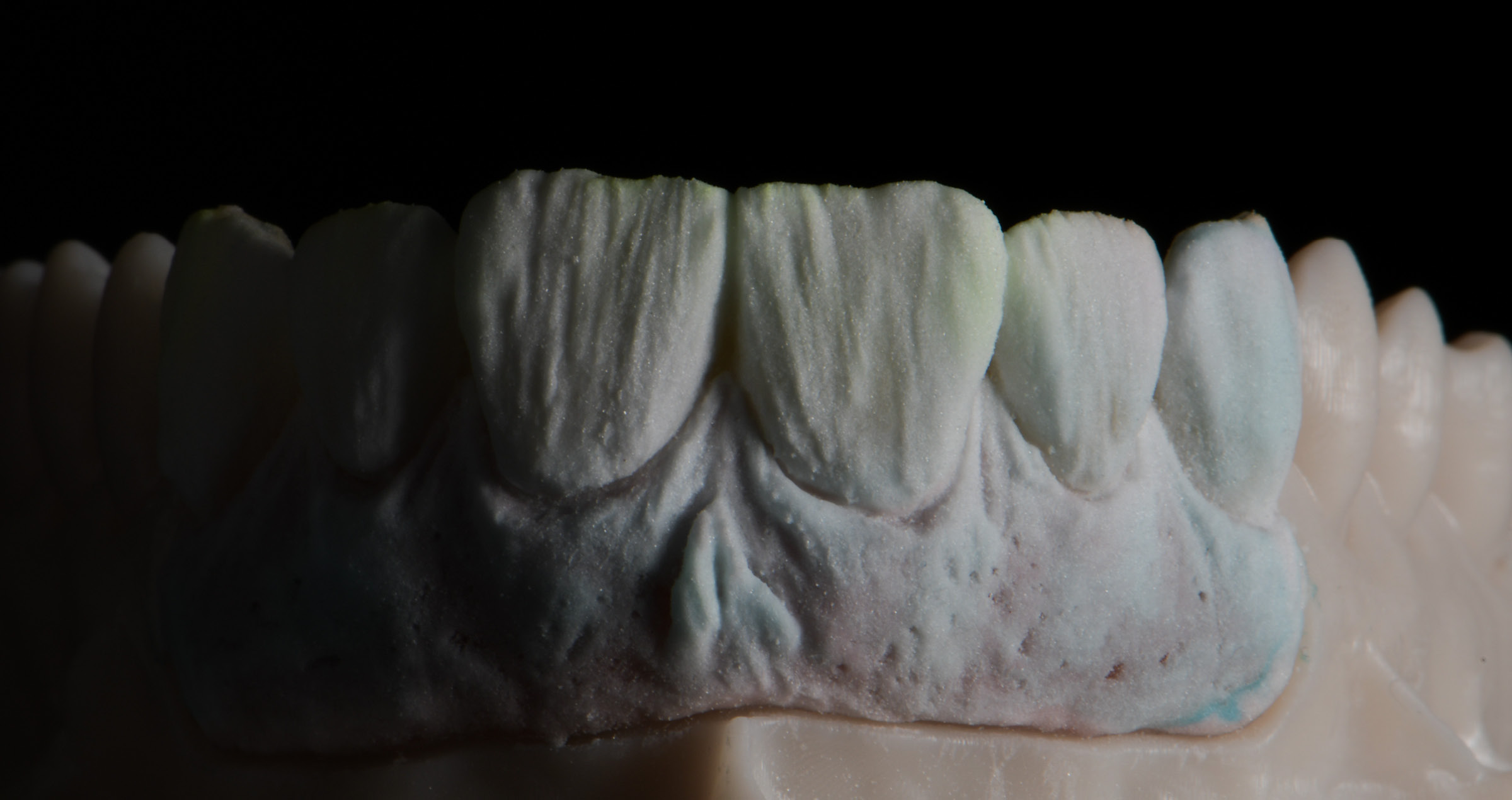
Fig. 1. Zirconia-based screw-retained implant-supported prosthesis after milling and carving to obtain a natural surface texture.


Fig. 2. Restoration after sintering. To intensify the colour characteristic of the multi-layered blanks, the surface was treated with Esthetic Colorant (mainly in the incisal area and the gum parts).


Fig. 3. Appearance after the application of CERABIEN™ MiLai SS Fluoro.


Fig. 4. Restoration after the application of CERABIEN™ MiLai internal stains. They add some natural shading effects to the tooth and gum areas.


Fig. 5. Restoration on the model after micro-layering. In the cervical area, CERABIEN™ MiLai LT1 was mainly used, while the middle and incisal areas were individualized with E2 and Tx, the latter adding a seamless gradient in translucency. For the gingiva, the choice fell on the tissue porcelains 1, 5 and 6.


Fig. 6. Finished restoration on the model.


Fig. 7. The micro-layer of porcelain has a brilliant effect.


Fig. 8. The lifelike appearance is due to a smart combination of surface texturing …


Fig. 9. … and micro-layering with a comprehensive set of internal stains plus porcelains.


CONFIDENCE AND CONTROL

Full ceramic layering can produce beautiful results, but can be quite complex and time-consuming. In times with limited availability of skilled personnel and high-performance materials being offered, it may be a valuable strategy to opt for micro-layering with CERABIEN™ MiLai whenever appropriate. The system provides precise control over the layering and shading procedure, so that highly aesthetic and functional outcomes are easily and confidently obtained.

Dental technician:

ANDREAS CHATZIMPATZAKIS


Andreas graduated from the Dental Technology Institute (TEI) of Athens in 1999. During his studies he followed a program at the Helsinki Polytechnic Department of Dental Technique, where he trained on implant superstructures and all ceramic prosthetic restorations. As of 2000, he is running the ACH Dental Laboratory in Athens, Greece, specialized on refractory veneers, zirconia and long span implant prosthesis. In 2017 Andreas visited Japan where he trained under the guidance of Hitoshi Aoshima, Naoto Yuasa and Kazunabu Yamanda and become International Trainer for Kuraray Noritake Dental Inc..


Easy application, immediate sensitivity relief

TEETHMATE™ DESENSITIZER RECOGNIZED AS TOP PRODUCT YET AGAIN

Dental Advisor has recognized TEETHMATE™ DESENSITIZER as a Top Product in the category of Hygiene – Desensitizer yet again. This year’s recognition – the eleventh in a row (2015 – 2025) – was announced in the January/February 2025 issue of the publication. TEETHMATE™ DESENSITIZER allows an effective non-invasive approach to the treatment of hypersensitivity – a painful condition that generally occurs when dentinal tubules are exposed – when used as directed by dental professionals.


HOW IT WORKS

TEETHMATE™ DESENSITIZER is designed to crystalize hydroxyapatite (HAp), a mineral that is naturally found in enamel and dentin, and is the human body’s strongest material. When applied to exposed, mechanically treated, or freshly prepared dentin, the calcium phosphate-based mixture blocks the exposed tubules and provides immediate pain relief. During setting, HAp is formed, providing for long-term prevention of hypersensitivity. Further, when used in the context of restorative treatment, TEETHMATE™ DESENSITIZER does not have a negative effect on the bond strength of subsequently utilized dental adhesives or cements.


BENEFITS IN A NUTSHELL

TEETHMATE™ DESENSITIZER is a versatile solution providing hypersensitivity relief independent of the cause. It is perfectly suited for

  • Treatment of dentin exposed by toothbrush abrasion, gingival recession, periodontal disease and/or acid erosion.
  • Treatment of dentin after mechanical tooth cleaning, scaling and/or root planing.
  • Treatment of the tooth surface before and after bleaching.
  • Treatment of prepared dentin for fillings and/or prosthetic restorations.


The use of the product is also beneficial as it is

  • Easy to mix and apply.
  • Proven to be effective.
  • Tissue-friendly and highly biocompatible.


OUTSTANDING CLINICAL PERFORMANCE RATING: 96 PERCENT

In a clinical evaluation, the Dental Advisor consultants found TEETHMATE™ DESENSITIZER effective in providing hypersensitivity relief immediately following and for up to six months after application. The study evaluated 27 patients diagnosed with gingival recession-related hypersensitivity, which was diagnosed using thermal testing with cold air. For the initial assessment, patients were asked to evaluate their level and frequency of hypersensitivity per tooth on a five-point scale. They were questioned about their level of sensitivity immediately after TEETHMATE™ DESENSITIZER was applied, according to the instructions for use, and again six months later. At baseline, 91 percent of the patients stated that they had no or only mild, sporadic sensitivity, which was still the case for 85 percent after six months.


Among the consultants’ comments were

  • “TEETHMATE DESENSITIZER is easy to apply and seems to provide consistent relief.”
  • "At six months, the majority of patients continue to experience marked improvement from their preoperative sensitivity or no sensitivity at all."


As a result, the product received a clinical performance rating of 96 percent.


ABOUT DENTAL ADVISOR

The Top Product and Preferred Product Awards from Dental Advisor, a US-based organization, were initiated to help busy practitioners navigate the variety of new dental solutions available, particularly for less invasive techniques and standardized procedures. These awards aim to identify products that improve outcomes consistently. Dental Advisor conducts clinical evaluations and product performance tests shortly after a product’s launch and publishes annual results online to help practitioners identify high-quality dental materials suited to their specific needs.


For more information, visit Dental Advisor at: www.dentaladvisor.com


Preserving tooth structure: from individual prophylaxis to flowable injection

Interview with Dr. Ludivine Facon


Individual prophylaxis, early defect detection and treatment, minimally invasive restorative techniques: In her joint dental practice in Anstaing, France, Dr. Ludivine Facon does everything in  her power to keep her patients’ teeth healthy for their lifetime. When we met her at the International Dental Show in Cologne, where she was a speaker for Kuraray Noritake Dental Inc., we asked her to share information about her treatment philosophy and how flowable injection fits into her overall approach.


Your treatment philosophy seems to be minimally invasive. Would you please tell us a bit more about it?

Ever since I started treating patients, my priority has always been to preserve the dental tissues and to be as minimally invasive as possible when restoration is required. My interest in prevention started with my thesis in 2000, which focused on oral health prevention in Quebec, Canada, a country where prophylactic care is an integral part of dental treatment. I have always been highly interested in individual prophylaxis, which naturally led me to focus on minimally invasive treatments. My goal is to stay as low as possible on the therapeutic gradient, always thinking about the long-term benefits for the patient.


What are the benefits of this approach for your practice?

Integrating prophylaxis for every patient into my practice allows me to work with excellent surface conditions for bonding. The oral environment is sanitized before applying conservative restorations, and carious lesion removal is kept to a minimum.


When defects – be it a carious lesion or severe tooth wear – are present, I use the following instruments and materials that allow for truly minimally invasive interventions:

  • Rondoflex 50-micron sandblaster to roughen the surface,
  • Micro diamond burs to remove what is necessary,
  • Layered composites for single-tooth restorations,
  • Injected composites when multiple teeth are involved.


Case predestined for composite injection, as multiple teeth in the maxilla need to be treated (smile makeover).


What dental materials do you use for your restorative procedures?

I am a hands-on dentist, and in my daily practice, I strictly follow surface preparation and bonding protocols recommended for CLEARFIL™ Universal Bond Quick 2 (Kuraray Noritake Dental Inc.). In addition, I use high-quality composites from Kuraray Noritake Dental Inc. For layering, CLEARFIL MAJESTY™ ES-2 Premium Enamel and Dentin are my got-to solution, while I use CLEARFIL MAJESTY™ ES Flow Low for injection.


What are the benefits of a conservative approach for your patients?

Patients appreciate the fact that my treatment approach is as conservative as possible while still allowing for easy reintervention if necessary, preserving as much healthy dental tissue as possible. Another significant advantage is the moderate cost, which makes the treatment more accessible.


How does composite injection fit into this philosophy?

This technique allows for an easy reconstruction of multiple teeth by transferring a wax-up designed in the lab into the mouth via an injection of modern flowable composite into a transparent silicone index. Patients like this technique because it is aesthetic, reliable, reproducible and minimally invasive. A major advantage is that it allows for touch-ups and repairs, making it a reassuring solution. In some cases, no tooth preparation is needed at all—we simply add material, making the whole treatment truly non-invasive.


Why do you think this technique is promising?

It is a trendy and promising technique because:

  • It is non-invasive --> preserves tissues --> aligns with minimally invasive dentistry.
  • It is predictable --> due to the index, the technique is reproducible.
  • It is easier than traditional layering --> saves chair time and improves patient comfort.
  • It is cost-effective --> a cheaper alternative to ceramic veneers.
  • It allows for repairs at any time, making it a reassuring option.


How did you proceed before knowing this technique?

In the anterior region, I used traditional composite layering with a wax-up and a palatal silicone index. It allowed me to rebuild the palatal wall and provide for precise incisal edge placement. In the posterior region, I used inlays, onlays, or overlays made of lab-processed reinforced composite or lithium disilicate.


Transparent silicone index with injection hole used to inject the flowable composite and restore the tooth to its planned shape.


What made you start using the new technique?

There has been an explosion in demand for smile enhancements, especially among young adults. The composite injection technique is an appealing alternative for reshaping smiles in young patients with intact teeth but unsatisfactory size or shape. It is less invasive than veneers, which have gained popularity due to social media trends, but often require significant tooth preparation.


How did you proceed in the beginning?

I first discovered the technique in a specialized journal in 2019, then trained myself using online tutorials. Of course, there were some trial-and-error moments, but it is a very accessible technique—even for beginners. To achieve optimal results, I believe that proper case selection and treatment planning are key. One of the most important preconditions for aesthetic outcomes is that the patient’s teeth have a simple shade structure. If the shade structure of the teeth is complex or the required restoration is large, it is better to layer the dentin before injecting the enamel. Moreover, it is essential to produce two models in the wax-up phase, not just one: An “intermediate wax-up model” with every other tooth featuring the wax-up, while the remaining teeth remain unmodified. The second is a “full wax-up model” with all teeth reshaped.


Considering these aspects, it is possible to obtain great outcomes quite quickly. The learning curve is steep, however – as with every new technique to be implemented – you need to step out of your comfort zone.


Apart from CLEARFIL™ Universal Bond Quick 2 and CLEARFIL MAJESTY™ ES Flow Low you already mentioned, what instruments and materials do you use?

For treatment planning including the wax-up, I use digital technology via Smilecloud, but a traditional wax-up works just as well. The production of the silicone index is the most delicate part when doing it in-house. I recommend using EXACLEAR (GC), the only truly effective transparent silicone currently available. Adjacent teeth are isolated with PTFE tape. Finishing instruments that have proven their worth are:

  • Scalpel Blade No. 12,
  • 3M™ Sof-Lex™ Contouring and Polishing Discs (Solventum),
  • Red-ring fine diamond burs,
  • TWIST™ DIA for Composite polishers (Kuraray Noritake Dental Inc.).


Intermediate wax-up model: One tooth with wax-up followed by one tooth without.


Full wax-up model.


Do you believe that the quality of the outcome is affected by the composite material you use?

Absolutely! New high-filled flowable composites, like CLEARFIL MAJESTY™ ES Flow Low, offer excellent mechanical properties and polishability, making them very promising.


Highly aesthetic treatment outcome after injection of CLEARFIL MAJESTY™ ES Flow Low.


What material characteristics impact overall quality?

First of all, the optical properties or shade matching ability of the material are crucial. I like the fact that I can select from a variety of shades when using CLEARFIL MAJESTY™ ES Flow. Once the right shade is selected and the thickness of the injected layer does not exceed 1 mm, the optical properties of the restorations may be expected to be exceptional.


Moreover, we need a material with great flow properties (fluid, but not too runny), which is virtually void-free. I prefer using low viscosity flowable composites like CLEARFIL MAJESTY™ ES Flow Low (two other flowabilities – HIGH and SUPER LOW – are also available). The physical properties (mechanical strength) and polishability plus polish retention are also important. They are usually excellent with premium flowable composites.


What are your most important clinical tips and tricks?

For beginners:

  • Press firmly on the cervical area of the silicone index to reduce excess material upon removal.
  • Finish the proximal area thoroughly before moving to the next injection step. This way, you provide for perfect key positioning for the following teeth.

If you follow the protocol, the technique is very beginner friendly!


What is your opinion about the emerging hybrid "layering & injection" technique?

This hybrid technique complicates the original injection technique, which is meant to simplify composite restorations. However, it is very useful in cases where aesthetic complexity requires layering. For maximum mimicry with this technique, I would love to have injectable composites in an enamel shade at my disposal.


Would you please share your final thoughts with us?

Take your time planning! Observe, document, take photos, use digital tools! Less is more.


Dr. Facon, thank you very much!

Dentist:


LUDIVINE FACON


Dr. Ludivine Facon graduated from the University of Lille, where she developed a solid foundation in dentistry. Passionate about periodontology and dental aesthetics, Dr. Facon pursued specialized training to refine her skills in these fields. In 2007, she completed clinical periodontology training at the Charon Clinic, followed by individual dental prophylaxis training with Michel Blique in 2008. From 2013 to 2014, she attended the long cycle program at the Académie du Sourire in Aix-en-Provence, enhancing her expertise in dental aesthetics. Dr. Facon continued to build on her knowledge with international training, including at the International Institute of Periodontology in Montreal in 2015, and a veneer training course at the GAD Center in Bordeaux the same year. In 2016, she further advanced in mucogingival surgery at the Académie de Parodontologie in Aix-en-Provence. Always keeping up with the latest developments, she participated in the CIDAE training in Brussels in 2022. More recently, in 2024, Dr. Facon completed a course in composite layering and injection, led by Guillaume Piskorski, the French specialist in injected composite technique, in Lille. With extensive expertise, Dr. Facon is also an educator in direct aesthetic composites, having taught at the University of Lille in 2020, 2022, 2023, and 2024.


Finishing Veneers with CERABIEN™ MiLai Lusters on KATANA™ Zirconia YML

In part two of this veneer workflow, Roberto Rossi completes the restoration by applying CERABIEN™ MiLai lusters to the pre-stained and sintered KATANA™ Zirconia YML. Watch as he enhances surface texture, gloss, and lifelike detail through precise finishing techniques.


With just a few simple steps, Roberto creates depth, dynamic light effects, and natural contours that rival real enamel. The process is intuitive and efficient, delivering a high-end finish—culminating in a final self-glazing fire for a polished, natural result.


An intelligent solution for dental technicians seeking efficiency without compromising on aesthetics.


Veneer Characterization with CERABIEN™ MiLai Internal Stains on KATANA™ Zirconia YML

In the first part of this aesthetic veneer workflow, dental technician Roberto Rossi demonstrates how to apply internal stains to KATANA™ Zirconia YML. This crucial step enhances the restoration by adding depth, translucency, and natural character from within.


After refining the anatomy and surface texture, Roberto skillfully blends and applies selected shades such as A+, Fluoro, and Incisal Blue. These shades create depth, opalescence, and inner vitality that radiate through the final restoration.


A must-watch for dental technicians looking to elevate their zirconia restorations with advanced, yet straightforward, internal staining techniques.


It was truly a lifetime experience

EUROPEAN KOLS EXPERIENCE INNOVATION AND CRAFTSMANSHIP IN JAPAN

This September, seventeen of Kuraray Noritake Dental’s Key Opinion Leaders (KOLs) from across Europe—representing nine countries—embarked on a remarkable journey to Japan. The program offered a rare opportunity to experience the heart of Kuraray Noritake Dental’s culture of innovation, craftsmanship, and collaboration.


A JOURNEY OF INSIGHT AND INSPIRATION

The tour began in Tokyo, where the group traveled by bullet train to Nagoya to explore some of Japan’s cultural and professional landmarks. Visits to Nagoya Castle and the historic Noritake Garden provided glimpses into the artistry and heritage that continue to inspire our company’s ceramic technologies today.


Nagoya castle.


That evening, an official dinner in Nagoya brought together the European guests and key members of the Kuraray Noritake Dental team, including Ms. Kiyoko Ban, Mr. Yoshihisa Yamada, and Mr. Kazuhiro Yamada. It was an evening filled with rich conversations, meaningful connections, and a shared vision for the future of dental excellence.


FROM CONCEPT TO CREATION: VISITING THE MIYOSHI AND NIIGATA FACTORIES

The following day, the KOLs visited the Miyoshi Factory, where the company’s ceramic products such as KATANA™ Zirconia are manufactured, and  attended insightful presentations by their European peers — including Jorgen Gad, Sophie Dallem, Dumitru Leahu, Marios Georgoulis, Stratos Chatzichristos, and Kamila Krzepkowska — followed by a comprehensive factory tour and in-depth discussions  with R&D experts on zirconia and dental lab materials, providing unique professional insights.


Discussion with Kuraray Noritake Dental team at Miyoshi Factory.


Presentation given by DT Sophie Dallem and DT Dumitru Leahu at Miyoshi Factory.


Presentation given by DT Marios Georgoulis at Miyoshi Factory.


The tour also brought our KOLs to Niigata, where participants experienced firsthand the research and development process behind Kuraray Noritake Dental’s renowned products. A highlight was the hands-on demonstration of CLEARFIL MAJESTY™ ES Flow Universal, allowing each participant to engage directly with the materials and processes that define the company’s quality.


Hands-on course at Niigata plant.


CONNECTING THROUGH COLLABORATION

Between technical sessions, the group visited the Tokyo office and showroom, sharing open discussions with our Japanese colleagues at the headquarters, followed by a sightseeing tour through Tokyo’s landmarks — from the Imperial Palace to Tokyo Tower. These shared experiences strengthened the sense of partnership and mutual respect not only between the European and Japanese teams but also between the KOLs themselves and the company.


“It was an incredible experience meeting exceptional people worldwide, among them top specialists.” 
—    DT Kamila Krezpkowska, Poland


Discussion with Kuraray Noritake Dental team at the Tokyo headquarters.


WORDS FROM OUR KOLS

The feedback from participants was overwhelmingly positive:


“It was truly a lifetime experience — both inspiring and invaluable for me as a dental technician. Witnessing how the materials we use every day are created gave me an even deeper appreciation for the craft behind them.”
DT Marios Georgoulis, Greece


“I’m so impressed by the organization, the endless friendliness, the openness, and the willingness to answer all my questions. It was a wonderful time, filled with so many experiences.” 
Dr. Bernhild Stamnitz, Germany


“It was a life experience I will never forget and I am very grateful I got this opportunity to be there.[…] The drive and compassion of all the workers in office, but also at the factory were very impressive to see. The view I had about the quality of your product improved more than it already was.” 
—  Dr. Mark Laske, Netherlands


A SHARED COMMITMENT TO EXCELLENCE

The KOL Japan Tour 2025 was more than a professional visit—it was a bridge between continents, uniting people through shared values of precision, innovation, and artistry. Kuraray Noritake Dental extends heartfelt thanks to all participants and to the teams in Japan who made this unforgettable experience possible.


Group picture at the Kuraray Noritake Dental office in Tokyo.


Arigato!


Micro-layering with CERABIEN™ MiLai

Case by Andreas Chatzimpatzakis


A CONCEPT EVEN FOR AESTHETICALLY DEMANDING CASES

The micro-layering technique is regarded as a more efficient, streamlined approach used as an alternative for full porcelain layering. It requires aesthetic, high-strength ceramics like lithium disilicate or zirconia as a base and – ideally – a set of porcelains specifically designed for reduced layer thicknesses that allows users to focus on imitating the characteristics of enamel. A high-quality example is CERABIEN™ MiLai (Kuraray Noritake Dental Inc.). Consisting of a set of internal stains and porcelains with a firing temperature of just 740 °C and a coefficient of thermal expansion in the range of 9.5~11.0×10⁻⁶/K (50 °C – 500 °C), this product works well on lithium disilicate and zirconia.


Its aesthetic potential is surprisingly high: Depending on case-specific requirements, users are given the choice between maximum efficiency using a single-bake technique and maximum aesthetics achieved with more complex layering. The latter option is demonstrated below using the example of six maxillary anterior veneers.


Fig. 1. Lithium disilicate frameworks (Amber Press) on the model.


Fig. 2. CERABIEN™ MiLai Value Liner 1 applied to the framework. This porcelain is typically used on lithium disilicate for wash baking.


Fig. 3. First build-up with CERABIEN™ MiLai CCV2 in the cervical section, …


Fig. 4. … Value Liner 2, …


Fig. 5. … Creamy Enamel in the middle area …


Fig. 6. … and Tx used to add ultimate translucency.


Fig. 7. Appearance of the restorations after the first bake.


Fig. 8. Outcome of the internal staining procedure.


Fig. 9. Application of CERABIEN™ MiLai LT1 for a standard translucency and opalescence effect, …


Fig. 10. … E2, …


Fig. 11. … a mixture of E2 and ELT1 (mixing ratio: 50:50) for translucency and brightness and along the marginal ridges, …


Fig. 12. … Tx mixed with Royal Blue (mixing ratio 70:30) for a blueish translucency in the incisal area…


Fig. 13. … as well as a final layer of LTx to add ultimate translucency and opalescence to the whole enamel surface.


Fig. 14. Outcome of the third bake.


Fig. 15. Cutback for the final layer of porcelain.


Fig. 16. Final layer of CERABIEN™ MiLai added to the central and lateral incisors for translucency.


Fig. 17. Situation after the fourth bake, grinding and use of a rubber polisher.


Fig. 18. Outcome of the fifth bake (self-glaze).


Fig. 19. Beauty shots …


Fig. 20. … of the restorations …


Fig. 21. … on the model.


TRULY BEAUTIFUL OUTCOMES POSSIBLE

This case example reveals that CERABIEN™ MiLai is much more than just a maximum-efficiency solution: With the current line-up of porcelains and internal stains, truly beautiful restorations can be produced. Hence, users are given high flexibility regarding not only the high-strength framework material they prefer, but also the effort and time they would like to invest. This makes CERABIEN™ MiLai a versatile porcelain system that meets many needs and covers a wide range of applications in the dental laboratory.

Dental technician:

ANDREAS CHATZIMPATZAKIS


Andreas graduated from the Dental Technology Institute (TEI) of Athens in 1999. During his studies he followed a program at the Helsinki Polytechnic Department of Dental Technique, where he trained on implant superstructures and all ceramic prosthetic restorations. As of 2000, he is running the ACH Dental Laboratory in Athens, Greece, specialized on refractory veneers, zirconia and long span implant prosthesis. In 2017 Andreas visited Japan where he trained under the guidance of Hitoshi Aoshima, Naoto Yuasa and Kazunabu Yamanda and become International Trainer for Kuraray Noritake Dental Inc..


Deux teintes, toutes les couleurs de dents

CLEARFIL MAJESTY™ ES Flow Universal REMPORTE UN PRIX DE LA RECHERCHE

Kuraray Noritake Dental Inc. vient de lancer un composite fluide avec un concept de correspondance des teintes simplifié : CLEARFIL MAJESTY™ ES Flow Universal. Comme cela a été publié dans l'édition de janvier/février 2025 de Dental Advisor, basé aux États-Unis, ce tout nouveau produit a remporté un prix de la recherche prestigieux pour sa convaincante performance in-vitro.
 

Propriétés en résumé

En Europe, CLEARFIL MAJESTY™ ES Flow Universal a seulement été commercialisé en deux niveaux de viscosité, Low et Super Low, alors qu'aux États-Unis, la variante Super Low est également disponible. Pour fournir une procédure de sélection des teintes sans efforts, le matériau combine intelligemment translucidité semblable à celle de l'émail, chrominance semblable à celle de la dentine et technologie de diffusion de la lumière unique (Light-Diffusion Technology, LDT). Il en résulte des capacités exceptionnelles pour la correspondance des teintes et une palette couleurs minimale de seulement deux teintes complémentaires, universal (U) et universal dark (UD). Une fois polymérisé, le matériau se fond naturellement dans la structure dentaire alentour.


Outre la sélection intuitive de teinte, le composite fluide offre un autre atout de taille : Sa solidité exceptionnellement élevée. Avec une résistance à la flexion de 152 MPa et une résistance à la compression de 374 MPa, CLEARFIL MAJESTY™ ES Flow Universal (Super Low) est aussi résistant que de nombreux composites de type pâteux. Ainsi, il peut être utilisé même dans les zones avec tensions en flexion et est indiqué pour ce qui suit:
 
  • Restaurations directes de toutes les classes de cavités, lésions cervicales (par ex. caries de surface radiculaire, défauts cunéiformes), usure et érosion dentaires
  • Base/bord de cavité
  • Correction de la position et de la forme de la dent (par ex. fermeture de diastème, malformation)
  • Réparation intra-orale de restaurations fracturées
  • Collage céramique et composite d'inlays, onlays et facettes de moins de 2 mm d'épaisseur


PERFORMANCE IN-VITRO ÉBLOUISSANTE

La variante de fluidité Super Low disponible aux États-Unis a été testée dans le centre de recherche sur les biomatériaux Dental Advisor et comparée à deux autres composites fluides. Ont notamment été évalués la résistance des matériaux à la flexion, le module d'élasticité, la résistance aux fractures, à la compression et la radio-opacité. En outre, les chercheurs ont examiné la capacité de correspondance des teintes pour les restaurations de cavités de classe V des prothèses dentaires dans les teintes A1, B2, C3 et D4. Enfin, ils ont testé la radio-opacité et les propriétés de fluidité.


La performance de CLEARFIL MAJESTY™ ES Flow Universal a été qualifiée de très bonne à tous les égards. Les propriétés physiques se sont avérées être parmi les plus élevées chez les composites fluides et à un niveau similaire à celui des alternatives pâteuses. La radio-opacité a été jugée idéale, de même que la viscosité étant donné que le matériau conserve sa forme initiale après application. Et, bien que seules deux teintes soient proposées, les chercheurs ont confirmé que CLEARFIL MAJESTY™ ES Flow Universal correspond à une vaste palette de teintes de dents naturelles.


À PROPOS DE DENTAL ADVISOR

Les prix Top Product et Preferred Product de Dental Advisor, une organisation basée aux États-Unis, ont été créés pour aider les professionnels à s'orienter dans la grande variété de nouvelles solutions dentaires disponibles, en particulier pour les techniques moins invasives et les procédures normalisées. Ces prix visent à identifier les produits qui améliorent significativement les résultats. Dental Advisor réalise des évaluations cliniques et tests de performance de produits peu après leur lancement et publie des résultats annuels en ligne pour aider les professionnels à identifier les matériaux dentaires de haute qualité qui conviennent à leurs besoins spécifiques. Les prix de la recherche ont été initiés pour mettre à l'honneur les fabricants de produits dentaires qui s'engagent constamment en faveur de la recherche, du développement et de l'avancement de matériaux dentaires afin d'améliorer la qualité des traitements.


Pour plus d'informations sur Dental Advisor, rendez-vous sur www.dentaladvisor.com


CLEARFIL MAJESTY™ ES Flow Universal: Le fluide pour chaque indication

CLEARFIL MAJESTY™ ES Flow Universal redéfinit la correspondance des teintes et la polyvalence. Ce composite fluide innovant est disponible en deux fluidités, offrant aux chirurgiens-dentistes une grande liberté de manipulation tout en assurant des résultats constants. Avec seulement deux teintes universelles, U et UD, il se fond naturellement dans la structure dentaire alentour, éliminant le besoin d'un guide nuancier.
 
La résistance est un autre de ses atouts. Comparable à de nombreux composites de type pâteux, CLEARFIL MAJESTY™ ES Flow Universal soutient un vaste champ d'applications restauratives. Le degré de fluidité Super Low est une option particulièrement appréciée avec maintien de la forme, même dans les zones occlusales, ce qui le rend idéal pour construire des cuspides postérieures et arêtes.
La variante Low est un composite fluide standard convenant à un vaste champ d'indications
 
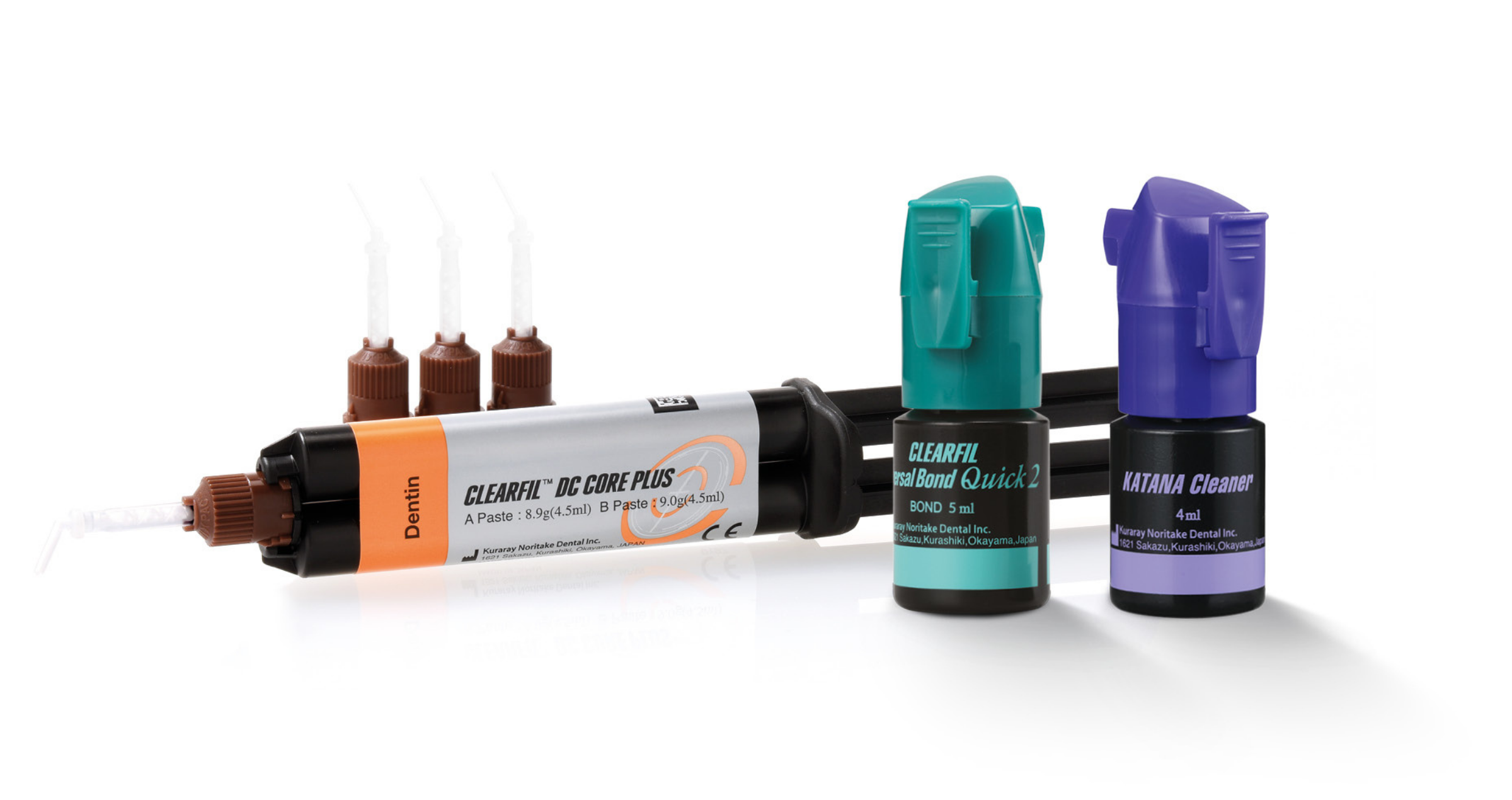
En combinaison avec CLEARFIL™ Universal Bond Quick 2, les procédures gagnent en efficacité. Cet adhésif de la prochaine génération incorpore une technologie novatrice qui recèle une myriade d'avantages précieux. Le temps de travail est idéal. Inutile de secouer le flacon, de frotter, d'attendre ni d'appliquer plusieurs couches. Appliquez, séchez et polymérisez, c'est tout.
 
Combinées, ces solutions font partie intégrante de la gamme Universal Excellence de Kuraray Noritake Dental Inc. : des matériaux de conception intelligente qui associent résistance, esthétique et efficacité dans les flux de travail quotidiens de la restauration.
 
Regardez les vidéos de flux de travail Restauration directe pour voir CLEARFIL MAJESTY™ ES Flow Universal (super low et low) et CLEARFIL™ Universal Bond Quick 2 fonctionner ensemble à l'unisson.