Identyfikacja

Dziękujemy za wizytę na naszej stronie

Zgodnie z aktualnymi przepisami prawa, treści zamieszczone na stronie Kuraray Noritake Polska zastrzeżone są dla profesjonalistów z branży stomatologicznej (lekarz stomatolog, asystentka, higienistka, technik dentystyczny lub inna osoba zawodowo związana z branżą).

Prosimy potwierdź swój status poniżej:
Oświadczam, iż jestem profesjonalistą związanym zawodowo z branżą stomatologiczną.

Blog

Cementation of zirconia - Report of ACTA Congress

Reliable adhesive cementation of zirconia


10-Methacryloyloxydecyl Dihydrogen Phosphate is a bit of a tongue-twister for anyone who is not a chemist by profession, so in everyday communication, this adhesive monomer is referred to by the three initial letters: MDP. MDP is indispensable in the dentistry business. For example, reliable adhesive cementation of zirconia restorations would not be possible without MDP. This adhesive monomer was developed by Kuraray Noritake Dental in 1981.

Requirements
Indirect restorations in modern dentistry must fulfil at least three requirements. First of all, they must be tissue-saving. This implies that a full crown is not the first choice, because approximately 70% of the tooth tissue has to be sacrificed for such a restoration. Nevertheless, full crowns are often still indicated by virtue of their mechanical retention. But given that the retention which can be achieved by adhesive cementation is now sufficiently reliable, a less invasive restoration than a crown should be chosen more often. And this choice may very well be for a zirconia restoration. Combined with the preliminary sandblasting of such an adhesive restoration, this choice is now an appropriate one thanks to MDP.


Durability is the second requirement for an indirect restoration. This quality of a restoration is largely associated with the flexural strength of the restoration material. While it has become clear that zirconia achieves the best durability scores, it should be pointed out that the cementation method also contributes significantly to the durability of a facing, inlay, onlay, etching bridge etc., which can nowadays all be realised in zirconia.


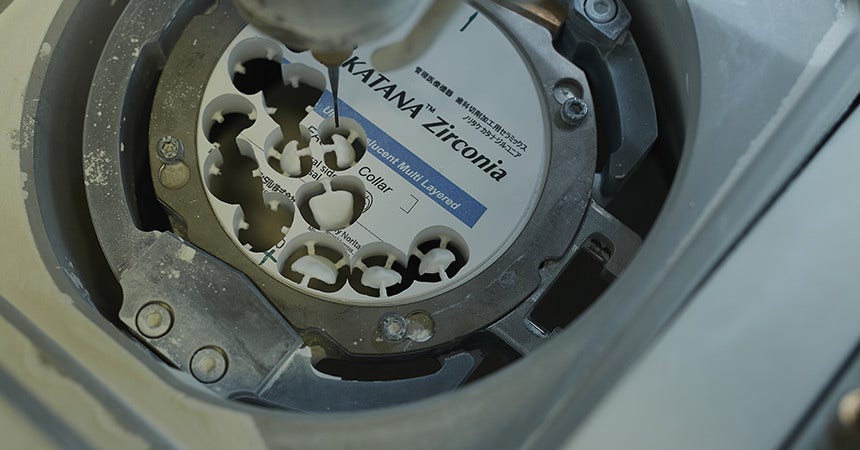
KATANA Zirconia UTML


KATANA Zirconia STML


KATANA Zirconia ML


AESTHETICS
Aesthetic acceptability is the third requirement for a modern indirect restoration. This means that porcelain baked on metal has become a thing of the past; full-ceramic materials are now the standard. Zirconia still has a relatively poor reputation in terms of aesthetics due to the extreme whiteness of the earliest examples from the turn of the century. Types of zirconia are now available with varying translucencies, and there are even so-called multi-layer varieties (KATANA Zirconia ML, STML and UTML by Kuraray Noritake), and these new zirconia no longer have to be porcelain-baked. Obviously, baking is still possible, and partial baking is a choice that is frequently made. One of the results of a multi-layer build-up is that the transparency is higher incisally than cervically, as it is in natural elements; the light falls through the incisal margin, but is blocked at the cingulum of the restoration. With a modern zirconia material such as KATANA Zirconia ML, this variable transparency goes hand in hand with a natural colour gradient from cervical to incisal. In a given colour, A1 for example, the cingulum has the corresponding dentine shade body and it passes to incisal in the appropriate enamel colour via two transition shades.


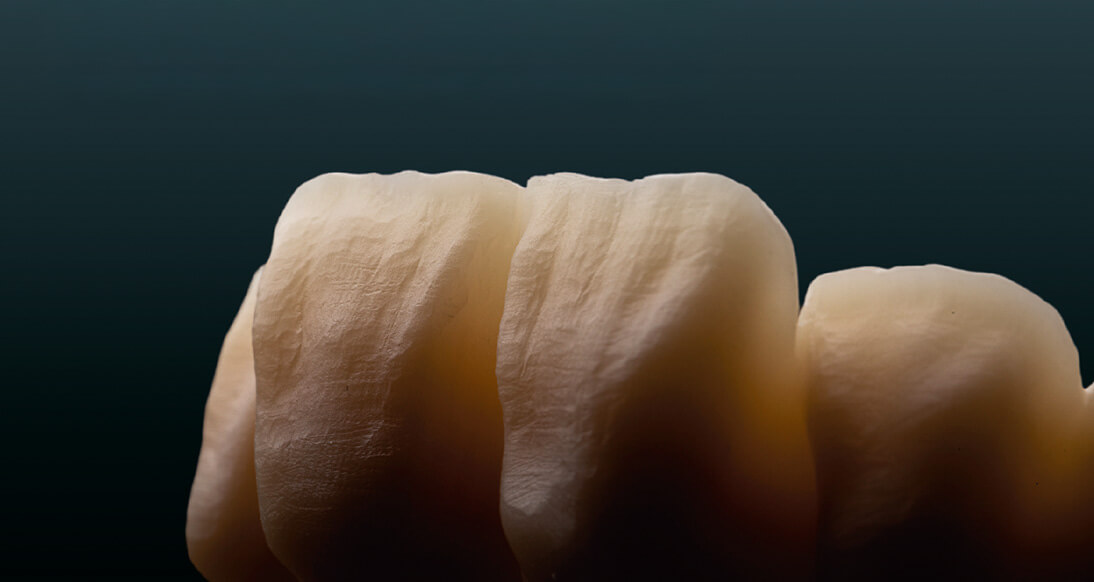
These veneers were made from KATANA Zirconia UTML and coloured using CERABIEN ZR External Stain


SURFACE
The new zirconia materials are changing the way dental technicians operate, as illustrated by the experience of Daniele Rondoni, a renowned dental technician. This professional, from Savona in Italy, has specialised in the use of Multi-Layering technology for ceramic materials (Tecnica della Multistratificazione in Ceramica). According to his philosophy, the choice of restoration materials should be so wide that customised solutions can be realised. Among other things, he believes that there will still be room for baked porcelain on a core of lithium disilicate or zirconia. Using baked porcelain, the dental technician can modify the surface texture of an aesthetic restoration to lend, as it were, a certain age to the restoration.


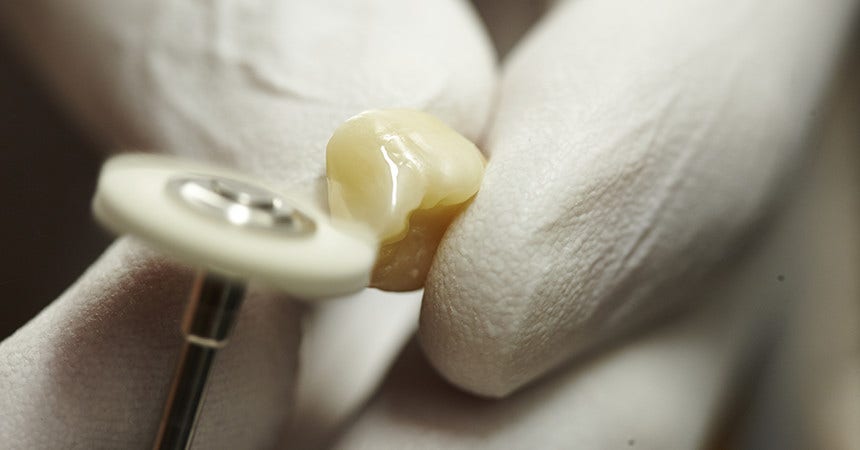
As for surface structure, the fact that the material allows for the smooth polishing of the occlusal plane is crucial to counteract abrasion by the antagonist and to maintain the occlusal balance. In this respect, the hardness of the material selected is not the main factor; the smoothness and resistance of the surface are far more important.


FLEXURAL STRENGTH
When selecting material for restorations, the dental technician also has the option to choose KATANA Zirconia Ultra Translucent Multi-Layered for veneers or anterior crowns; a zirconia with a translucence comparable to that of glass. This translucence is especially important with anterior restoration which is to be fitted between flawless natural elements, a situation that often occurs after anterior traumas. Such a restoration effected using KATANA Zirconia UTML harmonises with the neighbouring natural teeth, not least because this type of zirconia does not cause the frequently-occurring white appearance common in anterior crown. The modern aesthetic zirconia materials of the second generation are sintered at a temperature of 1,550°. This temperature is maintained for two hours. The dental technician needs to be aware that this temperature differs from the sintering temperature for KATANA Zirconia High Translucent Multi-Layered (1,500 °C). Wide-span bridges can be realised with the latter product, whereas the size of bridges made from KATANA Zirconia Super Translucent Multi-Layer remains limited to a maximum of four elements. KATANA Zirconia UTML can be used for small anterior bridges, but is more suitable for anterior crowns and veneers. The reason for this is that the flexural strength of these highly aesthetic zirconia materials is lower than the flexural strength of the standard zirconia, in which the flexural strength – 1,125 MPa – is sufficient for the production of durable widespan bridges. The flexural strength of the highly aesthetic zirconia varieties (approximately 750 MPa (STML) and 550 MPa (UTML)) is amply sufficient to ensure the durability of solitary aesthetic restorations and limited-span bridges.


Minimum wall thickness of KATANA*

* Maintain 0.8 mm thickness of pressed ceramic in all areas. When trimming of the zirconia framework the framework should be at least 0.4 mm.


PREPARATION
Flexural strength is not the only decisive factor for durability; the method of preparation is also crucial to properties of this material. Chamfer preparation is the required form of preparation,
with no knife-edge outline, no deep shoulder and, obviously, no undercuts. Since the restorations are fixed adhesively, parallel walls or grooves in the preparation are undesirable, and sharp
edges and transitions must be rounded off. If a preparation for a full crown has nevertheless been made, a substantial height difference between the vestibular and palatal/lingual outline is
contra-indicated.
 

Using the new zirconia materials means that a thickness of only 0.4 to 0.8mm need be removed for a veneer in the incisal and cervical area, and only 0.5mm is required in the labial plane,
which corresponds with the requirement to save tissue. For inlays, too, only 1mm is sufficient to achieve a durable result. If the inlay is extended to an onlay, 1mm is also sufficient for the
area where the cusps are capped. For a full crown in the lateral parts, a 1mm space must be kept as a minimum, which thickness must also be maintained for the upright walls of the preparation.


FIXATION
A wide range of possibilities have already been suggested for the durable fixation of zirconia-based restorations. All of these options have also been researched, but according to Prof. Matthias
Kern, there is no point in conducting further research into the best cementation procedure. This scientist and practitioner, who currently works at Kiel University, in Germany, has been involved
in the adhesive cementation of zirconia for nearly twenty years.Based on his wide experience, Kern is convinced that three requirements have to be met to achieve the reliable cementation
of zirconia. First of all, a rubber dam must be applied for the operation, which is obviously easier for partial restorations than for total restorations. It is not only from the perspective of tissuesaving that it is useful to keep the preparation limited for this reason. The second condition is that micro-mechanical adhesion needs to be achieved. For zirconia restorations, the necessary adhesion is obtained by sandblasting the surface. Obtaining chemical adhesion is the third condition. Based on extensive research, Kern is fully convinced that chemical adhesion can only be achieved by using MDP. His first publication on this subject dates back to 1998. It was the use of Kuraray Noritake’s PANAVIA, which did indeed contain MDP, which made it possible to achieve durable synthetic resin bonding to zirconia
after sandblasting.
 

SANDBLASTING
Dentists and dental technicians are apparently somewhat averse to sandblasting*, as evidenced by the extensive research conducted in an attempt to find an alternative. No such alternative has yet
been found. Efforts have been made to fuse a silica layer onto the zirconia to improve bonding, but according to Kern, the results of this procedure – the Rocatec method, for example – have been
disappointing. Nor is the silanisation of a zirconia restoration effective, because zirconia does not react to silan. Dentists who want to achieve the durable cementation of their zirconia restorations therefore have no other option than the purchase of a sandblasting device. Sandblasting can be carried out in a small cabin to prevent the surrounding area of the practice from being
affected. Soft air abrasion is carried out at 0.5 bar, while tight air abrasion is performed at 2.5 bar. The exact pressure is not all that crucial to the adhesion of the zirconia, providing that it is between
0.5 and 2.5 bar**. Kern advises sandblasting at a pressure of 1 bar, so that the surface to be bonded becomes somewhat rougher without this being visible to the naked eye. Obviously, the part of
the restoration that does not require bonding, such as the outside
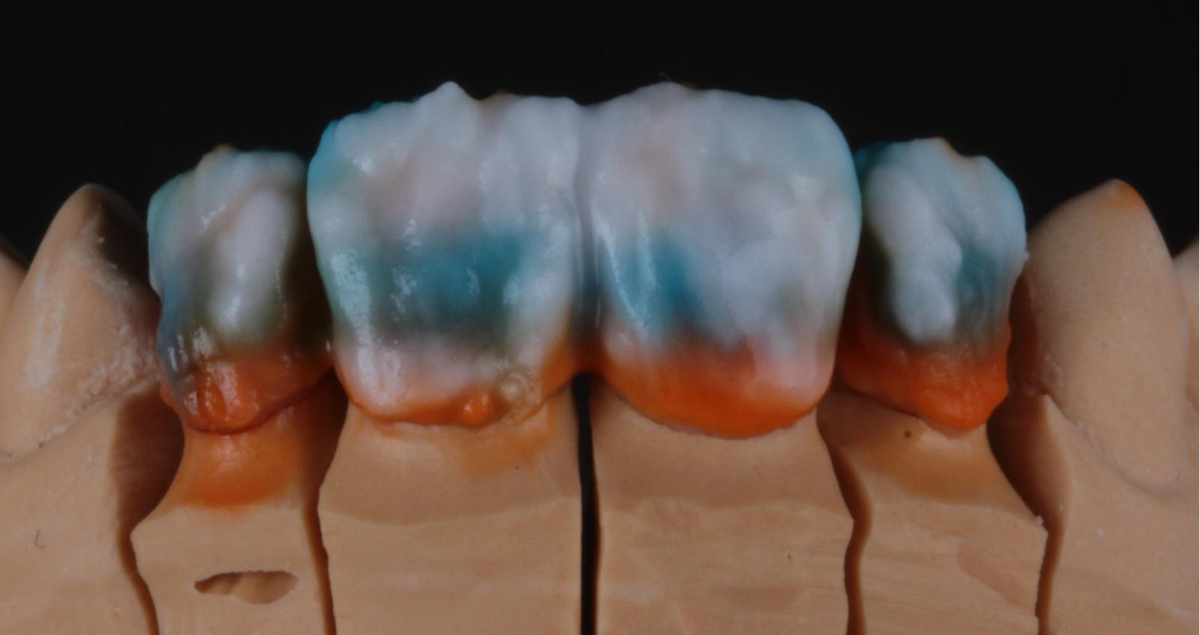
of a veneer or the dummy of an etching bridge, has to be protected from the effect of the abrasive grains. It is also advisable to apply a colorant (waterproof marker pen) to the area to be sandblasted
prior to the operation. The colour disappears during sandblasting, making it easy to check that the entire adhesive surface has actually been abraded.


SANDBLASTING
Sandblasting of zirconia oxide at a lower pressure is a requirement for an effective adhesion. The
combination of sandblasting and MDP ensures both mechanical adhesion in the micro-roughness and
chemical adhesion between zirconia dioxide and MDP. There is extensive research material to corroborate the effectiveness of this method.


* It had long been assumed that the tetragonal and/or cubic structure would relapse into a
monoclinic state due to sandblasting, as a result of which fracturing would occur because
of the associated expansion. Sandblasting with aluminium oxide particles of 50 micron as a
maximum and a maximum air pressure of 2.5 bar does not, however, cause any damage.
** Airpressure is different from manufacturer‘s recommendation.


Adhesive monomer
The restoration surface can be cleaned using alcohol after the
sandblasting process. This step is optional. If the alcohol becomes
contaminated, for example, by saliva residues, the effect will be
negated, because the sandblasted surface would be contaminated
as well. The choice of the fixation procedure is relatively simple
provided MDP is used. This adhesive monomer was developed in
1981 by Kuraray Noritake Dental to improve the adhesive strength
to hydroxyapatite, and has proved its strength ever since. MDP is
not present in the glass ionomer cements (GIC’s), which, because
of their ease of use, are also sometimes used for the cementation
of zirconia restorations. ‘Don’t!’ warns Kern. It is clear from all the
studies that the composite cements containing MDP provide the
most durable results. The oldest known cement from this category
is PANAVIA EX, which was introduced in 1983. The optimised
PANAVIA V5 was presented recently as the single cement for
all cementation indications guaranteed to work according to a
predictable procedure. All the cements and bondings produced by
Kuraray Noritake contain MDP.


Possibly because Kern conducted his research in Maryland for
two years, he has recorded remarkable results with adhesively
cemented Maryland bridges (etching bridges). It has also become
apparent that, most of the time, an adhesion bridge functions best
with only one wing. For example, if a one-wing zirconia adhesion
bridge is cemented using a cement containing MDP instead of
a lateral upper incisive adhesive, such an adhesion bridge may
remain in place for up to 20 years, to the satisfaction of both
dentist and patient. This restoration, with its survival rate of 95.2%
after five years, therefore qualifies as a permanent restoration.


And the same goes for an onlay bridge made from zirconia.
Sandblasting and MDP; the formula for the durable bonding
of zirconia restorations.


So bear in mind: MDP also stands for a Mega Durable Product.


PANAVIA V5 for the adhesive fixation of zirconia
Achieving a reliable bonding to zirconia – it can be done! Read all about it in the preceding article.


PANAVIA V5 is the successful successor to both PANAVIA F2.0 and CLEARFIL ESTHETIC CEMENT. Thanks to its excellent adhesive bond with both dental tissue and all indirect materials, superior aesthetics, and unambiguous processing, PANAVIA V5 is a popular bonding cement. PANAVIA V5
provides a single cement for all cementation indications and features an unambiguous procedure.


CONCISE INSTRUCTIONS FOR USE
1. Sandblast the zirconia surface to be bonded with aluminium oxide powder (30-50 μm) at low pressure, then clean the restoration in an ultrasound bath and allow it to dry.


2. Apply CLEARFIL CERAMIC PRIMER PLUS to the restoration surface, then proceed to Apply & Go. Dry the entire surface using a gentle air flow.


3. Apply PANAVIA V5 Tooth Primer to the element and leave it to take effect for 20 seconds. Dry the surface with air.


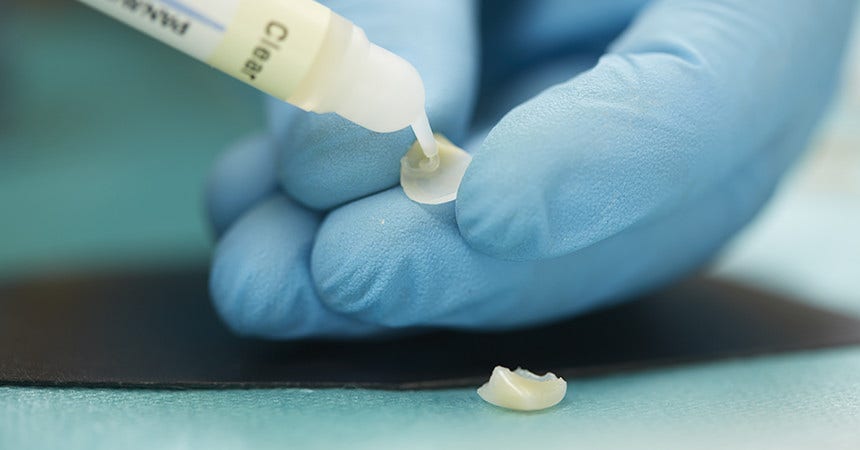
4. Apply PANAVIA V5 Paste to the restoration surface and
position the restoration.


Applying the paste.


Positioning
After placement, remove excess cement using a gauze, a small brush, or something similar.


5. Remove surplus cement and light-cure. Always take account of the self-curing time needed for opaque elements and the use of PANAVIA V5 Opaque..


Daniele Rondoni

Owner of a dental laboratory in Savona


Professor Matthias Kern

Christian-Albrechts University


New CLEARFIL core build-up Kit available now

In restorative dentistry, the core build-up is a crucial step that often has a high degree of difficulty and technique sensitivity. Pairing the brand new CLEARFIL Universal Bond Quick with the reliable CLEARFIL DC CORE PLUS, Kuraray Noritake Dental’s new CLEARFIL core build-up Kit ensures that post and core build-ups can be performed in a stress-free and streamlined manner with as few components as possible.

CLEARFIL Universal Bond Quick

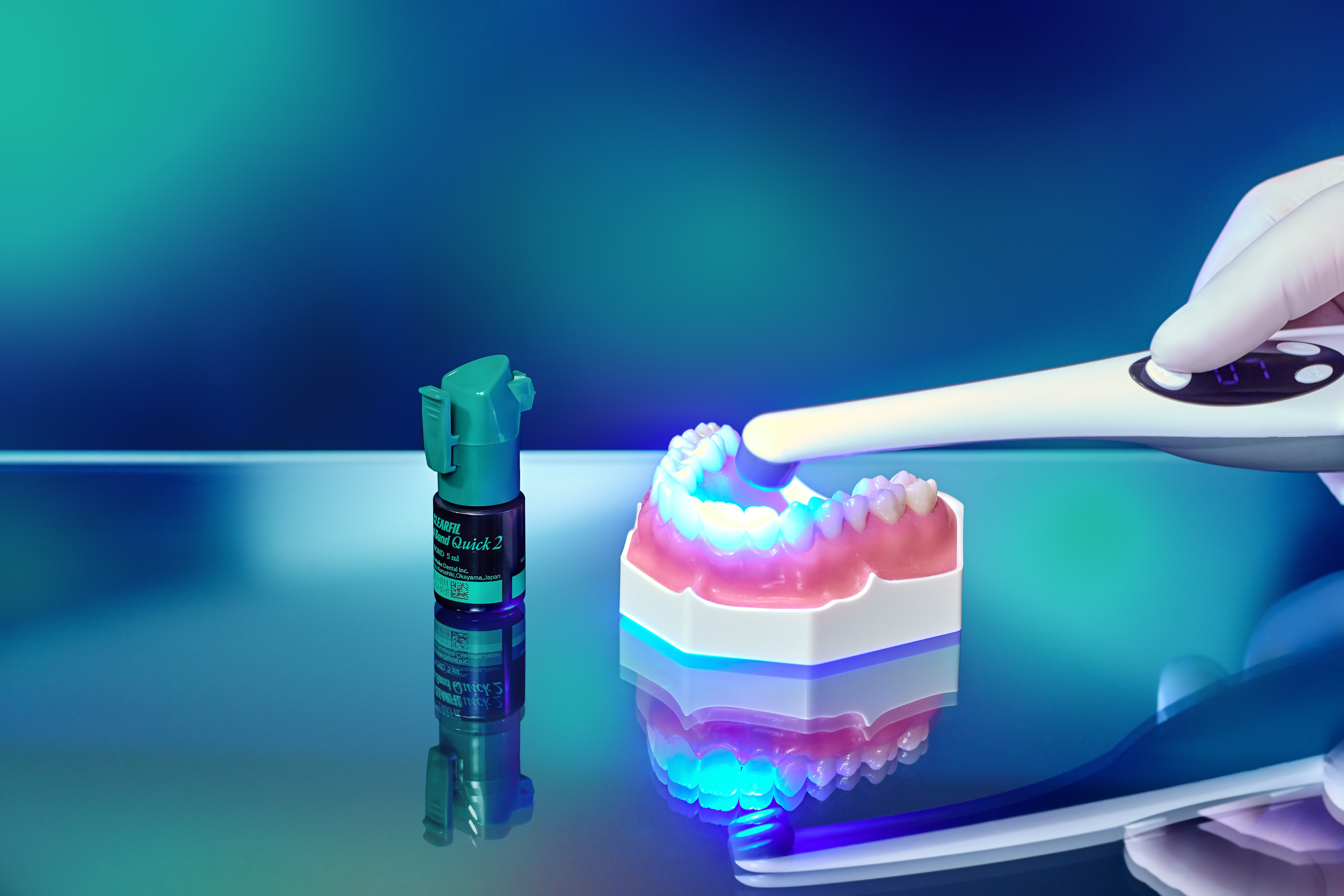
CLEARFIL Universal Bond Quick is the latest universal bonding agent from Kuraray Noritake Dental. A one-step adhesive that can be used in total-etch, selective-etch and self-etch modes, it eliminates the need for waiting, rubbing or applying additional layers. Utilising a combination of Kuraray Noritake Dental’s patented MDP monomer with hydrophilic amide monomers, this dental adhesive is able to penetrate the dentinal surface faster than any other while delivering a stronger, more stable bond.


CLEARFIL DC CORE PLUS

A dual-curing (light-curing with chemical self-curing property), two-component core build-up material, CLEARFIL DC CORE PLUS provides the strongest bond build-ups available when used with CLEARFIL Universal Bond Quick. It is supplied in an auto-mix delivery system, maximising ease of use, and with two types of specially designed guide tips for bulk or intra-canal use, allowing access to deep root canals. CLEARFIL DC CORE PLUS feels and cuts like dentine when it is being prepared, and since its modulus of elasticity is close to that of dentine, occlusal stress can be dispersed. Its non-slumping formula ensures that it maintains its profile, eliminating the need for matrices

Together, the CLEARFIL Universal Bond Quick and the CLEARFIL DC CORE PLUS create a stress-free procedure for build-up restorations in as little steps as possible.. In addition, CLEARFIL Universal Bond Quick’s instantaneous adhesion complements the accelerator for self-curing CLEARFIL DC CORE PLUS possesses. Their combined outstanding properties ensure long-lasting and exceptional clinical outcomes.

“As the replacement for our highly successful CLEARFIL DC CORE PLUS Kit, the CLEARFIL DC CORE PLUS & Quick KIT is the latest example of our ability to take our rigorously-tested research and development and turn it into an optimal dental solution. This well-balanced combination eliminates the need for an activator (CLEARFIL DC Activator). With only two components, the CLEARFIL core build-up Kit demonstrates that excellence in adhesion can be quickly achieved with the right products,” says Mitsuru Takei, Head of Technical Services for Kuraray Europe GmbH.

How rapid bond technology changes universal dental bonding agents

Much of the success of Kuraray Noritake Dental’s adhesive has come off the back of our originally developed MDP monomer (10-Methacryloyloxydecyl dihydrogen phosphate). After applying for a patent for it in 1981, we started using this monomer’s excellent chemical adhesion properties, hydroxyapatite and metals in PANAVIA EX, our first adhesive resin cement, as well as in our CLEARFIL SE BOND adhesive. Through a process of extensive research and development, we have been able to combine our MDP monomer with hydrophilic amide monomers to create rapid bond technology. Our new universal adhesive system CLEARFIL Universal Bond Quick relies on this technology to deliver a lasting bond faster, and easier, than ever. By building on our past successes to deliver better solutions, this new technology embodies what Kuraray Noritake Dental does best—innovate and develop new and improved products.


Dentin bonding

Bonding to a substrate such as dentin can be difficult, as the adhesive needs to be able to penetrate the dentin. For many other adhesives, their reliance on slow monomers means that there is slow penetration of the dentin layer. Rapid bond technology’s use of amide monomers gives CLEARFIL Universal Bond Quick superior hydrophilic properties in comparison to traditional monomers, such as HEMA, which allows it to penetrate the dentin faster and more effectively. By doing so, the time spent waiting between applying the adhesive and proceeding with air-drying is eliminated and a tight and impermeable seal of the cavity is created after light curing. Thanks to rapid bond technology, bonding with CLEARFIL Universal Bond Quick can be performed easily and efficiently with the added assurance of predictable clinical outcomes.

Low water sorption

When it comes to dentin bonding, the level of water sorption in the bond’s organic matrix is a key indicator of long-term success. A high rate of sorption has demonstrated to be a prominent factor in the progressive physical deterioration of bonds, which can lead to secondary caries. Potentially, due to both the high cross-linking properties of the amide monomers used in our rapid bond technology and the use of almost insoluble Ca-MDP salt, CLEARFIL Universal Bond Quick has a low rate of water sorption. As a result, bonds that are created using this adhesive are more stable and resistant to hydrolytic degradation.


Aesthetic bonding

Rapid bond technology does not only provide a basis for bonding excellence. With a thin film layer of 5–10 μm, CLEARFIL Universal Bond Quick’s aesthetic appeal is evident. Through the aforementioned dense crosslinks of its polymer network, rapid bond technology is able to reinforce the stability of this layer and provide resistance to discolouration.


As the engine powering CLEARFIL Universal Bond Quick, rapid bond technology represents the next step for Kuraray Noritake Dental. Finally, faster and more reliable bonding procedures with consistent and durable results are now possible.

CLEARFIL Universal Bond Quick - The next step in bonding agents

In 1978, Kuraray Noritake Dental introduced CLEARFIL BOND SYSTEM F, the first total-etch adhesive system. Through our renowned products such as the CLEARFIL SE BOND self-etching primer and bonding system and the PANAVIA family of adhesive resin cements, the company has continued to develop new solutions based on additional research and development. Continuing its tradition of setting trends in the dental world, Kuraray Noritake Dental is proud to present CLEARFIL Universal Bond Quick, our newest universal dental bonding agent. Delivering a reliable and lasting result instantly upon application, CLEARFIL Universal Bond Quick eliminates waiting time, the need for rubbing and the application of additional layers. Dentists can simply apply and proceed.


CLEARFIL Universal Bond Quick represents an evolution in dental bonding agents. Regardless of the technique used, CLEARFIL Universal Bond Quick guarantees optimal results in minimal time.


The new standard for bonding agents

CLEARFIL Universal Bond Quick offers a one-step adhesive that can be used for total-etching, selective-etching and self-etching. Unlike other universal bonding systems, it is effective on dentin in total-etch mode irrespective of the dentin’s moisture condition and it can adhere to almost all dental substrates, rendering additional primers obsolete. Our customers already praise its bonding ability as “game-changing” and “astounding”. With all of the advantages of a universal bond without any of the downsides, CLEARFIL Universal Bond Quick is the modern dentist’s preferred bonding agent.


Rapid bond technology

CLEARFIL Universal Bond Quick is developed to be less technique-sensitive than other one-step bonding agents on the market, thanks to Kuraray Noritake Dental’s monomer technology. Where other adhesives rely on slow monomers and their relatively slow dentin penetration, CLEARFIL Universal Bond Quick combines our patented MDP monomer with hydrophilic amide monomers, which is scientifically proven to provide stronger and more stable bonds. By doing so, this universal bonding system is able to penetrate the dentin faster and more effectively after curing, ensuring a tight and impervious seal of the cavity. Kuraray Noritake Dental’s rapid bond technology delivers stability and moisture resistance, making restorative procedures easier and more predictable than ever.


CLEARFIL Universal Bond Quick has a thin film layer of 5–10 μm, ensuring that it is resistant to discolouration along the edge of the restoration, thereby promising better aesthetic results. In addition, it offers excellent post-operative comfort for patients, as they do not suffer from sensitivity. With procedural outcomes like these, it becomes clear that CLEARFIL Universal Bond Quick delivers ideal results for both the dentist and the patient.

Adhesive cementation of KATANA Zirconia

A clinical case created by Dr. Shoji Kato of Takanawa Dental Office, Japan


PRODUCTS USED IN THIS CLINICAL CASE


KATANA™ Zirconia Multi-Layered Series


Our KATANA™ Zirconia series brings naturalness to all
prosthetics. Make natural veneers and natural full contour
prosthetics out of zirconia. Plus large dentin-like frameworks.
KATANA™ Zirconia UTML is a high translucent disc, which meets
the requirements of highest translucency level for anterior crowns
and veneers. All layers are highly translucent, whereby the color
saturation is reduced in the incisal area. The transparency of the
natural enamel is copied and the abutment shade is absorbed.

KATANA™ Zirconia STML is a multi-layered zirconia disc
where light is transmitted in the incisal area and blocked in
the cervical area. Due to its color and translucency gradient,
more opacity in the cervical area and more translucency in the
incisal area are achieved.

KATANA™ Zirconia ML, the pioneer of zirconia with a
natural color gradient, is made for large dentinal frameworks.
Its natural opacity makes it the ideal base to cover it with
hand-made ceramics. 


PANAVIA™ V5
One Cement. All cement indications. One prime procedure.
Start with priming the tooth using PANAVIA™ V5 Tooth
Primer. Then prime and roughen the prosthetic using
CLEARFIL™ CERAMIC PRIMER PLUS and apply the pre-mixed
cement. PANAVIA™ V5 comes in five aesthetic shades and
the original MDP assures a durable bond. On the tooth and
the prosthetic.


CLEARFIL™ CERAMIC PRIMER PLUS
The universal prosthetic primer for almost all prosthetic surfaces.
It durably bond to ceramics (lithium disilicate, zirconia), hybrid
ceramics, composite resins and metals. The original MDP monomer
bonds to metals and metal-oxides such as zirconia. Silane coupling
agent γ MPS guarantees a strong adhesion to composites, glassceramics
and hybrid ceramics. This perfect mixture of ingredients
will give you long lasting adhesion to virtually all dental materials.


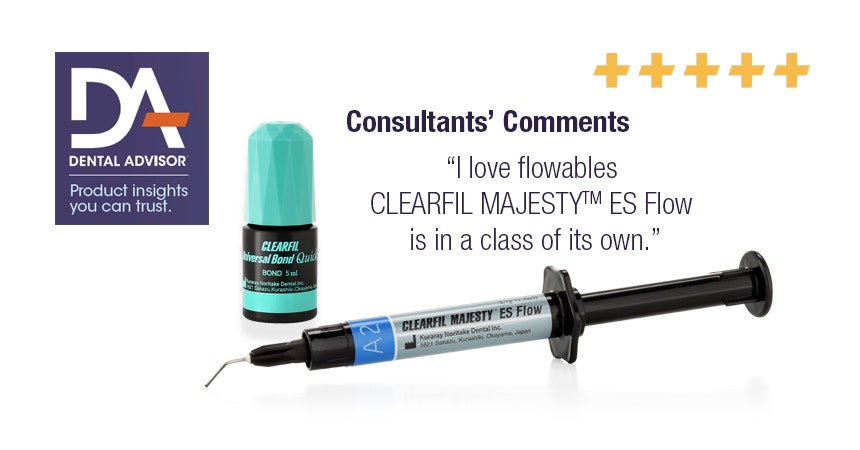
Award for CLEARFIL Universal Bond Quick

The Dental Tribune Editor's Choice awarded CLEARFIL Universal Bond Quick with the maximum 5 stars and an impressing 98% score.


Consultants’ Comments
• “Perfect viscosity. Ease of use and speed were great.”
• “I love the unit dose - so easy to use, and there was plenty of adhesive
for most procedures in each one.”
• “Great for replacement of silane to prime crowns for cementation with
resin cements - will self-cure with the dual-cured resin.”
• “Loved the fact that it is compatible with dual/self-cured resins and also
love that it can be used in self-cured mode with CLEARFIL DC Activator.
It’s applicable for all bonding procedures.”
• “Great product. A ‘go to’ bonding agent.”


Read the actual Report from The Dental Advisor
 

Press release - Cementation of Zirconia

Adhesive cementation of high-translucent zirconium oxide restorations


The definitive integration of full ceramic restorations throws up a lot of questions in everyday practice life. Many of these are answered in the “ACTA Report”. The Congress lectures (ACTA Congress) held by Prof. Matthias Kern (Kiel/Germany) and Daniele Rondoni, ZTM (Savona/Italy) have been condensed down to the essentials and presented in a practical manner. The focus is placed on zirconia materials and it’s adhesive, MDP based cementation.  


Until now, the preferred cementation method for dental zirconia was conventional luting. Through the establishment of high-translucent zirconia materials (e.g. KATANATM UTML/STML, Kuraray Noritake Dental), however, the standards have changed. The outstanding aesthetic properties of the new zirconias are to be supported through a composite resin cement. In the ACTA Congress held at the ACTA University (Amsterdam/Netherlands,), Prof. Matthias Kern and Daniele Rondoni, ZTM evinced exciting information on the subject. Prof. Kern underlined the significance of the MDP monomer for the reliable adhesive cementation of zirconia restorations. He is convinced that the chemical adhesion can only take place using MDP based resin cements (PANAVIATM, Kuraray Noritake Dental). Rondoni presented the advantages and the material properties of the new zirconias.


In the “ACTA Report”, the scientifically founded explanations, which have proven their worth in practice, have been summarised. The reader learns for example which prerequisites are required for adhesive cementation. In addition, valuable preparation and material-relevant processing guidelines are provided. The explanations on the functional method of the adhesive cementation and the MDP monomer are presented in an interesting way. The original MDP monomer was developed in 1981 by Kuraray in order to improve the bond strength on tooth structure and dental metal alloy. Today, MDP monomer (the basis of PANAVIATM resin cements) are characterised by their strong adhesion to metal(oxides) incl. zirconia.


PANAVIATM V5 is an aesthetic and adhesive resin cement for all cementation indications, based on MDP technology. Prof. Kern published a work on bonding to zirconia ceramic with MDP for the first time in 1998. His well-founded experiences are practically summarised in the “ACTA Report”.


Today sandblasting and MDP is the proven formula to reliable adhesive cementation of zirconia.

The “ACTA Report” is a recommended read for all dentists and dental technicians who have integrated full ceramic restorations into their everyday working lives. Well-founded and practical!    


For more information

Email dental.eu@kuraray.com or phone +49-(0)69-305 85 980

You can read the full report  here.


CLEARFIL Universal Bond Quick - The adhesive you have been waiting for!

Expect everything you have been waiting for:

- Universal Use: Can be used for Total-etch, Self-etch and Selective-etch techniques.

- New original MDP & AMIDE-based chemistry that provides a unique RAPID BOND TECHNOLOGY.

- No additional primer or activator is needed when used with CLEARFIL DC Core Plus/PANAVIA SA Cement Plus.

- Bonds to zirconia, metals and silica-based ceramics including lithium disilicate.

- Works on both wet and dry dentin when using the total-etch technique.

- No waiting time in both the total-etch and self-etch modes.

- Can adhere to any material w/o additional primers; no need for separate silane coupling agent.

- Can be mixed with CLEARFIL DC Activator to become a dual-cure adhesive which can be used with any self/dual-cured resin cement or core material

- Direct restorations using light-cured composite resin.

- Cavity sealing as a pretreatment for indirect restorations.

- Treatment of exposed root surfaces.

- Treatment of hypersensitive teeth.

- Intraoral repairs of fractured restorations.

- Post cementation and core build-ups.

- Cementation of inlays, onlays, crowns, bridges and veneers.

Press release - IDS - Real-Time Esthetic dental Demo's

From 21.03.-25.03.2017 IDS opens its doors again.

Kuraray Noritake Dental, a global supplier of innovative technologies in dentistry, presents new innovative products, as well as classics from dentistry and dental technology such as PANAVIA ™ or KATANA ™ Zirconia ML.

We are particularly pleased to present our new Universal Bonding, CLEARFIL ™ Universal Bond Quick. As a bonding specialist, Kuraray Noritake developed an innovative universal bonding process, without waiting time and with lasting results in all restorations.

CLEARFIL ™ Universal Bond Quick provides the best results without waiting, without intensive rubbing, without multiple layers or without multiple application.
The dentist not only saves time, but our bonding also reduces through the fast
Apply the risk of contamination.

Come and stay with us and be convinced by CLEARFIL ™ Universal Bond Quick!

Furthermore, there is brand-new information in the CEREC® area. Let yourself be surprised!

But also for the dental technicians there are many exciting and new information from Kuraray Noritake Dental, the inventor of the multi-layered Zirconia Disks.

A special highlight for the dental technicians among you are our Hands On demonstrations at our booth with internationally renowned dental technicians. You can find a program overview at www.kuraraynoritake.eu.
The highlight of the program will be our live talk at the stand in Hall 11.3 D010, on Friday, 24.03.2017 from 15-17 clock.

This afternoon, an exclusive expert team will be at your disposal with Dr. Ed Mc Laren (USA), Z. Oriol de la Mata y Garcia (ES), Zn. Nondas Vlachopulos (GR) and Daniele Rondoni (IT) Table discussion around the modern and aesthetic dentistry available for all questions!

But also for all other questions and suggestions about our portfolio, our product specialists at IDS are here for you!

Hall 11.3 / Stand D010 / D020 / D030

We look forward to you!
For further information please call +49 (0) 69 305 35835 or dental@kuraray.de

Experts present findings CLEARFIL Universal Bond Quick

PRESS RELEASE

EXPERTS PRESENT IMPORTANT FINDINGS ON THE ADVANCED BONDING PROPERTIES OF THE NEW ONE-BOTTLE UNIVERSAL ADHESIVE: CLEARFIL™ UNIVERSAL BOND QUICK


Hattersheim, Germany – January 2017  


The 2nd December 2016 saw the annual Kuraray Noritake Expert Symposium in Frankfurt with more than 60 leading adhesives and composites experts from universities all over Europe meeting to discuss and share new advances in the world of adhesive technology, notably CLEARFIL™ Universal Bond Quick: the new one-bottle universal adhesive by Kuraray Noritake Dental which is to be launched in Europe in February. Prof. Dr. Bart Van Meerbeek from the KU Leuven - BIOMAT - University Hospitals Leuven/Belgium, acted as Symposium Moderator.

Starting off the day’s proceedings, Yusuke Fujimura, Technical Manager and Chief Developer at Kuraray Noritake Dental demonstrated how, unlike most other bonding agents, CLEARFIL™ Universal Bond Quick works instantly, removing the need for waiting time, extensive rubbing or multiple layer application. This was followed by Professor Dr Bart Van Meerbeek who discussed the problems associated with conventional total-etch methods whereby strong phosphoric acid is applied to the dentin, dissolving the natural tooth protector hydroxyapatite and exposing the collagen matrix. He posed the fundamental question:” Why demineralise the tooth with strong acids only to remineralise it again?”

Also on the agenda were four individual studies, each tested far over and above the legally-required ISO standards, providing insights into the fact that the longevity prognosis for bonded restoration is absolutely dependent on both the quality of the adhesives and the effect of the procedural steps. Luc Randolph, Materials Research Engineer at the University of Louvain-la-Neuve/Belgium, reported on shear bond strength tests using the new universal adhesive CLEARFIL™ Universal Bond Quick concluding that: “Among the all-in-one universal alternatives, the new CUBQ technology appears equally efficient despite the absence of waiting time after application, making it a more user-friendly and convenient option than its competitors.”

Prof. Dr. Amélie Mainjot from the University of Liège/Belgium went a step further demonstrating highly positive bond results for zirconia which showed, even after thermocycling, comparable bond strength to Vita Mark II class-ceramic instead of pre-test failures when not treated with CLEARFIL™  Universal Bond Quick.

Finally, Prof. Dr. Mutlu Özcan from the University of Zurich/Switzerland, concluded that, whereas the described method of air-abrasion increases the adhesion results for the majority of adhesives, air-abrasion may not be needed for CLEARFIL™ Universal Bond Quick.

Over the course of the day the speakers presented many enlightening research results which participants were able to take away with them. However, before they left, Prof Van Meerbeek called for a panel discussion so that speakers could collaborate with the audience on requests for future development and findings.


CLEARFIL™ Universal Bond Quick is launched in Europe on the 1st of February 2017. 


Read the full report: Kuraray Noritake Symposium Report (PDF: 360 Kb)