429 Too Many Requests

429 Too Many Requests


nginx

Dental Zirkonia och varför tandläkare bör blanda sig i valet av dentala material

Vikten av högkvalitativ protetisk behandling

Högkvalitativ behandling är förmodligen den viktigaste faktorn för patientnöjdhet. Under varje enskilt tandläkarbesök vill patienten känna sig väl omhändertagen av skickliga yrkesmänniskor, men antalet sittningar får gärna hållas på en minimum. Vid protetisk behandling förutsätter det att ersättningen måste passa perfekt direkt och att den är hållbar över tid för att undvika omgörningar och extra tandläkarbesök.


Men är det ens möjligt att leverera perfekt passande och högkvalitativa ersättningar varje gång? Bland de potentiella källorna till problem med kvaliteten hos indirekta ersättningar finns vanliga misstag som görs av både tandläkare eller laboratoriet, kommunikationsmissar och ett ofta förbisett problem; användning av ågkvalitativt zirkonia.


Zirkoniaersättningar - en modern och estetisk lösning

För över tjugo år sedan gjorde zirkonia entré på den dentala marknaden som en ersättning för den metall som användes för att framställa kronor och broar. Båda materialen - zirkonia och metall - användes vanligen i kombination med ytporslin - i form av metallkeramiska konstruktioner eller porslinspåbrända zirkoniakonstruktioner. Under efterföljande år fokuserade ledande tillverkare av dentalt zirkonia (som Kuraray Noritake Dental Inc.) på materialförbättringar. Dessa förbättringar ledde gradvis till att det ursprungligen opakvita zirkoniamaterialet, som användes för underkonstruktioner, utvecklades till ett keramiskt material med tandlika optiska egenskaper och utmärkta mekaniska egenskaper. De senaste varianterna av zirkonia, som finns att få i olika graderav translucens och styrka, betraktas av många tandläkare jorden runt som det bästa möjliga behandlingsalternativet för en stor grupp patienter med varierande egenskaper och behov. En anledning är att materialet inte kräver någon, eller väldigt lite, porslinspåbränning. En annan anledning är att materialet tillåter tunn godstjocklek, vilket i sin tur möjliggör mycket måttlig avverkning av tandsubstans vid preparation. Vidare erbjuder materialet - förutsatt att ett högkvalitativt zirkonia används - ett gynnsamt långtidsresultat.


Det är skillnad i kvalitet mellan olika sorters zirkonia

Kvaliteten på olika zirkoniaprodukter kan variera beroende på olika faktorer; råmaterialets renhetsgrad (det gäller inte bara zirkonia, utan också alumina och yttria, liksom olika färgtillsatser osv.), precisionen i den kemiska sammansättningen, kornstorlek och partikeldistribution. Varje steg i framställningen av zirkoniaämnet - från pulversammansättning till pressning av ämnet till försintring - påverkar också kvaliteten på slutprodukten, d.v.s. de mekaniska och optiska egenskaperna hos zirkoniamaterialet.


Vanliga problem som orsakas av lågkvalitativ zirkonia

Varje gång det är något fel på de optiska egenskaperna hos en ersättning - med translucens, färg eller med övergångarna från ett lager till nästa i ett flerskiktat ämne - blir problemet uppenbart efter slutsintringen, som sker på det tandtekniska laboratoriet. Det blir kanske nödvändigt med en omgörning och till slut uppdagas kanske felet under inprovningen, vilket sannolikt har en negativ påverkan på patientens upplevelse. Detsamma gäller i de fall passformen blir felaktig på grund av till exempel orenheter i materialstrukturen. Och vad värre är; sämre egenskaper för biokompabilitet, ytstruktur, kantstabilitet, böjhållfasthet och brottseghet. De egenskaperna är bara identifierbara med mycket dyr testutrustning, som inte finns att tillgå på ett tandtekniskt laboratorium. Det betyder att brister av det slaget inte upptäcks förrän kliniska problem - som gingival recession, ökad ansamling av plack, högre grad av slitage eller frakturer som kan orsaka smärta och obehag - uppstår.


Översikt; potentiella problem och klinska konsekvenser för patienten

Potentiellt problem med zirkonia av låg kvalitet

Potentiella kliniska risker för patienter

Begränsad biokompabiltet

Gingival recession/inflammation

Inhomogeniteter i materialets struktur

Ersättningen har dålig passform
Ytsprickor
Estetiska problem (translucens, färg)
> omgörningar

Undermålig ytkvalitet: porositeter

Ökad ansamling av plack > periodotala problem, karies

Undermålig ytkvalitet: grövre yttextur

Svårare att putsa och polera > högt slitage på antagonisterna

Låg kantstabiltet

Frakturer och sprickor vid kantanslutningar > reparation och omgörning

Låg böjhållfasthet

Kortare livslängd > omgörning

Låg brottseghet

Frakturer/begränsad livslängd > omgörning


Certifiering och standardisering av dental zirkonia

Det är därför specialister har utvecklat en ISO-standard (ISO 6872:2015), som beskriver de in-vitrotester som alla tillverkare av zirkonia för dentalt bruk i Europa och USA måste genomföra för att bli godkända av FDA och för att få CE-märka sin a produkter. Testerna används för att mäta böjhållfasthet och brottseghet, de två sannolikt mest betydelsefulla egenskaperna för hur ersättningar som framställts av materialet beter sig över tid. Alla material som används i Europa och USA måste klara de här testerna.


Hur du undviker att sätta lågkvalitativa zirkoniaersättningar i munnen på dina patienter

Därav borde alla som använder certifierad zirkonia kunna känna sig säkra och kapabla att undvika materialrelaterade risker. Den ökade populariteten hos dental zirkonia har dock attraherat aktörer som vill ha sin bit av kakan utan att behöva anstränga sig för att säkra en hög produktkvalitet eller för att genomgå certifiering. Icke-certifierade produkter som saknar CE-märkning har en sak gemensamt: de försätter både din verksamhet och dina patienter i fara.


Så hur är det möjligt att säkra zirkoniaprodukternas kvalitet från tandläkarkliniken? De goda nyheterna är att det finns några enkla regler tillgängliga. Genom att följa dessa regler kan du undvika att sätt falsifikat och undermåliga produkter i munnen på dina patienter.


Sätt inte falisifikat eller produkter av lågkvalitativ zirkonia i munnen på dina patienter.


Tre gyllene regler du ska följa för att förse dina patienter med högkvalitativa zirkoniaersättningar:

  • Beställ bara ersättningar som framställts här hemma eller från en region som lyder under samma regelverk som du som själv: ersättningar som produceras i t ex Kina behöver inte uppfylla samma höga krav (därav avsaknaden av CE-märkning) och lever kanske därför inte upp till dina förväntningar.
  • Prata med ditt (inhemska) laboratorium om var deras zirkonia kommer ifrån: försäkra dig om att de köper sitt zirkoniamaterial från ledande tillverkare (som Kuraray Noritake Dental Inc.) via auktoriserade återförsäljare eller säljare som de verkligen känner.
  • Undvik erbjudanden som är för bra för att vara sanna: låga priser kan vara frestande, men den slutligiltiga prislappen för behandlingen kan bli ännu högre än vanligt när komplikationer uppstår.


Betydelsen på lång sikt för patienterna vid bruk av certifierade zirkoniaersättningar

Att försäkra sig om att det zirkoniamaterial du använder i kliniken uppfyller högsta möjliga kvalitetskrav är ett viktigt bidrag till patientnöjdheten över tid. Även om den initiala kostnaden för högkvalitativa zirkoniaersättningar är något högre än för ersättningar av lägre kvalitet, kan den totala investeringen bli mindre eftersom ersättningarna håller längre och omgörningar inte behövs. Dina nöjda patienter kommer sannolikt att vara mera engagerade och följsamma i att sköta sin munhygien och de förblir lojala, med positiv påverkan på ditt rykte och din patientstock.


Undersök olika val av zirkonia och välj produkter från certifierade tillverkare

Om du vill gå ett steg till kan du till och med jämföra olika certifierade zirkoniamaterial från olika tillverkare och upptäcka skillnader. Kurary Noritake Dental Inc. är till exempel en av de få tillverkare av zirkonia som "äger" hela tillverkningsprocessen, vilken inkluderar egen produktion av råmaterial. På så sätt har företaget kontroll över varje steg i processen och det ger en enstående produktkvalitet - oavsett vilken variant av materialet man väljer. Med produktportföljen som består av KATANA™ Zirconia UTML (ultratranslucent, flerskiktad), KATANA™ Zirconia STML (extra translucent flerskiktad) och det högtranslucenta, flerskiktade HTML PLUS liksom YML (med ytterligare styrka och translucensgradient), är det möjligt att svara upp mot varje indikation.


Universalresincement: Har du tänkt på ett tredje sätt att använda det?

Artikel av professor Lorenzo Breschi


Färre förpackningar, fler val - det är det enklaste sättet att beskriva universalresincement. Eftersom de är självadhesiva tillåter dessa dualhärdande, resinbaserade cement ett arbetsflöde med en komponent - utan separata primers för tand eller ersättning - i flertalet kliniska situationer. Den bindningsstyrka som uppnås är vanligtvis hög nog för att säkra en stabil bindning mellan tand och ersättning - i ett brett spann av indikationer. Det är dock något svagare än den bindning som erhålls med konventionella resincement, bestående av flera komponenter (vanligen primer för tand, resincement och primer avsedd för ersättningen).


Förutom att användas för självadhesiv cementering, kan resincement användas med kompletterande komponenter för att öka bindningsstyrkan till tand och/eller ersättning. Detta öppnar upp för nya möjligheter för användning av produkten: beroende på vilka bindningsegenskaper som önskas eller krävs, kan resincementet användas ensamt eller i kombination med primer för tand och/eller primer för ersättning. På så sätt blir hybridkoncept möjliga. Detta förklaras i den här artikeln som använder PANAVIA™SA Cement Universal (Kuraray Noritake Dental Inc. som exempel.


Självadherande cementering: för flera indikationer

När PANAVIA™ SA Cement Universal används som självadherande cement är detta dualhärdande resincement mycket användbart i många situationer. Bindningen till de restorativa materialen (inklusive kiselbaserade keramer) är hög, utan användning av separata primers eller silan1-4. Det beror på de två adhesiva monomerer som ingår i formulan - Original MDP-monomeren och LCSi-monomeren (ett silanbindningmedel med långa kolkedjor som ger en stark kemisk bindning till kiselbaserade keramer) Därför kan resincementet användas utan att ytterligare komponenter tillförs på det protetiska materialet - inte ens när det saknas retention och kravet på stark bindning därför är ännu högre.


Den självadherande användningen ger också en stark bindning till emalj och dentin. I vissa situationer kan dock användning av tandprimer användas för att ytterligare stärka bindningen till tandstrukturen


Adhesiv cementering: för utmanande situationer

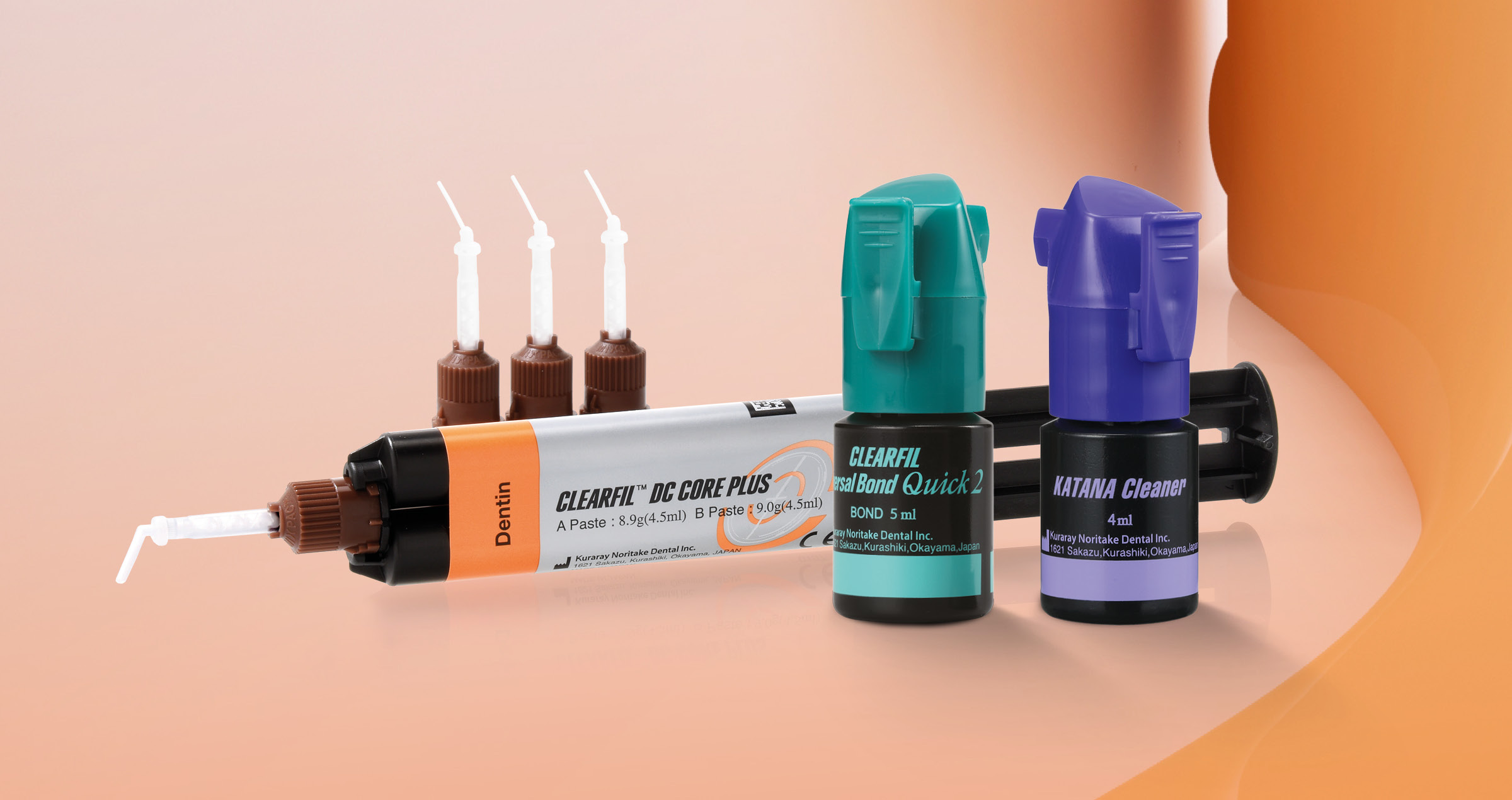
För användning tillsammans med PANAVIA™ SA Cement Universal rekommenderas CLEARFIL™ Universal Bond Quick (Kuraray Noritake Dental Inc.). Primer för tanden rekommenderas när användaren bedömer att behandlingsresultatet kommer att gynnas av en extraordinärt stark och hållbar kemisk bindning, d.v.s, i särskilt utmanande situationer där det föreligger otillräcklig mekanisk retention. Effektiviteten hos denna åtgärd har bekräftats i en japansk in-vitrostudie, i vilken mikrodraghållfastheten i bindningen till dentin efter 24 timmar hade ökat signifikant genom användning av universaladhesiven5. När man använder en separat adhesiv ökar dock kravet på noggrann och fullständig torrläggning. Anledningen till detta är att resincement är mindre fuktkänsliga än adhesiver. Därför anbefalls användning av kofferdam vid adhesiv användning.


Selektiv adhesiv cementering: för låga abutments och subgingivala kantanslutningar

För situationer där korrekt isolering med kofferdam är svårt, finns ett tredje alternativ tillgängligt - framtaget av en grupp italienska forskare: Selektiv Adhesiv Cementering. I det här fallet appliceras CLEARFIL™ Universal Bond Quick enbart i de preparerade tandområden som tillåter adekvat kontroll av fukt, medan man i de områden där fuktkontrollen är en utmaning förlitar sig på den självadhesiva funktionen hos PANAVIA™ SA Cement Universal. Situationer som lämpar sig för den här tekniken är typiskt sett stödtänder med subgingival preparationsgräns och fall där stödtanden är särskilt kort (så kort att den förhindrar användning av kofferdam).


Effektiviteten hos selektiv adhesiv cementering har verifierats i en in-vitrostudie, som jämförde tre olika adhesiva metoder - självadherande cementering, helomfattande adhesiv cementering och selektiv adhesiv cementering - med hjälp av draghållfasthetstest6. Testresultaten visar att bindningsstyrkan mellan PANAVIA™ SA Cement Universal och dentin respektive emalj ökas genom att adhesiven appliceras på enbart en del av tandens yta. För cementeringssystemet som består av PANAVIA™ SA Cement Universal och CLEARFIL™ Universal Bond Quick, uppvisade den helomfattande adhesiva cementeringen och metoden att selektivt cementera adhesivt liknande resultat.


En grupp italienska forskare föreslår ett tredje alternativt för de situationer när ordentlig torrläggning av arbetsområdet är svårt: Selektiv Adhesiv Cementering.


REKOMMENDERADE STEG FÖR SELEKTIV ADHESIVE CEMENTERING

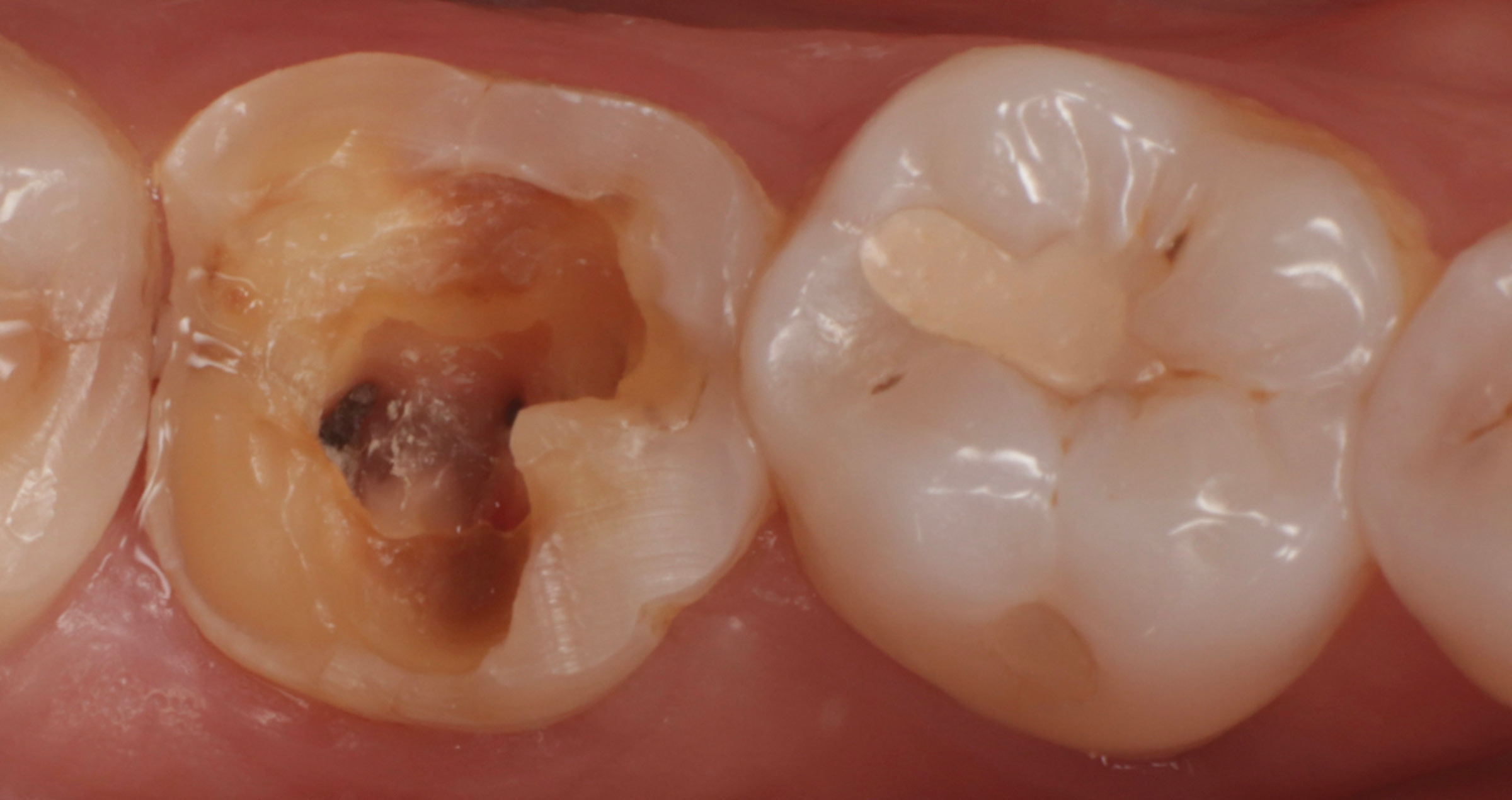
Fig. 1: Preparerad tand


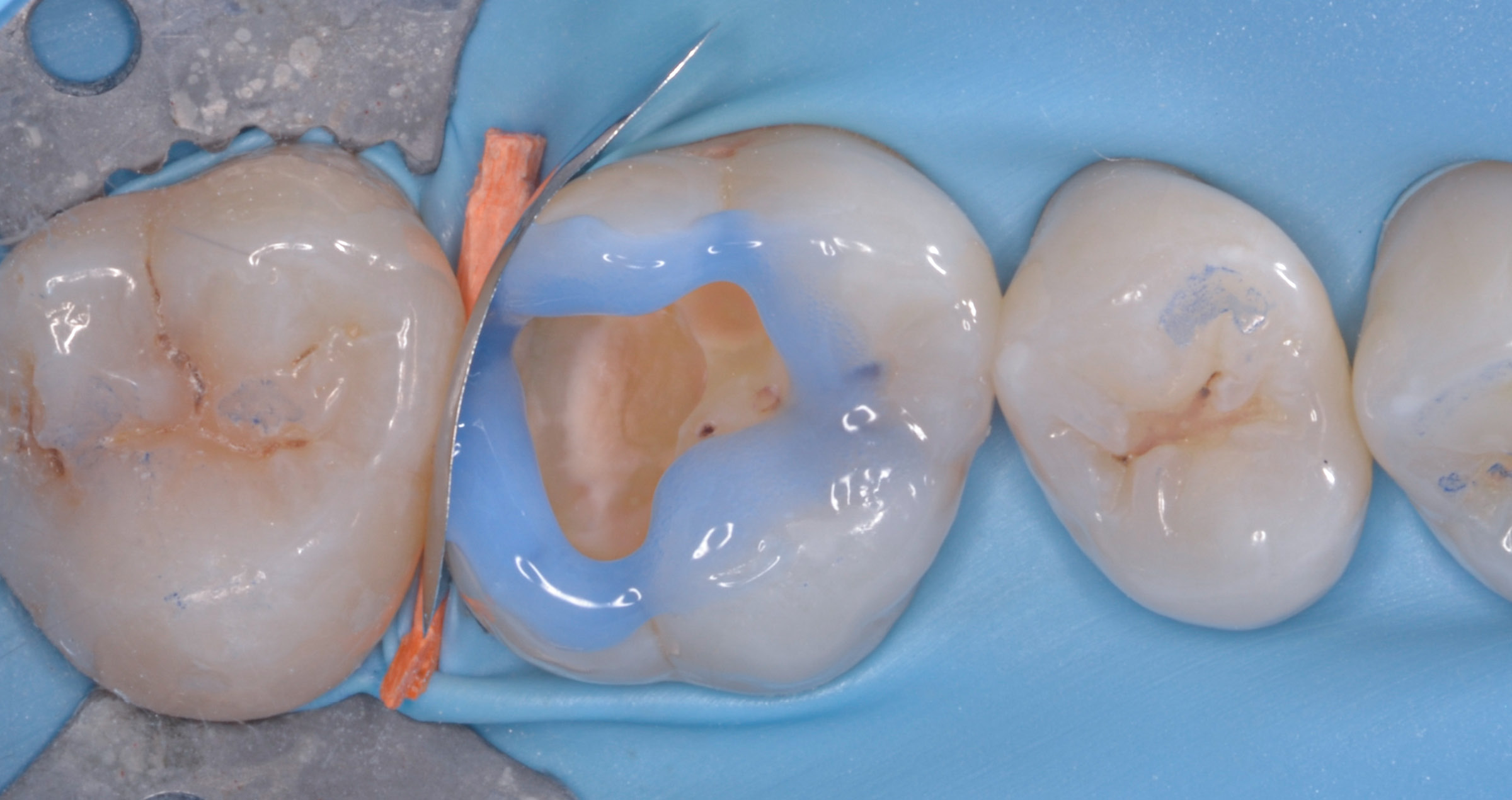
Fig. 2: Selektiv emaljetsning med fosforsyra.


Fig. 3: Applicering av universaladhesiv + luftblästring


Fig. 4. Resincementet appliceras inuti kronan och kronan sätts på plats.


Fig. 5. Punktvis härdning


Fig. 6. Avlägsnande av överskott och slutlig ljushärdning.


Fig. 7. Behandlingsresultat vid 1-årskontroll.


Fördelarna med selektiv adhesiv cementering

Förutom den eftersträvansvärda (långtids)ökningen i bindningstyrka som man uppnår genom att använda selektiv adhesiv cementering för en del av den preparerade tandytan, erbjuder metoden en del andra fördelar. Jämfört med de cementeringssystem som består av flera steg är protokollet förenklat, eftersom ingen separat primer behövs. Ljushärdning av adhesiven är inte nödvändigt så länge man använder sig av det rekommenderade systemet. Behovet av användning av kofferdam är eliminerat vid användning av den metoden för selektiv adhesiv cementering. På så sätt minskar tiden i tandläkarstolen och patientens bekvämlighet ökar.


Sammanfattning

Beroende på indikation, kliniska variabler och individuella preferenser kan användare av resincement, som PANAVIA™ SA Cement Universal, välja den metod som sannolikt ger det bästa kliniska resultatet. Det är den här flexibiliteten och det breda utbudet av användningsområden som gör den här innovativa produktkategorin i sanning universell. Med färre komponenter som ska användas underlättar universalprodukter strömlinjeformning och standardisering av kliniska procedurer, och det blir färre förpackningar som ska lagras, vilket underlättar beställning och lagerhållning.


Tandläkare:

LORENZO BRESCHI


Professor Lorenzo Breschi undervisar i protetik och dentala material vid universitetet i Bologna. Han är aktivt delaktig i forskning på de ultrastrukturella aspekterna av emalj och dentin. Han är tidigare president för The Academy of Dental Materials (ADM), ordförande för European Federation for Conservative Dentistry (EFCD), ordförande för Dental Materials Group (IADR), ordförande för Italian Academy for Conservative Dentistry (AIC), ordförande för International Academy of Adhesive Dentistry (IAAD).


Referenser

1. Cowen M, Cunha S, Powers JM. Novel Cement Bond Strength to Multiple Substrates. DENTAL ADVISOR Biomaterials Research Center, Biomaterials Research Report, Number 132 – June 16, 2020.
2. Patel N, Anadioti E, Conejo J, Ozer F, Mante F, Blatz M. Bond Strength of Different Self-Adhesive Resin Cements to Zirconia” (2021). Dental Theses. 62. https://repository.upenn.edu/dental_theses/62.
3. Yoshihara K, Nagaoka N, Maruo Y, Nishigawa G, Yoshida Y, Van Meerbeek B. Silane-coupling effect of a silane-containing self-adhesive composite cement. Dent Mater. 2020 Jul;36(7):914-926.
4. Irie M, Tokunaga E, Maruo Y, Nishigawa G, Yoshihara K, Nagaoka N, Minagi S, Matsumoto T. Shear bond strength of a resin cement to CAD/CAM Blocks for molars. P-2, 37th Annual Meeting of the Japanese Society of Adhesive Dentistry 2018.
5. Ohara N. Bonding strength of resin cement containing silane coupling agent to dentin or core resin. Results presented at the 150th meeting of the Japanese Society of Conservative Dentistry.
6. Breschi L, Josic U, Maravic T, et al. Selective adhesive luting: A novel technique for improving adhesion achieved by universal resin cements. J Esthet Restor Dent. 2023;1-9. doi:10.1111/jerd.13037.


KATANA™ Zirconia Troubleshooting Handbook

Available Now!


Have you ever produced a zirconia restoration without obtaining the outcome you expected? Most dental technicians probably have. The bad thing is that aesthetic flaws such as colour deviations or white spots and technical issues like cracks can occur and require remakes. The good thing is, however, that those problems are usually avoidable. Do you know how?


We would like to show you – in the new KATANA™ Zirconia Troubleshooting Handbook we just completed. On 30 pages, this handbook summarized the most important facts about modern zirconia-based restorative materials, their selection, the KATANA™ Zirconia line-up and, finally, possible aesthetic or technical problems, their origin and solutions to overcome them.


Let us assume that the beauty of your restorations is limited due to a lack of translucency. By looking up the problem “lack of translucency”, you will find a compact, well-structured overview of possible causes and adequate solutions. The recommendations include selecting dry instead of wet milling, abstaining from sandblasting the restoration surface and checking of the sintering parameters, quality of the sintering beads and position of the restoration in the furnace. For more details, problems and solutions, download the handbook!


DOWNLOAD NOW


Universal resin cement: did you ever think about a third application mode?

Article by Prof. Lorenzo Breschi


Fewer bottles, more choices – this is possibly the shortest way to describe the category of universal resin cements. Being self-adhesive, these dual-cure resin-based cements allow for a single-component workflow without the need for separate tooth or restoration primers in many clinical situations. The bond strength obtained in this way is usually high enough to provide for a stable bond between the tooth and the restoration in a wide range of indications. However, it is slightly lower than that achieved with conventional resin cement systems consisting of several components (typically tooth primer, resin cement and restoration primer).


Apart from the self-adhesive application mode, universal resin cements may be combined with additional system components to increase the bond strength to tooth structure or the restorative material, respectively. This opens up new possibilities with regard to the product’s use: depending on the required or desired bonding performance, the universal resin cement may be applied alone or in combination with a tooth primer, a restoration primer or both components. In addition, hybrid concepts become feasible, as explained in this article that focuses on PANAVIA™ SA Cement Universal (Kuraray Noritake Dental Inc.) as an example.


Self-adhesive luting: for many indications

PANAVIA™ SA Cement Universal is a dual-cure universal resin cement that is indicated for a wide range of applications when used in the self-adhesive mode. The bond established to restorative substrates (including silicate ceramics) is high without the use of a separate primer or silane1-4. This is due to two different adhesive monomers contained in the formulation – the Original MDP Monomer and the LCSi Monomer (a long carbon-chain silane coupling agent responsible for a strong chemical bond to silicate ceramics). Hence, it is possible to use the resin cement without any additional component applied on the side of the restoration – even in cases with a lack of retention and consequently high bond-strength requirements.


A strong bond to enamel and dentin is also obtained in the self-adhesive mode. In certain situations, however, it may be useful to further increase the bond strength to tooth structure with the aid of a tooth primer.


Adhesive luting: for challenging situations

The tooth primer recommended for PANAVIA™ SA Cement Universal is CLEARFIL™ Universal Bond Quick (Kuraray Noritake Dental Inc.). Its application is recommended whenever a user feels that the treatment would benefit from an extraordinarily strong and durable chemical bond, i.e. in particularly challenging situations with insufficient mechanical retention. The effectiveness of this measure has been confirmed in an in-vitro study conducted in Japan, in which the 24-hour micro-tensile bond strength to dentin was increased significantly by the application of the universal adhesive5. When a separate adhesive is used, however, the importance of a completely dry working field increases. The reason is that the moisture tolerance of resin cements is usually higher than that of adhesives. Consequently, the application of a rubber dam is highly recommended.


Selective adhesive luting: for short abutments and subgingival margins

For situations in which proper isolation of the working field with a rubber dam is difficult, a third application option is available and proposed by a group of Italian researchers: Selective Adhesive Luting. In this case, CLEARFIL™ Universal Bond Quick is applied solely to those parts of the prepared tooth that allow for proper moisture control, while relying on the self-adhesive functionality of PANAVIA™ SA Cement Universal in areas where it is challenging to obtain the desired dry working field. Situations which are predestined for this technique are abutment teeth with a subgingival preparation margin and particularly short abutment teeth (that hinder the placement of a rubber dam).


The effectiveness of the selective adhesive luting technique has been verified in an in-vitro study that compared the three adhesive strategies – self-adhesive luting, full adhesive luting and selective adhesive luting – with the aid of shear bond strength testing6. The results of the tests show that users are able to enhance the bond strength of PANAVIA™ SA Cement Universal to dentin and enamel by applying the adhesive to a part of the tooth surface only. For the cementation system consisting of PANAVIA™ SA Cement Universal and CLEARFIL™ Universal Bond Quick, the full adhesive and the selective adhesive approach led to similar outcomes.


For situations in which proper isolation of the working field with a rubber dam is difficult, a third application option is available and proposed by a group of Italian researchers: Selective Adhesive Luting.


RECOMMENDED STEPS FOR SELECTIVE ADHESIVE LUTING

Fig. 1. Tooth preparation.


Fig. 2. Selective etching of the enamel with phosphoric acid etchant.


Fig. 3. Application of the universal adhesive + air-drying.


Fig. 4. Crown placement after application of the resin cement into the crown.


Fig. 5. Tack-curing.


Fig. 6. Excess removal and final light curing.


Fig. 7. Treatment outcome at a recall after one year.


Benefits of selective adhesive luting

Apart from the desired (long-term) increase in bond strength achieved by applying a separate adhesive to a part of the or the whole prepared tooth surface, the technique offers additional benefits. Compared to multi-step cementation systems, the protocol is simplified as no separate restoration primer is needed. Light-curing of the adhesive is not required as long as the user stays within the recommended system. And in contrast to the full adhesive approach requiring rubber dam placement, the need for this step is eliminated in the selective adhesive approach. In this way, the chair-time is reduced and patient comfort increased.


Conclusion

Depending on the indication, clinical variables and individual preferences, users of universal resin cements like PANAVIA™ SA Cement Universal may select the technique that is likely to deliver the best clinical outcomes. It is this flexibility and the generally wide range of applications that makes the innovative product category truly universal. With fewer components to be used, universal materials facilitate the streamlining and standardization of clinical procedures, while with fewer bottles to be stored, they help staff gain control over order and storage management as well.


Dentist:

LORENZO BRESCHI


Prof. Lorenzo Breschi is Professor of Restorative Dentistry and Dental Materials at the University of Bologna. He is actively involved in research on the ultrastructural aspects of enamel and dentin. He is Past-President of the Academy of Dental Materials (ADM), President-Elect of the European Federation of Conservative Dentistry (EFCD), President-Elect of the Dental Materials Group IADR, President-Elect of the Italian Academy of Conservative Dentistry (AIC), President-Elect of the International Academy of Adhesive Dentistry (IAAD).


References

1. Cowen M, Cunha S, Powers JM. Novel Cement Bond Strength to Multiple Substrates. DENTAL ADVISOR Biomaterials Research Center, Biomaterials Research Report, Number 132 – June 16, 2020.
2. Patel N, Anadioti E, Conejo J, Ozer F, Mante F, Blatz M. Bond Strength of Different Self-Adhesive Resin Cements to Zirconia” (2021). Dental Theses. 62. https://repository.upenn.edu/dental_theses/62.
3. Yoshihara K, Nagaoka N, Maruo Y, Nishigawa G, Yoshida Y, Van Meerbeek B. Silane-coupling effect of a silane-containing self-adhesive composite cement. Dent Mater. 2020 Jul;36(7):914-926.
4. Irie M, Tokunaga E, Maruo Y, Nishigawa G, Yoshihara K, Nagaoka N, Minagi S, Matsumoto T. Shear bond strength of a resin cement to CAD/CAM Blocks for molars. P-2, 37th Annual Meeting of the Japanese Society of Adhesive Dentistry 2018.
5. Ohara N. Bonding strength of resin cement containing silane coupling agent to dentin or core resin. Results presented at the 150th meeting of the Japanese Society of Conservative Dentistry.
6. Breschi L, Josic U, Maravic T, et al. Selective adhesive luting: A novel technique for improving adhesion achieved by universal resin cements. J Esthet Restor Dent. 2023;1-9. doi:10.1111/jerd.13037.


Dental Zirconia and why dentists should get involved in prosthetic material decisions

Importance of high-quality prosthodontic treatment

High-quality treatment is probably the most important element on the road to patient satisfaction. During every single appointment, the patient wants to feel well cared for by a skilled professional, while chair time and the number of appointments should be reduced to the necessary minimum. This implies that, in the context of prosthodontic treatment, a restoration needs to fit perfectly straight away and be stable over time to avoid remakes and extra appointments.


But how is it possible to deliver perfectly fitting, high-quality restorations every time? Among the potential sources of problems with the quality of indirect restorations are common mistakes made in the dental office or laboratory, communication issues and – often overlooked – the use of low-quality dental zirconia.


Zirconia restorations – contemporary and aesthetic dental solution

More than 20 years ago, zirconia entered the dental market as a substitute to metal used for the production of crowns and bridges. Both materials – zirconia and metal – were usually combined with a layer of porcelain, forming porcelain-fused-to-metal or porcelain-fused-to-zirconia restorations. In the years to come, several leading manufacturers of dental zirconia (like Kuraray Noritake Dental Inc.) focused on material improvements. These improvements gradually transformed the original white-opaque framework material into a ceramic material with tooth-like optical and excellent mechanical properties. The latest zirconia variants, available with different levels of translucency and strength, are regarded as the best-possible treatment option in a wide variety of patients and indications by many dental professionals around the world. One reason is that they require just a small or no layer of porcelain. Another is that, with low minimum wall thicknesses, they allow for conservative tooth preparations, while they offer a favourable long-term behaviour – that is, if a high-quality material is used.


Quality differences of dental zirconia

Zirconia product quality may vary depending on various factors such as the purity of the raw materials (not only zirconia, but also alumina and yttria as well as colour additives etc.), the exact chemical composition, the grain size and particle distribution. Every step in the blank production process – from powder compilation to blank pressing and pre-sintering – has an impact on the final quality, i.e., the mechanical and optical properties of the zirconia, too.


Common issues resulting from low-quality zirconia

Whenever there is something wrong with the optical properties of a restoration – with its translucency, its overall colour or the transition from one layer to the next in blanks with a multi-layered colour structure – the problem will become apparent after the final sintering procedure in the laboratory. A remake might be necessary and eventually, the blemish might be identified during try-in, which will most likely have a negative impact on patient satisfaction. The same is true for cases with an improper fit resulting from inhomogeneities in the material structure, for example. What is even worse is an inferior biocompatibility, surface quality, edge stability, flexural strength or fracture toughness. These issues are identifiable only with testing equipment that is very expensive and usually not available in dental laboratories. This means that flaws of this kind usually remain undetected until a real clinical problem – like gingival recession, increased plaque accumulation, higher wear or an early failure that might cause pain and discomfort – occurs.


Overview of potential problems and clinical consequences for patients

Potential problem of substandard zirconia

Potential clinical consequence for patients

Limited biocompatibility

Gingival recession / inflammation

Inhomogeneities in the material structure

Improper fit of the restoration
Surface cracks
Aesthetic issues (translucency, colour) > remakes

Inferior surface quality: porous surface

Increased plaque accumulation > periodontal problems, caries

Inferior surface quality: rougher surface texture

Harder to smoothen and polish > high antagonist wear

Low edge stability

Marginal cracks and fractures > early repair or replacement

Low flexural strength

Decreased longevity > early replacement

Limited fracture toughness

Fractures / limited longevity > early replacement


Certification and standardization of dental zirconia

That is why specialists have developed an ISO standard (ISO 6872:2015), which describes in-vitro tests every manufacturer of dental zirconia used in Europe or the United States needs to conduct in order to pass FDA approval and receive the CE mark. The described tests are used to measure the flexural strength and fracture toughness, the two probably most important properties determining the long-term behaviour of restorations produced from the material. Every material used in Europe or the United States needs to have passed these tests.


How to avoid placing low-quality dental zirconia restorations in your patients’ mouths

Hence, everyone using this certified dental zirconia should be safe and able to minimize material-related risks. However, the increasing popularity of dental zirconia has attracted the attention of companies trying to have their share of the cake without undergoing the necessary efforts needed to safeguard a high product quality and pass certification. Non-certified products that lack CE marking have one thing in common: they definitely put your business and patient at risk.


So how is it possible to safeguard zirconia product quality from the dental office? The good news is that there are some simple rules available. By following them, you are able to avoid placing counterfeit or low-quality dental zirconia restorations in your patients’ mouths.


Avoid placing counterfeit or low-quality dental zirconia restorations in your patients’ mouths.


Three golden rules to provide your patients with high-quality zirconia restorations:

  • Only order restorations that are produced domestically or in a region with the same standards as your own: restorations produced in dental laboratories in China, for example, need to fulfil lower standards (thus lacking CE mark) and might not live up to your expectations.
  • Talk to your (domestic) laboratory partner about the source of their zirconia: make sure they are purchasing zirconia from leading manufacturers (e.g. Kuraray Noritake Dental Inc.) via authorized distributors or sellers they really know.
  • Avoid deals that are too good to be true: low prices may be tempting, but the final cost of a treatment may be even higher than usual when complications occur.


Long-term impact for patients when using certified zirconia restorations

Making certain that the zirconia placed in your dental office fulfils the highest possible quality standards is an important contribution to long-term patient satisfaction. Even if the initial cost of high-quality zirconia restorations is somewhat higher than that of inferior-quality work, the overall investment may be lower when the restorations last longer and remakes are eliminated. Your happy patients are likely to be more engaged and compliant with oral hygiene regimens as well as loyal, with a positive impact on your reputation and patient base.


Research zirconia options and choose for products from certified manufacturers

If you would like to go one step further, you can even compare certified zirconia variants from several manufacturers and detect differences. Kuraray Noritake Dental Inc., for example, is one of very few manufacturers of dental zirconia carrying out the whole manufacturing process including raw material production in-house. In this way, the company is able to control every step in the procedure and provide for an outstanding product quality – no matter which material variant is selected. With the available portfolio consisting of KATANA™ Zirconia UTML (ultra translucent multi-layered), KATANA™ Zirconia STML (superior translucent multi-layered) and the high-translucent multi-layered HTML PLUS as well as YML (with additional strength and translucency gradation), it is possible to cover virtually every indication.


Self-etch adhesive with antibacterial properties

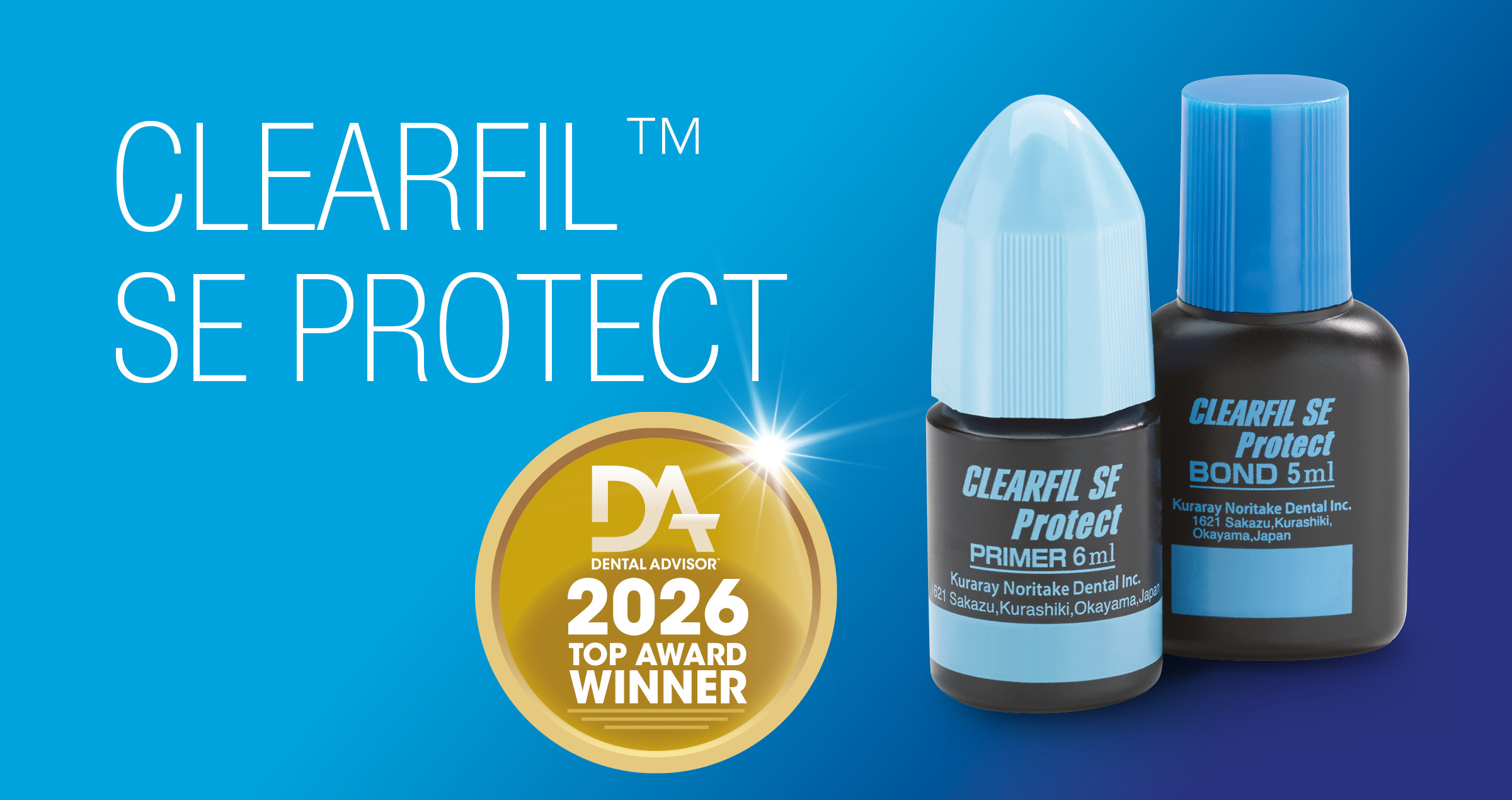
AWARD WINNING PRODUCT

For the 10th time, the self-etch adhesive CLEARFIL™ SE Protect has been named a Top Product by DENTAL ADVISOR, which announced its choices for dental materials and equipment found by its evaluators to deliver the best practice-based performance in its JAN/FEB 2024 issue.


The publication included CLEARFIL™ SE Protect among honorees in the Bonding Agent Self-Etch category, noting attributes that go far beyond providing a reliable bond.


ABOUT THE PRODUCT

This outstanding toolbox staple is built on the same system of the gold-standard adhesive CLEARFIL™ SE BOND, so it offers excellent bond strength for enamel and dentin. Its MMP inhibiting effect protects the bond from degradation over time and hence supports bond durability. Beyond that reliable bond, it provides an antibacterial cavity-cleansing effect that eliminates the need for the use of a separate cavity cleanser, thanks to the proprietary MDPB monomer it contains.


In short, CLEARFIL™ SE Protect offers you following benefits:

  • Fast and simple procedure with low technique sensitivity
  • Excellent bond strength for enamel and dentin
  • Long-lasting bond strength
  • Antibacterial cavity-cleansing effect
  • Virtually no post-operative sensitivity


It is also a highly versatile adhesive system that can be used in the context of:

  • Placing direct restorations
  • As a cavity sealant
  • For the treatment of hypersensitive or exposed root surfaces


Among the extended indications are cementation with composite resin cement or core build-up with self- or dual-cured resin materials in combination with CLEARFIL™ DC Activator.


EVALUATION

Its attributes are reflected in the study findings and comments of DENTAL ADVISOR’s editors and consultants, who assessed it over a six-week period during which over 150 restorations were placed. It received a 98% clinical rating by consultants using a 1-5 rating scale.


The practitioners evaluating the product found no post-operative sensitivity. Among their observations mentioned in the online DA report were the fact that the primer and bond wet the tooth evenly. They also considered the antibacterial and fluoride releasing qualities “an added benefit”. On the topic of sensitivity, they mentioned that “CLEARFIL SE Protect is effective in the reduction of sensitivity when placed on areas of recession or similar areas of sensitive tooth structure.”.


ABOUT DENTAL ADVISOR

The Top Product or Preferred Product Awards conferred by US-based DENTAL ADVISOR were initially introduced to help busy practitioners make sense of the numerous new solutions indicated for less invasive techniques, standardised or simplified procedures, ultimately to achieve better outcomes regularly.


DENTAL ADVISOR conducts its practice-based clinical evaluations and product performance tests shortly after product launch, and publishes results annually online to help potential users identify high-quality new dental materials and determine which among them are best suited to fulfill their individual requirements.


For more information visit the website of DENTAL ADVISOR: www.dentaladvisor.com


Flowable Injection Technique: how to polish composite restorations?

By Dr. Michał Jaczewski


The durability of a composite restoration depends on many factors. Some are outside the practitioner's sphere of influence and are strongly patient-related. For example toothbrush and toothpaste type, brushing technique, diet, stimulants and hygiene habits all have an impact on the restoration. Following the best finishing and polishing protocol, however, is fully up to the dentist.


Correct polishing aims to remove the oxygen inhibition layer and produce a smooth restoration surface. A properly polished restoration will not absorb staining agents from food, drink or stimulants that lead to discoloration of the composite, ensuring a long-lasting aesthetic result of the restoration.


Polishing the composite is a process to which special attention should be paid. It consists of several steps and principles:


  • The use of finishing discs allows for a smooth restoration surface , excess composite to be removed and the final shape to be given to the restoration. It is important to remember to work on a moistened surface with a maximum speed of 5,000-10,000 rpm on a 1:1 dental handpiece.


  • Polishing rubbers, there are many types and shapes on the market. One of the most universal designed specifically for composite is TWIST™ DIA for Composite. This is a set consisting of two rubbers with different levels of abrasion. The first (dark blue) is used for preliminary rough polishing, the second (light-blue) for final gloss and smoothness. It should be remembered that working with these tools should be carried out on a dry surface without water cooling. Dry working carries the risk of irritating the dental pulp, so the working speed should be limited to between 5000 and 10000 rpm and excessive pressure must be avoided.


  • The next step is to use a diamond polishing paste with a gradient of 1 to 5 microns. The use of a polishing goat wheel brush is recommended to use with this paste. The type of brush is not important, however, don’t use rigid bristles that could scratch the composite. Using the polishing brush and polishing paste make it possible to reach places which are difficult to access, such as the cervical area and proximal surfaces. In addition to this step, a celluloid diamond containing abrasive strip is used to polish the proximal surfaces more precisely. In order not to alter the contact points, low abrasive (Super Fine) strips should be used.


  • A further step to increase the gloss of the restoration and to protect it against discoloration is an aluminum oxide paste with a cotton polishing brush. The use of such paste, originally dedicated to ceramics, results in an exceptionally smooth surface and a high gloss of the restoration surface. This step is carried out in a dry environment at a maximum speed of 5,000-10,000 rpm.


In all techniques, thus also the Flowable Injection Technique, the level of polishing influences the durability and the optical and aesthetic properties of the restoration. This key step in tooth restoration should therefore devoted sufficient time. Composites are characterized by different compositions and amounts of fillers which not only influence their properties, but also the ease with which they can be polished. In some cases, the procedure has to be repeated several times to achieve a "mirror effect". CLEARFIL MAJESTY™ ES Flow is a composite which is very easy to polish to a high shine level, despite its high filler content. Specially adapted rubbers, brushers and pastes enable easy creation of a smooth surface thereby contributing to a lasting result.


BEFORE


AFTER


3-YEARS RECALL


MAKE THEM SHINE, MAKE THEM SMILE!


Would you like to know more about Flowable Injection Technique? Read the insightful and inspirational interview with Dr. Michał Jaczewski.


Dentist:

MICHAL JACZEWSKI


Michał Jaczewski graduated from Wroclaw Medical University in 2006 and today runs his private practice in the city of Legnica, Poland. He specializes in minimally invasive dentistry and digital dentistry and is the founder of the Biofunctional School of Occlusion. Here he lectures and runs workshops with focus on full comprehensive patient treatments.


Universal cement that offers a strong, durable bond and needs no separate primer

AWARD WINNING PRODUCT

DENTAL ADVISOR has once again recognized PANAVIA™ SA Cement Universal as a Top Product in the category of Indirect Restoratives. This dual-cure, fluoride-releasing, radiopaque self-adhesive resin cement adheres to virtually all substrates — including lithium disilicate — in a single-step procedure without the need for a separate primer or silane. It also offers easy, gingival-friendly removal of excess cement and requires no refrigeration.


SCIENCE BEHIND THE PRODUCT

It is because PANAVIA™ SA Cement Universal combines two innovative technologies in a single product that a strong and durable bond can be achieved in a single step. The silane-coupling agent, LCSi monomer, establishes a durable, chemical bond with porcelain, lithium disilicate, and composite resin; and the original MDP monomer provides for chemical reactiveness with zirconia, dentin and enamel.


WIDE INDICATION RANGE

Due to its unique chemistry PANAVIA™ SA Cement Universal represents a convenient, versatile, and efficacious single solution to practitioners’ everyday cementation needs for a wide variety of indications, including cementation of crowns/bridges, inlays/onlays, posts, splints, and even adhesion bridges.


EVALUATION

In its commendation, DENTAL ADVISOR stated, “As tested in DENTAL ADVISOR Laboratories, PANAVIA™ SA Cement Universal with an incorporated silane primer had exceptional initial bond strength to dentin, lithium disilicate, and zirconia.”


The benefits and quality of PANAVIA™ SA Cement Universal were further reflected in the findings and feedback of the 31 clinical evaluators who tested the cement during 516 applications. They praised its ease of use, handling characteristics, and aesthetics, and gave it an overall clinical rating of 96 percent. Among their comments: "Has an ideal film thickness and flows well.”,  "You can use this in a moist environment with no issues.” , and “Excess cement peels right away from the margin.”


ABOUT DENTAL ADVISOR

The Top Product and Preferred Product Awards conferred by US-based DENTAL ADVISOR were initially introduced to help busy practitioners make sense of the numerous new solutions indicated for less invasive techniques and standardised or simplified procedures, ultimately, to achieve better outcomes regularly.


DENTAL ADVISOR conducts its practice-based clinical evaluations and product performance tests shortly after product launch. It publishes results annually online in its January/February issue to help potential users identify high-quality new dental materials and determine which among them are best suited to fulfil their individual requirements.


Universal adhesive for durable bond with quick and simple procedure

AWARD WINNING PRODUCT

CLEARFIL™ Universal Bond Quick has again been named a 2024 Preferred Product in the bonding agent category by DENTAL ADVISOR, which also recognized this universal bonding agent as an Editor’s Choice bonding agent. DENTAL ADVISOR’S roster of award-winning dental materials and equipment found by its evaluators to deliver the best practice-based performance was announced in its JAN/FEB 2024 issue.


ABOUT THE PRODUCT

CLEARFIL™ Universal Bond Quick is a single-bottle, fluoride-releasing universal adhesive suitable for all direct and indirect restorations using a quick and simple technique. The material utilizes Rapid Bond Technology, merger of MDP monomer with new hydrophilic amide monomers, which creates a strong chemical bond to hydroxyapatite. Thanks to the amide monomer, which is highly hydrophilic, the adhesive quickly penetrates dental tissue to create a fast chemical bond to dentin and enamel, eliminating the need for prolonged scrubbing application of the adhesive into the dentin and long waiting times. After curing, the innovative amide monomer forms a moisture-resistant cross-linked polymer network.


APPLY AND PROCEED

Despite its ease of use and reduced application and wait times, there is no tradeoff in terms of bond strength: CLEARFIL™ Universal Bond Quick delivers a bond that is moisture-resistant, stable, and durable.


VERSATILITY OF APPLICATION

This fast and versatile agent bonds directly to dentin, enamel, metals, zirconia and lithium disilicate restorative materials, and is appropriate for bonding direct and indirect restorations; it can also be used for total-etch, selective-etch, or self-etch methods.


CLEARFIL™ Universal Bond Quick is also an excellent choice when doing post cementation and core build-up procedures with CLEARFIL™ DC CORE PLUS . It can be used for treatment of the post surface, be it fiber or metal, but also for the tooth surface preparation before cementing with PANAVIA™ SA Cement Universal, for example. Universal excellence at its best!


REMARKS FROM EVALUATORS

practitioners evaluating the CLEARFIL™ Universal Bond Quick commented on its ease in dispensing and placement, viscosity, suitability for all bonding procedures, and convenience. Among their remarks were: "Quick application and cure time is ideal for situations where isolation is difficult, especially in a high moisture area.", "Loved that it is compatible with dual/self-cured resins and that it can be used in self-cure mode with CLEARFIL™ DC Activator”. and “It is compatible with virtually any bonding procedure."


ABOUT DENTAL ADVISOR

Honors such as Editor’s Choice and Preferred Product that are conferred by US-based DENTAL ADVISOR were introduced to help busy practitioners make sense of the numerous new solutions indicated for less invasive techniques and standardised or simplified procedures, ultimately to achieve better outcomes regularly.

DENTAL ADVISOR conducts its practice-based clinical evaluations and product performance tests shortly after product launch, and publishes results annually online to help potential users identify high-quality new dental materials and determine which among them are best suited to fulfill their individual requirements.


Omfattande dental restaurering med digitalt arbetsflöde

ARTIKEL AV MICHAEL BRAIAN, SPECIALIST I ORAL PROTETIK, DDS, CDT, PHD


Digitala framsteg har revolutionerat tandvården genom effektiv och precis vård1. Intraorala skanners ersätter traditionella avtrycksmetoder och möjliggör virtuella modeller för behandlingar som implantatinstallation, ortodonti och protetik2. Scan- bodies underlättar digitalisering av implantatstödd protetik och CAD/CAM förbättrar design och framställning av protetiska ersättningar3. Fräsning och 3D-printing erbjuder snabbhet, precision och möjlighet att utforma komplexa strukturer vid framställningen av dental protetik4. Dessa uppfinningar lovar en ljus framtid för både professionen och patienter.


Användningen av digital teknologi i tandvården har medfört betydande framsteg i tandvården1. Denna fallstudie beskriver en omfattande restaurering med hjälp av digitalt arbetsflöde som innefattar extraktion, proteser, implantatkirurgi, intraoral skanning, 3D-printade try-ins och framställning av den färdiga, monolitiska ersättningen.


EXTRAKTION AV SKADADE TÄNDER


Det första steget i patientens behandling bestod i extraktion av mycket skadade tänder. Det var en nödvändig åtgärd i syfte att eliminera infektion och obehag samt för att förbereda den orala kaviteten för därpå följande moment i rehabiliteringsprocessen. Proteserna används för att underlätta den guidade kirurgin5. Efter extraktion fick patienten lämpliga instruktioner för postoperativ vård och en period för läkning tilläts innan man gick vidare med nästa moment. (Fig.1)


Fig. 1: Allvarligt skadade tänder före extraktion.


PROTESER UNDER LÄKNINGSTIDEN


Under läkningstiden, som uppskattningsvis varade i sju månader, fick patienten avtagbara proteser för att ersätta de extraherade tänderna. Syftet med den temporära lösningen är att patienten ska kunna upprätthålla oral funktion, utseende och självförtroende under läkningsperioden, men också att de orala vävnaderna blir förberedda för kommande implantatkirurgin6.


IMPLANTATKIRURGI


I överkäken installerades sex implantat, i underkäken fyra. (Fig.2). Beslutet baserades på patientens individuella behov och orala anatomi. Studier visar att antalet implantat som krävs för optimalt stöd och stabilitet är beroende av en mängd faktorer, bland annat benkvalitet och benkvantitet, implantatets position och protetikens utformning7. Av tidigare forskning framgår att sex implantat i överkäken och fyra i underkäken är tillräckligt för att ge adekvat stöd för fullkäksprotetik och ger en hög lyckandefrekvens och patientnöjdhet7. Dessutom kan färre implantat minska tiden och kostnaderna för kirurgi, samt minska risken för de komplikationer som förknippas med installation av flera implantat. Utifrån detta specifika patientfall bedömdes därför detta som lämpligt.