Powder ceramics redesigned for micro-layering

Case by MDT Andreas Chatzimpatzakis


EFFECTIVE FINISHING OF A ZIRCONIA FRAMEWORK WITH CERABIEN™ MiLai


‘Modern concepts are based on the smart combination of different materials.’

The implant-prosthetic restoration of edentulous jaws requires more than functional stability. Modern concepts are based on the smart combination of different materials. In the presented case, a titanium bar provides for a stable connection between the implants, while a zirconia framework offers the necessary strength and fracture resistance. Both materials stand out due to their high biocompatibility, the good soft tissue attachment properties of zirconia being particularly noteworthy. The real challenge in the selected type of restoration, however, begins with aesthetic realization. Micro-layering techniques promise efficiency combined with aesthetics – but this often comes with compromises, e.g. in terms of handling. With CERABIEN™ MiLai (Kuraray Noritake Dental Inc.), a new path is now being taken here.

MDT Andreas Chatzimpatzakis, Athens


The rapid development of all-ceramic framework materials such as zirconia and lithium disilicate calls for new veneering concepts. CERABIEN™ MiLai (Kuraray Noritake Dental inc.) picks up on the strengths of classic powder ceramics and optimizes them for the requirements of micro-layering – the reinterpretation of a classic, so to speak. The basis for this is provided by synthetic feldspathic ceramic technology, in which Kuraray Noritake Dental Inc. has decades of experience. The company developed its first synthetic dental ceramics back in the late 1980s – expertise that is now also used in the low-fusing porcelain system CERABIEN™ MiLai for micro-layering. Unlike natural feldspathic ceramics, the synthetic version provides for consistent properties without the need to adjust the formulation due to altering raw materials. This is reflected in stable coefficients of thermal expansion and a uniform particle distribution; prerequisites for aesthetic results and colour stability. Another decisive advantage is evident during the firing process: the special composition prevents micro-movements in the material during firing, which can lead to inhomogeneities and gray haze effects with conventional ceramics. This property is indispensable for micro-layering, as any irregularity, no matter how small, would be immediately visible in the thin ceramic layers.


INITIAL SITUATION

The presented case illustrates the technical procedure around the restoration of an edentulous maxilla. The prosthetic work was produced after the placement of six implants and their osseointegration. In consultation between the practice team around prosthodontist Dr Georgios Siavikis, laboratory technician and patient, the decision was made to restore the teeth with a bar-supported bridge construction. A CAD/CAM-fabricated titanium bar (Atlantis® BridgeBase, Dentsply Sirona) formed the basis. Due to its high manufacturing precision, it would provide for a passive fit of the reconstruction on the implants. The material of choice for the superstructure was zirconia, which was to be finalized using micro-layering due to the patient’s high aesthetic demands.


Fig. 1. Computer-aided design of the implant bar.


Fig. 2. Computer-aided design of the zirconia framework – transparent view revealing the BridgeBase.


Fig. 3. Computer-aided design of the zirconia superstructure.


WHY CHOOSE MICRO-LAYERING?

The decision to opt for micro-layering is based on tangible benefits: In addition to economic efficiency, the thin layer of porcelain provides a high level of safety and significantly reduces the risk of chipping. In addition, the ultra-thin porcelain layer enables a controlled approach to porcelain layering. However, we must be aware that with micro layering, around 80 to 90 percent of the restoration’s final shape is already created in the framework. Although this leads to maximum control during layering, it also places high demands on the selected framework material. With porcelain layer thicknesses in the micro range, the zirconia needs to be convincing in terms of aesthetics and mechanical strength. For our long-span bridge construction, we chose KATANA™ Zirconia HTML Plus (Kuraray Noritake Dental Inc.), a material that combines high strength with natural translucency. We deliberately opted for a disc in the shade A2 – one shade lighter than the desired target shade A3. This strategic choice enabled us to play with the colours during layering and implementation of the internal stain technique.

Fig. 4. Multi-Layered zirconia with a high strength and translucency used as a framework material.


WHY OPT FOR INTERNAL STAINING?

The internal stain technique is no longer an insider tip, but is one of the supreme all-ceramic disciplines. Kuraray Noritake Dental Inc. has perfected the technique over decades together with dental technicians. We particularly value the technique in our day-to-day laboratory work, as it gives restorations an individual touch that sets them apart from standard work. Unlike superficial stains, the internal staining creates a characterization from inside the restoration with a lively play of colours that unfolds naturally in changing light conditions.


Until now, it has been challenging to combine the advantages of the internal stain technique with those of micro-layering. Although we have put various approaches to a test and detected solutions that do work, we have always come up against technical limitations. The combination of both techniques – micro-layering and internal staining – places special demands on the porcelain system: It needs to allow characterization from the inside and at the same time be able to be processed in ultra-thin layers. CERABIEN™ MiLai closes the previous gap. As a low-fusing porcelain system, it combines the advantages of the internal stain technique with the efficiency of micro-layering. Being a powder-based porcelain system, the product may be used in the familiar way – only much more efficiently. The possibility of adjusting the consistency to individual needs gives us the precise control we need for minimal layer thicknesses. With 16 porcelains and 15 internal stains, the system remains manageable without compromising on design.

Fig. 5. The low-fusing porcelain CERABIEN™ MiLai is designed for micro-layering on zirconia and lithium disilicate.


FRAMEWORK PREPARATION

After milling and sintering, the framework in its cut-back design was processed systematically: The first step was to treat the zirconia surface with a diamond bur – under water cooling to avoid microcracks. In this phase, it is also possible to incorporate fine anatomical details such as mamelon structures or marginal ridges. To provide for a strong bond, the surface of the framework was then sandblasted with 50 μm alumina particles. In this context, it is important to apply a moderate pressure that conditions the surface without weakening the structure. Framework preparation was completed with ultrasonic cleaning for ten minutes. All this created the basis for a reliable bond between the framework and the veneering porcelain.

Fig. 6. Zirconia framework prepared for finishing.


INTERNAL STAINING MEETS MICRO-LAYERING

Next on the list was internal staining. It is often the smallest details that have the biggest effect – be it a prominent marginal ridge or an intensive cervical colouration. Sometimes, however, less is more. It is often a question of the dental technician’s artistic sensitivity and – of course – the individual situation. In this case, Tissue Red was used for a vivid effect of the gingival areas, while a combination of Cervical 2, Incisal Blue 1 and Mamelon 2 was chosen to give the teeth a three-dimensional depth effect. Subsequent micro-layering was carried out selectively: CCV2 in the cervical area, Creamy Enamel for lighter margins and LT1 for the desired standard translucency and opalescence. The gingiva was given its natural depth through a sophisticated interplay of shades and shapes – with a base of Tissue 1 and 5, while the keratinized areas were given their characteristic appearance with a 60/40 mixture of Tissue 1 and TX.

Fig. 7. Internal staining: Targeted application of the stains on the framework as the basis for the three-dimensional colour effect of the restoration.


Fig. 8. Micro-layering: Ultra-thin layering on the characterized framework gives the restoration its final shape and light dynamics.


What followed was the first bake. CERABIEN™ MiLai is a low-fusing porcelain. Its firing temperature of 740 °C is not only the enabler of its compatibility with various framework materials (zirconia, lithium disilicate), but also reduces the risk of distortion or micromovements causing unwanted changes in shape during repeated firings. Minor shape corrections were made after the first bake. In this step, a particular advantage of powder ceramics in micro-layering becomes apparent: they allow for precise modelling of even the finest structures and textures. The surface structure with its lively textures gives the work its natural appearance. The final glaze firing leveraged the self-glazing effect of CERABIEN™ MiLai.

Fig. 9. Occlusal view of the finished restoration.


Fig. 10. Clearly visible internal colour characteristics.

Fig. 11. Lively surface structure with interplay of concave and convex areas both in the area of the teeth and the gingiva.


Fig. 12. Restoration in situ; edentulous maxilla with an implant-based zirconia bridge. The patient’s wishes regarding individual aesthetics are fulfilled thanks to internal staining and micro-layering (CERABIEN™ MiLai) – effectively, economically and safely.


EFFECTIVE AND FLEXIBLE

In the case presented, we combined the internal stain technique with micro-layering to fulfil the patient’s individual aesthetic demands. However, CERABIEN™ MiLai is just as suitable for micro layering without internal staining – fast, straightforward and effective. And this is precisely the advantage of this system: it offers the flexibility to go your own way – tailored to the respective situation and to the framework material (zirconia and lithium disilicate), eliminating the need to store different porcelain systems. Particularly useful: CERABIEN™ MiLai can be combined with the tried-and-tested CERABIEN™ ZR porcelain. Thanks to the low firing temperature, areas that have already been layered remain stable in shape and colour. The high versatility makes CERABIEN™ MiLai our preferred system for effective micro-layering. MiLai YOUR WAY – we have found our way with it and know that we have the right solution for every case.


‘THE HIGH VERSATILITY MAKES CERABIEN™ MILAI OUR PREFERRED SYSTEM FOR EFFECTIVE MICRO-LAYERING.’


Dental technician:

ANDREAS CHATZIMPATZAKIS


Andreas Chatzimpatzakis graduated from the Dental Technology Institute (TEI) of Athens in 1999. During his studies, he followed a program at the Helsinki Polytechnic Department of Dental Technique, where he trained on implant superstructures and all-ceramic prosthetic restorations. Since the year 2000, he has been running the ACH Dental Laboratory in Athens, Greece, specialized on refractory veneers, zirconia and long-span implant prosthesis. In 2017, Andreas travelled to Japan, where he was trained by Hitoshi Aoshima, Naoto Yuasa and Kazunabu Yamanda to become an Official Trainer for Kuraray Noritake Dental Inc.


Made for lithium disilicate

Case by Andreas Chatzimpatzakis


PUTTING CERABIEN™ MiLai TO THE TEST

Nowadays, lithium disilicate and highly translucent variants of zirconia are among the most popular ceramic materials processed in the dental laboratory. Their favourable optical properties allow us to opt for simplified finishing approaches such as micro-layering in a great majority of cases. For dental technicians, this means a reduction of the manual workload without compromising the quality of the outcomes.


Recently, Kuraray Noritake Dental Inc. has launched a new set of porcelains and internal stains specifically developed for micro-layering, which works not only with zirconia but also with lithium disilicate. The CERABIEN™ MiLai line-up consists of 16 porcelains and 15 internal stains, which – the manufacturer claims – are easy to select and manage. As the more universal approach with a single porcelain for silicate ceramics and zirconia enables us to streamline inventory management and to standardize layering procedures, we decided to test the new product in the laboratory setting. The following case is a documentation of the first try of CERABIEN™ MiLai on lithium disilicate (Amber Press, HASS Bio).


Fig. 1. Anatomically reduced crown structures made of lithium disilicate (Amber Press LT, shade A2).


Fig. 2. Crowns after the application of CERABIEN™ MiLai Value Liner 1 generally used to increase the value of lithium disilicate restorations, followed by wash firing.


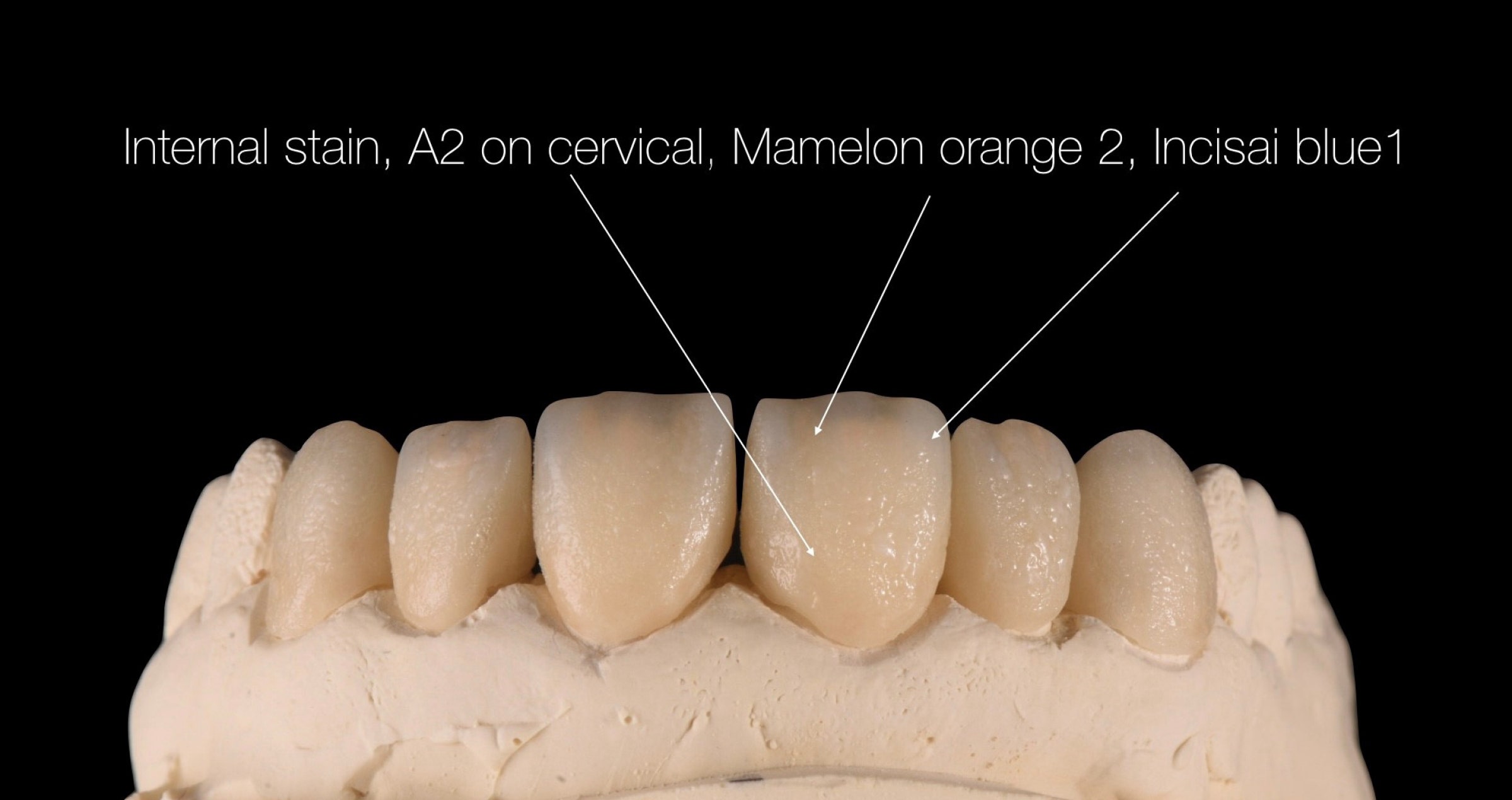
Fig. 3. Situation after CERABIEN™ MiLai Internal Stains: A+ is applied in the cervical area to enhance the chroma, and Mamelon Orange 2 alternating with Incisal Blue 1 are used to imitate the mamelon structures in the incisal area.


Fig. 4. Crowns after the first and second bake with CERABIEN™ MiLai Porcelain LT1 applied in the cervical area to add translucency and opalescence to the enamel, E2 mixed with ELT (ratio: 60/40) to optimize the body area and LTx to boost the incisal translucency and opalescence.


Fig. 5. Restorations finalized with CERABIEN™ ZR FC Paste Stain Clear Glaze and external stains to add some lines incisally.


Fig. 6. Lateral view of the restorations.


Fig. 7. Natural translucency and internal optical structure revealed in transmitted light.


CONCLUSION

The outcome achieved at the first go with the CERABIEN™ MiLai line-up for micro-layering on lithium disilicate is very satisfying. I feel that we can achieve great results with this system, which is indeed easy to select and manage. The reduced number of shades clearly comes in handy especially for beginners, who will be grateful for the option of creating lifelike restorations with fewer decisions to be made, and less effort involved compared to conventional ceramic line-ups. The possibility of standardizing and streamlining procedures by using a single porcelain system for all micro-layering procedures is likely to improve the life of every dental technician.


Dental technician:

ANDREAS CHATZIMPATZAKIS


Andreas graduated from the Dental Technology Institute (TEI) of Athens in 1999. During his studies he followed a program at the Helsinki Polytechnic Department of Dental Technique, where he trained on implant superstructures and all ceramic prosthetic restorations. As of 2000, he is running the ACH Dental Laboratory in Athens, Greece, specialized on refractory veneers, zirconia and long span implant prosthesis.


In 2017 Andreas visited Japan where he trained under the guidance of Hitoshi Aoshima, Naoto Yuasa and Kazunabu Yamanda and become International Trainer for Kuraray Noritake Dental Inc..


A new bright smile

Clinical case by Kostia Vyshamirski, DT


Digital technologies for computer-aided imaging, planning, design and manufacturing are valuable tools that support dental technicians in their daily work. Combined with traditional approaches, those digital tools allow us to assess, shape, and finally meet or even exceed patient expectations. The case below is a perfect example: We produced 20 natural bleach restorations made of KATANA™ Zirconia YML and CERABIEN™ ZR Porcelains and of Noritake Super Porcelain EX-3 (Kuraray Noritake Dental Inc.), respectively.


INITIAL SITUATION

The aim was to create a new white, still natural smile. It was decided to replace the old crowns in the maxilla and to create a wider and brighter smile by adding laminate veneers in the maxilla and mandible.


Fig. 1. Initial clinical situation.


DIGITAL SMILE DESIGN AND DIAGNOSTIC WAX-UP

Digital smile design and a diagnostic wax-up are great tools for analysing and planning a new smile. Intraoral scans and portrait photographs of the patient served as the basis for the development of the ideal proportions and shapes. Once the virtual designing of the new restorations was completed (software: exocad DentalCAD), the wax-up models were printed. By transferring the wax-up into the patient’s mouth via an index or matrix, it is possible to test and assess the outcome intraorally. In this step, aesthetic and functional analysis should be the priority.


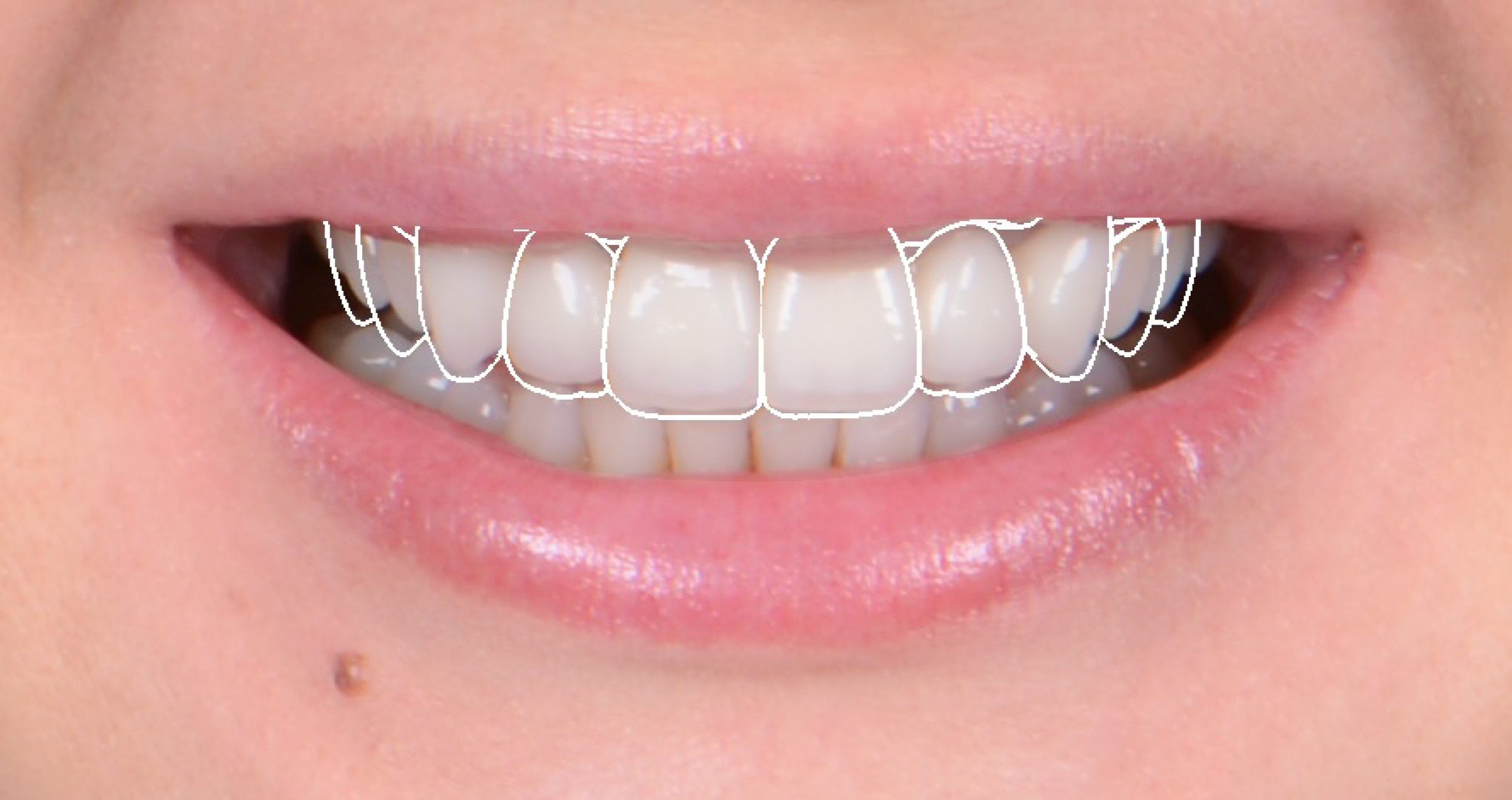
Fig. 2. Digital smile design based on an image.


Fig. 3. Computer-aided waxing up in the maxilla based on the smile design.


Fig. 4. Completed virtual wax-up for the maxilla and mandible.


Fig. 5. Wax-up transferred into the patient’s mouth for functional and aesthetic analysis.


Fig. 6. The planned new bright smile.


ALVEOLAR PRINTED MODEL

Precise and functional models are essential for the production of accurate, aesthetic restorations in the laboratory. The model builder software SHERAeasy-model (SHERA) and a 3D printer (ASIGA MAX UV, Asiga) were used to produce solid models and alveolar models with full gingival information and removable dies.


Fig. 7. Alveolar models printed in gingiva and tooth colours.


Fig. 8. Printed models with articulator holding plates and removed dental elements.


REFRACTORY DIE DUPLICATION AND ARTICULATION

The refractory die technique allows for the production of extremely thin-walled restorations and hence supports minimal tooth structure removal. For this reason, the approach seems best suited for all previously untreated teeth without major defects. The printed dies were duplicated in the refractory die material before mounting the models in the articulator for a transfer of the maxillomandibular relations.


Fig. 9. Process of duplicating printed dies in the refractory material.


Fig. 10. Articulating the models.


PRODUCTION OF THE RESTORATIONS

To achieve the best results, it is essential to select the best material for each specific situation. For the production of the crown frameworks used to restore the six maxillary anterior teeth, KATANA™ Zirconia YML in the shade NW appeared to be the ideal option. Their intaglio surfaces were treated with Esthetic Colorant (Kuraray Noritake Dental Inc.) in the shade OPAQUE to prevent a shining through of the discolourations found on some of the prepared teeth. After sintering of the frameworks in a high-temperature sintering furnace (Nabertherm) at 1,550° C, CERABIEN™ ZR porcelains were applied as illustrated below. For the creation of natural effects inside the restorations – i.e. between the layers of porcelain –, we use the internal stain technique (ILS). This procedure is very predictable and fast. Each step during porcelain build-up and staining was recorded with photos to monitor the entire process and to capture all information on the individual protocol steps. The porcelain veneers (Super Porcelain EX-3, Kuraray Noritake Dental Inc.) were produced on the refractory dies to restore the premolars in the maxilla and central incisors to second premolars in the mandible.


Fig. 11. Refractory dies and zirconia frameworks on the model.


Fig. 12. Wax-up on the model with removable dies.


Fig. 13. KATANA™ Zirconia YML frameworks on the model.


Fig. 14. Opacity control with CERABIEN™ ZR Opacious Body OB White to optimise brightness.


Fig. 15. Application of CERABIEN™ ZR Body NW0.5 to restore the cores of the crowns using a silicon index.


Fig. 16. CERABIEN™ ZR porcelains E1 and LTX applied to create translucency at the incisal edge.


Fig. 17. Prepared surface ready for internal stain application.


Fig. 18. Creation of mamelons and incisal effects with CERABIEN™ ZR internal stains.


Fig. 19. Adaptation of the incisal third with a mamelon mixture of internal stain shades (white, mamelon orange and bright).


Fig. 20. Outcome of the internal staining procedure.


Fig. 21. CERABIEN™ ZR Luster application using the Interchangeable Build-up Technique, application of CCV1 in the cervical area.


Fig. 22. CERABIEN™ ZR porcelains ELT1 used for the core, LTX for the incisal area and ELT3 for the ridges.


Fig. 23. Restorations finished by carving, hand polishing and a self-glaze bake.


Fig. 24. Layering map summarizing the porcelain layering procedure.


FIT ASSESSMENT AND TRY-IN

When the production process was complete, the restorations were placed on the solid models (printed master casts). This step is very important to validate the passive fit and contact points of each crown and veneer. Afterwards, it was time to try-in and check all the restorations intra-orally.


Fig. 25. Final restorations ready for fit assessment.


Fig. 26. Maxillary restorations: Checking of the passive fit and contacts on the model.


Fig. 27. Mandibular restorations: Checking of the passive fit and contacts on the model.


Fig. 28. Intra-oral try-in of the crowns.


DEFINITIVE PLACEMENT AND FINAL OUTCOME

Refractory ceramic veneers were cemented via an adhesive protocol using a resin-based composite. Opaque glass ionomer cement was used to cement the zirconia crowns.


At the recall about one month after restoration placement, we saw amazing gum conditions and a happy, healthy and beautiful smile!


Fig. 29. Image taken right after definitive placement of the crowns.


Fig. 30. Nice pink-and-white aesthetics achieved with the all-ceramic restorations.


Fig. 31. Amazing gum conditions found one month after restoration placement.


Fig. 32. Happy, healthy and beautiful smile.


Fig. 33. The new smile exceeds expectations.


Dentists:

KOSTIA VYSHAMIRSKI

OMAR AZZAWI

Kanstantsin started his dental technician career in 2014. His speciality is aesthetic prosthetic porcelain works. Kanstantsin is an experienced user of KATANA™ Zirconia and Noritake porcelains. He owns his lab in Riga, Latvia.

Dr. Omar Azzawi, Vienna, Austria


The new way of micro-layering

Case by Andreas Chatzimpatzakis


With CERABIEN™ ZR, Kuraray Noritake Dental Inc. offers a whole porcelain portfolio for the finishing of restorations based on zirconia. Originally developed for complex layering techniques, the synthetic feldspathic porcelain powders, liquid ceramics, internal and external stains allow for the creation of beautiful dental artwork. We love to work with the system as it offers consistent handling and mechanical properties, allowing us to produce predictable outcomes.


However, the complexity of the system with its huge number of different shades can pose challenges to less experienced users. This complexity is further increased when different substructure materials are used, as CERABIEN™ ZR works exclusively on zirconia, so that users would need to select and manage a second porcelain system when opting for a lithium disilicate framework, for example.


For dental technicians who would like to keep it smartly simple, the new CERABIEN™ MiLai line-up is certainly a great solution. Specifically developed for micro-layering on pre-shaded, highly translucent substructure materials such as lithium disilicate or a latest-generation zirconia, CERABIEN™ MiLai porcelains and internal stains may be applied in a thin (micro-) layer on restorations with a small (vestibular) cut-back. Just like CERABIEN™ ZR, the new system is based on synthetic feldspathic porcelain delivering consistent properties, but the line-up is reduced to 15 internal stains and 16 porcelains. As the CERABIEN™ MiLai has a firing temperature of 740 °C (1,364 °F), it works on oxide ceramics like zirconia, but also on reinforced silicate ceramics like lithium disilicate*.

*The material should have CTE value within 9.5~11.0×10⁻⁶ /K (50~500 °C)


Consequently, the system may be used as the universal porcelain system for micro-layering on aesthetic ceramics. With its slim portfolio, it fits the philosophy of creating impressive restorations with fewer components, layers and bakes very well, as demonstrated in two different case examples below.


VENEERS BASED ON LITHIUM DISILICATE

Fig. 1. Six anterior veneers made of lithium disilicate (Amber Press LTA2 HASS Bio), designed with a slight cut-back to create the space needed for micro-layering.


Fig. 2. Restorations after the application of CERABIEN™ MiLai Value Liner 1 followed by wash firing and internal staining. This type of porcelain increases the value of lithium disilicate restorations. By staining the core, we control the chroma and add some internal characteristic effects. In this case, we added Cervical 2 to the marginal area and characterized the incisal third with Cervical 2 and Incisal Blue 1 & 2.


Fig. 3. First porcelain layer consisting of CERABIEN™ MiLai LT1 applied to the cervical, ELT1 to the mesial third and TX to the incisal third before …


Fig. 4. … and after the first bake.


Fig. 5. Application of internal stains for special effects like cracks, intense chroma etc.


Fig. 6. Second porcelain layer consisting of CERABIEN™ MiLai LT1 applied to the canines as well as the cervical third of the central and lateral incisors, while the middle and incisal third of the four incisors is individualised with LTx.


Fig. 7. Finished restorations on the master cast.


Fig. 8. Lateral view of the restorations highlighting their natural surface texture.


ANTERIOR BRIDGEWORK BASED ON ZIRCONIA

Fig. 1. KATANA™ Zirconia HTML Plus (A2 shade) structure immediately after milling.


Fig. 2. Appearance of the substructure after sintering.


Fig. 3. High translucency of the zirconia with the applied CERABIEN™ MiLai stains and porcelains on teeth and gingiva.


Fig. 4. Palatal view of the individualized restoration before the firing process.


Fig. 5. Restoration ready for try-in.


CONCLUSION

The two different cases confirm that CERABIEN™ MiLai works very well on lithium disilicate and zirconia. Despite the reduced number of stains and shades, it is possible to imitate most of the shades and individual effects found in natural teeth, which are important for lifelike outcomes. Hence, the new material is worth a try for everyone who prefers standardized and simplified procedures.

Dental technician:

ANDREAS CHATZIMPATZAKIS


Andreas graduated from the Dental Technology Institute (TEI) of Athens in 1999. During his studies he followed a program at the Helsinki Polytechnic Department of Dental Technique, where he trained on implant superstructures and all ceramic prosthetic restorations. As of 2000, he is running the ACH Dental Laboratory in Athens, Greece, specialized on refractory veneers, zirconia and long span implant prosthesis.


In 2017 Andreas visited Japan where he trained under the guidance of Hitoshi Aoshima, Naoto Yuasa and Kazunabu Yamanda and become International Trainer for Kuraray Noritake Dental Inc..


Welcome to the future of ceramic layering

Cases by DT Ioulianos Moustakis and MDT Andreas Chatzimpatzakis


Producing dental restorations that are not recognizable as such – this is probably the ultimate goal of every dental technician. For a long time, pursuing this goal was complicated by core materials whose optical properties were very different from those of natural teeth. The dark metal or opaque zirconia substructures had to be masked by applying multiple layers of intensively coloured ceramic powders, topped by more translucent porcelains imitating the enamel.


The rise of modern, tooth-coloured core materials such as lithium disilicate and zirconia has changed the game. With a core that is highly aesthetic, translucent and close to the final shade, it became much easier to produce a restoration that is virtually indistinguishable from the adjacent teeth. The thickness of the porcelain layer decreased as did the number of shades to be combined and necessary bakes to be conducted. The use of the existing porcelain systems for the new micro-layering techniques posed several new challenges: those systems originally developed for opaque zirconia were indicated for the more translucent zirconia core materials, but usually not for lithium disilicate. Moreover, the complexity of the systems made their use unnecessarily complicated for inexperienced users.


Consequently, Kuraray Noritake Dental Inc. developed a new porcelain system for micro layering on zirconia and lithium disilicate core materials. The portfolio of CERABIEN™ MiLai, which refers to micro-layering and the Japanese word for future (mirai), consists of 15 internal stains (13 tooth colours including Bright to boost the translucent and Fluoro to boost the fluorescent effect, and two tissue colours) and 16 porcelains (12 tooth porcelains and four tissue porcelains). Hence, it enables dental technicians to implement a modernized version of the original Internal Live Stain Technique developed by Hitoshi Aoshima in the early 1990s in a porcelain layer of minimal thickness.


The following demo cases are used to show how to achieve lifelike aesthetic restorations based on aesthetic zirconia and on lithium disilicate. Illustrating each step, the cases allow users to anticipate how much time and effort can be saved compared to traditional layering techniques.


CASE 1

MAXIMALLY SIMPLE APPROACH ON LITHIUM DISILICATE

In this case, the idea was to restore the six maxillary anterior teeth in a simple way. The selected core material for the planned veneers was Amber Press (HASS Bio) LT in the shade B1. The lithium disilicate restorations were pressed with a micro cut-back and their fit was checked on the model, followed by surface texturing, sandblasting and steam cleaning [Fig. 1a]. When the veneers are milled instead of pressed, the procedure is the same. After that, the restorations are ready for the application of the CERABIEN™ MiLai internal stains for characterization of the core. In order to achieve the desired result, it is critical to mix the selected stains with the internal stain Bright responsible for a translucent effect. The chroma map for internal staining is shown in figure 1b, the outcome of the procedure in figure 1c. Subsequently, the veneers were built up to their final anatomy with selected CERABIEN™ MiLai Porcelains [Fig. 1d] to imitate the enamel and create a window effect. In this approach, simple layering and a single bake are sufficient to create the desired restoration. After glazing with Clear Glaze, finishing of the restorations was accomplished with paper-abrasive cones, a rubber polisher and polishing paste. The outcome is shown in figure 1e.


Fig. 1a. Pressed lithium disilicate veneers after surface optimization (grinding), sandblasting and steam cleaning on the model.


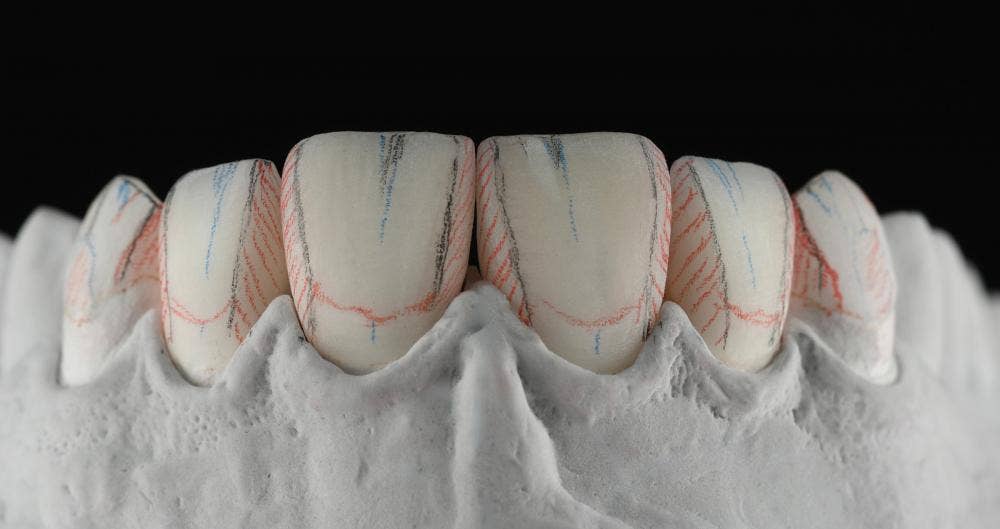
Fig. 1b. Chroma map for the application of CERABIEN™ MiLai Internal Stains to the lithium disilicate surface. We selected B+ (red colour) for the cervical area. For the proximal and middle incisal areas, Incisal Blue 1 & 2 (gradient blue colour) were applied and incisally in the middle, we chose Cervical 2 (orange colour). Tip: all internal stains were mixed with Bright and IS Liquid.


Fig. 1c. Appearance of the veneers after the application of CERABIEN™ MiLai Internal Stains.


Fig. 1d. CERABIEN™ MiLai Porcelains applied on top of the internal stains: LT1 is used for the cervical area (red) and a mixture of TX and E2 (30:70 ratio) for the middle and the incisal third.


Fig. 1e. The final restorations after glazing with Clear Glaze and mechanical polishing using paper-abrasive cones, a rubber polisher and Pearl Surface Z (Kuraray Noritake Dental Inc.).

Images courtesy of Andreas Chatzimpatzakis.


CASE 2

ADVANCED APPROACH ON LITHIUM DISILICATE

In order to imitate a more complex inner colour structure with mamelons, different levels of translucency and more individual effects, a slightly more complex micro-layering approach was selected. Again, the core was produced using Amber Press in the LT variant and the shade B1. After pressing and fitting on the model, we reduced the incisal third to create space for the transparent porcelain [Fig. 2a]. Subsequently, an extremely thin layer of CERABIEN™ MiLai Porcelain adding translucency to the enamel surface (TX) was applied in the incisal third of the veneers [Fig. 2b]. In this way, it is possible to create an optimally translucent basis for the application of the internal stains. The first bake was conducted and the surfaces were sandblasted as well as steam cleaned to create the conditions needed for internal staining [Figs. 2c and 2d]. The chroma map for and outcome of the internal stain application are shown in figures 2e and 2f. Afterwards, a final layer of CERABIEN™ MiLai Porcelain was applied [Fig. 2g]. All four incisors received a layer of LTx to add ultimate translucency and opalescence to the enamel, while LT1 was the material of choice in the cervical third of the canines, where LTx completed the layer in the other areas. As LT1 is slightly less translucent and opalescent, a natural effect is obtained in this way. The outcome obtained after glazing and mechanical polishing is shown in Figure 2h.


Fig. 2a. Lithium disilicate veneers reduced for the advanced layering procedure involving more porcelains and bakes.


Fig. 2b. Thin layer of TX applied to the incisal third of the restorations to boost the translucency in this area.


Fig. 2c. Appearance of the veneers after the first bake.


Fig. 2d. Ceramic surfaces after sandblasting and steam cleaning.


Fig. 2e. Chroma map for the application of the internal stains. Cervical 2 was used for the cervical third, Incisal Blue 2 for the proximal regions and Mamelon Orange 2 for the mamelons. As mentioned before, the selected internal stains were mixed with Bright.


Fig. 2f. Appearance of the veneers after the bake of the applied CERABIEN™ MiLai Internal Stains.


Fig. 2g. Final build-up to reach the desired shape of the veneers. LTx is the only material applied to the central and lateral incisors, while the canines are built up with LTx in the incisal and middle and LT1 in the cervical third.


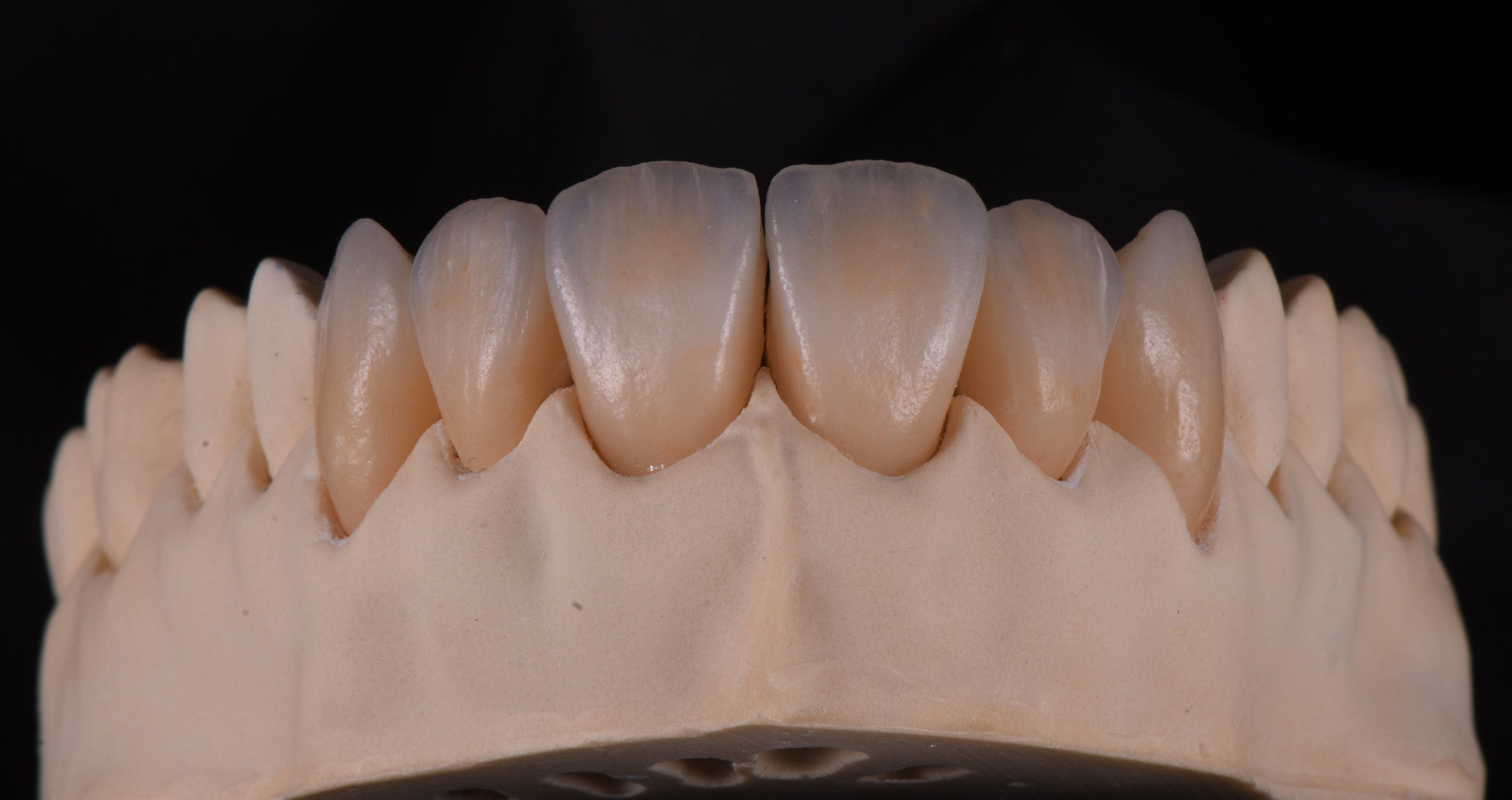
Fig. 2h. Glazed and polished veneers on the model.

Images courtesy of Andreas Chatzimpatzakis.


CASE 3

ADVANCED APPROACH WITH GUM AREAS ON ZIRCONIA

In this case, a highly complex ten-unit bridge with gum parts in the anterior region had to be produced. The selected framework material was KATANA™ Zirconia HTML Plus (Kuraray Noritake Dental Inc.), which offers a multi-layered colour structure, an optimized translucency and the high flexural strength required for long-span bridges. The restoration was milled in an anatomically reduced design and the surface texture was optimized with rotating instruments before sintering [Fig. 3a]. After the final sintering procedure, the restoration had a favourably high translucency in the incisal region and a natural shade structure [Figs. 3b and 3c]. In the first step of the micro-layering procedure, the application of the CERABIEN™ MiLai Internal Stains was planned and carried out [Figs. 3d and 3e]. Subsequently, different layers of CERABIEN™ MiLai Porcelain were applied. The images 3f to 3h reveal which shades were combined and illustrate the procedure, while the outcome before and after the last bake is shown in Figures 3i to 3k. In the next step, the gum areas were completed using the CERABIEN™ MiLai tissue porcelains Tissue 4, 5 and 6 in the order and locations described in Figures 3l to 3o. In the final layer, Tissue 1 was mixed with ELT1 to imitate the labial frenulum and with LTx to create a smooth transition to the natural gingiva [Figs. 3p and 3q]. The final restoration is shown in Figure 3r.


Fig. 3a. Milled restoration after surface texturing.


Fig. 3b. Shade and translucency of the sintered zirconia restoration.


Fig. 3c. Highly translucent bridge on the model.


Fig. 3d. Chroma map for the application of CERABIEN™ MiLai Internal Stains.


Fig. 3e. Applying a mixture of Bright, Salmon Pink and Tissue Pink to the gum area.


Fig. 3f. Application of CERABIEN™ MiLai E2 to add translucency to the structure.


Fig. 3g. Application of Tx and a mixture of Tx and CCV-2 to individualize the cervical and incisal areas while boosting the translucency of the enamel in the middle and incisal third.


Fig. 3h. Adding a final layer of LT1 for additional translucency and opalescence.


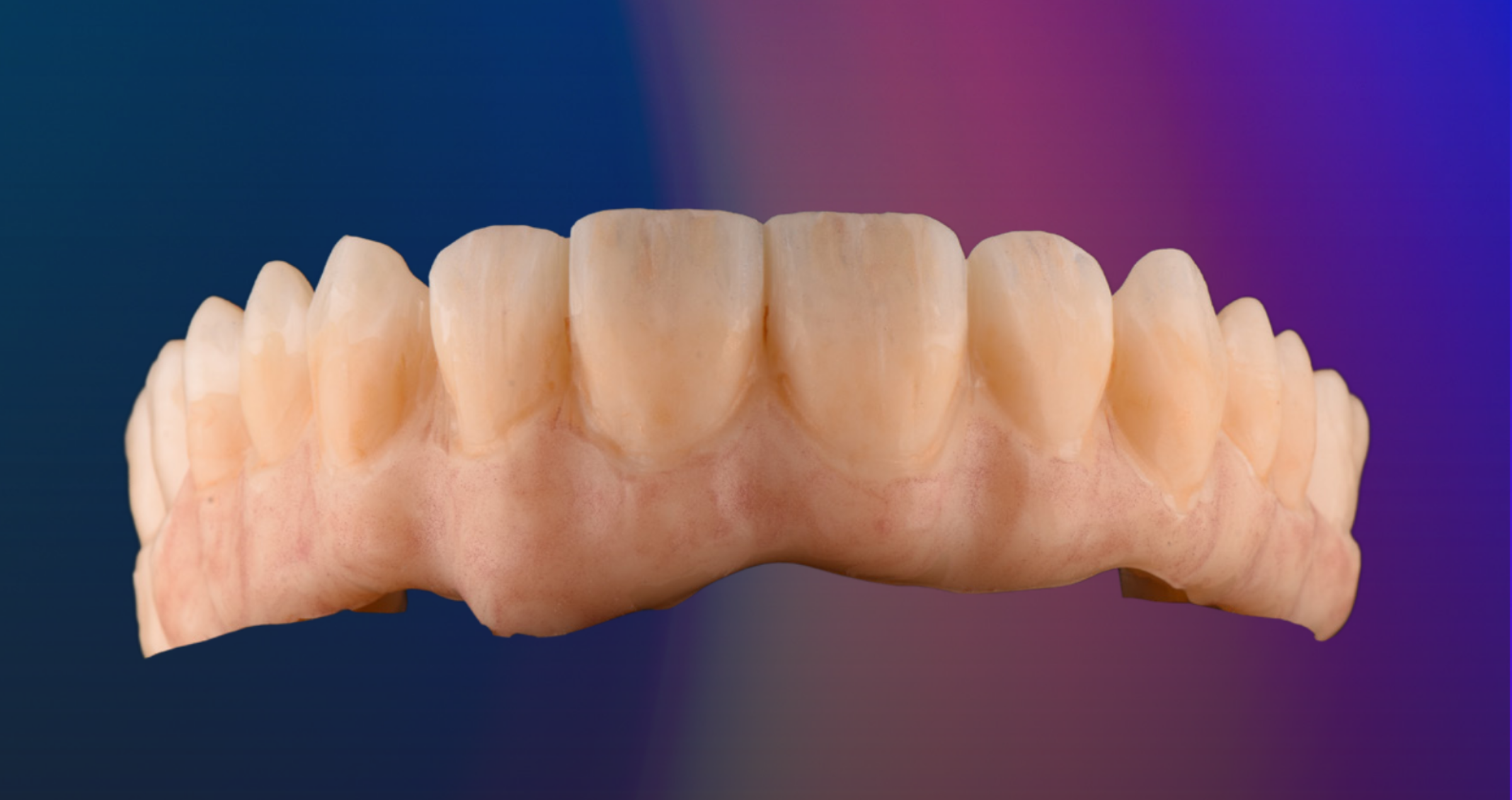
Fig. 3i. Appearance of the ten-unit bridge before the bake – labial view.


Fig. 3j. Appearance of the ten-unit bridge before the bake – palatal view.


Fig. 3k. Appearance of the ten-unit bridge after the bake.


Fig. 3l. Application of small amounts of Tissue 5 …


Fig. 3m. … covered with a layer of Tissue 6 alternating with Tissue 5.


Fig. 3n. Following another bake, Tissue 5 is applied in the proximal areas.


Fig. 3o. How to combine Tissue 6 and Tissue 4 in the next layer.


Fig. 3p. How to complete the tissue layer with Tissue 1, locally mixed with ELT1 or LTx.


Fig. 3q. Restoration before the final bake.


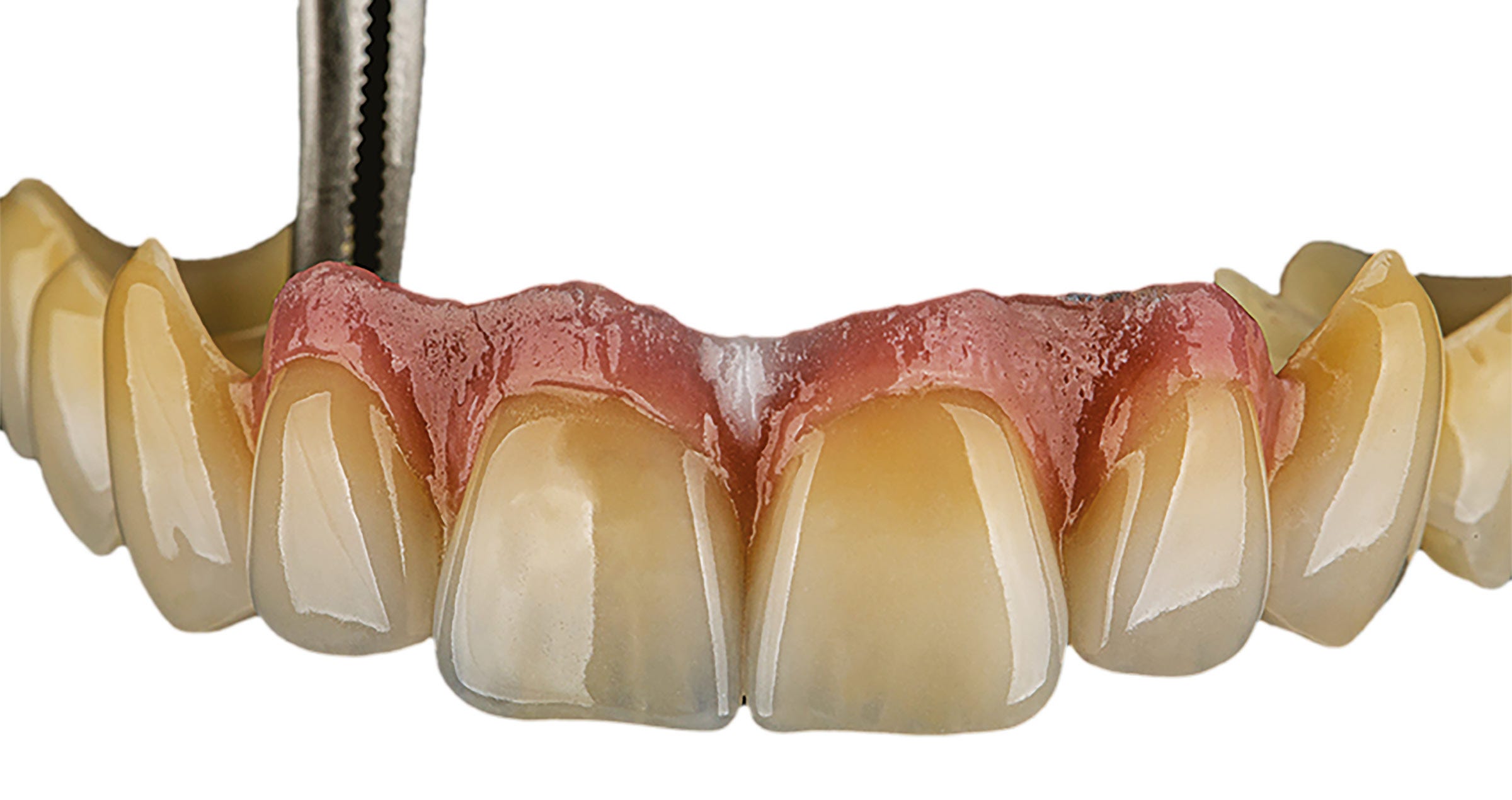
Fig. 3r. Final ten-unit bridge ready for placement.

Images courtesy of Ioulianos Moustakis.


ABOUT THE AUTHORS

DT IOULIANOS MOUSTAKIS
Germany


Dental Technician/Photographer
1985 - 1987 Studied at the School of Dental Technology (SBIE) in Athens / Greece
1997 - 1998 Master school in Berlin
2007 - Education as Maxillofacial prosthetic technician (IASPE)
2010 - Advanced education in Functional diagnosis temporomandibular joint
2011 - 2012 Curriculum implant prosthetics for dental technicians (DGZI)
2013 - 2014 Education as a graphic designer at the Media Design Hochschule (MDH) in Berlin
2015 - 2017 Education as a photographer at the Photocentrum of the Gilberto Bosques VHS Friedrichshain-Kreuzberg
2014 - 2016 - 2018 Further training at Noritake/Kuraray in Japan
2019 - International Instructor Noritake/Kuraray
2019 - Certified trainer of Teeth Morphology carving (Osaka Ceramic Training Center)
1998 - Implant Dental Studio - Athens/Greece
2010 - Zirkler & Moustakis Dental Technology - Falkensee/Germany
2020 - Giuliano Dentaldesign - Falkensee/Germany

Publications in Dental Journals
2014 - 5/2014 Dental Dialogue/Germany
2015 - 10/2015 The International Journal of Dental Technology/Japan
2018 - 1/2018 Cosmetic Dentistry/Germany
2018 - 4/2018 Zahntechnik Zeitung/Germany
2018 - 5/2018 Das Dental Labor/Germany
2018 - 5/2018 Dental Dialogue/Italy
2018 - 10/2018 Laborama/Greece
2019 - 1/2019 LabLine/Hungary
2019 - 3-4/2019 Dental Technologies/UK
2020 - 4/2020 LabLine/Hungary
2021 - 1+2 LabLine/Hungary
2021 - 5/2021 + 12/2021 Quintessenz Zahntechnik/Germany
2021 - 4/2021 QDRP France

Competitions
2013 – 6th place at the 8th KunstZahnWerk contest by Candulor
2017 – 5th place at the 10th KunstZahnWerk contest by Candulor
2017 – 1st place at the 10th KunstZahnWerk contest by Candulor as "Best Documentation“
2020 – 1st place at the 4th Panthera Master Cup by Panthera Dental

Memberships
NGSC Noritake Greek Study Club
DGZI German Society of Dental Implantology
IASPE International Association for Surgical Prosthetics and Epithetics
Key Opinion Leader (KOL) at company MPF Brush Company
Key Opinion Leader (KOL) at company Candulor
Key Opinion Leader (KOL) at company Kuraray/Noritake


MDT ANDREAS CHATZIMPATZAKIS
Greece


Andreas graduated from the Dental Technology Institute (TEI) of Athens in 1999. During his studies he followed a program at the Helsinki Polytechnic Department of Dental Technique, where he trained on implant superstructures and all ceramic prosthetic restorations.

From the year 2000, he is running the ACH Dental Laboratory in Athens, Greece, specialized on refractory veneers, zirconia and long span implant prosthesis.

ACH Dental Laboratory is Co-operating lab with the National and Kapodistrian University of Athens for the MSc degree in Dental Laboratory Materials.

From 2016 he is key opinion leader for the MPF Brush.co.

On 2017 he visits Japan where he trained from Hitoshi Aoshima, Naoto Yuasa and Kazunabu Yamanda and becomes International Trainer for Kuraray – Noritake company.

In 2018 he became Editor-in-chief for the dental technician magazine “LABORAMA” published by OMNIPRESS co.

On 2019 he studies carving, morphology and all ceramic restorations at the Osaka Ceramic Training Center by Shigeo Kataoka.

On 2019 he establishes the Dental Technicians’ Coaching Services and coaches dental technicians to improve their work.

Andreas has also conducted several lectures and hands on seminars in Greece and abroad and published articles in Greek and international magazines.

His lecture “An exciting journey … to be a dental technician” is about inspiring dental technicians to improve their work by observing and emulate natural teeth using the internal live stain technique.


Article first published in Labline Magazine Issue 45, Spring 2022 edition.

Mastering Ceramics: A Comprehensive Guide for Dental Ceramists

Discover a detailed walkthrough of an advanced shade reproduction technique with this comprehensive guide by DT Tomáš Forejtek. Tailored for professionals working with CERABIEN™ ZR ceramics (Kuraray Noritake Dental Inc.) and the eLAB protocol, this case study provides step-by-step insights into achieving exceptional results, from documentation to shade selection and framework design to final polish. Whether you are refining your craft or exploring new methods, this resource is a valuable addition to your toolkit.


Case report by Vasilis Vasiliou

THE ART OF RESTORING SMILES: MASTERING THE CHALLENGE OF A SINGLE CENTRAL INCISOR

Restoring a single maxillary central incisor is possibly the biggest challenge a dental technician can face in everyday work. Especially when a patient is young, it is extremely important to restore her or his smile to its original beauty. Any restoration that is perceivable as such might have a negative impact on their self-confidence and quality of life even in the long term.


A STORY OF JOY AND DESPERATION

Take Ioanna, a 14-year-old girl who presented in her dental office in a state of desperation. In the hours before, she had been floating on cloud nine: Her favourite band performed in Cyprus for the first time and she had managed to buy tickets for herself and her best friend. Thrilled, they had arrived at the concert, the band started playing and the crowd danced to the music. It felt like this was going to be the best day of her life. At the time the band played its most popular song, people were delirious, jumping up and down in ecstasy. Between all the exuberant dancing and laughing, however, Ioanna suddenly was hit by a strong push. She fell, her face hitting something hard – a seat in front of her. Pain froze time and it took a few seconds before she understood what had happened: Tasting blood in her mouth, she explored her teeth with her tongue and realized that one of her central incisors had fractured.


AFFECTING THE QUALITY OF LIFE

This is one of the many touching stories we listen to every day. A fall during a concert, a push at somebody’s birthday party, a car accident: There are many incidences that can ruin a young, beautiful smile. By paying attention to the involved patients and their stories, one will come to realize how strongly some of them are affected by all this. They cover their mouths when they laugh or hold back their smiles.


Any dental technician who is committed to restoring their lost smile in the best possible way is probably aware of the impact his or her work can have and the responsibility coming with it: A Beautiful result will restore not only their smile, but also their self-confidence, will let them start laughing happily, expressing themselves comfortably and simply enjoying social interaction again (Figs. 1 to 5). Compromised outcomes, on the other hand, might have the opposite effect. Being aware of this role should be every technician’s motivation to become better day by day. Evolve for these moments, when our work brings tears of joy to our patients.


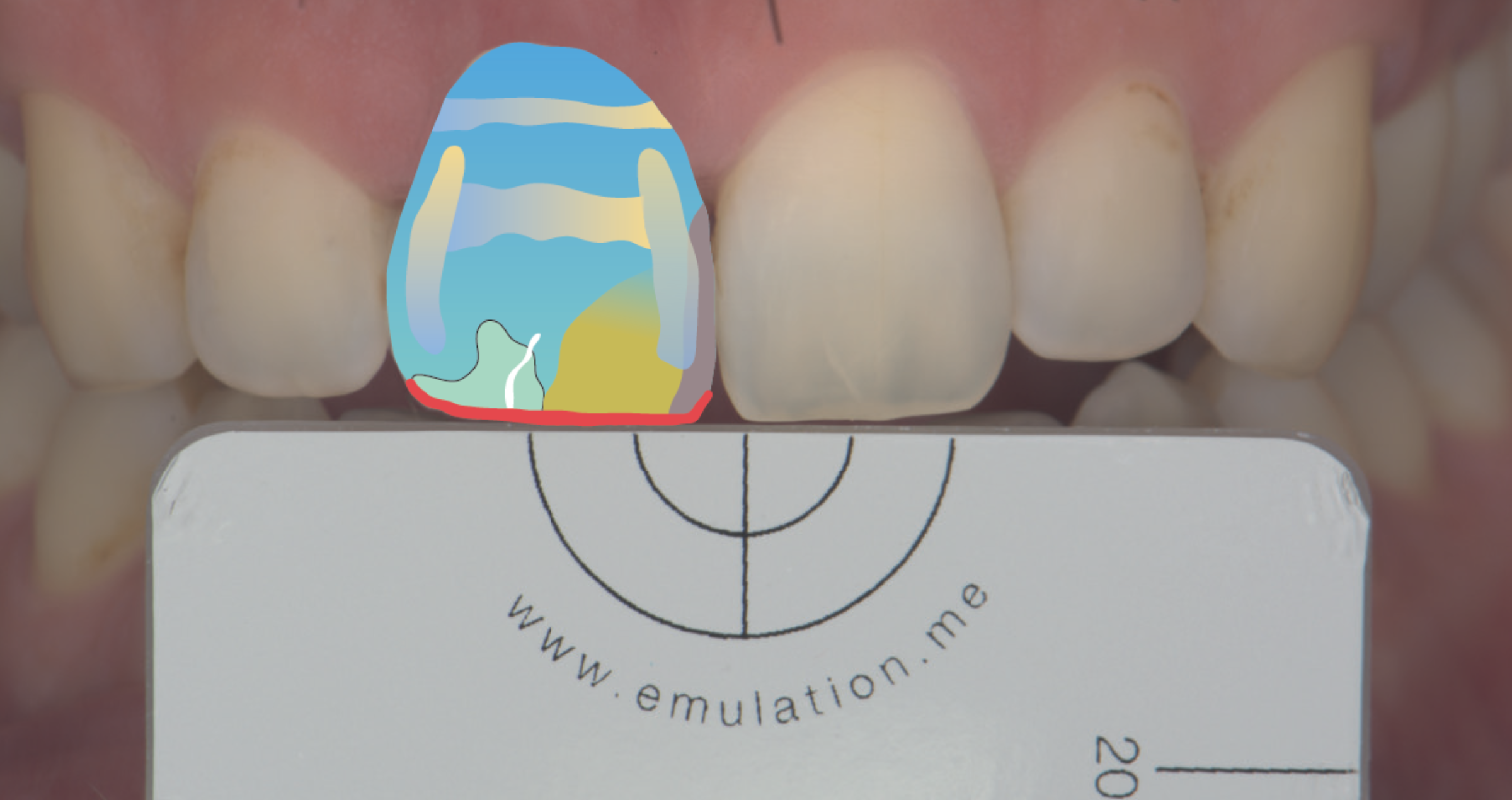
Fig. 1. Layering sketch for the restoration of a fractured central incisor in three layers: Layer one.


Fig. 2. Layering sketch for the restoration of a fractured central incisor in three layers: Layer two.


Fig. 3. Layering sketch for the restoration of a fractured central incisor in three layers: Layer three. After the first bake, small details were integrated, followed by a second bake. Finally, the restoration was finished with CERABIEN™ ZR FC Paste Stain and Glaze.


Fig. 4. Treatment outcome able to restore not only the smile, but also the self-confidence of the young girl.


Fig. 5. Immediately after cementation of the restoration, the restoration is barely identifiable, only the soft tissue needs some time for recovery.


ASPECTS TO BE CONSIDERED

But how to proceed in restoring single central incisors in the best possible way? The success of this type of restoration is hidden in the shape, which is the most difficult part. Managing to create a natural morphology is more than half the battle. The other important part is colour. The key to reproducing colour is in understanding how the utilized porcelains work. It is all about light reflection, absorption, translucency and opalescence, value and characteristic details. The more you gain experience and understand the optical properties of teeth and ceramics, the better your outcomes will be. Support is offered by a camera, a macro lens and a twin flash, which are used to capture and analyse the intraoral situation. For an initial analysis and understanding of shape and colour, I like to see the patients in my dental laboratory. Feeling the colour helps to develop the most realistic picture of what needs to be created. The key to successful realisation of the plan just developed is the use of reliable, easy-to-handle materials – in my case KATANA™ Zirconia and CERABIEN™ ZR Porcelains (both Kuraray Noritake Dental Inc.).


POSSIBLE STEPS

The first thing to focus on when starting to produce an anterior restoration – like in the case presented in figures 6 to 14 – is the correct value of the tooth. As soon as the framework or base is produced in the right value, you need to place what you see. Does the adjacent tooth show mamelons, traces of blue and orange? Those characteristics simply need to be observed and copied. There is no need to create something fancy. The tricky part is to use the available space reasonably. When there is plenty of space for the porcelain, it may be challenging to keep the value of the framework and avoid a greyish appearance. Depending on the die colour, age of the patient, natural surface texture and space available, an appropriate layering approach and finishing technique may be selected.


Fig. 6. Replacement of an anterior crown: Prepared tooth with severe discolouration. The adjacent central incisor has a special shape and vivid inner colour structure.


Fig. 7. Framework made of KATANA™ Zirconia ML in the shade A3. The target shade being A3.5, a quite opaque material was selected in a slightly brighter shade to achieve the required masking effect.


Fig. 8. Single-bake layering procedure: Application of CERABIEN™ ZR Opacious Body, …


Fig. 9. … Cervical Body, …


Fig. 10. … Body and Transitional Body.


Fig. 11. Incisal cut-back …


Fig. 12. … and creation of the mamelon structure.


Fig. 13. Application of Aqua Blue 1 …


Fig. 14. … followed by T Blue …


Fig. 15. … and Luster Porcelains.


Fig. 16. Halo effect created with Body.


Fig. 17. Treatment outcome. (After a first bake followed by minor adjustments, a second bake, surface texturing and glazing with CERABIEN™ ZR FC Paste Stain Clear Glaze.)


CONCLUSION

Creating a single central takes us out of our comfort zone. By paying attention, observing the adjacent teeth carefully and using materials we really understand, it is possible to meet or exceed our patients’ expectations. While specific tools like cameras and experience with the utilized materials offer support in producing predictable outcomes, my main credo is “If you want things around you to change, you must first change yourself”. For continued improvement, it is thus necessary to focus on professional growth and advancement. With the right mentors who will teach us the secrets of stratification and inspire and motivate us to continue advancing, it becomes easier to restore the smiles and self-confidence of our patients every time they need us to.


Acknowledgements

Special thanks go to the dental practitioners who treated the patients presented above – Andreas Skyllouriotis DDS, MSD, Surgically-Trained Prosthodontist, and Theo Odysseos, DDS, Diplomate, American Board of Oral Implantology / Implant Dentistry.


Dental Technician:

VASILIS VASILIOU


Vasilis Vasiliou was born in Nicosia, Cyprus, and graduated from the Technical School for Dental Technicians in Athens in 2004. He has furthered his education by attending several advanced seminars led by mentors and experts in the field, such as Ilias Psarris and Nondas Vlachopoulos.


Throughout his career, Vasilis has made significant contributions to the dental community, including presenting at various conferences in Greece and publishing articles in Greek dental magazines. Since 2020, he has been a key opinion leader for MPF Brush Company and, since 2022, a HASS Ambassador. Vasilis has been an active member of the International Team for Implantology (ITI) since 2019.


Together with his father, Vasilis runs a successful dental laboratory in Nicosia, specializing in all-ceramic and implant restorations. His extensive experience and commitment to excellence have established him as a respected professional in his field.


Efficient production of a zirconia overdenture

Case by CDT Mathias Berger, France


Every patient is unique. Their specific backgrounds, functional needs and aesthetic demands need to be respected in any prosthodontic treatment plan. However, the importance of an individual treatment approach increases with the number of teeth to be replaced: After all, the impact of the restorations on facial aesthetics and on the patient’s quality of life is never greater than when all teeth are missing. Fortunately, adequate dental materials and techniques are available for a patient-centered, individual approach, no matter what challenges need to be overcome.


A patient with bruxism


In the present case, an elderly male patient with bruxism was in need of a new maxillary denture. Since the placement of five implants in the maxilla, he had no proprioception in this jaw. This lack of sensation had an impact on the overdenture to be produced: material and design needed to be carefully selected in a way that it would withstand uncontrolled chewing forces. As technical complications are easier to repair than biological complications, the overdenture should not be unbreakable – instead, the replacement of single units should be easily manageable.


Two-part denture design


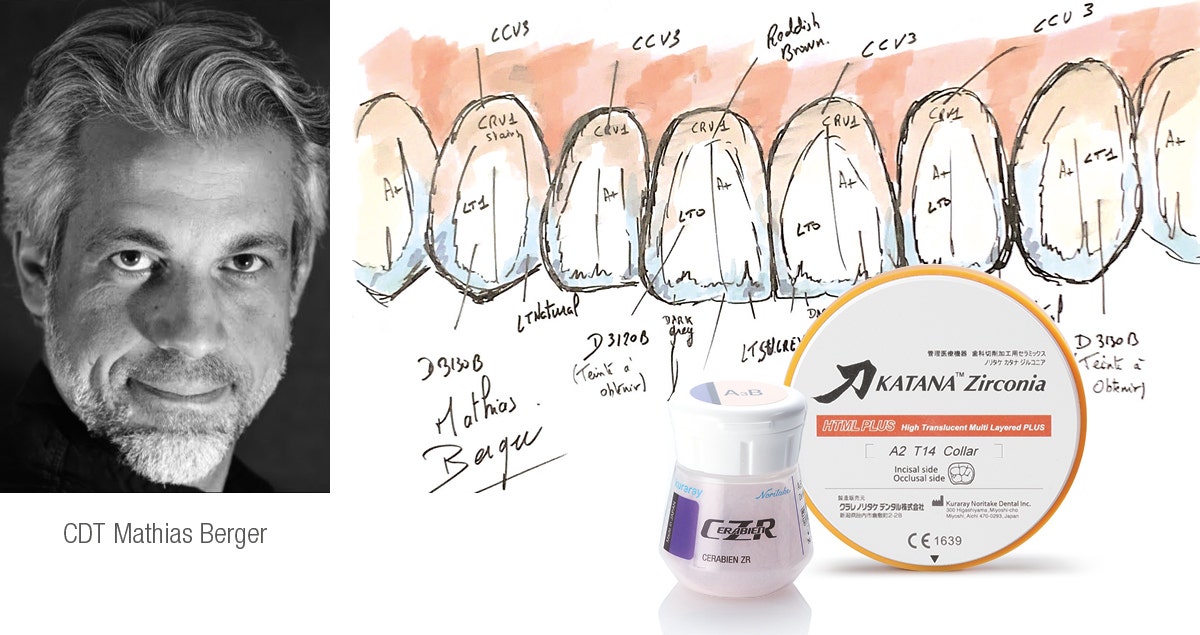
The solution was a two-part design with a milled bar consisting of the gum area and tooth abutments (fig. 1) combined with single crowns. The material of choice for the bar was KATANA™ Zirconia HTML Plus (Kuraray Noritake Dental Inc.) with a uniform flexural strength of 1,150 MPa throughout the disc, while the single crowns were milled from KATANA™ Zirconia YML that offers natural translucency and strength gradation. While a monolithic design was selected for the posterior crowns, the six crowns for the anterior region received a micro-cutback for aesthetic micro-layering with CERABIEN™ ZR Porcelain. The shade scheme for individualization of the anterior crowns is shown in fig. 2. In a nutshell, customization was performed with the Internal Stains Cervical 1, Grayish Blue, Dark Grey and A+. The finishing layer on the incisors was created mainly using LT0 materials with some CCV-3 on the cervical and LT Natural on the mesial and distal lobes. On the canines, LT1 was used instead of LT0. The posterior crowns were merely finished with liquid ceramics (CERABIEN™ ZR FC Paste Stain, Kuraray Noritake Dental Inc.).


Fig. 1. Sintered bar milled from KATANA™ Zirconia HTML Plus.


Fig. 2. Chroma map for micro-layering in the anterior region.


Fig. 3 shows the finished single crowns with their individual, age-appropriate shade effects on the sintered bar. After checking the fit of the crowns, the gum areas of the bar were individualized using CERABIEN™ ZR Tissue Porcelain (fig. 4). Subsequently, the crowns were luted to the zirconia abutments (fig. 5), leaving screw access holes in aesthetically uncritical positions (fig. 6). The final overdenture ready for try-in is shown in fig. 7. Due to an excellent fit on the implants (fig. 8), it was possible to immediately fix the overdenture with the screws, close the access holes with composite and discharge the patient. The final appearance is shown in fig. 9.


Fig. 3. Finished crowns on the sintered bar.


Fig. 4. Bar with individualized gum areas.


Fig. 5. Placement of the central incisor crowns on the bar.


Fig. 6. Occlusal screw access hole in the finished overdenture.


Fig. 7. Overdenture ready for try-in.


Fig. 8. Intraoral try-in of the aesthetic overdenture.


FINAL SITUATION


Fig. 9. Treatment outcome.


CONCLUSION


This patient case is a good example of how important it is to respect the patient’s background, age and specific demands when producing dental restorations. Thanks to the great variety of restorative materials with different mechanical and optical properties available, it is possible to create suitable prosthetics for virtually every patient. However, for this purpose, it is important to stay up to date regarding new products launched and techniques developed. This way, it is often even possible to create beautiful and durable solutions in a simplified and efficient procedure such as micro-layering on innovative zirconia with a high aesthetic potential.


Dentist:

CDT MATHIAS BERGER


Same-day dentistry: Replacement of two PFM crowns with zirconia restorations

Clinical case by Dr. Frank Heldenbergh


The advancements in zirconia in contemporary dentistry nowadays allow for a wider range of applications, including in the anterior sector, and for chairside production using dedicated CAD/CAM systems. Even without a cutback, KATANA™ Zirconia Block (STML), combined with CERABIEN™ ZR FC Paste Stain (both Kuraray Noritake Dental Inc.), offer an extremely satisfactory aesthetic solution.


In the present patient case, the materials were chosen to replace old PFM crowns on the maxillary central incisors. The planned treatment was in accordance with the patient's wishes, and carried out in a single appointment.


CASE DESCRIPTION

The patient asked for a replacement of the existing crowns on the two maxillary central incisors (teeth 11 and 21, FDI notation). The porcelain-fused-to-metal (PFM) restorations had been in place for about thirty years (Figure 1). She desired aesthetic improvements and slight repositioning of these two teeth.


TREATMENT PLAN

In agreement with the patient, it was decided to perform the entire procedure in one appointment: removal of the existing crowns, digital impressions, production, and bonding of new restorations. The periodontium was healthy with no bleeding. The only uncertainty was whether the existing crowns were cemented onto inlay-cores or if they were Richmond crowns. A preliminary silicone impression was taken as a precautious measure: in case something unexpected prevented the new crowns from being bonded during the session, it would be easily possible to produce temporary crowns.


Fig. 1. Initial clinical situation.


TREATMENT

Using a diamond bur followed by a tungsten carbide bur, the existing crowns were removed, revealing that they indeed were Richmond crowns. Because the anatomy of the intra-radicular posts clearly contraindicates an attempt to remove these posts, it was decided to trim the crowns to transform them into inlay cores rather than risk further damage. The corono-peripheral preparations were reworked at the same time. One of the major challenges was related to the necessity of masking the metal of the transformed coronal-radicular reconstructions. Luckily, the space available was sufficient for the production of full zirconia crowns with a significant thickness (Figure 2). The target shade of the crowns was chosen in consultation with the patient (Figure 3).


Fig. 2. Situation after removal of the existing restorations.


Fig. 3. Shade determination using a shade tab: A2 was the appropriate shade.


Subsequently, impressions were taken using and intraoral scanner, the virtual models were checked and the crowns designed, considering the patient's request to have her two incisors slightly retracted (Figures 4 and 5).


Fig. 4. Virtual models of the patient’s teeth with the newly designed crowns, revealing the space available for a slight retraction.


Fig. 5. Designing of the two crowns.


The two crowns were milled from KATANA™ Zirconia Block 14Z A2 (Figure 6). A quick reminder: unlike lithium disilicate, zirconia prosthetic parts cannot be tried in immediately after milling, as they are around 20 percent larger than their final size after sintering. Final sintering was performed within about 18 minutes using the furnace SINTRA CS (ShenPaz Dental Ltd). After this process, the crowns may be tried on to check their fit, shape, shade and optical integration.


Fig. 6. Milled crowns in the CAD/CAM blocks.


For finishing of the restorations, different options are available. In this case, we decided not to limit ourselves to mechanical polishing of the prosthetic parts, as zirconia does not fluoresce like natural teeth. To add fluorescence as an optical feature, the surface was lightly stained and glazed with CERABIEN™ ZR FC Paste Stain (Figure 7).


Fig. 7. Crowns in the furnace after staining and glazing with liquid ceramics.


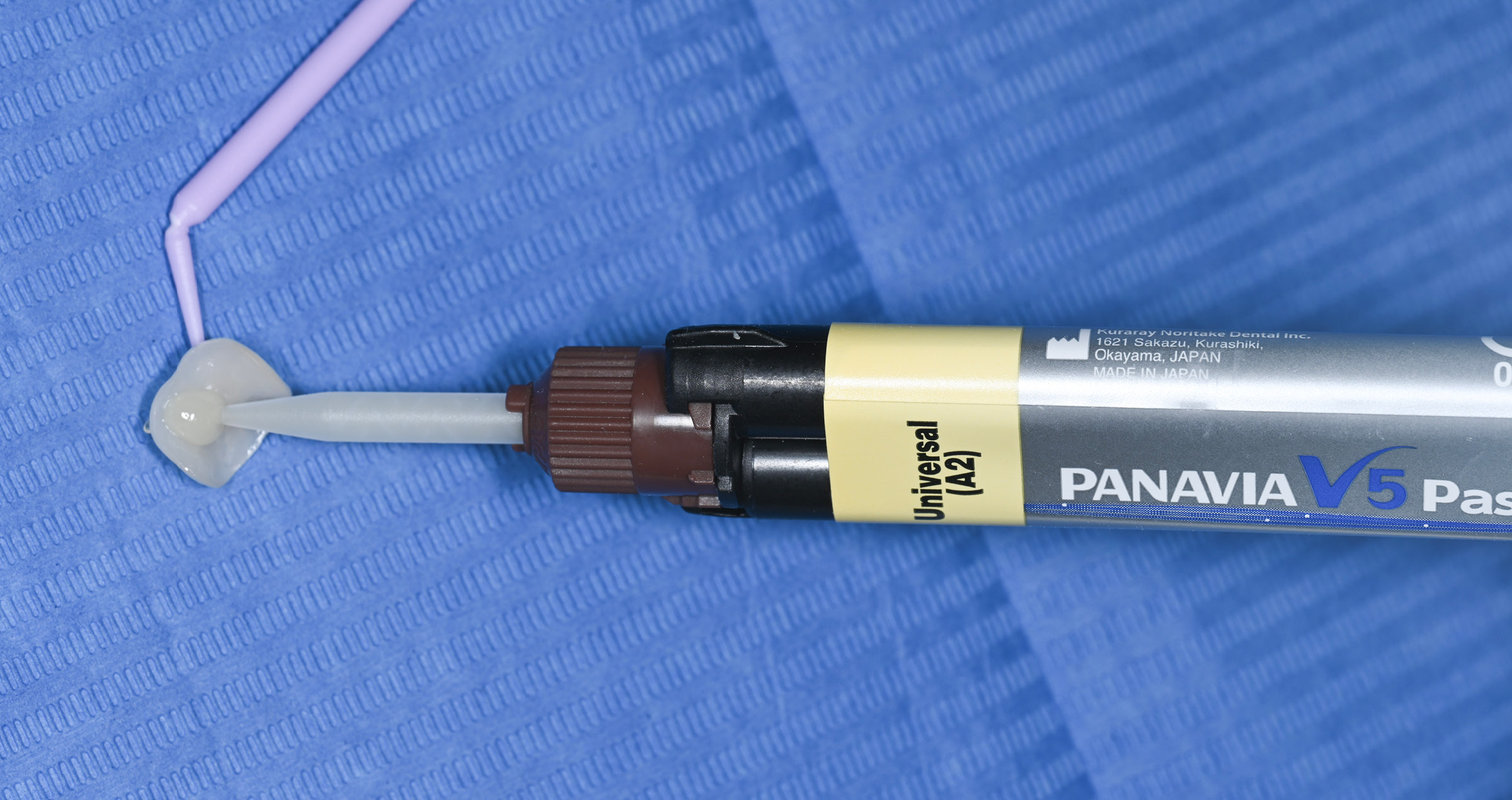
After firing, the two incisor crowns were tried in again using a try-in paste corresponding to the chosen resin cement system (PANAVIA™ V5, Kuraray Noritake Dental). In this way, the final appearance was simulated to validate the shade of the cement. The intaglio surfaces of the crowns were then sandblasted before applying CLEARFIL™ CERAMIC PRIMER PLUS as the restoration primer. The prepared teeth were treated with KATANA™ Cleaner (Kuraray Noritake Dental Inc.) to decontaminate the surface from proteins in saliva and possibly blood. Those clean surfaces are ideal for bonding. After thorough rinsing and drying, PANAVIA™ V5 Tooth Primer (containing MDP monomer for bonding with the hydroxyapatite and metal of the preparation) was applied according to the manufacturer’s instructions (Figure 8).


Fig. 8. Selected cementation system and try-in.


Subsequently, PANAVIA™ V5 Paste was applied into the first crown, which was then seated, followed by tack curing (brief photopolymerization for three to five seconds), excess removal and final light curing from all sides.


The procedure was then repeated for the second maxillary central incisor. The result instantly satisfied the patient, both in terms of aesthetics (adaptation, position of the new crowns, mimicry) and the comfort provided (Figures 9 and 10).


Fig. 9. Crowns immediately after placement.


Fig. 10. Aesthetically pleasing and comfortable result.


At a recall after four months, soft tissue conditions were ideal and the patient was happy with the outcome (Figures 11 to 13). The selected zirconia had nice optical properties, masking of the metal posts was successful and the natural surface texture contributed its share to a nice overall picture. The retracted position of the teeth was also perceived positively by the patient, while comfort and function were excellent.


DISCUSSION

Although lithium disilicate has so far been considered the material of choice for prosthetic work in the anterior region, zirconia is nowadays proving to be an extremely satisfactory alternative from every point of view: milling, strength, aesthetics, assembly (among other things, no hydrofluoric acid is required for bonding). KATANA™ Zirconia Blocks (STML) with a multi-layered colour structure in a single 4Y-TZP zirconia block, combined with CERABIEN™ ZR FC Paste Stain, offer a remarkable solution. This applies to treatments around the replacement of existing crowns as well as first-line treatments with less invasive preparations (verti-prep) than those required by other types of ceramics.


Fig. 11. The patient’s smile at a recall after four months.


Fig. 12. Great optical integration.


Fig. 13. Natural surface texture contributing to success Control pictures after four months taken by Emmanuel Charleux.


Dentist:

FRANK HELDENBERGH


Dr. Frank Heldenbergh graduated with a Doctor of Dental Surgery degree from the University of Reims in 1988.Driven by a passion for prosthetics, he pursued further specialization as a Prosthetic Resident at the UFR Odontology of Reims from 1990 to 1992. Dr. Heldenbergh’s dedication to advancing dental practices led him to join the Board of the Academy of Adhesive Dentistry in 1999. His commitment to this field has been unwavering, and he currently serves as the Vice President of A.D.D.A.-R.C.A.


Recognized for his expertise in ceramic veneers, inlays and onlays, Dr. Heldenbergh supervised practical work for the Paris Odontological Society from 2000 to 2018, shaping the skills of many aspiring dentists. His influence extended to the A.D.F. Congress, where he supervised practical work on ceramic veneers from 2000 to 2016. In 2017, he was the Head of Practical Work at A.D.F., a role that allowed him to further contribute to the advancement of dental education and practices. In 2018, he was the Head of Practical Work for ceramic veneers at the Paris Odontological Society.


Recognizing the importance of technology in modern dentistry, Dr. Heldenbergh pursued a University Degree in CAD/CAM from Toulouse in 2022. This addition to his qualifications highlights his dedication to staying at the forefront of dental innovation.

BEST.FIT: A hybrid technique for an efficient and aesthetic restoration of anterior teeth

Case by Dr. Enzo Attanasio

The introduction of new-generation composites, equipped with nanofillers and highly loaded, has opened doors to new techniques for managing direct and semi-direct restorations. In particular, over the last ten years, there has been a significant revolution in the world of flowable composites. Nowadays, these materials offer a filler percentage very similar to packable composites through precise interventions in resin matrix management. They come in various viscosities, offering numerous advantages both in terms of handling and clinical use, as well as beneficial mechanical and physical characteristics.


FLOWABLE INJECTION TECHNIQUE

This new era of flowable composites has seen the development of a technique known as the Flowable Injection Technique (also referred to as injection moulding). It enables dental practitioners to reproduce anatomical forms created by a dental technician in the laboratory through a diagnostic wax-up. The shapes planned on the model are transferred directly in the patient's mouth using transparent silicone matrices or indexes, into which the composite is injected through specific injection holes.


The main difference compared to traditional mock-ups is that the reproduced dental elements remain separate from each other. This technique provides predictable results identical to those developed on the technician's wax-up, requiring less chair time than direct veneering and offering a longevity similar to traditional composite restorations.


BENEFITS AND CHALLENGES

The major benefit of this technique is the faithful reproduction of morphological details that the technician creates on the diagnostic wax-up, which the clinician can reproduce with minimal effort. The restoration produced through the flowable injection technique, if all steps are followed correctly, requires minimal finishing by the clinican, who only needs to focus on polishing the composite.


However, one limitation is the difficulty in isolating the operative field, often requiring a split-dam technique or labial retractors, with all the associated adhesive challenges. The use of a rubber dam is only feasible if the peripheral dental tissues around the restoration are euchromatic, allowing the technician to create a wax-up with supragingival preparation margins.


Another compromise with the flowable injection technique is the management of the composite as a single mass. This makes it only possible to reproduce natural incisal translucencies typical of young patients by performing complex cutbacks and subsequent incisal painting. Without specific operator skills, the outcomes of this time-consuming manual procedure are unpredictable.


HYBRID TECHNIQUE: BEST.FIT

To leverage the advantages of both classical direct anterior restoration and flowable injection techniques and eliminate the limitations, a hybrid technique known as BEST.FIT (Buccal Enamel Shade Through Flow Injection Technique) has emerged. This technique allows the operator to manage the delicate phase of reproducing the buccal enamel layer of the anterior restoration through the flowable injection technique, keeping certain aspects in mind during the injection phase.


PROCEDURE

The transparent silicone key used for the creation of the buccal enamel layer is similar to the one used in the original flowable injection technique. The initial phase of restoration management follows all the classical steps of direct technique, requiring isolation with rubber dam. The palatal enamel layer is recreated with a highly translucent packable composite, and the palatal portion of the interproximal walls is produced using a suitable matrix system. Then, the core of the restoration is defined with opaque masses, creating mamelons and adding incisal effects. It's crucial to control the residual enamel thickness using a vestibular silicone index, aiming for about 0.3 mm of space. The buccal portion is finally reconstructed during the injection phase. The transparent silicone index created on the wax-up should be tested after each reconstruction phase to ensure passive insertion.


After creating the restoration core, the element to be injected is separated from the contiguous ones with thin PTFE tape. The transparent mask is then inserted, and fluid composite is injected through the injection holes to precisely reconstruct the buccal enamel thickness. The composite tip should be positioned at least halfway through the buccal surface, and the injection should be slow and controlled to avoid air bubbles in the material.


FINISHING

Following a 40-second polymerization vestibularly and occlusally, the transparent matrix is carefully removed, and excess interproximal composite above the PTFE tape as well as any remaining composite cylinder from the injection holes are removed. After completing all restorative elements, the rubber dam is dismantled, and composite excess is finished. After checking the occlusion, the composite is polished, usually requiring no further intervention.


CASE EXAMPLE

Fig. 1. Female patient with discoloured anterior restorations desiring a smile makeover.


Fig. 2. Close-up of her maxillary anterior teeth.


Fig. 3. Restorations in need of replacement: Lateral view from the right.


Fig. 4. Restorations in need of replacement: Lateral view from the left.


Fig. 5. Printed model based on a digital diagnostic wax-up based on a digital impression.


Fig. 6. Palatal silicone index produced for the conventional direct restoration steps.


Fig. 7. Transparent matrix with injection holes produced for the build-up of the buccal enamel layer using the flowable injection technique.


Fig. 8. Operative field isolated with rubber dam.


Fig. 9. Existing restorations removed and tooth surfaces roughened at the start of treatment.


Fig. 10. Palatal silicone index positioned intraorally for the build-up of the palatal wall.


Fig. 11. Checking of the space available in the vestibular area with a second silicone index.


Fig. 12. Etching with phosphoric acid etchant.


Fig. 13. Application of a universal adhesive (CLEARFIL™ Universal Bond Quick, Kuraray Noritake Dental Inc.).


Fig. 14. Palatal walls built up with CLEARFIL MAJESTY™ ES-2 Premium in the shade A1E with the aid of the palatal silicone index.


Fig. 15. Build-up of the interproximal walls with CLEARFIL MAJESTY™ ES-2 Premium in the shade A1D and establishing of the contact points using anatomical sectional matrices for the posterior area placed vertically.


Fig. 16. Dentin core built up with CLEARFIL MAJESTY™ ES-2 Premium in the shade A2D. CLEARFIL MAJESTY™ ES Flow Super Low in the shade XW was applied on the mamelons, while CHROMA ZONE™ COLOR STAIN Blue (Kuraray Noritake Dental Inc.) was used to reproduce incisal translucencies in the spaces not covered by the dentin core.


Fig. 17. Try-in of the transparent matrix for flowable injection.


Fig. 18. Isolation of the adjacent teeth with PTFE tape for a one-by-one injection.


Fig. 19. CLEARFIL MAJESTY™ ES FLOW Low in the shade A2 (Kuraray Noritake Dental Inc.) injected for the anatomical shaping of the maxillary right central incisor.


Fig. 20. Situation after flowable injection for all four anterior teeth, light curing through the matrix, final matrix removal and excess removal.


Fig. 21. Treatment outcome …


Fig. 22. … with visible mamelons, natural incisal translucencies …


Fig. 23. … and a lifelike anatomical shape …


Fig. 24. … of the restorations.


CONCLUSION

Each work phase must be executed with extreme care to lay the foundations for a passive linking of all subsequent steps without creating difficult management situations. The BEST.FIT technique is a convenient and useful method for dental practitioners to manage multiple direct anterior restorations simply and predictably, especially in situations requiring complex rehabilitations with large restorations.


Dentist:

ENZO ATTANASIO


Enzo Attanasio graduated in 2008 in Dentistry and Dental Prosthetics from the Magna Graecia University of Catanzaro. In 2009, he went on to specialize in the use of laser and new technologies in the treatment of oral and perioral tissues at the University of Florence. That year he also attended Prof. Arnaldo Castellucci’s course in Clinical Endodontics at the Teaching Center of Microendodontics in Florence where, in 2012, he went on to complete his training in Surgical Microendodontics. In 2017 he attended a course on Direct and indirect Adhesive Restorations at Prof. Riccardo Becciani’s Think Adhesive training center in Florence where he later become a tutor. Today, as a member of the Italian AIC and based in Lamezia Terme, Italy, Dr Attanasio has a special interest in Endodontics and Aesthetic Conservative.