
Interview: Empower your dental lab

Interview with Mathias Fernandez Y Lombardi, EU Scientific Manager, Kuraray Europe GmbH


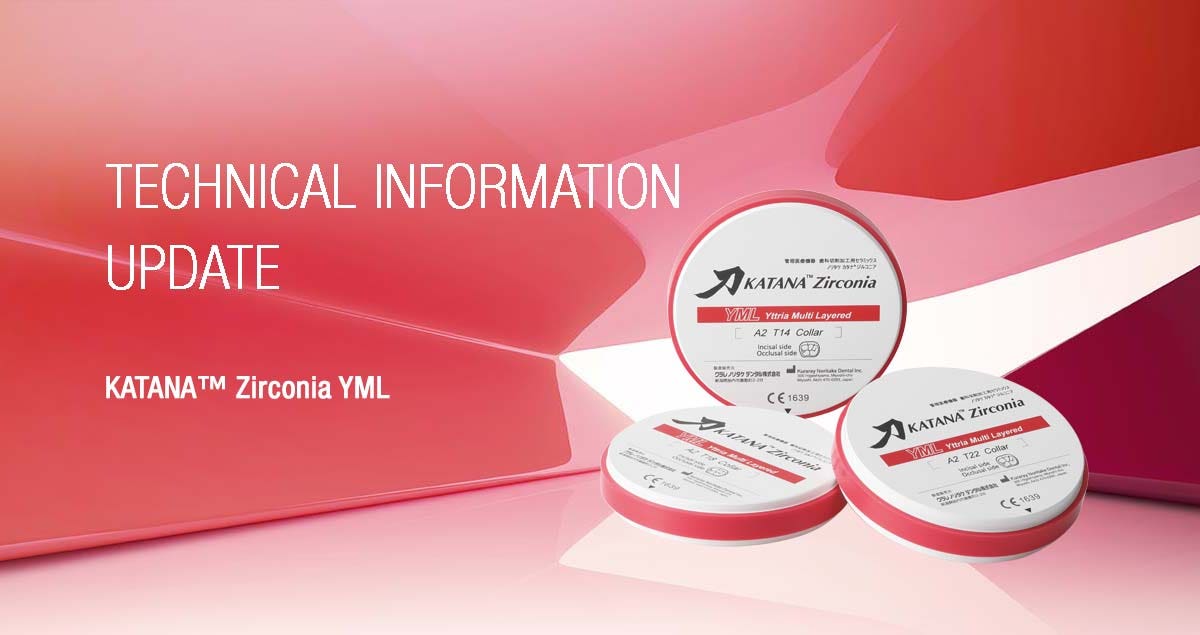
Kuraray Noritake Dental Inc. reinvented its original zirconia multi-layer technology by integrating newly developed raw materials with different yttria content into the proven multi-layer colour structure. The material that is based on this innovative technology, KATANA™ Zirconia YML, offers a well-balanced flexural strength, chroma and translucency gradation throughout the blank.


According to pilot users of the new zirconia discs, the greatest benefit of using KATANA™ Zirconia YML is in the true empowerment of the laboratory. We asked Kuraray Noritake’s EU Scientific Manager Dental Ceramics & CAD/CAM Materials, Mathias Fernandez Lombardi, to explain how the new material is able to positively affect work routines in the dental laboratory.


The greatest benefit of using KATANA™ Zirconia YML is in the true empowerment of the laboratory.


Mathias Fernandez Lombardi, who should consider working with KATANA™ Zirconia YML?


KATANA™ Zirconia YML is designed for laboratories and milling centres with a strong focus on simplification. With its strong body and highly translucent enamel layer, it offers exactly the properties required for an unlimited indication range. Being perfectly suited for the production of durable monolithic long-span posterior bridges and of highly aesthetic anterior crowns or partial restorations, KATANA™ Zirconia YML is a true all-rounder that eliminates the need for another zirconia or even ceramic CAD/CAM material. At the same time, it supports highly automated production procedures and requires minimal hand work.


What are the benefits of using a single material for every indication?


Several benefits are related to the use of a single, all-round material. It leads to a reduced number of blanks to be stored, which simplifies inventory management and minimizes the storage space needed. Moreover, it facilitates standardization of laboratory workflows. Using the same material every time means that there are no differences in the basic design and milling parameters like minimum wall thicknesses and connector strengths, in the sintering protocols and finishing options to be taken into account. Hence, errors are less likely to occur and routines are easily established. Finally, the risk of cross-contamination is eliminated when a single material is processed with the available equipment (milling machine, milling and finishing tools, and sintering furnace). Predictable outcomes and flawless aesthetics are usually the result.


What are the benefits related to the use of KATANA™ Zirconia YML as the only ceramic CAD/CAM material?


I guess that the most important argument is that aesthetic outcomes are easily and efficiently achieved with KATANA™ Zirconia YML for all kinds of restorations, even for long-span bridges. It is usually sufficient to produce monolithic restorations for the posterior region, which are just polished or glazed. Anterior restorations may be designed monolithically or with minimal cut-back, and the user may choose between CERABIEN™ ZR (CZR) FC Paste Stains and CZR Internal Stains plus glaze to obtain a natural look. Another benefit of KATANA™ Zirconia YML is its seamless multi-layer structure combined with an extraordinary blank quality.


Why is this seamless structure and high blank quality important for users?


The seamless multi-layer structure, that is a smooth transition from one layer to the next, is the precondition for structural integrity and flawless aesthetics. It ensures that the material is free of transition lines, offers accurate dimensions after sintering (due to uniform shrinkage) and shows a reliable long-term performance not compromised by internal tensions. In KATANA™ Zirconia YML, a completely homogeneous composition, with carefully aligned CTE-values and shrinkage ratios in all parts of the blank, is responsible for this benefit.


Aesthetic outcomes are easily and efficiently achieved with KATANA™ Zirconia YML for all kinds of restorations, even for long-span bridges.


For its development, Kuraray Noritake Dental leveraged its long-standing expertise in dental ceramics and the advantages of an end-to-end in-house blank production process, without which it would have been impossible to reach the requested quality level. Due to the fact that the material is so well aligned, it was even possible to develop a 54-minute sintering programme that produces equally good results as the proven 90-minute or 7-hour programmes and becomes the go-to option for all rush cases. With this feature, KATANA™ Zirconia YML becomes the “jack of all trades” material: It offers highest comfort and security like an SUV, but when it comes to speed, it is in no way inferior to a sports car.


The above sintering recommendations represent only a guideline; depending on each individual furnace and condition, some adjustments might be necessary. If the 54 or 90-minute sintering program is not programmable in your furnace, it is not possible to set the furnace according to one of these schedules. *The material is removed from the furnace at 8000C. A furnace with a configurable YML sintering program is required.


Users who have already tested ceramic materials with a strength gradient know that positioning of long-span restorations in the blank can be tricky. What are the rules to be respected when positioning a long-span bridge in a YML blank?


Positioning of restorations in KATANA™ Zirconia YML discs is extraordinarily easy. The reason is that the gap between the lowest flexural strength found in the enamel area and the highest flexural strength found in the lowest body layer is comparatively small. Moreover, the Body Layer 1 that is found adjacent to the enamel layer already offers a flexural strength that is higher than the 800 MPa requested for bridges with four or more units. Consequently, users are on the safe side whenever they place their long-span restorations in the middle of the blank. More specifically, half of the connector cross section needs to be in the lower half of the disc, which is quite different from other materials with strength gradation that allow for connector positioning in the body area only. KATANA™ Zirconia YML restorations with a maximum of three units may be positioned in any layer. In this context, the fact that the thickness of each layer increases proportionally with the height of the disc comes as a benefit: The enamel layer is large enough to exploit its aesthetic potential in single-unit or small bridge cases.


Positioning of long-span restorations in the middle of the disc.


What would you recommend dental technicians who would like to empower their laboratory or milling centre?


I can truly recommend testing KATANA™ Zirconia YML in the laboratory environment to see how it handles and to assess its potential. The exceptional blank quality and seamless integration of the different layers, the ease of positioning and processing efficiency are factors potential users need to experience in real life to understand what they mean for their daily work. Similarly, the aesthetic outcomes need to be assessed in the clinical environment for an authentic impression of the natural look and feel obtained. I am sure that KATANA™ Zirconia YML will be able to convince virtually everyone who wants to empower the laboratory with an easy-to-use, efficient universal zirconia solution that fits virtually every patient’s and every dentist’s needs! Kuraray Noritake Dental knows that dental technicians and practitioners are in need of products that support their striving for simplification, standardization and increased efficiency so urgently needed in present times. Therefore, our product innovations are all focused on delivering more performance with less effort. KATANA™ Zirconia YML is the latest addition to a whole series of materials pursuing this goal.


Minimum connector cross-sections are to be respected during the computer-aided design of KATANA™ Zirconia YML restorations.


Mathias Fernandez Y Lombardi


EU Scientific Manager
Dental Ceramics & CAD/CAM Materials
Kuraray Europe GmbH


2013
Successful completion of an apprenticeship as a dental technician at Seuthe dental laboratory in Plettenberg, Germany


2018
Successful completion of dental technology studies at the University of Osnabrück, Germany. Graduation as an engineer in dental technology


Since March 2018
Employee of Kuraray Europe GmbH


The aesthetic possibilities of the KATANA™ Zirconia Block

In January 2019, Kuraray Noritake Dental proudly hosted a symposium dedicated to the KATANA™ Zirconia Block. Dental professionals from across Europe gathered in Berlin to hear a number of experts detail their research into, and clinical experiences with, this all-zirconia solution. Among those presenting were Dr Alessandro Devigus and master dental technician Daniele Rondoni, both active members of the European Academy of Esthetic Dentistry.


Devigus and Rondoni’s presentation was focused on discussing the possibilities of the KATANA™ Zirconia Block for restorations in the aesthetic zone. Devigus, who is the founder and president of the Swiss society for computer-aided dentistry (SGcZ), spoke of the dual meaning of the word ‘digital’—though it refers to numbers, it also can be used to describe something performed with one’s digits, or fingers. Digital dentistry, he explained, thus combines the reliability of computer-aided design and manufacturing with the creativity and aesthetic possibilities of handcrafted restorations. “This combination of hands and machine is, simply put, what defines digital dentistry,” Devigus said.


The evolution of KATANA™


Rondoni highlighted the evolution of Kuraray Noritake Dental’s work, particularly with zirconia. Having been an international instructor for the company for many years, he spoke of witnessing the development of the KATANA™ family into a solution that can truly replicate the appearance of natural dentition. “Thanks to the multilayered nature of this material, we can obtain a mimetic effect in regards to the optical properties of a natural tooth,” he explained, and described how these multiple layers effectively reproduce the shade gradation of teeth and work to create a three-dimensional effect.


Fluorescence is crucial


Both presenters emphasised the importance of fluorescence for the aesthetic qualities of dental restorations. “My concern was always that, with zirconia, there was no fluorescence,” Devigus admitted. This fear was easily allayed, however, with the use of Kuraray’s Cerabien™ ZR FC Paste Stain, a product optimised for full-zirconia restorations.


A true chair side solution


To demonstrate their experiences with the KATANA™ Zirconia Block, the two presenters then showed a number of clinical cases that they had worked on together in Devigus’ dental practice in Bülach in Switzerland. Devigus praised the speed sintering that is made possible through the block’s integration with Dentsply Sirona’s CEREC system, saying that, “For me, if a material can be used to complete a restoration in less than two hours, then it is truly a chair side material. You cannot expect a patient to sit there and wait there for four hours in your dental practice—but this is not a concern with the KATANA™ Zirconia Block.


Dr Alessandro Devigus Daniele Rondoni


Interview: "Multi-layered zirconia reinvented: unveiling the secrets behind KATANA™ Zirconia YML"

The KATANA™ Zirconia family of multi-layered CAD/CAM blanks has a new member: KATANA™ Zirconia YML (yttria multi-layered). Based on Kuraray Noritake Dental Inc. (KND) proprietary multi-layer technology, this new material offers multiple layers with different levels of chroma and translucency PLUS different concentrations of yttria in a single blank. We talked to two experts from Kuraray Noritake Dental’s Research & Development Department in Japan, Atsushi Matsumoto and Yuta Tajima, about the new product and its specific features.


Mr. Matsumoto, Mr. Tajima, KND already offers a broad range of zirconia materials covering virtually every indication. Why did you decide to start developing yet another dental zirconia?


The KATANA™ Zirconia series has indeed received high praise and great feedback from the market. Users particularly appreciate the remarkably high strength of HTML, the well-balanced aesthetic and strength properties of STML, and also the high translucency of UTML. Although there has been a large increase of zirconia materials in the dental market recently, we have received many requests from our customers for a more universal material that offers the excellent properties of all variants of KATANA™ Zirconia in one product. This product should allow them to fabricate all kinds of restorations from a single disc, from single crowns to full bridges, while maintaining high aesthetic and mechanical properties for both anterior and posterior restorations. As the developer of the KATANA™ Zirconia series, the invention of KATANA™ Zirconia YML is our response to these desires expressed by our customers.


What is the main difference between KATANA™ Zirconia YML and the other available products of the KATANA™ Zirconia Multi-Layered Series?


All layers of KATANA™ Zirconia UTML, STML and HTML are produced from the same basic powder composition and therefore offer the same strength throughout the whole blank. Depending on the case specific requirements, users need to select the most suitable type of material, either a high-strength zirconia or a highly translucent variant. KATANA™ Zirconia YML is an all-in-one zirconia suitable for all cases: It consists of a high-translucency enamel layer, an intermediate layer offering well-balanced strength, translucency and colour, and a high-strength body layer. The raw materials used for this product are developed and produced by KND exclusively for YML. This is another milestone in advanced product development KATANA™ Zirconia.


We have received many requests from our customers
for a more universal material.


In general, the currently available zirconia materials with an integrated strength gradient do not have a very positive image in the eyes of many dental technicians and specialists, due to the fact that in the incisal area, the materials seem to be insufficiently strengthened. This can lead to fractures when it comes to long-span restorations, especially if they are inadequately positioned within the blank. How carefully did KND focus on these problems and how did they try to solve them in order to stand out from the competition?


The current yttria-based multi-layer products on the market are facing complicated limitations in connector position in large cases, such as full-arch restorations, due to the lack of an ideal combination of aesthetics and strength. To overcome this challenge, KND developed well-balanced raw materials of high strength and high aesthetics, and by including these raw materials in the intermediate layer between the enamel and body layers. The result is that even for long-span restorations, it is very simple to position the connectors thanks to its excellent balance between high strength and high aesthetic properties. Due to these unique attributes incorporated in our new product, the risk of deformation and breakage is avoided.


Another problem is the often clearly visible line between the different layers containing different amounts of yttrium oxide, which can be seen at a more detailed inspection after sintering. How did you address this issue?


At KND, we achieved both, adequate translucency gradation and invisible transition lines, even for zirconia layers with different yttria content. This has been accomplished thanks to our multi-layer zirconia manufacturing technology refined over many years, which includes mixing the appropriate amount of each layer's boundary to intentionally avoid transition lines. In addition, the newly developed interlayer raw materials and a newly designed sintering schedule were the keys to success.


How is it possible to have a sintering protocol that works for different zirconia components within the KATANA™ Zirconia YML blank and allows for the shortest sintering times ever?


The amount of shrinkage during sintering is determined by different factors such as the number and quantity of additives (yttria, alumina etc.) it contains. If the shrinkage ratio of each layer is different, transition lines are likely to appear between the layers, which might produce tensions in the material structure. The newly developed raw material for KATANA™ Zirconia YML enables us to control and unify the shrinkage ratio for all layers, even for raw materials with different yttria contents.


The use of proprietary raw materials produced in-house with excellent properties suitable for high-speed sintering was the main precondition that allowed for the development KND’s high-speed sintering schedule (54 min for restorations up to 3-unit bridges), which is available for all products of the KATANA™ Zirconia multi-layered series. This option improves the efficiency of the dental technician’s work and simplifies the workflow.


Enamel Layer
To provide high translucency that harmonizes with the anterior teeth.

Body Layer 1
To provide seamless color and translucency towards the Enamel Layer.

Body Layer 2, 3
To provide deep and vivid color while reducing whitening.


Are there any differences in milling and adjusting KATANA™ Zirconia YML compared to competitor products?


All KATANA™ Zirconia products from KND have an appropriate hardness with less chipping during the milling process thanks to the raw materials manufactured and refined in-house. Also, after the sintering procedure, it offers excellent chipping resistance, especially during very challenging marginal adjustments.


Is there anything else that sets KATANA™ Zirconia YML apart from other products with an integrated strength gradient?


Yes, KATANA™ Zirconia YML offers reduced sintering deformation, thanks to in-house developed raw materials, based on proprietary technology to control shrinkage rate. Moreover, we offer a wide range of shades (14), which is another important aspect (apart from the material’s well-balanced aesthetic properties and absence of transition lines) for the creation of lifelike restorations. Finally, since three out of four layers meet the conditions for an ISO class 5 classification, there are few restrictions on the design variation of the prosthesis.


Why should a dental technician consider using KATANA™ Zirconia YML instead of any other dental zirconia (in your opinion)?


Atsushi Matsumoto:

It is now possible for dental technicians to produce strong and aesthetic restorations with just one material, KATANA™ Zirconia YML. This allows for a reduced inventory, while working time is significantly shortened due to the possibility of high-speed sintering.


Yuta Tajima:

To my mind, the most convincing properties are excellent firing accuracy due to well-balanced material properties across all layers, the wide range of shades available and the great design flexibility even when designing long-span bridges. Last but not least, the trusted quality of the KATANA™ brand and the label “Made in Japan” are reasons to opt for this new product.


All blanks from the KATANA™ Zirconia Series stand out from other dental zirconia materials due to their particularly fine-grained, densely pressed microstructure, which is the basis for a superior surface quality, edge stability and the resulting accuracy of fit. What is the secret behind this exceptionally high blank quality?


Since we do not know the correlation between marginal stability properties (chipping, etc.) and material compositions, structures etc., it is very difficult to answer this question. It may depend on the structures of the zirconia crystals, the raw material itself, the correct strength level after pre-sintering or any other minor factor during the manufacturing process of the disc. All these factors together, of course, are important.


We are using pigments developed by KND, which have an excellent colour stability without fading even after the final sintering procedure.


Even if the restoration margins have been milled to a very thin profile, they still show smooth margins without any chipping.


A clear advantage of the KATANA™ Zirconia series, much praised by KND's Key Opinion Leaders, is its colour stability and shade match to the "VITA classical shade guide". Can you explain the importance of an in-house conducted addition of additives and color pigments in form of metal oxides to satisfy the user and distinguish KATANA™ Zirconia from competitors’ products?


We are using pigments developed by KND, which have an excellent colour stability without fading even after the final sintering procedure. The particle size is appropriately controlled. In addition, our professional "colour mixing" staff, reflecting the opinions of clinically experienced dental technicians both inside and outside the company, have achieved a pigment mixture that shows only a slight change in shade even in cases with different thicknesses.


What is your vision with regard to future developments in dental zirconia?


Since the introduction of zirconia on the dental market, many significant material advances have been achieved. Today, there are high-strength, low light-transmitting zirconia materials up to high light- transmitting, low strength zirconia materials available on the market. Furthermore, there are now also high light-transmitting, low strength zirconia materials in mixed systems (YML series) offered. Our foremost goal is to develop the ultimate zirconia in near future, combining both high strength and high light transmission, which breaks the general expectation of a compromise between strength and translucency within zirconia materials.


Atsushi Matsumoto  Yuta Tajima


Key properties of modern one-step bonding agents

An interview with Dr. Tomohiro Takagaki, DDS, PhD by Dr. Jorge Espigares, DDS, PhD


Due to its increased usability, one-step universal adhesives are becoming more popular and are the choice of many clinicians all around the world. Nonetheless, some studies have shown lower performance for one-step universal adhesives than previous generations.


Dr. Jorge Espigares,
DDS, PhD
Dr. Tomohiro Takagaki,
DDS, PhD


Dr. Jorge Espigares, DDS, PhD, Planning and Development Department at Kuraray Noritake Dental Inc., interviewed Dr. Tomohiro Takagaki, DDS, PhD, lecturer and former assistant professor at Tokyo Medical and Dental University (TMDU), pioneer in the field adhesive dentistry, author of many publications, and currently lecturing at Asahi University, Japan.


Dr. Takagaki, in your opinion, what are the most important factors for a good and durable adhesion?

Dr. Takagaki: Good resin infiltration (penetration) and good polymerization are essential factors for good bonding. This is the basic concept for the formation of the hybrid layer. Additionally, there are other important factors such as low water sorption for bonding durability and the demineralization depth, which should be the same as the depth that the resin is capable of penetrating to.


Nowadays, the trend seems to be one-step universal adhesives. Do you believe that this reduction in steps has brought any limitations compared to previous generations?

Dr. Takagaki: Traditionally, one-bottle adhesives are too hydrophilic. This hydrophilicity also brings high water sorption, therefore the durability of the interface is compromised. At TMDU, we did not accept one-step bonding agents in clinical usage based on results we obtained in our research in that area.


Water sorption/solubility of different bonding agents.
Data provided by Tokyo Medical and Dental University.


What do you think of the new MDP-Amide chemistry (included in CLEARFIL™ Universal Bond Quick) for overcoming such limitations?

Dr. Takagaki: The MDP monomer has proved through research to be the best monomer for adhesion to tooth substrate. Nowadays, many manufacturers include MDP. Although the MDP purity and performance differs from Kuraray Noritake’s original one, in one-step bonding agents only MDP is not enough. The differential factor is the amide monomer that provides the desired high penetration and low water sorption.


You and your work at TMDU are very well known in the field of adhesive dentistry. Did your research show results that would support the above mentioned statements?

Dr. Takagaki: In our research results, we observed indeed a lower water sorption compared to previous one-step generations. Actually, we were surprised to see water sorption levels equivalent to the two step bonding agent gold standard: CLEARFIL™ SE BOND. (1. Graph). The amide monomer behaves as hydrophilic before the polymerization and as hydrophobic after, which is the desired situation for one bottle self-etching systems.


Would you recommend, therefore, the usage of universal bonding agents in daily practice?

Dr. Takagaki: Yes, but as mentioned, the MDP-amide chemistry is essential. It is noteworthy that another company is also using an amide monomer. However, our results at TMDU indicate that the performance in terms of penetration is not that good. Actually, we still saw lesion formation with that other company’s amide. Kuraray Noritake’s MDP-amide chemistry is the only one that avoids lesion formation (2. SEM images). In addition, CLEARFIL™ Universal Bond Quick releases fluoride that helps protecting the interface degradation and its “no waiting time” makes it ideal for challenging conditions as pediatric and/or geriatric patients.


Let’s get out of the laboratory, according to your clinical experience is there any extra advice that you could provide for a reliable adhesion?

Dr. Takagaki: One important point that sometimes is missed is to properly air-dry the solvent for at least 5 seconds after the bond application. I also recommend selective enamel etch for achieving aesthetic margins, even if all universal bonding agents allow self-etching. Finally, I would like to talk about simplicity. We dentists tend to shorten the necessary time and sometimes the rubbing time is not respected. With CLEARFIL™ Universal Bond Quick, our research showed not significant difference in bond strength with rubbing time (3. Graph). Therefore, it reduces the risk of error, allowing consistent results. I believe that simplicity is required so the fact that CLEARFIL™ Universal Bond Quick and PANAVIA™ SA Cement Universal can cover direct and indirect restorations, is ideal for daily practice. CLEARFIL™ Universal Bond Quick achieves what I am looking for in my practice: easy, quick and reliable.


Although the amount of available universal adhesives market is large, key properties like the ones above-mentioned may help in the complicated process of selecting a one-step adhesive that offers the best performance, simplicity, consistency and predictable results.


Bond strength upon rubbing time. Data courtesy of Tokyo Medical and Dental University.


New sintering program introduction “54-minute sintering” is now possible for 3-unit bridge

New sintering program introduction “54-minute sintering” is now possible for 3-unit bridge

PROVEN SCIENCE AND ARTISTRY LEAD TO QUALITY

Kuraray Noritake Dental enables the unique in-house production of raw materials. In contrast to our competitors, who source their raw materials externally (well known: Tosoh Cooperation), Kuraray Noritake Dental distinguishes itself by its unique in-house production of zirconia raw materials. Many years of expertise in manufacturing the company’s own powder have brought the material quality of KATANA™ to completely new dimensions, not only by controlling the degree of purity and particle sizes, but also by creating an optimal balance of binders, color pigments, stabilizers and other ingredients.


“WE CONTROL EVERY DETAIL.”


KATANA™ Zirconia STML NW with CERABIEN™ ZR FC Paste Stain
Sergio R. Arias DDS, MS Sung Bin Im, MDC, CDT


NEW SINTERING SCHEDULE

In addition to the new sintering programs, the traditional KATANA™ sintering programs can also be used, if desired.


Special LabLine edition of our “BOND” magazine is available now

The Function that becomes aesthetics


Italian dental technician, CDT Stefano Lograno, demonstrates how it is possible for the medical-technical prosthetic team to adopt a protocol from diagnostics to cementation, in which aesthetics can be functionally guided in a simple, predictable and standardized workflow following the criteria of the gnathological school of Vienna of Prof. Rudolf Slavicek.


Click here to read. Enjoy!


Start Reading: BOND | SPECIAL EDITION | 6/2021


Previous version:

BOND | VOLUME 7 | 10/2020


The universal trend in dentistry

Technological progress has enabled the development of products with a wide range of applications, as well as resulting in simplified procedures. These products offer multiple benefits for the user; less laborious procedures come to mind, not to mention fewer steps and faster processing. The direct result is a reduced potential for the sort of procedural mistakes that can lead to serious consequences. As for stock levels, far fewer products are now required to achieve the envisaged end result. This means that the risk of stored products exceeding their best-before dates is greatly reduced, leading to cost savings as well as contributing to shrinking the waste mountain.


Under the umbrella name Universal Excellence, Kuraray Noritake Dental Inc's product range includes a well-balanced selection of universal bonding and cementing products, making it possible for dentists to perform a wide range of treatments with only a limited product range.


CLEARFIL™ Universal Bond Quick is the basis for adhesive treatments; a one-step universal bonding that can be used, at the dentist's discretion, as a self-etching or fully-etched bonding option or as a combination of selective enamel etching. Rapid Bond Technology is used for this bonding, which also contains fluoride. This technological development makes it possible to realise maximum penetration in tooth tissue, followed by hydrophobic sealing after light-curing. The original MDP monomer constitutes the backbone of CLEARFIL™ Universal Bond Quick, as it does in our other bonding systems.


The recently introduced CLEARFIL MAJESTY™ ES-2 Universal composite is truly a game changer. This material is universal both in terms of indication spectrum and colour adaptation. CLEARFIL MAJESTY™ ES-2 Universal may not be the only composite in this relatively new segment, but it is by far the most forgiving. This is due to the meticulously calculated amount of refractory fillers, or so-called light diffusion fillers, in a composite of optimum translucency. The composite blends effortlessly with the colour of the teeth without the need for additional opaque composites in small or large anterior or posterior restorations.


CLEARFIL MAJESTY™ ES Flow is a flowable composite available in three levels of flowability. This flowable integrates seamlessly with the Universal Excellence concept, thanks to its wide range of indications. The unparalleled Kuraray silane technology and the specific resin used provide that CLEARFIL MAJESTY™ ES Flow is not only flowable, but also strong; in fact, this flowable is actually stronger than most paste composites. It is also a genuine pleasure to work with. Unlike other flowables, CLEARFIL MAJESTY™ ES Flow can be applied and manipulated easily because it does not stick to the application needle or instrument.


Wouldn’t it be good to have adhesive resin cements without the need for additional primers? This is now possible with PANAVIA™ SA Cement Universal. Only one product needed to bond to tooth tissue and to most prosthetic materials. It will even bond to glass-based ceramics such as lithium disilicate without the use of a separate silane primer. That is because – in addition to MDP – PANAVIA™ SA Cement Universal includes the unique, long carbon chain silane (LCSi) also used in CLEARFIL MAJESTY™ ES Flow. How universal can a product be?


Finally, we would like to highlight KATANA™ Cleaner, a universal cleaning agent for both intra-oral and extra-oral use. Clean, decontaminated surfaces are the most effective basis for adhesive procedures, and because KATANA™ Cleaner is based on MDP, it is also fully compatible with our bonding and adhesive/cementing products.


You can rely on Universal Excellence both in terms of providing the very best treatments in your practice, and to avoid the holding of unnecessary stock and the risk of being confronted with unused products that have exceeded their best-before date.


Interview: “It all starts with the right dentine bonding agent”

Dr Max Andrup, a 2010 graduate of Umeå University, currently runs a private practice in the city of Hudiksvall in Sweden, where he maintains a passion for restorative dentistry with a biomimetic approach. In this interview, he discusses the future of restorative dentistry and explains why he relies on Kuraray Noritake Dental’s products for his daily workflow.


Dr Andrup, could you please tell us a bit about your dental career to this point?

For the first few years of my career, I pursued a residency as an oral and maxillofacial surgeon. For various reasons, I ended up buying my own practice instead, and I couldn’t be happier with that decision! It allows me to take my time with patients and focus on delivering high-quality treatment together with co-workers with whom I really enjoy working.


How did your passion for restorative dentistry develop?

I have always enjoyed bringing patients’ dentition back to a functional and aesthetic state. I’m not sure why exactly, but I started looking for dental accounts on social media to broaden my horizons and to see how others solved challenging clinical situations. This was a turning point for my career, as I found so much inspiration and learnt a great deal from what others shared.


Do you have a dental philosophy? If so, what are its guiding principles?

Knowing that many people don’t really like going to the dentist, my goal in my practice has always been not just to provide excellent oral care but also to offer a comfortable and relaxing experience. My ultimate goal is that no patient should feel anxious about his or her visit. The patients don’t necessarily have to look forward to their visits, but they shouldn’t be something over which they lose sleep.


When were you first introduced to Kuraray Noritake Dental's portfolio of products?

About three years ago, I found these Instagram accounts talking about gold standard adhesives and biomimetic restorative dentistry. This piqued my interest, and I started to read many scientific papers in order to understand why some adhesives worked better than others, why certain composites are preferable when replacing deep dentine, and so on. Products from one particular company kept coming up: Kuraray Noritake Dental. I had never worked with their products before but, convinced as a result of what I’d read and seen, I ordered a starter pack with CLEARFIL™ SE Protect adhesive, CLEARFIL MAJESTY™ Flow and CLEARFIL™ AP-X and haven’t looked back since!


Which Kuraray Noritake Dental products do you use on a daily basis in your workflow and why?

The one product I couldn’t survive without is the CLEARFIL™ SE Protect adhesive. It brings a level of research and clinical backing that gives me a feeling of confidence when conducting restorative dentistry. It contains the MDPB monomer, which results in lower levels of bond degradation. If you want to achieve a bond strength to dentine in the range of 40-50 MPa* it all starts with the right dentine bonding agent, and CLEARFIL™ SE Protect is just that.

*depending on testing method


What do you think will be trends, or points of emphasis, in restorative dentistry moving forward?

Unfortunately, I believe that the trend in the field of dentistry will continue to move towards simplification regarding bulk-fill restoratives and one-step adhesives. I can understand why-simple procedures are faster, and many clinicians have very limited time. The truth is, however, that developing a strong bond to dentine takes time, and you need to have an understanding of how the materials work to make the bond last.


In the past few years, new technologies have emerged that make it easier to study what happens in the bottom of a cavity when placing bulk-fill restoratives and, as expected, the contraction stress from the polymerisation process forms gaps in the cavity floor. This results in postoperative sensitivity and eventually a degraded bond. Getting a strong and durable bond to dentine starts with a gold standard adhesive like CLEARFIL™ SE Protect, but if you don’t respect the hybrid layer and place bulk fill over it, it will most likely fail.


Combining High Strength and High Translucent Zirconia

By Prof. Dr. Florian Beuer


Zirconia has been the most popular all-ceramic material in dentistry for more than two decades. While the earlier generations of zirconia had to be veneered with porcelain to achieve acceptable aesthetics, recent developments showed higher translucency, allowing them to be used as full-contour restorations with partial veneering on the buccal aspects. However, the higher translucency was paid off by reduced mechanical stability.


In the past, we had to decide whether we want high stability or high translucency. With the introduction of the new KATANA™ Zirconia YML, both characteristics are combined in one disc. Analogue to previous multi-layer materials, the graded translucency is now combined with graded mechanical strength. The three apical layers (body 1 to body 3) consist of high strength zirconia with a flexural strength of 1000 MPa, while the enamel layer shows a flexural strength of 750 MPa. Thanks to this combination, aesthetics can be achieved much easier with higher buffers for mechanical stress. On the other hand, there is the potential to reduce thickness of the restoration and save tooth tissue during preparation.


At the KATANA™ Zirconia YML symposium (www.kuraraysymposium.info) on July 3rd, we will look at the developments of zirconia in the last years and point out the significance of monolithic restorations, their strengths and the crucial issues in the treatment protocol. Join us!


Dentist:


PROF. DR. FLORIAN BEUER


Professor and Chair, Department of Prosthodontics, Geriatric Dentistry and Craniomandibular Disorders, Charité – Universitätsmedizin Berlin, Germany.


KATANA™ Zirconia YML: the reinvention of multi-layered zirconia

The fact that different zirconia materials are used depending on the indication is both a blessing and a curse: Blessing because it allows dental technicians to achieve the best possible outcomes in every situation, and curse because the approach requires a extensive inventory and a lot of decisions. For those who prefer to take a more efficient route without compromising the outcomes, KATANA™ Zirconia YML is the new go-to solution. With its strong core and translucent outer layer, this new generation of multi-layered zirconia offers the properties needed for a broad indication range and easily obtained aesthetics.


KATANA™ Zirconia YML is the reinvention of the original multi-layer technology developed by Kuraray Noritake Dental Inc. (Kuraray Noritake Dental) more than a decade ago. It features new raw materials of different yttria concentrations integrated into the well-liked four-layer colour structure. The result is a disc with a well-balanced combination of chroma, translucency and flexural strength gradation.


As all body layers have a flexural strength of at least 1,000 MPa, the new zirconia fulfills the requirements for a broad range of indications even including monolithic long-span restorations. With its proven colour gradient and super-high translucency enamel layer, the aesthetic potiential is so high that it is often sufficient to opt for a monolithic design of the desired restorations and a time-saving finishing procedure such as polishing or ultra-micro layering with liquid ceramics (e.g. CERABIEN™ ZR FC Paste Stain).


The different layers in the blank are perfectly adjusted to each other through an in-house production procedure which ensures easy positioning of the restorations within the blank, a seamless multi-layer structure required for flawless aesthetics, a precise fit and predictable long-term behaviour.


The advanced fabrication and material composition comes with another advantage: A 54-minute high-speed sintering procedure is available for single-tooth restorations and bridges with up to three units. The optical and mechanical properties of the restorations are comparable to those after the alternative 90-minute or seven-hour sintering cycle.


KATANA™ Zirconia YML will be available July 1st 2021. To celebrate the launch of the new member to our KATANA™ Zirconia family, we invite you to join us for a virtual kick-off symposium on July 3rd, 2021 at 10:00 CET. We will show you how aesthetic outcomes are achieved with minimal effort, how design flexibility puts you in control and how the pace of procedures is accelerated without compromising quality.


Registration and further information: www.kuraraysymposium.info


Download brochure: