No Author Selected

PANAVIA™: 40 years of success in adhesive luting

DID YOU EVER WONDER WHY THE PRODUCTS OF THE PANAVIA™ BRAND OFFER SUCH OUTSTANDING PERFORMANCE?


You probably know that they all contain the original MDP monomer developed in the early 1980s. It has attracted much attention because it is such an excellent adhesive monomer. This phosphate ester monomer forms a very strong bond to tooth structure, zirconia, and dental metals. It has been used in every PANAVIA™ product. In reality, however, other catalytic technologies and ingredients alongside MDP are important technological contributors supporting the performance of our cementation solutions.


INGREDIENTS AFFECTING THE POLYMERISATION REACTION


One of these decisive additional technologies and ingredients is the polymerization catalyst triggering the curing process. Different from the MDP monomer used in every PANAVIA™ product, the polymerization catalyst has been continuously improved since the introduction of PANAVIA™ EX in 1983. New versions have been developed for PANAVIA™ 21, PANAVIA™ Fluoro Cement and PANAVIA™ V5, for example. Another important component also affecting the curing process is the Touch Cure Technology used in two of the three major products of the current PANAVIA™ Portfolio: PANAVIA™ V5 and PANAVIA™ Veneer LC. This technology was first used in PANAVIA™ 21, which was launched in 1993. The contact of the chemical polymerization activator contained in the self-etching primer with the resin cement paste accelerates the polymerization of the cement from the adhesive interface, thus providing better adhesion of the resin cement. In developing PANAVIA™ V5, we reviewed the chemical composition of the existing PANAVIA™ products and updated it substantially. The Touch Cure technology has also been adopted for use in the case of PANAVIA™ V5 Tooth Primer and the concomitantly used PANAVIA™ V5 Paste. When cementing veneers with PANAVIA™ Veneer LC, we also use PANAVIA™ V5 Tooth Primer for conditioning teeth. This also involves the application of Touch Cure technology for achieving an adhesive connection with the tooth without compromising the working time of the cement paste.


ADDITIONAL ADHESIVE MONOMERS


Even in the field of adhesive monomers, we did not stand still: We developed the LCSi monomer, a long carbon chain silane-coupling agent which made possible to integrate the function of a ceramic primer in our universal self-adhesive resin cement PANAVIA™ SA Cement Universal. With its high level of hydrophobicity, this monomer provides stable, long-term bond strength. Generally speaking, it may be said that the reason bond durability may drop is a hydrolytic reaction damaging the chemical bond between the silica contained in the glass ceramics and the silane-coupling agent.


THREE PRODUCTS COVERING VIRTUALLY EVERY NEED


By combining these technologies and ingredients smartly, we have succeeded in developing a resin cement portfolio that covers virtually every need. With PANAVIA™ V5, PANAVIA™ SA Cement Universal and PANAVIA™ Veneer LC, it is possible to treat a wide variety of cases. The products allow for the luting of various types of restorations, prosthetic appliances and for the placement of posts and produce great outcomes if used properly according to the instructions for use.


PANAVIA™ V5 is the resin cement that has the widest range of uses among the three cement systems just mentioned. It covers almost all the intended uses of the other two cements. Therefore, it is possible for the dental practitioner to choose the right cement system for treatment, according to the cases arriving at the clinic and patient needs, from among these three major resin cement products: PANAVIA™ V5, a resin cement with a wide range of applications; PANAVIA™ SA Cement Universal, a simple and easy-handling self-adhesive resin cement; and PANAVIA™ Veneer LC when there is a need to bond laminate veneers.

EXPLORING NEW OPPORTUNITIES


The good thing about developing technologies in a company like Kuraray Noritake Dental is that their application is not limited to a certain product or product group. The R&D Department always carries out research on how to leverage the benefits of the technologies in other applications. Take, for example, KATANA™ Cleaner, which was released in 2019. This cleaning agent can be used to remove saliva, blood, temporary cement, or other contaminants that can adhere to the surfaces of teeth or prosthetic devices during trial fitting and temporary cementation of a prosthetic device. This unique product has been developed by taking advantage of the surfactant function of the MDP monomer.


CONCLUSION


Hence, it is mainly our long-standing knowledge and experience in the development of dental resin cements and adhesive solutions that provides for the excellence of the current PANAVIA™ Portfolio. We know how to improve on existing technologies, to never stop developing new ones and to continuously look for the best way to combine proven and new components to obtain the best possible outcomes. In the steps of the product development procedure, clinical tests are conducted and feedback from dental practitioners is gathered in order to take into account the extreme conditions found in the oral environment. In the past 40 years, this strategy has proven successful, and we are sure it will help us to develop many other innovative products that offer ideal support in striving to improve the oral health of patients.


Bonding in minimally invasive repair procedures: tips and tricks

Article by Dr. Michał Jaczewski


Resin composites are wonderful restorative materials: They allow for minimally invasive, defect oriented tooth preparation, may be modelled as desired, and can be modified and repaired whenever necessary. To achieve all of this, however, a strong and long-lasting bond is an absolute requirement. The bond needs to be established either between enamel and dentin on one side and the resin composite on the other, or between the existing and the newly applied composite material.


UNIVERSAL ADHESIVE

Committed to keeping clinical procedures as simple as possible, I use an 8th-generation bonding agent – CLEARFIL™ Universal Bond Quick (Kuraray Noritake Dental Inc.) in my dental office. Containing Rapid Bond Technology, it allows for a particularly easy and straightforward use without the need for extensive rubbing or long waiting times. At the same time, it bonds well to various substrates including enamel, dentin and resin composite as it contains the original MDP monomer.


Its composition and resulting versatility make CLEARFIL™ Universal Bond Quick the first choice for many indications including non- to minimally-invasive repair procedures. As it works extraordinarily well in situations where we want to bond to dentin, enamel or old composite (Fig.1), it is usually not necessary to remove the whole existing restoration that needs to be repaired or modified. Instead, preparation may be limited to the composite part, so that no additional tooth structure needs to be removed.


Fig. 1. CLEARFIL™ Universal Bond Quick establishes a strong bond to dentin, enamel or old composite.


CLINICAL PROTOCOL

Depending on the condition of the existing restoration surface, the repair protocol may be slightly different. The basic steps are as follows:


PROTOCOL 1: OXYGEN INHIBITION LAYER STILL ON THE SURFACE

- No surface treatment required, rinse with water in case of contamination with blood or saliva, followed by air-drying and (optionally) adhesive application

- Apply new layer of composite immediately


PROTOCOL 2: OXYGEN INHIBITION LAYER ALREADY REMOVED FROM THE COMPOSITE SURFACE

- Remove the composite around the defect and create a bevel at the cavity margin with rotating instruments

- Sandblast the surface with aluminium oxide particles

- Fresh composite surface: Clean the surface with KATANA™ Cleaner (Kuraray Noritake Dental Inc.) or etch with phosphoric acid etchant

- Composite surface older than two weeks: Etch with phosphoric acid etchant

- Apply the universal adhesive (which contains silane)

- Apply a new layer of composite


CLINICAL RECOMMENDATIONS

1. STAY IN THE COMPOSITE DURING PREPARATION

When an old composite restoration needs to be replaced – e.g. because the existing restoration shows discolouration or the patient asks for a brighter shade – it is possible to remove only a part of the composite and leave the rest in place to save the underlying healthy tooth structure. Accurate control over the amount of material removed and the amount of material left in place is offered by the use of UV light. Under UV light, the composite is perfectly visible (Fig. 2). Hence, a highly conservative structure removal is supported (Fig. 3).


Fig. 2. Controlling structure removal with UV light, which nicely reveals the old composite.


Fig. 3. Tooth preparation with rotating instruments.


2. INCREASE ADHESION BY SANDBLASTING

Creating a clean, micro-retentive composite surface ideal for bonding: This is the aim of sandblasting the affected composite area with aluminium oxide particles (Fig. 4). The particle size I prefer is 27 μm. Residual particles, may be removed with 37% orthophosphoric acid, which needs to be rinsed off thoroughly before air-drying the surface (Figs. 5a and 5b).


Fig. 4. Air-abrasion with 27 μm aluminium oxide particles.


Fig. 5a. Phosphoric acid etching. Adjacent teeth are protected with PTFE tape.


Fig. 5b. Thorough rinsing to remove the etchant from the surface.


3. USE A UNIVERSAL ADHESIVE THAT CONTAINS SILANE

When bonding to old composite, silanisation of the surface is recommended to increase the bond strength. On dentin, a separate silane shows no positive effect. Hence, it is recommended to apply a separate silane to the composite surface only, a challenging task in situations with a surface consisting of tooth structure and composite. As CLEARFIL™ Universal Bond Quick contains silane, the separate silane application step may be skipped, which clearly simplifies the procedure (Figs. 6a and 6b).


Fig. 6a. Application of CLEARFIL™ Universal Bond Quick to the prepared surface.


Fig. 6b. Solvent evaporation with a gentle stream of air.


4. IF IN DOUBT, USE A UNIVERSAL ADHESIVE DURING REPAIR PROCEDURES

Whenever detected during restoration, defects in the composite layer or air bubbles can be repaired or eliminated right away. As long as the oxygen inhibition layer is still present, another layer of composite may be applied immediately without any prior steps. However, if the surface has been contaminated by saliva or blood (Figs. 7a and 7b) or it is unclear whether we are bonding to dentin, enamel or composite, CLEARFIL™ Universal Bond Quick may be applied (Fig. 8). On top, a new layer of composite is placed to restore the defect (Fig. 9).


Fig. 7a. Composite surface with a defect near the margin with blood contaminating the affected area.


Fig. 7b. Composite surface with a defect near the margin after thorough rinsing and drying.


Fig. 8. Application of the universal adhesive.


Fig. 9. Application of composite material to restore the defect.


5. IF AVAILABLE, PLACE A SILICONE INDEX TO SIMPLIFY ANATOMICAL SHAPING

If the defect is small, it is possible to apply the flowable composite directly and remove the excesses (Fig. 10). The obtaining of a natural shape and smooth transition between old and new composite, however, is simplified by the use of a silicone index or matrix (Fig. 11), which might still be present from the original restoration procedure. A possible outcome of this type of repair is shown in Figure 12; both images were taken prior to finishing and polishing.


Fig. 10. Flowable composite spreading and excess removal.


Fig. 11. Silicone index placed over the teeth including the tooth with the defect.


Fig. 12. Outcome of the flowable injection procedure.


CONCLUSION

Elimination of bubbles or defects in a freshly created restoration, changes in the colour of an existing filling or a shape correction due to wear processes: Modifying composite restorations can be easy – provided that appropriate materials and techniques are used. One of the key elements on the path to success is the selection of a suitable adhesive system, preferably a universal single-bottle adhesive like CLEARFIL™ Universal Bond Quick, which allows for streamlined procedures and supports excellent outcomes. By respecting the provided tips, it is possible to create the desired outcomes in a minimally invasive, straightforward way, laying the foundation for long-lasting aesthetics and function.


Dentist:

MICHAŁ JACZEWSKI


Michał Jaczewski graduated from Wroclaw Medical University in 2006 and today runs his private practice in the city of Legnica, Poland. He specializes in minimally invasive dentistry and digital dentistry and is the founder of the Biofunctional School of Occlusion. Here he lectures and runs workshops with focus on full comprehensive patient treatments.


Don't take your work with you

Leaving work at work, unplugging your mind from the dental office is not rocket science - provided that high-quality dental materials are used. Ideally, they are well-adapted to operator, case, and patient-specific needs. When it comes to restoring cavities with composite, Kuraray Noritake Dental Inc. has got the right products for any dental professional.


The CLEARFIL MAJESTY ES family of dental composites is composed of different product lines designed to meet specific needs. Altogether, the line-up offers a solution for every technique and handling preference, clinical situation and patient requirement.


UNIVERSAL SOLUTION FOR UTMOST SIMPLICITY


When utmost simplicity is desired, a highly innovative universal solution such as CLEARFIL MAJESTY ES-2 Universal is an excellent choice. This paste-type composite system includes only four shades: Universal, Universal Light, Universal Dark, and Universal White.


The Universal shade has the highest translucency and is, therefore, most suitable in cases where several cavity walls are still present, such as in Class I or II cavities and the cervical area. In cavities where light easily passes through, the lower-translucency variants Universal Light (for teeth with shades up to A3) and Universal Dark (for teeth darker than A3) are the best options. Universal White is the go-to solution for young patients and whitened teeth. Consequently, there is usually no need for a shade guide, and the optical properties allow application without an opaquer or blocker in most of cases. Both features greatly simplify the clinical procedure.


CLASSIC AND PREMIUM OPTIONS FOR SINGLE- AND DUAL-SHADE LAYERING

Clinicians who prefer classical single-shade layering according to a shade guide and a greater number of shades available may prefer CLEARFIL MAJESTY ES-2 Classic. With a line-up of 18 shades, it supports straightforward procedures and leads to aesthetic results.


Whenever the aesthetic needs are very high, such as in the context of restoring a large cavity in the aesthetic anterior region, CLEARFIL MAJESTY ES-2 Premium may be the best option. Designed for simplified multi-shade layering, it comes with fixed shade combinations of dentin and enamel opacity, that greatly support predictable outcomes.


MECHANICAL PROPERTIES

All the CLEARFIL MAJESTY ES paste-type composite systems offer a well-balanced viscosity and excellent mechanical properties, including

  • a high flexural strength of 118 MPa
  • a filler load of 78 wt%
  • a compressive strength of 347 MPa
  • a low volumetric shrinkage of 1.9 %
  • a curing depth of 2.0 mm and
  • a long working time under ambient light of 4.5 minutes

VERSATILITY POWERHOUSE IN THREE VISCOSITIES>

A flowable composite completes the portfolio. As the ideal level of viscosity depends on individual preferences and on the specific indication, CLEARFIL MAJESTY ES Flow comes in three different flowabilities: high, low and super low.


They have:

  • a high flexural strength of 145, 151 and 152 MPa, respectively
  • a filler load of 71, 75 and 78 wt%, respectively
  • a compressive strength of 358, 373 and 374 MPa, respectively and
  • a working time under ambient light of 100 seconds.

In addition, they are well-received for their easy application, fast polishing and high polish retention. All these features make the product a true versatility powerhouse. Moreover, it is offered in an innovative syringe designed for bubble-free application of the desired amount of composite and easy modelling.


THE IDEAL PORTFOLIO FOR PEACE OF MIND

The CLEARFIL MAJESTY ES portfolio offers highly suitable products for many clinical situations, demands and treatment techniques. As they support predictable outcomes and long-lasting success, using them gives dental practitioners the peace of mind needed to leave work at work and truly enjoy their free time—in the evening at home, on weekends or on holiday.


For more information about Kuraray Noritake Dental Inc.’s composite solutions visit the website.


Universal adhesive in the context of different repair procedures

Article by Dr. Michał Jaczewski


When working with composite, one of the most important aspects is to understand the mechanisms of adhesion. Choosing the right composite is one thing, but choosing a suitable bonding system and using it correctly is an equally important aspect affecting the long-term performance of a direct restoration.


There are many bonding products on the market - two-bottle (primer and bond) but also single-bottle systems. For anyone trying to select an ideal adhesive for a specific clinical case, the sheer number of available products can be challenging. The temptation to use them all, in slightly different ways, has the potential to create errors. In my dental practice, I am committed to simplifying procedures.


This is why I started looking for a bonding system that would offer a sense of security in terms of adhesion, but also ease of use in different clinical situations. I have opted for the 8th-generation bonding agent with the desired features - CLEARFIL™ Universal Bond Quick (Kuraray Noritake Dental Inc.). The single-bottle universal adhesive is ideal for a broad variety of bonding procedures carried out in the dental office.


IMPRESSIVE FEATURES

CLEARFIL™ Universal Bond Quick can be used in the total-etch as well as the selective enamel etching technique in combination with an etching gel such as K-ETCHANT Syringe (Kuraray Noritake Dental Inc.). It is also a self-etching adhesive. Used in combination with the dual-cure build-up material CLEARFIL™ DC CORE PLUS or the dual-cure universal resin cement PANAVIA™ SA Cement Universal (both Kuraray Noritake Dental Inc.), it is also an ideal choice for cementation in the root canal and for cementing inlays or crowns made of a variety of different restorative materials – from metal to zirconia or lithium disilicate. Efficient clinical procedures are supported by the incorporated Rapid Bond Technology, which eliminates the need for extensive rubbing or waiting for the adhesive to penetrate the substrate and the solvent to evaporate. Among the key components of this technology are hydrophilic amide monomers, which allow the adhesive solution to penetrate moist dentin extraordinarily quickly, while also having a high curing ability. In addition, the original MDP monomer is included in the formulation. Together with the amide monomers, it provides for a high bond strength to enamel and dentin – achievable in a simple procedure of application, air-drying and light-curing.


The described properties turn CLEARFIL™ Universal Bond Quick into one of the most versatile and easy-to-use adhesive bonding solutions in the dental office. Operator sensitivity is low, as is its technique sensitivity, since the three-step procedure is always the same. The following case examples illustrate its use in the context of different repair procedures.


REPAIR OF COMPOSITE RESTORATIONS

One of the major benefits of using composite as a restorative material lies in the fact that it may be modified and repaired at any time. Regardless of whether an air bubble is detected on the surface, the shade needs to be adjusted, a fracture occurs or materials need to be added as a result of wear, modification or repair is easily accomplished without needing to sacrifice additional amounts of healthy tooth structure. Whenever a silicone index has been produced for the initial treatment and is still available, and the user knows which composite has been utilized for the original restoration, the Flowable Injection Technique may be selected as a particularly easy and efficient way of repairing a restoration. However the recommended protocol is slightly different depending on the state of the restoration surface.


CASE EXAMPLE 1: IMMEDIATE REPAIR PROCEDURE

When a restoration has been damaged or an air bubble has appeared during injection of a flowable composite, the procedure is slightly different. In this case, the oxygen inhibition layer is usually still present on the surface of the restoration. Therefore, it is possible to simply apply an additional portion of composite (Figs. 1a to 1d). Even after contamination of the composite surface with water, saliva or blood, this measure is possible. The surface merely needs to be rinsed thoroughly and dried before applying the new portion of composite. For maximum safety, a universal adhesive may be used as well.


Fig. 1a. Repair procedure applicable for defect within a composite restoration whenever the oxygen inhibition layer has not yet been removed: Air bubble detected in the interproximal region.


Fig. 1b. Application of a new portion of composite after rinsing and drying. The adjacent surface is protected with PTFE tape.


Fig. 1c. Repositioned silicone index used to give the restoration the originally planned shape.


Fig. 1d. Final restoration.


CASE EXAMPLE 2: REPAIR PROCEDURE AFTER POLISHING

If a similar defect is detected during finishing and polishing, i.e. when the oxygen inhibition layer has already been removed (Fig. 2), a roughening of the surface is strictly necessary. With a bevelled preparation of the area with the air bubble, optimal conditions are created for another layer of composite that blends in well with the surrounding material (Fig. 3). After bevelling, the surface needs to be sandblasted and cleaned either with KATANA™ Cleaner (Kuraray Noritake Dental Inc.) (Fig. 4a) or with 37 % orthophosphoric acid (Fig. 4b). After thorough rinsing and drying, an additional portion of composite may be applied to the surface (Figs. 5a to 5c). As the defect is small, the composite may be applied instead of injected and the silicone index repositioned afterwards.


Fig. 2. Void on the surface, detected during finishing.


Fig. 3.  Removed void and bevelled area around the defect.


Fig. 4a. Option 1: Cleaning of the surface with KATANA™ Cleaner.


Fig. 4b. Option 2: Etching with K-ETCHANT Syringe.


Fig. 5a. Application of composite (CLEARFIL MAJESTY™ ES Flow Low).


Fig. 5b. Repositioning of the original silicone index to obtain the desired shape.


Fig. 5c. Final restoration with a nice blend-in of the different layers of composite.


CASE EXAMPLE 3: REPAIR PROCEDURE AFTER TWO OR MORE WEEKS

For damaged restorations which have been in place for more than two weeks, an ideal composite-composite interface needs to be created by bevelling and roughening of the surface. A perfect example is presented in Figure 6. The most important step influencing the success of the procedure is proper preparation of the composite surface. To lay the foundation for a strong bond between the new and the old composite as well as for aesthetic outcomes, a bevel needs to be created (Figs 7a and 7b) to facilitate a smooth transition between the two layers. Once the bevel is completed, the surface should be sandblasted with alumina particles sized 27 μm (Fig. 8). The following recommended steps are etching of the composite with 37 % orthophosphoric acid (Fig. 9) and finally application of CLEARFIL™ Universal Bond Quick (Fig. 10). As the universal adhesive contains a silane coupling agent, separate silane application is not necessary. Instead, the new layer of composite may be applied immediately e.g. using the flowable injection technique with an existing matrix (Fig. 11).


Fig. 6. Fractured anterior composite restoration benefitting hugely from repair – the remaining composite is in a great state regarding colour and shape.


Fig. 7a.  Bevelling with dedicated instruments.


Fig. 7b.  Ideal bevel created to provide for a strong bond and great optical blend-in.


Fig. 8. Sandblasting of the surface with alumina particles.


Fig. 9.  Phosphoric acid etching.


Fig. 10. Application of the universal adhesive.


Fig. 11. Composite applied using the flowable injection technique.


Fig. 12. Treatment outcome.


CONCLUSION

The three described repair protocols are straightforward and work well – provided that a strong bond is established at the composite-composite interface. The way it is established may be slightly different depending on whether the oxygen inhibition layer is still present or has already been removed. Using a universal adhesive like CLEARFIL™ Universal Bond Quick, the procedure is simplified owing to elimination of steps such as the separate application of silane.


Dentist:

MICHAŁ JACZEWSKI


Michał Jaczewski graduated from Wroclaw Medical University in 2006 and today runs his private practice in the city of Legnica, Poland. He specializes in minimally invasive dentistry and digital dentistry and is the founder of the Biofunctional School of Occlusion. Here he lectures and runs workshops with focus on full comprehensive patient treatments.


Quality and Inventory Management in the Dental Lab

DELICATE BALANCE BETWEEN COSTS AND AESTHETICS IN DENTAL LAB

When you are a lab owner striving to achieve high-end results using modern digital techniques, the initial investment in CAD/CAM technology is significant, followed by ongoing costs for expendable items such as milling tools and blanks. That cost can be reduced by selecting universal, high-quality materials.


Undoubtedly, zirconia stands out as one of the most popular materials on the market. From an inventory perspective, however, lab owners often find themselves purchasing multiple discs of the same shade and thickness. The reason is that they need to meet all requirements for strength and aesthetics in different settings – enabling them to cover all kinds of restorations and deliver excellent patient outcomes.


UNIVERSAL SOLUTION FOR DENTAL LABS

At Kuraray Noritake Dental Inc., we take pride in not only developing the first-ever multilayer zirconia, KATANA™ Zirconia ML, but also in our commitment to delivering the highest quality materials that we can.


KATANA™ Zirconia YML, our latest addition to the KATANA™ Zirconia line-up, exemplifies this dedication and offers universal applicability. The universal feature is based on the fact that KATANA™ Zirconia YML disc not only offers colour gradation, but also impressive flexural strength and translucency gradation, with maximum values of up to 1,100 MPa and 49 % translucency, respectively.


INHOUSE PRODUCTION - THE PATH TO HIGH QUALITY ZIRCONIA DISC

Like all our zirconia offerings, KATANA™ Zirconia YML begins its journey to the dental lab in our Japanese facility where raw zirconia powder undergoes special treatment process before the addition of essential components.


Once the material has undergone this thorough initial stage, it progresses to the pressing and pre-sintering phase to form the disc. Every detail is carefully calculated, managed and controlled. This phase of the process takes several days, underscoring our goal to achieve the most aesthetic product.


HIGH-SPEED SINTERING PROGRAM: 54 MINUTES

The unique powder formulation and refinement process, as well as the pressing and pre-sintering technique, is the key to allow our customers to realize restorations of up to three-unit bridges without any compromise in terms of aesthetics or mechanical properties using the 54-minute high-speed sintering* process.


This high quality, lengthy production process results in an exceptionally dense material, which once sintered, goes on to deliver a high strength, high aesthetic final restoration.


HIGH PRECISION SHRINKAGE AND STABLE CTE VALUES FOR EXCEPTIONAL FIT

Outstanding deformation stability during the sintering procedure, contributes to the stability during the final sintering process in the dental laboratory, providing for an exceptional fit of large-span bridges and other restorations.


MULTI-LAYERED STRUCTURE AND EASE OF POSITIONING OF RESTORATIONS IN THE BLANK

To enhance aesthetic qualities, all KATANA™ Zirconia YML discs are designed using ratios rather than fixed measurements of different layers in the multi-layered structure. This means that regardless of the disc's thickness, there is always a consistent ratio of 35 % of raw material that constitutes the translucent enamel zone. Hence, discs with an increased height, which are typically used for the production of larger restorations, will always offer sufficient space in the enamel zone, while smaller discs are optimized for smaller restorations.


ONE DISC. ALL INDICATIONS.

These qualities empower dental lab owners to deliver a wide range of restorations. The material is suitable for single crowns to full-arch structures, for full-contour designs to conventional frameworks, using a single material without compromising on aesthetics: KATANA™ Zirconia YML. For finishing, we offer a well-aligned portfolio of solutions designed for internal and external staining, micro-layering and full layering.


EXPLORE KATANA™ Zirconia YML: WEALTH OF RESOURCES, CLINICAL CASES AND FAQS

Visit our website to discover more about KATANA™ Zirconia YML. You will find useful materials such as brochure, technical guide, in-depth technical information.


Would you like to see the material in action – browse the blog section of our website that offers a variety of clinical cases and articles by world-renowned experts showcasing and proving the versatility and aesthetics of KATANA™ Zirconia YML.


*The material is removed from the furnace at 800°C. A furnace with a configurable KATANA™ Zirconia YML firing program is required.


BEST.FIT: A hybrid technique for an efficient and aesthetic restoration of anterior teeth

Case by Dr. Enzo Attanasio

The introduction of new-generation composites, equipped with nanofillers and highly loaded, has opened doors to new techniques for managing direct and semi-direct restorations. In particular, over the last ten years, there has been a significant revolution in the world of flowable composites. Nowadays, these materials offer a filler percentage very similar to packable composites through precise interventions in resin matrix management. They come in various viscosities, offering numerous advantages both in terms of handling and clinical use, as well as beneficial mechanical and physical characteristics.


FLOWABLE INJECTION TECHNIQUE

This new era of flowable composites has seen the development of a technique known as the Flowable Injection Technique (also referred to as injection moulding). It enables dental practitioners to reproduce anatomical forms created by a dental technician in the laboratory through a diagnostic wax-up. The shapes planned on the model are transferred directly in the patient's mouth using transparent silicone matrices or indexes, into which the composite is injected through specific injection holes.


The main difference compared to traditional mock-ups is that the reproduced dental elements remain separate from each other. This technique provides predictable results identical to those developed on the technician's wax-up, requiring less chair time than direct veneering and offering a longevity similar to traditional composite restorations.


BENEFITS AND CHALLENGES

The major benefit of this technique is the faithful reproduction of morphological details that the technician creates on the diagnostic wax-up, which the clinician can reproduce with minimal effort. The restoration produced through the flowable injection technique, if all steps are followed correctly, requires minimal finishing by the clinican, who only needs to focus on polishing the composite.


However, one limitation is the difficulty in isolating the operative field, often requiring a split-dam technique or labial retractors, with all the associated adhesive challenges. The use of a rubber dam is only feasible if the peripheral dental tissues around the restoration are euchromatic, allowing the technician to create a wax-up with supragingival preparation margins.


Another compromise with the flowable injection technique is the management of the composite as a single mass. This makes it only possible to reproduce natural incisal translucencies typical of young patients by performing complex cutbacks and subsequent incisal painting. Without specific operator skills, the outcomes of this time-consuming manual procedure are unpredictable.


HYBRID TECHNIQUE: BEST.FIT

To leverage the advantages of both classical direct anterior restoration and flowable injection techniques and eliminate the limitations, a hybrid technique known as BEST.FIT (Buccal Enamel Shade Through Flow Injection Technique) has emerged. This technique allows the operator to manage the delicate phase of reproducing the buccal enamel layer of the anterior restoration through the flowable injection technique, keeping certain aspects in mind during the injection phase.


PROCEDURE

The transparent silicone key used for the creation of the buccal enamel layer is similar to the one used in the original flowable injection technique. The initial phase of restoration management follows all the classical steps of direct technique, requiring isolation with rubber dam. The palatal enamel layer is recreated with a highly translucent packable composite, and the palatal portion of the interproximal walls is produced using a suitable matrix system. Then, the core of the restoration is defined with opaque masses, creating mamelons and adding incisal effects. It's crucial to control the residual enamel thickness using a vestibular silicone index, aiming for about 0.3 mm of space. The buccal portion is finally reconstructed during the injection phase. The transparent silicone index created on the wax-up should be tested after each reconstruction phase to ensure passive insertion.


After creating the restoration core, the element to be injected is separated from the contiguous ones with thin PTFE tape. The transparent mask is then inserted, and fluid composite is injected through the injection holes to precisely reconstruct the buccal enamel thickness. The composite tip should be positioned at least halfway through the buccal surface, and the injection should be slow and controlled to avoid air bubbles in the material.


FINISHING

Following a 40-second polymerization vestibularly and occlusally, the transparent matrix is carefully removed, and excess interproximal composite above the PTFE tape as well as any remaining composite cylinder from the injection holes are removed. After completing all restorative elements, the rubber dam is dismantled, and composite excess is finished. After checking the occlusion, the composite is polished, usually requiring no further intervention.


CASE EXAMPLE

Fig. 1. Female patient with discoloured anterior restorations desiring a smile makeover.


Fig. 2. Close-up of her maxillary anterior teeth.


Fig. 3. Restorations in need of replacement: Lateral view from the right.


Fig. 4. Restorations in need of replacement: Lateral view from the left.


Fig. 5. Printed model based on a digital diagnostic wax-up based on a digital impression.


Fig. 6. Palatal silicone index produced for the conventional direct restoration steps.


Fig. 7. Transparent matrix with injection holes produced for the build-up of the buccal enamel layer using the flowable injection technique.


Fig. 8. Operative field isolated with rubber dam.


Fig. 9. Existing restorations removed and tooth surfaces roughened at the start of treatment.


Fig. 10. Palatal silicone index positioned intraorally for the build-up of the palatal wall.


Fig. 11. Checking of the space available in the vestibular area with a second silicone index.


Fig. 12. Etching with phosphoric acid etchant.


Fig. 13. Application of a universal adhesive (CLEARFIL™ Universal Bond Quick, Kuraray Noritake Dental Inc.).


Fig. 14. Palatal walls built up with CLEARFIL MAJESTY™ ES-2 Premium in the shade A1E with the aid of the palatal silicone index.


Fig. 15. Build-up of the interproximal walls with CLEARFIL MAJESTY™ ES-2 Premium in the shade A1D and establishing of the contact points using anatomical sectional matrices for the posterior area placed vertically.


Fig. 16. Dentin core built up with CLEARFIL MAJESTY™ ES-2 Premium in the shade A2D. CLEARFIL MAJESTY™ ES Flow Super Low in the shade XW was applied on the mamelons, while CHROMA ZONE™ COLOR STAIN Blue (Kuraray Noritake Dental Inc.) was used to reproduce incisal translucencies in the spaces not covered by the dentin core.


Fig. 17. Try-in of the transparent matrix for flowable injection.


Fig. 18. Isolation of the adjacent teeth with PTFE tape for a one-by-one injection.


Fig. 19. CLEARFIL MAJESTY™ ES FLOW Low in the shade A2 (Kuraray Noritake Dental Inc.) injected for the anatomical shaping of the maxillary right central incisor.


Fig. 20. Situation after flowable injection for all four anterior teeth, light curing through the matrix, final matrix removal and excess removal.


Fig. 21. Treatment outcome …


Fig. 22. … with visible mamelons, natural incisal translucencies …


Fig. 23. … and a lifelike anatomical shape …


Fig. 24. … of the restorations.


CONCLUSION

Each work phase must be executed with extreme care to lay the foundations for a passive linking of all subsequent steps without creating difficult management situations. The BEST.FIT technique is a convenient and useful method for dental practitioners to manage multiple direct anterior restorations simply and predictably, especially in situations requiring complex rehabilitations with large restorations.


Dentist:

ENZO ATTANASIO


Enzo Attanasio graduated in 2008 in Dentistry and Dental Prosthetics from the Magna Graecia University of Catanzaro. In 2009, he went on to specialize in the use of laser and new technologies in the treatment of oral and perioral tissues at the University of Florence. That year he also attended Prof. Arnaldo Castellucci’s course in Clinical Endodontics at the Teaching Center of Microendodontics in Florence where, in 2012, he went on to complete his training in Surgical Microendodontics. In 2017 he attended a course on Direct and indirect Adhesive Restorations at Prof. Riccardo Becciani’s Think Adhesive training center in Florence where he later become a tutor. Today, as a member of the Italian AIC and based in Lamezia Terme, Italy, Dr Attanasio has a special interest in Endodontics and Aesthetic Conservative.


Article by Dr. Michał Jaczewski

FLOWABLE INJECTION AND STAMP TECHNIQUE: RESTORING TEETH IN THE POSTERIOR REGION

Restoring the occlusal surface of posterior teeth while preserving the natural morphology and re-establishing correct occlusal contacts has always been challenging for dental practitioners. Free-hand layering requires knowledge of tooth anatomy, composite handling skills and experience. When the occlusal surface of a tooth is damaged at the start of treatment (as is usually the case in teeth with large MOD cavities) or an increase of the vertical dimension of occlusion is planned (e.g. in severely worn teeth), the use of the flowable injection technique may be a suitable alternative. It truly speeds up and facilitates the process of building up the restoration to a natural shape, but requires thorough planning and preparation. In cases with an intact occlusal surface, the stamp technique might be the first choice.


FLOWABLE INJECTION TECHNIQUE: GENERAL CONSIDERATIONS

It is up to the user how exactly the restorations, to be built up by flowable injection, are planned and how the plan is implemented: One can either opt for a conventional wax-up or make use of digital tools in the planning phase. Dedicated design software offers the benefit of facilitating the creation of a natural shape and morphology of the desired restoration and allows for the establishing of an ideal occlusal relationship. Once the wax-up is ready, it needs to be transferred into the patient’s mouth. This is accomplished via a printed or classical model with wax-up, which forms the basis for the production of a matrix or silicon index. This index is then used intraorally for the injection of the flowable composite. To enable proper light curing through the index, the index material should be as transparent as possible.


AREA-SPECIFIC CONSIDERATIONS

In the posterior area, an index made of two different materials – a soft inner silicon structure and a hard outer shell – may be advisable. Due to its higher dimensional stability compared to a soft silicon index, it is possible to put pressure on it for proper adaptation to the isolated teeth and soft tissue without the risk of altering the shape of the tooth. Figure 1 shows such an index on and next to a printed model. It consists of a hard shell made of acrylic and a soft inner structure made of a transparent silicone material (e.g. EXACLEAR™, GC). For production, a high-capacity hydraulic pressure curing unit designed for use with self-curing resins (Aquapres™, Lang Dental) has proven its worth: It ensures a highly accurate reproduction of the (digital) wax-up.


Fig. 1. Printed model and silicone index.


Reconstruction of posterior teeth with the flowable injection technique requires prior removal of all carious lesions and reconstruction of the proximal surfaces to restore the contact points. Hence, the injected composite serves the exclusive purpose of restoring the occlusal surface. When several teeth are treated, a two-step procedure with an alternating technique is recommended to provide for proper separation of the teeth. Blocking the proximal surfaces below the contact point with PTFE tape will reduce the amount of excess material in these areas and make it easier to clean and prepare the proximal surfaces after flowable injection. Proximal and deeper occlusal lesions should be restored with the aid of a matrix, wedge and ring.


CLINICAL PROTOCOL

A possible clinical protocol is illustrated in Figures 2 to 5: After caries excavation and tooth preparation, sectional matrices, wedges and rings were placed to allow for simultaneous treatment of the mesial and occlusal cavities. Following etching and application of the universal adhesive CLEARFIL™ Universal Bond Quick (Kuraray Noritake Dental Inc.), the cavities were restored with CLEARFIL MAJESTY™ ES Flow Super Low in the shade A1 and CLEARFIL MAJESTY™ ES-2 Universal in the shade U. The distal cavity of the first molar was filled in the last step of the free-hand modeling procedure. In order to restore the occlusal surfaces in their original vertical dimension, every second tooth was isolated with rubber dam and the exposed molar etched (total-etch technique with K-ETCHANT Syringe, Kuraray Noritake Dental Inc.). the alternating index was positioned with some pressure and the flowable composite (CLEARFIL MAJESTY™ ES Flow Super Low) injected. Once light curing was completed, it was possible to remove the index, chip off the excess and finish and polish the restoration before repeating the procedure for the adjacent molar.


Fig. 2. Restoration of two molars: Teeth preparation and caries excavation.


Fig. 3. Restoration of two molars: Filling of the proximal and occlusal cavities.


Fig. 4.  Restoration of two molars: Re-establishing the occlusion with the aid of the flowable injection technique.


Fig. 5. Alternating approach: Restoration of the second molar by injecting flowable composite.


DISCUSSION

The use of the flowable injection technique allows for rapid restoration of teeth and the establishment of precise occlusal contacts. This reduces the time spend on occlusal surface modelling and minimizes the risk for prolonged treatment due to a repeated need for occlusal adjustments. In addition to saving time, it is possible with this technique to restore a greater number of teeth in a single appointment. The aesthetics of this type of restoration may be somewhat limited: A skilled practitioner is able to achieve better aesthetic results on the occlusal surface. However, with a detailed wax-up and high-quality model great outcomes can be obtained. The surface quality of printed models can be increased by adjusting the printing parameters including the layer height (Fig. 6). The use of a hydraulic pressure curing unit for silicone index production further increases the quality of the occlusal surface.


When planned and implemented correctly, the established occlusal surface and contacts reflect the natural anatomy without the need for adjustments (Fig. 7). Especially when restoring an entire quadrant, it is possible to increase the efficiency by opting for the flowable injection technique. Doing so reduces the number of appointments and the chair time decisively (Fig. 8).


STAMP TECHNIQUE: CONSIDERATIONS

If the occlusal surface of the tooth is intact, a wax-up may not be necessary. In this case, the better strategy is to duplicate what is still available before initiating treatment. A flowable composite or liquid rubber dam can be used for this purpose. It is important to coat the tooth surface with glycerin gel before applying the material. This will facilitate separation of the stamp from the tooth. It is always advisable to create a stamp that covers not only the details that need to be recorded and duplicated, but is extended over the cusps. This offers better stability in the restoration phase.


CLINICAL PROTOCOL

Figures 9 to 11 illustrate a possible clinical procedure. In this case, a molar with an occlusal carious lesion needed to be restored. The tooth surface was cleaned and a thin layer of glycerin gel applied, followed by a thick layer of liquid rubber dam, which covered the entire occlusal surface. Then, a micro applicator was immersed into the material and the stamp cured. After preparation, etching and application of the bonding system, the cavity was restored with flowable composite (CLEARFIL MAJESTY™ ES Flow Super Low in the shade A2). When the cavity is larger and depending on personal preferences, a paste-type composite (CLEARFIL MAJESTY™ ES-2 Universal) may also be used. Prior to light curing of the composite, the occlusal surface was covered with PTFE tape and the stamp pressed onto it. After firm pressing, the tape and excess material were removed and the restoration polymerized. This restoration faithfully reproduces the occlusal surface and did not require any occlusal adjustments.


Fig. 6. Stamp production with liquid rubber dam.


Fig. 7. The stamp.


Fig. 8. Restoration procedure: From preparation to bonding.


Fig. 9. Restoration procedure: Filling with flowable composite.


Fig. 10. Restoration procedure: Duplication the original occlusal surface with the stamp.


Fig. 11. Tooth before and after treatment using the stamp technique.


CONCLUSION

Techniques that add simplicity and efficiency to clinical procedures are always welcome in the busy practice environment. Depending on the information available at the start of treatment and the number of teeth to be restored, the flowable injection or the stamp technique may be an ideal choice. They are easily implemented and speed up the clinical procedure, but most importantly support predictable outcomes. This saves time in the finishing phase and minimized the risk of repeated adjustments, hence protecting everyone involved from additional appointments and frustration. Especially for practitioners with limited routine in free-hand modelling and for those with maximum patient comfort in mind, both techniques are worth being integrated in their clinical procedures.


Dentist:

MICHAL JACZEWSKI


Michał Jaczewski graduated from Wroclaw Medical University in 2006 and today runs his private practice in the city of Legnica, Poland. He specializes in minimally invasive dentistry and digital dentistry and is the founder of the Biofunctional School of Occlusion. Here he lectures and runs workshops with focus on full comprehensive patient treatments.


Universal: Whenever a high translucency is desired

Case by Dr. Jusuf Lukarcanin


In teeth in which the areas to be restored are surrounded by a lot of non-discoloured tooth structure - as may be the case in Class I, II and Class V cavities - the use of CLEARFIL MAJESTY™ ES-2 Universal in the shade U may be an option. The 28-year-old patient, who presented for diastema closure, had teeth with a comparatively low translucency and different shades due to smoking and excessive coffee consumption. As the composite was applied in enamel areas only, the relatively high translucency of the universal shade seemed beneficial in this case.


Fig. 1. Initial clinical situation.


Fig. 2. New smile of the patient.


Reasons for selecting universal:

- Large amounts of underlying or surrounding tooth structure present

- Medium light-scattering desired


Universal properties:

- High translucency

- Medium light-scattering effect


Dentist:

JUSUF LUKARCANIN


Dr. Jusuf Lukarcanin is a Certified Dental Technician (DCT) and a Doctor of Dental Science (DDS). He studied dentistry at the Ege University Dental Faculty in Izmir, Turkey, where he obtained a Master‘s degree in 2011. In 2017, he received a Ph.D. degree from the Department of Restorative Dentistry of the same university. Between 2012 and 2019, Dr. Lukarcanin was the head doctor and general manager at a private clinic in Izmir.


Between 2019 and 2020, he worked at Tinaztepe GALEN Hospital as a Restorative Dentistry specialist, between 2020-2022 he worked at MEDICANA International Hospital Izmir as a Restorative Dentistry specialist. Currently he is an owner of a private clinic for aesthetics and cosmetics in Izmir.


Restoration of a single central incisor: Mastering the art of observation

Case by Andreas Chatzimpatzakis


Observe and copy: This is the key to nature-like dental restorations. There are many optical effects, colour transitions and morphological details in natural teeth that need to be taken in and understood – and replicating them is only possible for those who know exactly how their materials work. Once these skills are acquired, however, they enable a dental technician to produce their restorations as truly beautiful copies of nature. Even when restoring a single maxillary central incisor, the technique delivers outstanding – or inconspicuous - outcomes, as revealed by the following example.


Using high-quality, translucent and gradient-shaded zirconia frameworks and porcelains, the layering technique does not have to be highly complicated. Two bakes and a number of selected effect liquids, internal stains and porcelains are usually sufficient for outcomes that exceed expectations.


CASE EXAMPLE


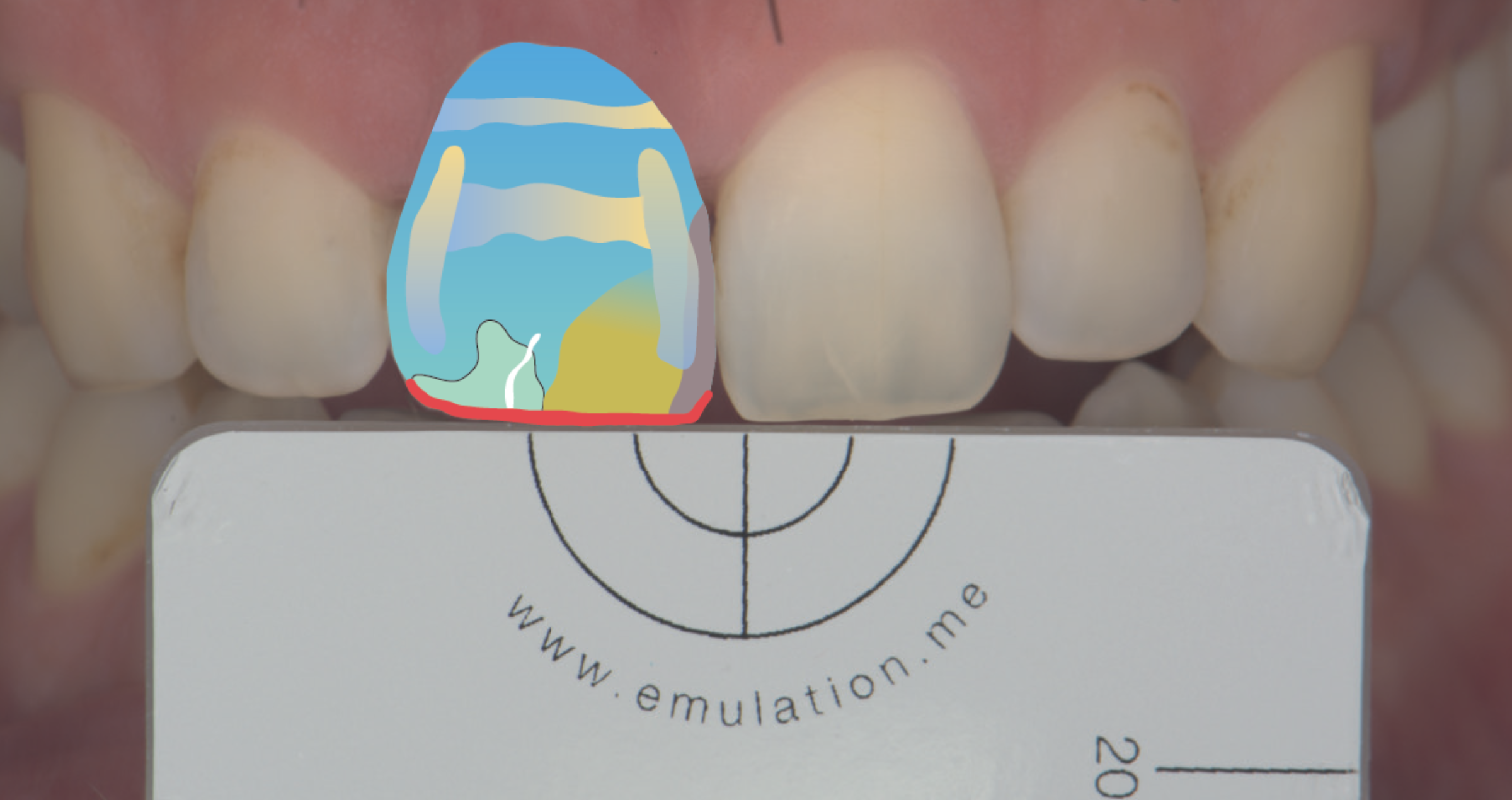
In the present case, a young male patient had a quite opaque crown on his maxillary right central incisor that needed to be replaced. During shade selection in the dental laboratory (Fig. 1), it was observed that the cervical third of the adjacent central incisor is lighter than the rest. Its shade in other areas corresponded to B4 on the VITA classical A1-D4® Shade Guide. Hence, it was decided to use a somewhat lighter material for the framework and darken the restoration especially in the middle and incisal areas with internal stains.


The concrete plan was to mill a coping made of KATANA™ Zirconia STML (Kuraray Noritake Dental Inc.) in the shade A3, characterize it with Esthetic Colorant (both Kuraray Noritake Dental Inc.) and sinter the piece (Figs 2 to 4). In the following layering procedure including just two bakes, a combination of internal stains and selected porcelains (CERABIEN™ ZR, Kuraray Noritake Dental Inc.) was applied as illustrated in Figures 5 to 12. Figures 13 to 17 display the result on the model, minor adjustments during try-in and the final treatment outcome.


Fig. 1. Shade selection. The cervical third of the adjacent central incisor is lighter than usual compared to the middle and incisal areas.


Fig. 2. Coping made of KATANA™ Zirconia STML in the shade A3.


Fig. 3. Intensification of some shade characteristics of the multi-layered blank using Esthetic Colorant in the shades Grey (middle) and Blue and Grey (incisal area).


Fig. 4. Coping after sintering.


Fig. 5. Colour map for internal staining, using CERABIEN™ ZR Internal Stains.


Fig. 6. Result of the use of Shade Base Stain Modifier Fluoro to increase the fluorescence and internal staining as planned.


Fig. 7. Application of Opacious Body OBA2, …


Fig. 8. … Translucent Tx …


Fig. 9.: … and Luster CCV-2.


Fig. 10. Crown after the first bake.


Fig. 11. Crown after the application of CERABIEN™ ZR Internal Stains: A+, Aqua Blue 2, White mixed with Cervical 2 (ratio: 30/70) for the cracks, and Cervical 2.


Fig. 12. Application of Luster LT1 to finalize the shape.


Fig. 13. Finished crown after the second bake on the model.


Fig. 14. Evaluation of the surface texture: Observing and copying the surface details is as important as the imitation of the shade characteristics.


Fig. 15. Minor texture adjustments during try-in.


Fig. 16. Final restoration in place after cementation with PANAVIA™ V5 (Kuraray Noritake Dental Inc.).


Fig. 17. Treatment outcome.


CONCLUSION


Mastering the art of observing natural teeth is the key to lifelike restorations. It allows a dental technician to develop a deep understanding of shade and morphology, which is – apart from knowing the selected materials very well – the only talent needed to reach a high level of excellence. Those who are observant and take in every detail with their eyes can be sure that their mind will understand and their hands will automatically follow.


Dental technician:

ANDREAS CHATZIMPATZAKIS


Andreas graduated from the Dental Technology Institute (TEI) of Athens in 1999. During his studies he followed a program at the Helsinki Polytechnic Department of Dental Technique, where he trained on implant superstructures and all ceramic prosthetic restorations. As of 2000, he is running the ACH Dental Laboratory in Athens, Greece, specialized on refractory veneers, zirconia and long span implant prosthesis. In 2017 Andreas visited Japan where he trained under the guidance of Hitoshi Aoshima, Naoto Yuasa and Kazunabu Yamanda and become International Trainer for Kuraray Noritake Dental Inc..


Large cavity restoration with resin composite: which materials to choose?

Case by Vasiliki Tsertsidou


What kind of resin composite is recommended for core build-up procedures? While there are specific dual-cure core build-up resin composites available on the market, it is not mandatory to use them. Light curing is advisable to be applied even for materials with dual-cure polymerization. Some conventional resin composites demonstrate more favourable properties for a core build-up compared to specific core build-up resin composites itself.1 Hence, it is possible to utilize a composite generally used in the dental office, provided it is indicated to and it is not applied deep within the root canal, where proper light curing would be impossible. The critical material properties for core build-ups are high filler load, sufficient flexural modulus and flexural strength.


CLEARFIL MAJESTY™ ES-2 composite series (Kuraray Noritake Dental Inc.) are suitable option for this case. With a filler load weight percentage of 78 and a flexural strength of 118 MPa (according to manufacturer), CLEARFIL MAJESTY™ ES-2 Classic corresponds to core build-up prerequisites*. The following case is illustrating the clinical procedure.


*The indication range of CLEARFIL MAJESTY™ ES-2 composite does not cover core build-up. In the specific case it is used for creating a large Class II filling where all conditions from the IFU, such as curing depth, are met.


Fig. 1. Endodontically treated tooth with a vertical fracture of palatal wall on maxillary right second premolar.


Fig. 2. Buccal view of the tooth.


Fig. 3. Clinical image, directly after removal of fragment.


Fig. 4. Fragment of the maxillary right second premolar.


Fig. 5. Circumferential matrix band for build-up to assist endodontic retreatment.


Fig. 6. Build-up of the missing walls (margin relocation) with CLEARFIL MAJESTY™ ES-2 Classic (A3).


Fig. 7. Temporary filling of the cavity.


Fig. 8. Replacement of the temporary filling material with CLEARFIL MAJESTY™ ES-2 Classic.


Fig. 9. Crown preparation.


Fig. 10. Proximal carious lesion present on the adjacent fist premolar.


Fig. 11. Situation after rubber dam placement and caries removal.


Fig. 12. Cavity restored with CLEARFIL MAJESTY™ ES-2 Classic.


Fig. 13. Prepared crown.


Fig. 14. Crown after sandblasting of the intaglio.


Fig. 15. Mechanically cleaned abutment tooth ready for pre-treatment.


Fig. 16. Intaglio of the crown treated with CLEARFIL™ CERAMIC PRIMER PLUS.


Fig. 17. Etching of the composite surface with phosphoric acid gel.


Fig. 18. Air-drying of PANAVIA™ V5 Tooth Primer on the abutment tooth.


Fig. 19. Crown in place after cementation with PANAVIA™ V5 Paste and excess removal.


A GOOD CHOICE


Dual-cure core build-up resin composites are two-component materials that need to be mixed homogeneously, which obstracts composition from containing high filler load. However, to prevent deformation of the core, a highly filled composite is advisable. This better simulates the flexural modulus of natural tissues compared to materials with low filler load. Consequently, a light-curing material like CLEARFIL MAJESTY™ ES-2 might be a better option. Applied in 2-mm increments in the core area (and not in the root canal), it performs well and provides the desired outcomes. Additionaly, the option of utilising the same material as for any other type of direct restorations is simplifying the stock management and supporting dental practitioners striving for a simplification of clinical procedures.


References

1. Spinhayer L, Bui ATB, Leprince JG, Hardy CMF. Core build-up resin composites: an in-vitro comparative study. Biomater Investig Dent. 2020 Nov 3;7(1):159-166. doi: 10.1080/26415275.2020.1838283. PMID: 33210097; PMCID: PMC7646551.


Dentist:

VASILIKI TSERTSIDOU