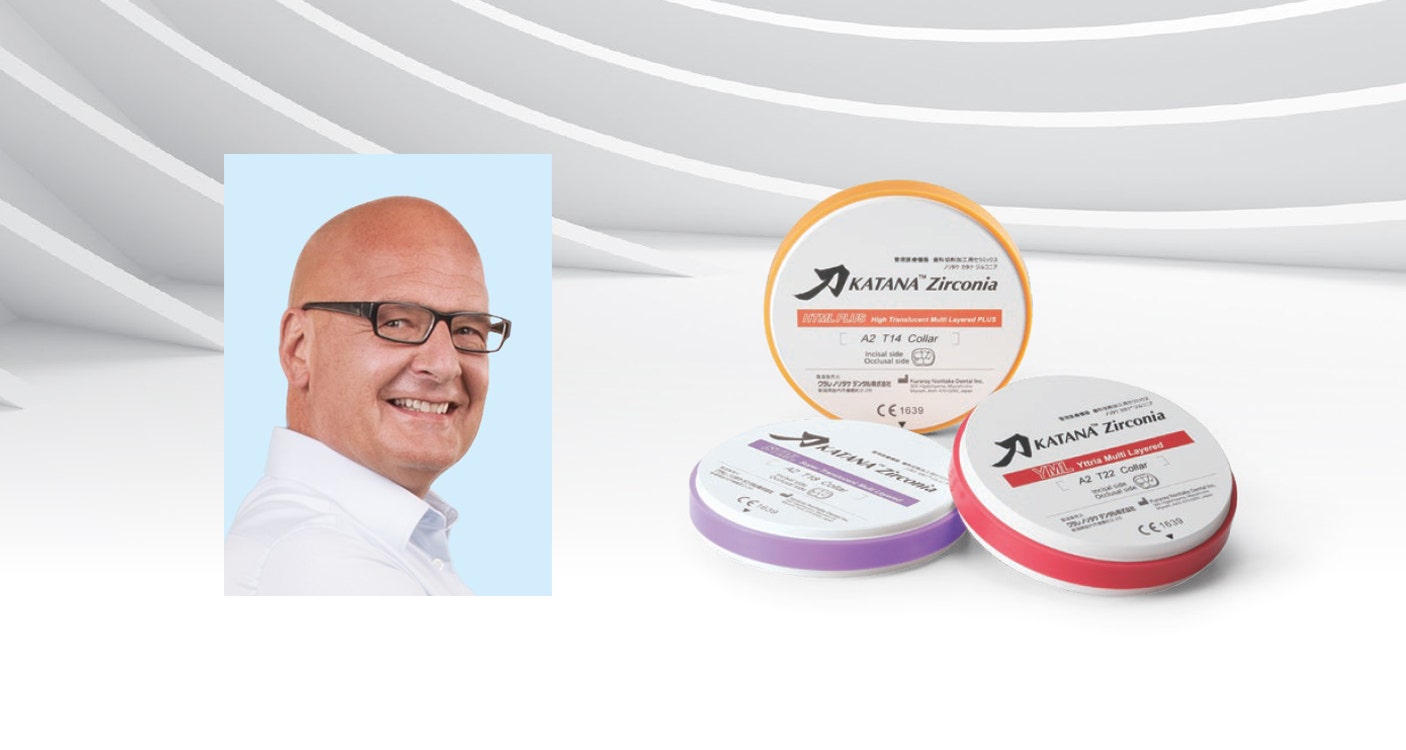
Hans Baars

Interview Hans Baars

KURARAY, DAT ZIJN WIJ


Accountmanager Hans Baars

"Ik leg graag uit waarom onze producten zo goed presteren"

Toen Hans Baars in 2008 bij een implantaatfabrikant werkte, werd hij naar eigen zeggen besmet met het 'tandheelkundige virus'. "Tandartsen zijn vaak vakidioten, ze kunnen heel enthousiast en aanstekelijk over hun vak vertellen." Baars wilde alles weten en dook volledig in de tandheelkundige producten. Dat leidde ertoe dat hij, inmiddels bij Kuraray, niet alleen als accountmanager werkt, maar ook wordt opgeleid als technical manager. Zo kan hij tandartsen niet alleen uitleggen hóe een product werkt, maar ook waaróm het product zo goed werkt. "Veel doorvragen zat altijd al in me. Ik neem niet klakkeloos dingen aan, maar wil weten waarom iets doet wat het doet."

Waar bestaan je werkzaamheden uit?

In mijn functie als accountmanager probeer ik steeds adviserend te verkopen. Het delen van kennis en creëren van bewustzijn is hierbij erg belangrijk.

Ook geef ik veel presentaties en hands-on trainingen. Ik vind het belangrijk om theoretische kennis te combineren met kennis uit de praktijk. Daarom ben ik ook regelmatig te vinden naast de stoel, zowel om tandartsen te adviseren over onze producten als om te leren.

Daarnaast word ik opgeleid als technical manager. In die functie ben ik lid van het scientific marketing team van Kuraray, waarin alle ins en outs van nieuwe producten worden besproken en vertaald naar marketing.

Wat is volgens jou het unieke aan Kuraray?

De producten van Kuraray staan garant voor hoge kwaliteit. In mijn functie is het erg belangrijk om vertrouwen te hebben in de producten waar ik over praat en dat ze wetenschappelijk onderbouwd zijn. Dat is absoluut zo.

Daarnaast stopt Kuraray veel energie in het op kennis brengen en houden van personeel. Dat is heel goed. Zo weten wij allemaal precies waar we het over hebben. En de lijntjes zijn heel kort, mede omdat we een kantoor in Nederland hebben.

Waarvoor kunnen tandartsen contact met je opnemen?

Ze kunnen me benaderen voor productinformatie, gebruiksinstructies, hands-on trainingen, lezingen en presentaties. Dit kan individueel of in groepsverband. Daarnaast kom ik graag langs om te vertellen over nieuwe innovatieve producten op het gebied van cementen, flowable composieten, CAD/CAM-blokjes en contaminatieverwijdering. Ook belicht ik op IQual-avonden graag de wetenschappelijke kant achter onze producten. Uitleggen waarom onze producten zo goed presteren, vind ik nog steeds een van de leukste dingen om te doen.

E-mail: hans.baars@kuraray.com of bel +31 (0) 6 102 159 74. Of klik op het plaatje om direct een afspraak in te plannen.

Over Kuraray

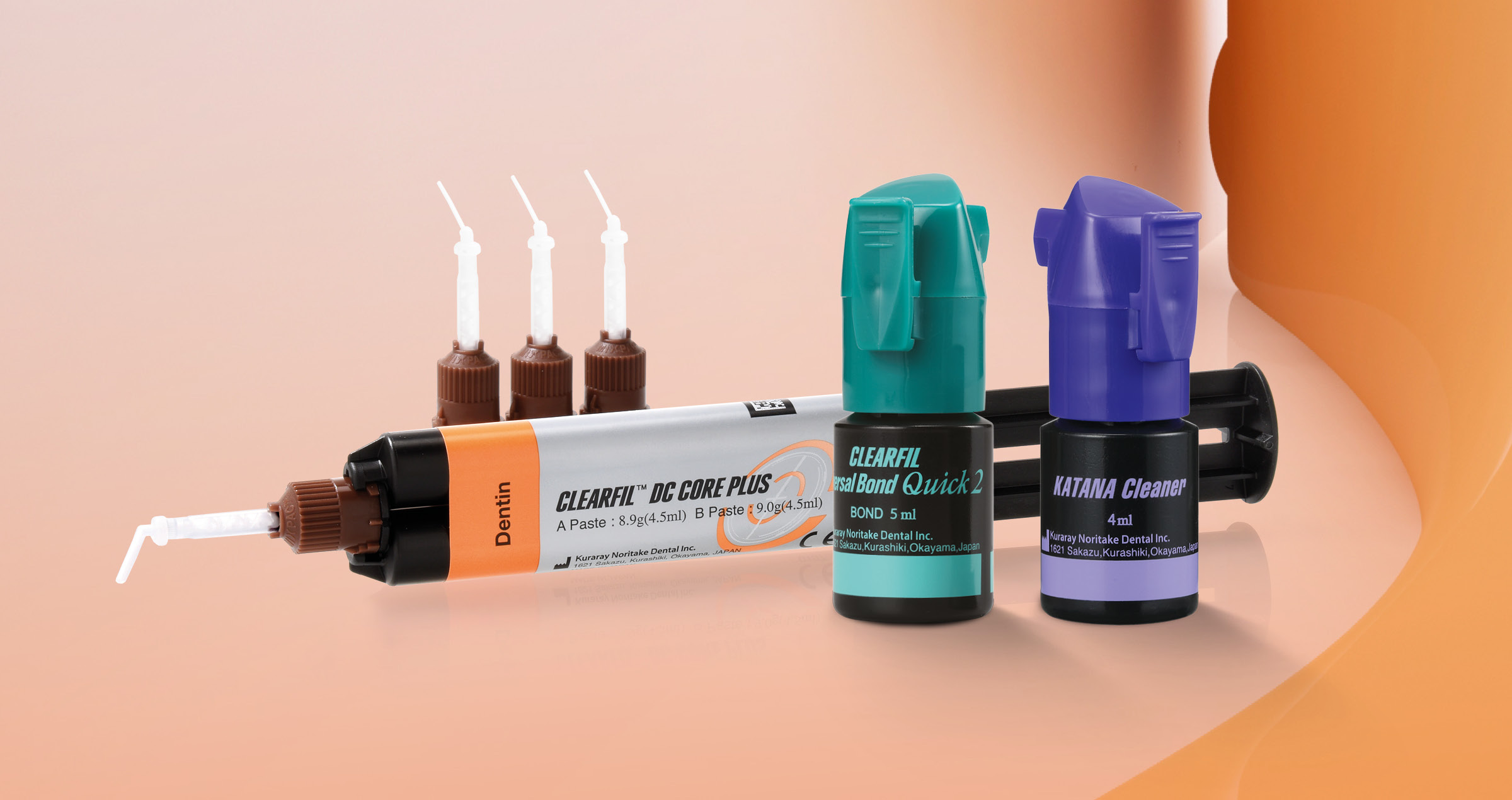
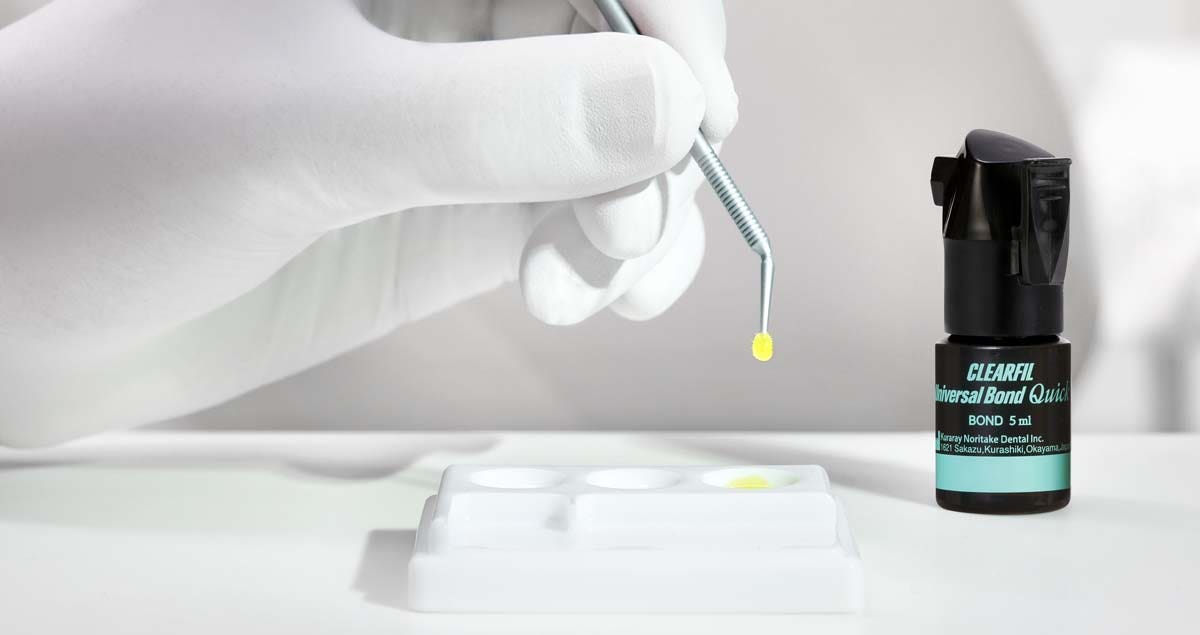
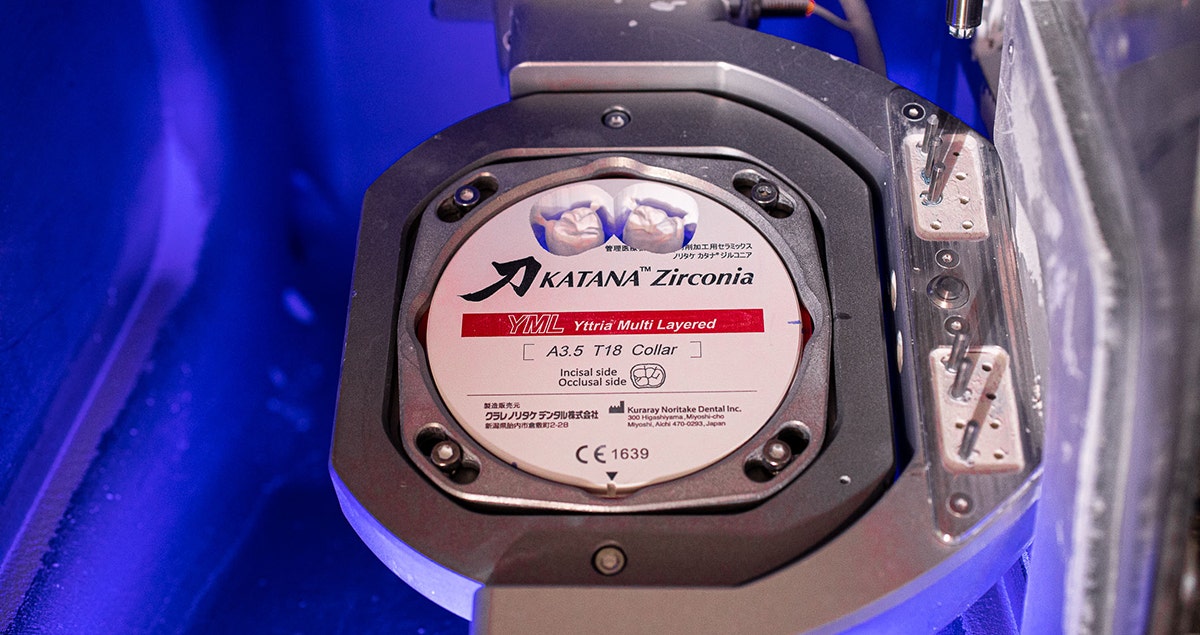
Kuraray werd in 1926 in het Japanse Kurashiki opgericht. Vandaag de dag is het bedrijf een mondiale topproducent op het gebied van medische producten, materialen, textiel, chemicaliën, adhesieven en veel meer. In 2012 gingen Kuraray Medical en Noritake Dental Supply samen op in Kuraray Noritake Dental. Het bedrijf levert dentale bondings, composiet en andere producten aan meer dan 90 landen wereldwijd. Bekende producten zijn onder meer  KATANA Zirconia, CLEARFIL Universal Bond Quick en PANAVIA SA Cement Universal.

Conventional cementation or adhesive luting - a guideline

Conventional cementation or adhesive luting - A guideline

A guideline with regard to contemporary materials


The retention of the fixed prosthodontic restorations is a critical factor for the long-term success, as the loss of crown retention is one of the main reasons for failure of crowns and fixed dental prosthesis (FDP) (1, 2). There are three main elements that need to be considered to achieve proper retention of the restorations; the tooth preparation, the restorative material and the luting agent.


TOOTH PREPARATION


During tooth preparation there are some important features to be considered, such as the height, angle and surface texture of the abutment tooth, in order to achieve an adequate retention and resistance form which provide stability of the restorations to resist dislodgment and subsequent loss (3). Retention form is responsible for counteracting tensile stresses, whereas resistance form counteracts shear stresses (4).


In order to achieve a sufficient retention and resistance form for full coverage crowns it is recommended that the height of the abutment tooth should be at least 4 mm and that the optimal convergence angle should range from 6 to 12 degrees with a maximum of 15 degrees (1, 5-8).


RESTORATIVE MATERIAL


With the continuous introduction of new restorative materials to the dental market it is important to take into consideration the different mechanical properties of the various materials. The composition and the surface properties of the material have a decisive role in the ability to accomplish mechanical and/or chemical attachment to the restoration and therefore achieving required retention.


LUTING AGENT


The luting agent is the connection between the tooth and the restoration. Proper luting of indirect restoration is critical in achieving long-term success as it highly influences the retention of the restoration as well as tightly sealing the gap between the restoration and the tooth. Although there are several classifications for the definitive luting agents, they can be , however, classified into two main categories based on the ability to achieve chemical connection to different substrates; conventional (e.g. zinc phosphate, glass-ionomer and resin-modified glass-ionomer cements) and adhesives. Most commonly used and best documented adhesive luting agents are the adhesive composite resin cements.


Composite resin cements can be further classified according to the chemical composition into traditional full-adhesive resin cement and self-adhesive resin cements, both also differ in the bonding procedure. The full-adhesive resin cements require pre-treatment of the tooth structure and restorative material using separate adhesive systems. In this combination of the resin cement and the adhesive system, very durable chemical bonding can be reached.


To simplify the luting procedure and eliminate the need of using several components, the self-adhesive resin cements are a good choice for the daily busy practice, in which reliable bonding can be achieved in only one simple step of cement application, mostly without additional primers or bonding agents.


With the availability of different types of cements, the decision of choosing the suitable luting agent and method can be confusing for the practitioner. Especially with the wide use of contemporary restorative materials such as new generations of highly translucent zirconia as well as reinforced-composites, it is important to take into consideration that the properties of such materials differ highly from metal or earlier generations of zirconia. Subsequently the choice of the luting agent must be appropriate to achieve satisfying results and long-term success. Therefore, in this article, the authors aim to provide insights for the clinicians on choosing the correct luting agent that can help achieve satisfactory results for the dentist as well as the patients.


CONVENTIONAL CEMENTATION OR ADHESIVE LUTING?


The choice of whether to use a conventional cement or an adhesive resin cement depends on several factors, the key factors are:

  1. Retention and resistance form of the abutment tooth.
  2. Mechanical and optical properties of the restorative material (flexural strength and translucency).
  3. Simplicity of the workflow and special requirements of the working environment.


1) RETENTION AND RESISTANCE FORM OF THE ABUTMENT TOOTH


Minimal-invasive restorations, such as resin-bonded FDP, labial and occlusal veneers and inlay-retained FDP are based on a non-retentive preparation form. In this case the only possible method to achieve retention is the adhesive luting (9-11).


Even though such preparations completely lack a retentive form, long-term success of the restorations is well-documented when using a durable resin cement (e.g. PANAVIA™ 21, Kuraray Noritake Dental Inc., Japan) and proper bonding procedure (10, 11).


For full-coverage restorations (e.g. crowns and FDPs), the guidelines for tooth preparation discussed before (minimum height of 4 mm and maximum convergence of 15 degrees) need to be applied in order to achieve the retention and resistance form required to make cementation with a conventional luting agent acceptable.


However, in reality this retention form is hard to realize due to several factors.


In cases of severe loss of tooth substance, achieving a minimum height of the abutment tooth is only possible with building up the tooth using a core build-up material which in some cases can be considered time consuming especially when the required build-up is minor (for example 1-2 mm). Moreover, increasing the height through core build-up is sometimes not possible, as in cases with short clinical crowns and insufficient occlusal clearance that is essential to provide the minimum thickness required for the restorative material. In such cases surgical crown lengthening is necessary to increase the height of the tooth without compromising the occlusal space required, which can be time consuming for the clinician and undesirable for the patient as it involves a surgical procedure and extends the treatment process.


Concerning the convergence angle, several studies showed that in reality and in daily practice of the dentist, the preparation angle is much higher than 15 degrees (5, 6, 12, 13). For instance, preparations from general practitioners were evaluated digitally and compared to clinical recommendations and it was found that the mean convergence angle was 26.7 degree with the distopalatal angle being 31.7 degree (12).


Based on the previous concerns, it can be concluded that achieving a proper retention form during daily practice is hard to realize and thus conventional cementation in such cases can present clinical problems especially on the long term. Therefore, adhesive luting can be recommended in these cases as an alternative to conventional cementation (6, 14). For full-coverage restorations with preparation designs featuring at least some mechanical retention, the use of self-adhesive resin cements can be considerate a good alternative as it provides high clinical success rates (9, 15).


Conclusion / Clinical Significance:

  • For non-retentive minimal-invasive restorations, traditional full-adhesive luting is a must.
  • For full-coverage restorations, full-adhesive or self-adhesive luting is recommended.
  • In case a retentive preparation with minimum height of 4mm and convergence angle of 6-12 degrees, adhesive luting as well as conventional cementation can be used.


2) MECHANICAL AND OPTICAL PROPERTIES OF THE RESTORATIVE MATERIAL


Flexural strength and translucency of the restorative material are critical factors that influence the decision which luting agent to use.


a) Flexural strength

As a general guideline for all-ceramic restorations, ceramics with low and medium flexural strength under 350 MPa should be adhesively luted with composite resin cements, as these restorations rely on resin bonding for reinforcement and support (9, 14, 16). This includes feldspathic-, glass-, hybrid-ceramics and composite.


Although discussions on conventional cementation versus adhesive luting for high-strength ceramics with flexure strength of more than 350 MPa have been going on for a long time (9), there are several studies showing an increased stability and strength of all types of ceramics, even lithium disilicate and zirconia, when they are adhesively luted (9, 17-20).


It is also important to consider that the documented success of most conventional cements is mainly combined with restorations made of metal or early generations of zirconia. Nonetheless, the clinical success of new generations of high-translucent zirconia can be significantly influenced by the luting agent as these new generations have notably lower flexural strength (9). And therefore, attention has to be paid to minimal material thickness together with adhesive luting to ensure long-term clinical success and prevent fractures (9).


Conclusion / Clinical Significance:

  • For glass-ceramic, hybrid-ceramics and composites, adhesive luting is a must.
  • For lithium disilicate and zirconia restorations, adhesive luting is highly recommended.
  • For metal restorations, adhesive luting as well as conventional cementation can be used.

b) Translucency

To meet the increasing esthetic demands of the patients, new materials and techniques are continuously introduced, aiming to provide the perfect esthetic restorations. This includes not only new restorative materials but also new modifications to the luting agents as well. Highly translucent ceramics can deliver superior esthetics and therefore their popularity and clinical applications expanded widely among clinicians. It is nevertheless very important for the clinician to apprehend that the final esthetic result is influenced by the complete restorative complex and not just by the restorative material, as the luting agent is a key factor in achieving the desired high esthetics (21-24).


For that reason, the choice of an opaque conventional cement for cementation of high-translucent restoration should not be recommended as it can negatively influence the final esthetic results. Therefore, composite resin cements are the material of choice, as they are available in different shades and translucencies for the clinician to be able to choose the suitable resin cement to achieve the desired esthetics based on the restorative material and thickness as well as the color of the underlying abutment. Some composite resin cements offer try-in paste so that the clinician and the patient can visualize the final results before luting and therefore better choose the appropriate shade of the resin cement.


Conclusion / Clinical Significance:

  • For all translucent ceramic restorations, adhesive luting is highly recommended.
  • For metal and opaque high-strength zirconia restorations, adhesive luting as well as conventional cementation can be used.


3) SIMPLICITY OF THE WORKFLOW AND SPECIAL REQUIREMENTS OF THE WORKING ENVIRONMENT


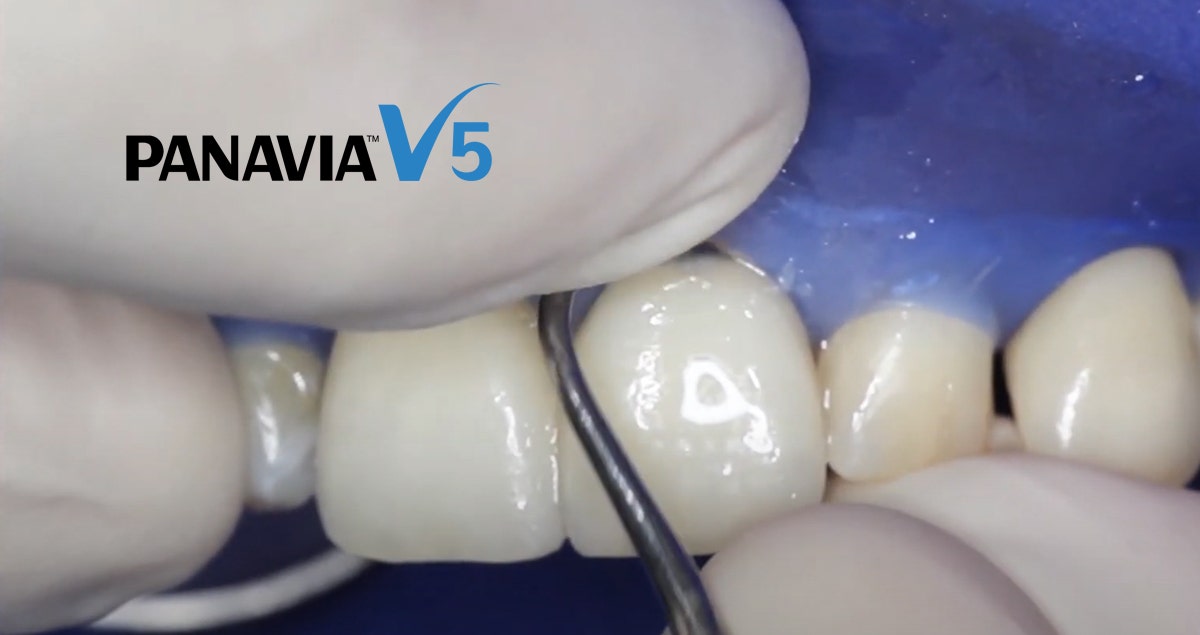
The process of adhesive luting with full-adhesive composite resin cements (e.g. PANAVIA™ V5, Kuraray Noritake Dental Inc.) requires separate etching and priming procedures usually using a self-etch adhesive system (e.g. PANAVIA™ V5 Tooth Primer, Kuraray Noritake Dental Inc.) as well as a primer for the restorative material such as a universal primer that can be used for different substrates including metal, ceramics and composites (e.g. CLEARFIL™ CERAMIC PRIMER PLUS, Kuraray Noritake Dental Inc.). These procedures are technique sensitive and intolerant to contaminations, therefore the luting process needs a dry oral environment avoiding any contamination, such as saliva or blood, preferably using rubber dam, as any contamination can compromise the bond strength. Therefore, inability to maintain dry field as in case of subgingival preparation margins is considered a contraindication for traditional full-adhesive luting. However, this method provides very durable bond strength, therefore it is the luting method of choice for minimal invasive non-retentive preparations, such as resin-bonded FDPs, labial and occlusal veneers and inlay-retained FDPs, in which the retention is mainly dependent on the adhesion (9-11).


Still, in everyday practice, clinicians seek efficiency and effectivity by using a simple but durable luting agent for the insertion of full-coverage restorations such as tooth-or implant-supported crowns and FDPs. Although the conventional cements are simple and fast in their use, they provide little or no adhesion at all and therefore they are not recommended in several cases (6, 9, 14, 15, 19, 20). A simple but reliable method can be well accomplished by the use of self-adhesive resin cements (e.g. PANAVIA™ SA Cement Universal, Kuraray Noritake Dental Inc.) as they can be considered the best alternative for full-adhesive adhesive luting in less critical situations that do not rely entirely on adhesion (9, 15). Furthermore, self-adhesive resin cements are not as technique sensitive and intolerant to contaminations as traditional full-adhesive resin cements.


Typically, a MDP phosphate monomer is integrated in the self-adhesive resin cement, which is required to chemically bond to different substrates, making it possible for the resin cement to chemically bond to non-precious metals and zirconia as well as tooth substance. However, regardless of the self-adhesive resin cement, the use of a separate silane coupling agent is still required when bonding to silica-based ceramics (e.g. leucite, lithium silicate and lithium disilicate), hybrid ceramics and composite restorations.


Recently, a unique self-adhesive resin cement (PANAVIA™ SA Cement Universal, Kuraray Noritake Dental Inc.) was introduced: through an innovative and distinctive production technology, a silane-coupling agent (long carbon chain silane (LCSi)) is integrated in the cement, and thus being the real universal adhesive system that completely eliminate the need for any other adhesive or primer when being used for all substrates including glass ceramics. So the luting process can be in this case truly shortened to one step.


Therefore, this unique cement combines several advantages of adhesive luting as well as the straightforward procedure of the conventional cementation without compromising the clinical success, regardless of the type of the restorative material.


As a conclusion, adhesive luting has more benefits over conventional cementation, regarding retention, esthetics, stabilization of the tooth and the restoration as well as preventing micro leakage (6, 9, 14-17, 19, 20, 25, 26) (Table 1). Moreover, there are no absolute contraindications for adhesive luting other than hypersensitivity to methacrylate monomers, as self-adhesive resin cements can be used in cases where full-adhesive resin cements are contraindicated, such as inability to avoid contamination (Table 2). As a result, adhesive luting can be generally used in every clinical situation, whereas conventional cementation is limited (Table 3).


Dentist(s):

Prof. Dr. Florian Beuer
Professor and Chair, Department of Prosthodontics, Geriatric Dentistry and Craniomandibular Disorders, Charité – Universitätsmedizin Berlin, Germany.


Dr. Adham Elsayed
Clinical and Scientific manager, Kuraray Europe GmbH, Hattersheim, Germany.


References

1. Ladha K, Verma M. Conventional and contemporary luting cements: an overview. J Indian Prosthodont Soc. 2010;10(2):79-88.
2. Schwartz NL, Whitsett LD, Berry TG, Stewart JL. Unserviceable crowns and fixed partial dentures: life-span and causes for loss of serviceability. J Am Dent Assoc. 1970;81(6):1395-401.
3. Gilboe DB, Teteruck WR. Fundamentals of extracoronal tooth preparation. Part I. Retention and resistance form. J Prosthet Dent. 1974;32(6):651-6.
4. Muruppel AM, Thomas J, Saratchandran S, Nair D, Gladstone S, Rajeev MM. Assessment of Retention and Resistance Form of Tooth Preparations for All Ceramic Restorations using Digital Imaging Technique. J Contemp Dent Pract. 2018;19(2):143-9.
5. Edelhoff D, Özcan M. To what extent does the longevity of fixed dental prostheses depend on the function of the cement? Working Group 4 materials: cementation. Clin Oral Implants Res. 2007;18 Suppl 3:193-204.
6. Güth JF, Stawarczyk B, Edelhoff D, Liebermann A. Zirconia and its novel compositions: What do clinicians need to know? Quintessence Int. 2019;50(7):512-20.
7. Smith CT, Gary JJ, Conkin JE, Franks HL. Effective taper criterion for the full veneer crown preparation in preclinical prosthodontics. J Prosthodont. 1999;8(3):196-200.
8. Uy JN, Neo JC, Chan SH. The effect of tooth and foundation restoration heights on the load fatigue performance of cast crowns. J Prosthet Dent. 2010;104(5):318-24.
9. Blatz MB, Vonderheide M, Conejo J. The Effect of Resin Bonding on Long-Term Success of High-Strength Ceramics. J Dent Res. 2018;97(2):132-9.
10. Chaar MS, Kern M. Five-year clinical outcome of posterior zirconia ceramic inlay-retained FDPs with a modified design. J Dent. 2015;43(12):1411-5.
11. Kern M, Passia N, Sasse M, Yazigi C. Ten-year outcome of zirconia ceramic cantilever resin-bonded fixed dental prostheses and the influence of the reasons for missing incisors. J Dent. 2017;65:51-5.
12. Guth JF, Wallbach J, Stimmelmayr M, Gernet W, Beuer F, Edelhoff D. Computer-aided evaluation of preparations for CAD/CAM-fabricated all-ceramic crowns. Clin Oral Investig. 2013;17(5):1389-95.
13. Nordlander J, Weir D, Stoffer W, Ochi S. The taper of clinical preparations for fixed prosthodontics. J Prosthet Dent. 1988;60(2):148-51.
14. Blatz MB. Long-term clinical success of all-ceramic posterior restorations. Quintessence Int. 2002;33(6):415-26.
15. Blatz MB, Phark JH, Ozer F, Mante FK, Saleh N, Bergler M, et al. In vitro comparative bond strength of contemporary self-adhesive resin cements to zirconium oxide ceramic with and without air-particle abrasion. Clin Oral Investig. 2010;14(2):187-92.
16. Kern M, Thompson VP, Beuer F, Edelhoff D, Frankenberger R, Kohal RJ, et al. All ceramics at a glance. 3rd English Edition ed: AG Keramik; 2017.
17. Attia A, Abdelaziz KM, Freitag S, Kern M. Fracture load of composite resin and feldspathic all-ceramic CAD/CAM crowns. J Prosthet Dent. 2006;95(2):117-23.
18. Borges GA, Caldas D, Taskonak B, Yan J, Sobrinho LC, de Oliveira WJ. Fracture loads of all-ceramic crowns under wet and dry fatigue conditions. J Prosthodont. 2009;18(8):649-55.
19. Campos F, Valandro LF, Feitosa SA, Kleverlaan CJ, Feilzer AJ, de Jager N, et al. Adhesive Cementation Promotes Higher Fatigue Resistance to Zirconia Crowns. Oper Dent. 2017;42(2):215-24.
20. Weigl P, Sander A, Wu Y, Felber R, Lauer HC, Rosentritt M. In-vitro performance and fracture strength of thin monolithic zirconia crowns. J Adv Prosthodont. 2018;10(2):79-84.
21. Calgaro PA, Furuse AY, Correr GM, Ornaghi BP, Gonzaga CC. Post-cementation colorimetric evaluation of the interaction between the thickness of ceramic veneers and the shade of resin cement. Am J Dent. 2014;27(4):191-4.
22. Chang J, Da Silva JD, Sakai M, Kristiansen J, Ishikawa-Nagai S. The optical effect of composite luting cement on all ceramic crowns. J Dent. 2009;37(12):937-43.
23. Turgut S, Bagis B. Effect of resin cement and ceramic thickness on final color of laminate veneers: an in vitro study. J Prosthet Dent. 2013;109(3):179-86.
24. Volpato CA, Monteiro S, Jr., de Andrada MC, Fredel MC, Petter CO. Optical influence of the type of illuminant, substrates and thickness of ceramic materials. Dent Mater. 2009;25(1):87-93.
25. Al-Makramani BMA, Razak AAA, Abu-Hassan MI. Evaluation of load at fracture of Procera AllCeram copings using different luting cements. J Prosthodont. 2008;17(2):120-4.
26. Gu XH, Kern M. Marginal discrepancies and leakage of all-ceramic crowns: influence of luting agents and aging conditions. Int J Prosthodont. 2003;16(2):109-16.


Our latest "BOND" magazine is available now!

Volume 7 of our "BOND" magazine is now published and ready to read!


Content Highlights:

  • Composites versus hybrid ceramics
  • Flowable composites a universal solution?
  • Universal adhesives, is one bottle sufficient?


Start Reading: BOND | VOLUME 7 | 10/2020


Het universele alternatief voor reinigen met fosforzuur

Behalve voor het etsen van tandweefsel wordt fosforzuur ook veelvuldig gebruikt als intra- en extra-oraal reinigingsmiddel. Is fosforzuur wel altijd het juiste middel?


Directe restauraties

Veel bondingprocedures worden gedaan volgens het zelfetsprincipe. De zure monomeren in de primer en/of de bonding modificeren de smeerlaag en etsen het tandoppervlak in geringe mate. Hierdoor wordt zowel een chemische als mechanische hechting  gerealiseerd tussen de bonding en het tandweefsel.

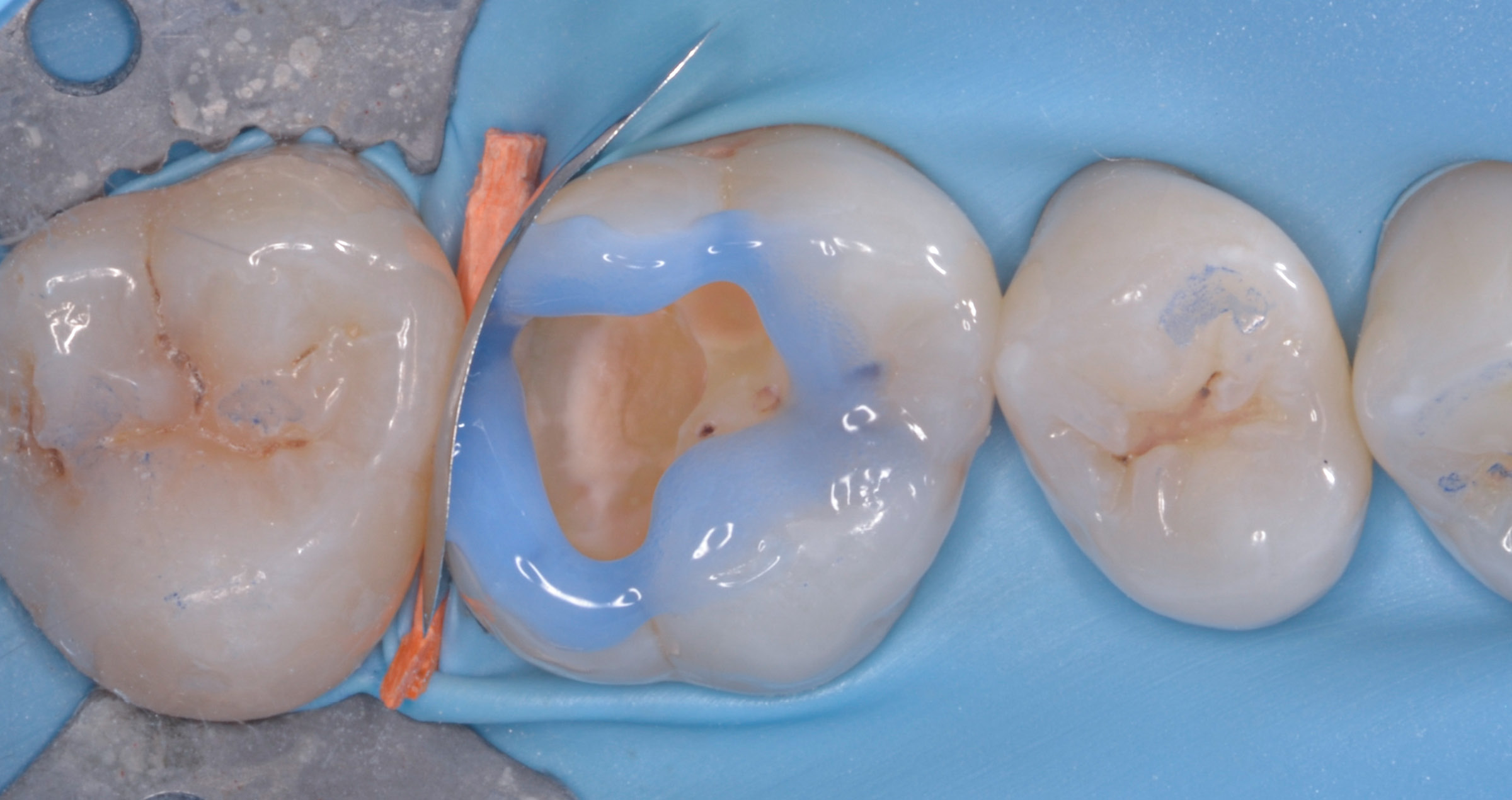
Indien er contaminatie is opgetreden in de caviteit, dan is het onwenselijk om die met behulp van fosforzuur weg te nemen. Immers, hydroxyapatiet wordt weggeëtst uit het tandoppervlak, waardoor er geen chemische hechting meer kan plaatsvinden.


Katana Cleaner bevat een MDP-zout van triethanolamine, kortweg MDP-TEA en bevat ook nog ‘vrij’ MDP. Door het bijna neutrale karakter (pH 4,5) van KC zal er in tegenstelling tot bij gebruik van fosforzuur geen HAp worden verwijderd. Wel echter wordt eventuele speeksel- en/of bloedcontaminatie op effectieve manier geëlimineerd.


Indirecte voorzieningen

Voor glashoudende materialen als lithiumdisilicaat en veldspaatporselein is fosforzuur een beproefd middel om verontreinigingen, bijv. de neerslag die ontstaat bij het etsen ervan met HF, te verwijderen. Maar routinematig gebruik van fosforzuur om indirecte voorzieningen te ontdoen van contaminatie is mogelijk niet verstandig. Zo wordt het gebruik ervan op zirkoniumoxide zelfs afgeraden. Het beïnvloed de chemische hechting van gefosfateerde monomeren aan het zirkoniumoppervlak nadelig.


Bij het cementeren van prothetische voorzieningen met zelfhechtende cementen (bijv. PSAU) of cementen die gebruik maken van zelfetsende primers (Panavia f2.0 of V5) is het gebruik van fosforzuur op dentine niet geïndiceerd. Dit om de zelfde reden als bij directe restauraties.


Katana Cleaner is in tegenstelling tot fosforzuur 35% een niet schadelijk product. Onafhankelijk van het type tandstructuur, het soort restauratiemateriaal en de adhesieve procedure. Daarom is Katana Cleaner een universeel reinigingsoplossing om in uw procedures te integreren.


Zie ook mijn eerdere blog over fosforzuur.

EC Certificate of Kuraray Noritake Dental Inc. products

At Kuraray Noritake Dental Inc. we are proud that our products are being developed using innovative technologies, paying attention to detail and keeping in mind the needs of our customers.


We are committed to offering outstanding products that provide dental professionals with the flexibility for self-expression and creativity, adding value and delivering superb aesthetic results to each and every procedure.


Usability, simplicity and, of course, quality always in mind - providing dental professionals with materials that will make their daily practice stress free.


As a prove that our products meet the needs of dentists and lab technicians alike, we are happy to share with you the EC Certificates of Full Quality Assurance System that we have received from The Notified Body.  Those can be downloaded below.


Chairside products


Labside products


Het verleden, heden en de toekomst van adhesieve tandeelkunde. Interview met Prof. Bart van Meerbeek

Het verleden, heden en de toekomst van adhesieve tandeelkunde
Interview met Prof. Bart van Meerbeek

Prof. Bart Van Meerbeek, medehoofdredacteur van Journal of Adhesive Dentistry, is een van de meest gezaghebbende autoriteiten op het gebied van tandheelkundige adhesieven. In dit artikel geeft hij aan hoe die materialen in de afgelopen drie decennia zijn verbeterd en hoe de toekomst van de adhesieve tandheelkunde zich verder zou kunnen ontwikkelen.


Professor van Meerbeek, op welke manier zijn bondingproducten veranderd en verbeterd vanaf het moment dat u met onderzoek van start bent gegaan?
Volgens mij heeft de grote vooruitgang binnen de adhesieve tandheelkunde - en in het bijzonder ten aanzien van bondingproducten - in de afgelopen dertig jaar een enorm effect gehad op de tandheelkunde in het algemeen, en dan uiteraard vooral op de restauratieve tandheelkunde. Bij een groot aantal van de huidige restauratieve tandheelkundige procedures wordt gebruikgemaakt van adhesieven ; deze zijn sterk verbeterd in vergelijking met de tijd - meer dan twee decennia geleden - toen ik mijn dissertatie over dentinebonding schreef. Hechting aan glazuur is uiteraard verhoudingsgewijs gemakkelijk in vergelijking  met die  aan dentine. Toen ik begon met onderzoek naar dit onderwerp, werd ik beperkt tot klinische tests; daarbij geconfronteerd wordend  met een relatief groot aantal restauratieve falingen binnen korte tijd. Ik verricht nu al bijna dertig jaar onderzoek op dit gebied en prijs me gelukkig dat ik van dichtbij getuige kon zijn van de snelle vooruitgang van de prestaties en kwaliteit van tandheelkundige adhesieven.

Op een zeker moment kwam de onderzoekswereld tot het inzicht dat er een tussenliggende smeerlaag is, die wordt gevormd via preparatie van de caviteit, en dat die laag van invloed is op het bondingproces. Als je een succesvolle micromechanische en chemische hechting aan het substraat wilt realiseren, zul je eerst iets met deze smeerlaag moeten doen.

Vervolgens belandden we in het tijdperk van de conditioners en primers. In het verleden waren de restauratieve tandartsen ietwat huiverig voor het gebruik van fosforzuur vanwege het risico op pulpa-irritatie. Steeds vaker echter werd overgegaan op  het gebruik van fosforzure etsmiddelen en van primers, die de hechting van de bonding aan dentine effectief bevorderden. Hoewel er in vitro uitstekende hechtresultaten bereikt werden met meerstaps adhesieven (wat later ook werd bevestigd door klinisch onderzoek), concentreerde men zich bij het voortgaande ontwerp en ontwikkeling van adhesieven op het vereenvoudigen en verkorten van de procedure.

Uiteindelijk kwamen twee adhesiefsystemen naar voren die gebruik maken van twee essentieel verschillende hechtmethoden; de ets-en-spoel adhesieven en de zelfets of ets-en-droog adhesieven. Dankzij de nieuwste generatie universele adhesieven kunnen tandartsen nu kiezen welke van de twee methoden zij willen toepassen met één en hetzelfde adhesief.


Wat zijn de voordelen van  adhesieve restauraties ten opzichte van meer traditionele methoden?
Adhesieve restauraties zijn minimaal invasief; de tandarts hoeft geen gezond tandweefsel te verwijderen voor ondersnijdingen om de restauratie op zijn plaats te houden. Er kan dus meer behoudend worden gewerkt. Optimaal behoud van glazuur moet vooropstaan bij elke restauratieve behandeling, aangezien dat zonder meer het beste weefsel om aan te hechten is. Hoewel hechting aan dentine altijd lastiger is gebleven en onze inspanningen op het gebied van bonding feitelijk lange tijd heeft vertraagd, kunnen gebitselementen vandaag de dag adhesief worden gerestaureerd op een betrouwbare, voorspelbare en duurzame manier. Inclusief een effectieve hechting aan dentine.

De hoeveelheid solitaire restauraties is aanzienlijk toegenomen, samen met een uiterst succesvolle implantologie om ontbrekende elementen te vervangen, met daarbij een afnemende noodzaak voor bruggen. Bonding heeft de bijkomende verschuiving van conventionele invasieve kronen naar weefselsparende partiële restauraties gestimuleerd; hedendaagse adhesieven zijn in staat om dergelijke partiële restauraties op vrij vlakke en zelfs niet-retentieve oppervlakken op hun plaats te houden. Bovendien maken adhesieve technieken het mogelijk om restauraties met een meer natuurlijke uitstraling te realiseren. Esthetische restauraties van glaskeramiek en zelfs van de sterke zirkoniumoxidekeramiek, dat niet langer kan worden gezien als niet-hechtbaar, kunnen adhesief worden gecementeerd


Hoe denkt u over de huidige generatie universele adhesieve oplossingen?
Volgens mij is die generatie heel goed, maar niet altijd net zo goed als de meer traditionele 'gouden standaard' tweestaps zelfets en driestaps ets-en-spoel adhesieven wanneer we kijken naar de intrinsieke hechtingspotentie met tandweefsel. Ik zie het echter als een positief punt dat veel van deze universele adhesieven het 10-MDP monomeer bevatten, dat moet worden beschouwd als een van de beste momenteel beschikbare functionele monomeren die wel in een hoge concentratie en van hoge  zuiverheid aanwezig moeten zijn.


In het algemeen hecht het 10-MDP monomeer zich ook uitstekend aan zirkoniumoxide. Als het gaat om hechting aan restauratiematerialen zoals verschillende soorten keramiek en  kunstharsgebaseerde composieten, is het altijd nuttig om te weten welke universele adhesieven silaan bevatten en claimen geen verdere behandeling van de restauratie nodig te hebben. Voordelen zijn dat ze minder techniekgevoelig zijn en minder behandelingsstappen behoeven, uiteraard vooropgezet dat ze werken. Momenteel bestaat er echter wetenschappelijk bewijs dat silaan, dat wordt verwerkt in de huidige zuur- en waterhoudende universele adhesieven, onvoldoende stabiel is. Gelukkig wordt er momenteel onderzoek gedaan naar de ontwikkeling van nieuwe universele adhesieven die andere silanen bevatten, met een grotere stabiliteit in water bij een lagere zuurgraad.

Over het geheel genomen, denk ik dat een restauratieprimer met een hoge silaanconcentratie, samen met 10-MDP, nog steeds effectiever is dan een groot aantal universele adhesieven voor hechting aan restauratieve materialen. Die universele adhesieven kunnen namelijk andere bestanddelen bevatten die een soort concurrentie binnen het materiaal veroorzaken bij het bereiken van het substraatoppervlak en de wisselwerking daarmee; leidend tot een minder sterke hechting.

Een andere tekortkoming van universele adhesieven is hun geringe filmdikte en de relatief hoge hydrofiliciteit, die de opname van water bevordert en de adhesieven daarmee gevoelig maakt voor hydrolytische degradatie. In dit verband moet nog wel worden opgemerkt dat het aanbrengen van een laagviskeuze, hydrofobe vloeibare composiet op een universeel adhesief dit enigszins kan compenseren en alsnog een duurzame bonding mogelijk kan maken.


Is het 10-MDP monomeer cruciaal voor het uiteindelijke succes van universele adhesieven? Zijn er nog andere factoren die hierop van invloed zijn?
Het is in elk geval overduidelijk dat het 10-MDP monomeer een van de meest effectieve beschikbare monomeren is vanwege zijn primaire chemische vermogen om te hechten aan hydroxyapatiet. Tussen de producten onderling bestaan echter aanmerkelijke verschillen in de zuiverheid en concentratieniveaus van 10-MDP; of het monomeer al dan niet door de fabrikant zelf wordt samengesteld, of elders wordt geproduceerd, is bepalend voor die factoren. In principe zou een universeel adhesief dat een hoge concentratie van uiterst zuiver 10-MDP monomeer bevat, de beste prestaties moeten leveren.


Bieden zelfets adhesieven bepaalde specifieke voordelen?
Het grootste voordeel is dat die adhesieven niet al het hydroxyapatiet en alle mineralen verwijderen uit het dentine, zodat het zwakkere dentinecollageen beschermd blijft. Het etsen met fosforzuur resulteert in een relatief diepe en volledige demineralisatie, waarbij tevens collageen wordt blootgelegd; dat maakt de hechting meer vatbaar voor degradatie. De gedeeltelijke instandhouding van mineralen rondom collageen bij toepassing van een mild zelfets adhesief zorgt bovendien voor de vorming van een sterke ionische binding, zeker als het adhesief het functionele monomeer 10-MDP bevat. Daarnaast dienen we te beseffen dat een chemische hechting weliswaar niet per se leidt tot een hogere hechtsterkte, maar wél kan zorgen voor een verbeterde duurzaamheid van de bonding op langere termijn.


Wat ziet u als de volgende stap binnen de adhesieve tandheelkunde?
Wellicht kan het aantal stappen binnen het bondingproces worden verminderd, met als uiteindelijk doel de beschikbaarheid van zelfhechtende restauratieve materialen. Er zijn ontwikkelingen in die richting (onderzoek en commerciële producten), maar die producten zijn niet altijd bijzonder effectief gebleken en de duurzaamheid van de hechting is onduidelijk. Momenteel worden er echter nieuwere materialen op de markt gebracht, die volgens de fabrikanten zonder enige voorbehandeling kunnen worden gebruikt. De klinische effectiviteit moet echter nog worden bewezen en gegarandeerd, voordat dergelijke zelfhechtende restauratieve materialen in de dagelijkse praktijk kunnen worden gebruikt als echte amalgaamalternatieven.


Een andere mogelijkheid - en momenteel een R&D-hype - is de ontwikkeling van bioactieve adhesieven. Veel tandheelkundige onderzoekers en ook fabrikanten willen niet alleen dat adhesieven goede bondingprestaties leveren, maar tevens bepaalde therapeutische voordelen bieden. De exacte definitie van een bioactief adhesief hangt af van je gesprekspartner. Volgens sommige onderzoekers moeten deze antibacteriële eigenschappen hebben; anderen daarentegen beweren dat remineralisatie van dentine en interactie met pulpacellen vereist zijn om te worden aangeduid als bioactief. We moeten zeker onderzoeken of we deze materialen die bijkomende eigenschappen kunnen meegeven, maar op één voorwaarde, namelijk dat het adhesieve materiaal niets verliest van zijn oorspronkelijke hechtingscapaciteit. Naar mijn mening is dát de grootste uitdaging voor de toekomst van de adhesieve tandheelkunde.

Wij zijn geopend

Onze inspanningen voor u:

De tandheelkundige technologie van Kuraray Noritake biedt tandheelkundige specialisten over de hele wereld kwalitatief hoogstaande producten door middel van eenvoudige procedures met duurzame resultaten. Als gevolg van de COVID-19-uitbraak beleven we momenteel met zijn allen een moeilijke periode waarop we niet voorbereid waren. Onze gedachten gaan daarbij uit naar al diegenen die getroffen worden door de coronaviruspandemie.

Kuraray Europe GmbH voelt als Europese verkoopvestiging van Kuraray Noritake Dental Inc. een grote verantwoordelijkheid ten aanzien van onze klanten, partners, collega's en samenleving. Weet dan ook dat, ondanks de uitdagingen waarmee we geconfronteerd worden, wij ons best zullen doen om u de diensten te leveren die u nodig heeft:


  1. Business as usual.

Daarbij is het van belang dat we aan al onze klanten producten en diensten blijven leveren, maar tegelijkertijd ook de veiligheid van onze werknemers kunnen waarborgen. Met dat in het achterhoofd, hebben we besloten de meeste van onze werknemers die niet bij de productie betrokken zijn, zoveel mogelijk vanuit huis te laten werken en alle niet-essentiële en grensoverschrijdende (dienst)reizen te vermijden. Deze aanpassingen mogen echter op geen enkele manier invloed hebben op de wijze waarop u als gewaardeerde klant contact met ons kunt opnemen. Wij blijven voor u klaarstaan om u te ondersteunen. Om de rechtstreekse contacten van persoon tot persoon tot een minimum te beperken, zullen wij onze communicatie aanpassen aan uw wensen: bv. per telefoon, e-mail of via videochat (Skype, FaceTime of Google Hangout). Wat voor u het beste uitkomt!


  1. Leveringen.

Momenteel beschikken we over voldoende voorraden voor zowel tandartsen als tandheelkundige laboratoria, en ook over een betrouwbare logistieke infrastructuur. Dankzij ons wereldwijde netwerk van dealer-depots zullen tandheelkundige professionals over de hele wereld rechtstreeks toegang blijven houden tot ons brede assortiment Kuraray Noritake Dental-producten. Kuraray Europe GmbH zal daarbij alles in het werk stellen om uw bestellingen op tijd te leveren. Hierbij willen wij u vriendelijk verzoeken ervoor te zorgen dat op uw kantoor iemand beschikbaar is om de levering in ontvangst te nemen. Mocht dit, om welke reden dan ook, niet mogelijk zijn, dan verzoeken wij u uw leverancier hier vooraf van op de hoogte te stellen.


  1. Technische dienstverlening.

Onze technische dienst is beschikbaar om aan uw wensen te voldoen.


Mocht er nog iets anders zijn dat wij kunnen doen om u te ondersteunen, laat het ons dan weten.

Wij wensen u het allerbeste. Zorg goed voor uzelf en blijf gezond.


Met vriendelijke groet,


Kuraray Europe GmbH

BU Medical

Katana Cleaner

Nieuw Katana Cleaner

Optimalisatie van hechtkwaliteit


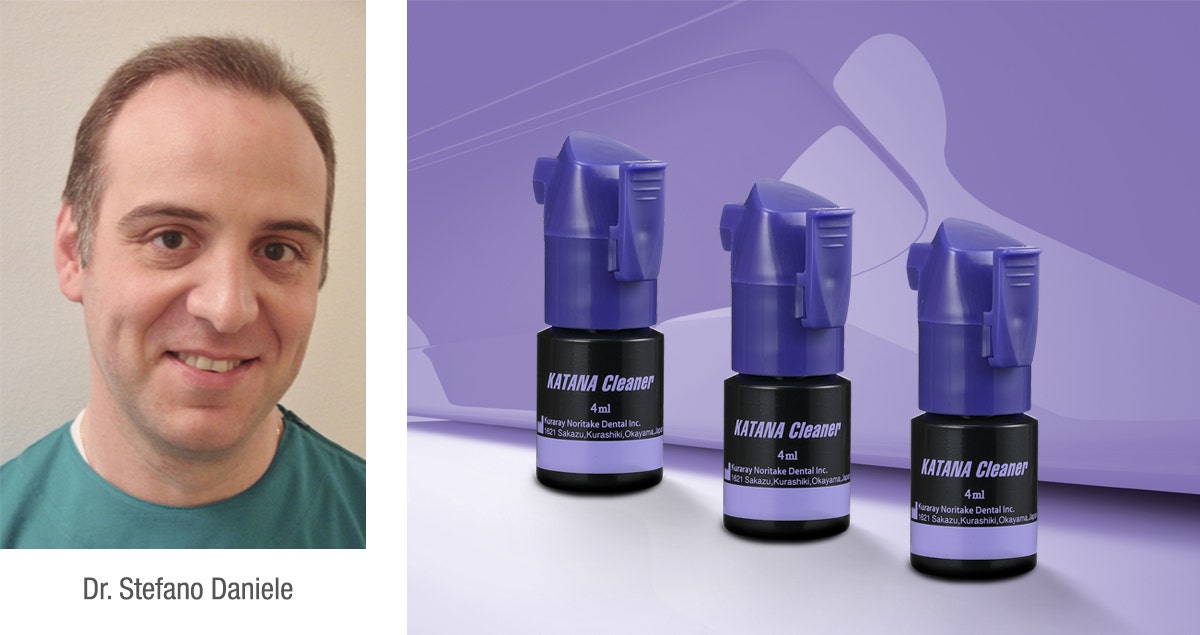
Een sterke en duurzame bonding tussen tand en restauratie is een beslissende factor, die van invloed is op de prestaties van tandheelkundige restauraties op lange termijn. De kwaliteit van de hechting wordt echter niet alleen beïnvloed door het bondingproduct of de toegepaste cementeeroplossing, maar tevens door de conditie van het hechtoppervlak. Kuraray Noritake Dental heeft KATANA™ Cleaner - een universele cleaner met MDP-zout en een pH-waarde van 4,5 voor intra- en extra-orale toepassingen - ontwikkeld voor professionals die op een gemakkelijke wijze willen zorgen voor schone tand- en restauratie-oppervlakken.


Het is bewezen dat de proteïnen in speeksel en bloed een negatieve uitwerking hebben op de prestaties van tandheelkundige adhesieven. Vooral bij indirecte procedures is het echter niet altijd mogelijk om de hechtoppervlakken te vrijwaren van orale verontreinigingen. Bij de try-in worden de geprepareerde tand en de restauratie uiteindelijk mogelijk besmet en moeten deze worden gereinigd. Spoelen met water leidt niet tot het beoogde effect en zelfs bij de vele beschikbare cleaners blijft er doorgaans vervuilingen achter op het oppervlak. Tests hebben aangetoond dat het gewenste hoge reinigingseffect - zonder in te boeten op hechtsterkte - wordt gerealiseerd door gebruik van KATANA™ Cleaner, of zandstralen. Bovendien leidt het gebruik van KATANA™ Cleaner tot de gewenste resultaten op dentine en glazuur in de mond waarvoor zandstralen en de meeste andere cleaners niet worden geïndiceerd.


Het gebruik van KATANA™ Cleaner biedt nóg een voordeel: de reinigingsprocedure is uitzonderlijk gemakkelijk, snel en zorgvuldig. De universele cleaner wordt geleverd in een flesje met een innovatieve flip-top dop, zodat het product met één hand kan worden gedoseerd. Vervolgens wordt het product 10 seconden op het oppervlak van de restauratie en de geprepareerde tandstructuur of de abutment in gemasseerd, vervolgens gespoeld met water en gedroogd. Dankzij de hoge oppervlakte-activiteit van het MDP-zout zijn die 10 seconden voldoende om de verontreinigingen op het oppervlak te verwijderen; zo worden omstandigheden gecreëerd die sterk in de buurt komen van die op een niet besmet hechtoppervlak. Vervolgens wordt de bonding of het cement naar keuze - bijvoorbeeld PANAVIA™ V5 of PANAVIA™ SA Cement Universal - gebruikt conform de gebruiksinstructies van de fabrikant.


Het resultaat is een sterke en duurzame bonding, die gebruikers een gerust gevoel geeft. Testgebruikers die het product al hebben geprobeerd, zijn het er over eens dat KATANA™ Cleaner staat voor een gemakkelijke manier om de hechtkwaliteit te optimaliseren en adhesieve procedures te stroomlijnen.