No Author Selected

Interview: “The future of dentistry will be digital”

As the operator of his own dental practice in the German town of Laer and a member of the Digital Dental Academy in Berlin, Dr Hendrik Zellerhoff is clearly a very busy man. Fortunately, his integration of Kuraray Noritake Dental’s KATANA Zirconia Block into his daily workflow means that he is able to deliver high-quality restorations to his patients faster than ever. In this interview, Dr Zellerhoff explains how he uses the block and how his patients have responded to it.

Dr Zellerhoff, can you tell us a little bit about your background as a dentist?
In 2003, I began working as an assistant and at this time I worked with the CEREC system, a system for which I am now a certified trainer. In 2005, I opened my own dental practice in Laer, which I continue to operate to this day.

When did you first begin to work with Kuraray Noritake Dental’s range of products?
I think it was about four or five years ago that the laboratory that I worked with told me how good Kuraray Noritake’s KATANA Zirconia discs were for sintering and fabricating full-zirconia crowns. At that point, however, I was only looking for materials that would work with CEREC, and so it wasn’t until early 2018, when I went on a course in Leipzig in Germany where the KATANA Zirconia Block was being demonstrated, that I really saw how I could use this product in my practice. The block’s integration with the CEREC system means that it is now possible for me to provide high-strength aesthetic zirconia restorations for my patients accurately and quickly.

How frequently do you use the KATANA Zirconia Block during your daily work as a dentist?
I think around once a day, on average. It varies—sometimes I may make restorations for three different patients on one day, and then it’s four days until I use it again. My CEREC is only able to conduct wet milling, however, which is obviously slower than the 15-minute time span made possible through dry milling, and this limits how often I can use it.

What do you like most about this zirconia solution?
For me, it both feels and looks very real, so it has this aesthetic function going for it. Its multilayered, highly translucent appearance definitely helps to achieve more natural-looking restorations. However, the mechanical strength of the material is also something that I like, as it means that it can be used for restorations with thinner walls and sharper margins than those made with glass-ceramics.

With the release of the KATANA Zirconia Bridge Block, do you expect to use this zirconia solution more?
Oh, absolutely! The ability to make aesthetic bridges in the molar area and in a single visit is a revelation to me.

What has the response from your patients been?
They love it! These procedures can be realised on the same day as their initial appointment, and this means that my practice has patients coming from far outside of the small town in which I live. We even get people coming all the way from Switzerland to receive KATANA-based treatments—that’s how positive the response has been.

With this focus on digital dentistry, is there still a role for the dentist as a craftsperson?
I love to work with an entirely digital workflow. If a machine can do something better or faster than I am able to, then that is all right with me. As far as I can see, the future of dentistry will be digital. At the end of the day, the goal stays the same—to provide my patients with results that they are happy with.

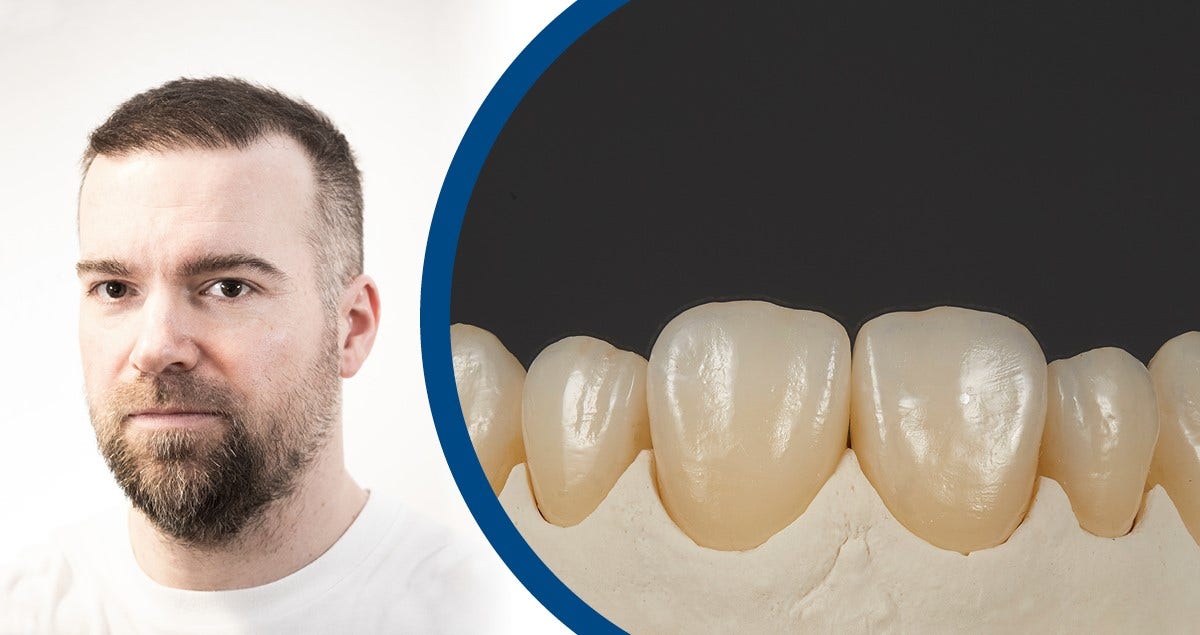
Dr Paolo Baldissara: “The KATANA™ Zirconia Block is an extremely promising technology”

With over 30 years of experience as a dentist and researcher, Dr Paolo Baldissara of the University of Bologna in Italy could be forgiven for slowing down a bit. This is far from happening, however, as he continues to be at the forefront of ceramic restoration material developments and their integration into CAD/CAM workflows.


When presenting at a symposium held in Berlin in Germany by Kuraray Europe earlier this year, Dr Baldissara highlighted how the company’s patented multilayered zirconia technology allows the KATANA™ Zirconia Block to effectively mimic the shade gradation of natural teeth. He commenced his presentation by outlining the general shift towards metal-free restorations, which in his opinion has been driven by a number of factors, the high value now placed on aesthetics in dentistry chief among them.


“I began using zirconia back in 2005 for prosthodontics in my department at Bologna, and it has greatly improved in quality since then,” said Dr Baldissara. “Generally speaking, the shift towards zirconia only started when a high-strength substitute for metal that was able to be processed with CAD/CAM systems with high accuracy became available.”


It was at the 2015 International Dental Show in Cologne in Germany where Dr Baldissara was first introduced to KATANA™ Zirconia UTML and STML, both of which impressed him with their high levels of translucency. “I started to use them almost immediately, mainly in their monolithic form, for research and in clinical practice,” he said. “My opinion of them was very high, as they allowed me to make cost-effective single crowns and multi-unit restorations with excellent aesthetic properties with scattered and diffused light. This is, ultimately, what patients want.”


Dr Baldissara began using the KATANA™ Zirconia Block in 2018 and expressed his excitement with how its high-speed sintering allows for fast processing of restorations. He recommended dry milling for a number of reasons: not only does it allow for the translucency of the zirconia to be maintained, it also helps to avoid contamination from other ceramic powders that may persist in the milling unit. In addition, he encouraged attendees to frequently replace the burs of their milling units for optimal results and reduced risk of chipping.


“Dry milling and high-speed sintering of the KATANA™ Zirconia Block is an extremely promising technology,” said Dr Baldissara. “In my opinion, it is the correct way to make aesthetic and mechanically strong restorations for the patient.”

Steve Meeze: Passion for Dentistry

Steve Meeze on the passion for dentistry

Steve Meeze definitely has it: a passion for dentistry. Yet, there was a time when he was unhappy in his job as a dental practitioner. Fundamental changes were necessary to lay the foundations for finding personal fulfillment in his work. We spoke to him about his motivation to do things differently and about the path he has chosen and is following down to the present day.


Many students of dentistry would like to run their own dental office one day. For you, this dream came true, but you ultimately decided to take a different path. Why did this change seem necessary?


After graduation in 1983, running my own dental office seemed to be a great plan: I wanted to be independent, grow my patient base, and become successful, which went very smoothly in the beginning. This economic success, however, did not protect me against starting to feel unhappy and burned-out after several years. Once I began to take my negative emotions seriously and to search for the underlying causes, I realized that is was not merely the workload that troubled me. The truth was that I was missing a sense of purpose in many of my daily tasks. This seemed to be the reason for my lack of energy and motivation to proceed with what I had started. Luckily, I was able to find my personal “why” after some time.


Where did you find your own fulfillment or sense of purpose?


I ultimately found it in the field of conservative dentistry. The reason is that direct restorative treatments with composite allow me to do amazing things in a non-invasive or minimally invasive way. Doing no harm and always being able to go back simply feels good, and my patients are incredibly grateful for what I do. Their gratitude is my reward. This is why I decided to dedicate myself exclusively to treating patients with composite.


How do you do this?


In 2009, I sold my own dental office and started working in different practices in Flanders. In this process, I established some highly valuable partnerships with colleagues, who appreciate my skills and refer their patients to me mainly in the course of interdisciplinary treatment. These orthodontists or surgeons need someone who puts the finishing touches to their work. And this is exactly what I do: I create a beautiful smile at the end of an often complex treatment. Other patients approach me on their own accord with fractured or misshaped teeth and the desire for esthetic improvement. In any case, I listen to them carefully before I start planning. Knowing what is on their minds, I can treat them with confidence. The most precious moment for me is when I hand over the mirror and let them evaluate my work. Their positive reaction, the glint in their eyes is what motivates me every day.


Is there a specific technique you use in your daily work?


Yes, I use the Light Facing Concept I developed to solve esthetic issues in the anterior region. This technique focuses of creating a harmony without the need to sacrifice large amounts of healthy tooth structure. With this concept, a fractured anterior tooth, for example, is restored in three steps: Initially, a single dentin shade of composite of the same color as the fractured tooth is used to create the desired tooth shape and make the fracture line disappear. In this step, shade selection is independent of the final color I would like to reach. Subsequently, I correct the color with an opaque material and try to match the shade of the adjacent teeth as exactly as possible. If necessary, I create mamelons and other individual characteristics in this layer. The final step is carried out on all anterior teeth whenever the appearance of the treated tooth differs from the others: A light facing – i.e. a very thin layer of more or less translucent composite – is added to mask the differences. In cases with minimal shade differences, a composite with a high translucency is used, while a more opaque material is preferable whenever the differences are more apparent.


What is your preferred material for the Light Facing Concept?


My personal experience shows that the best results are obtained with CLEARFIL MAJESTY ES-2 Premium composite from Kuraray Noritake. It simply offers the best mimetic (chameleon) effect of all composite materials I have tested so far, and I have tested many of them. The material tends to blend in with the surrounding tooth structure, and only four shade combinations are usually sufficient to cover the whole range of my patients’ tooth shades. I love this virtually magical effect!


What is your personal conclusion?


When I made the decision to start doing what really makes me happy, I could not be sure that I had chosen the right path. Retrospectively, I know that giving up my present career and taking steps towards personal fulfillment has been exactly the right thing to do. I love the fact that I can satisfy my patients’ desires without sacrificing healthy tissue, and my Light Facing Concept implemented with MAJESTY ES-2 make it easy for me to obtain the results they have been dreaming of.


CASE EXAMPLES

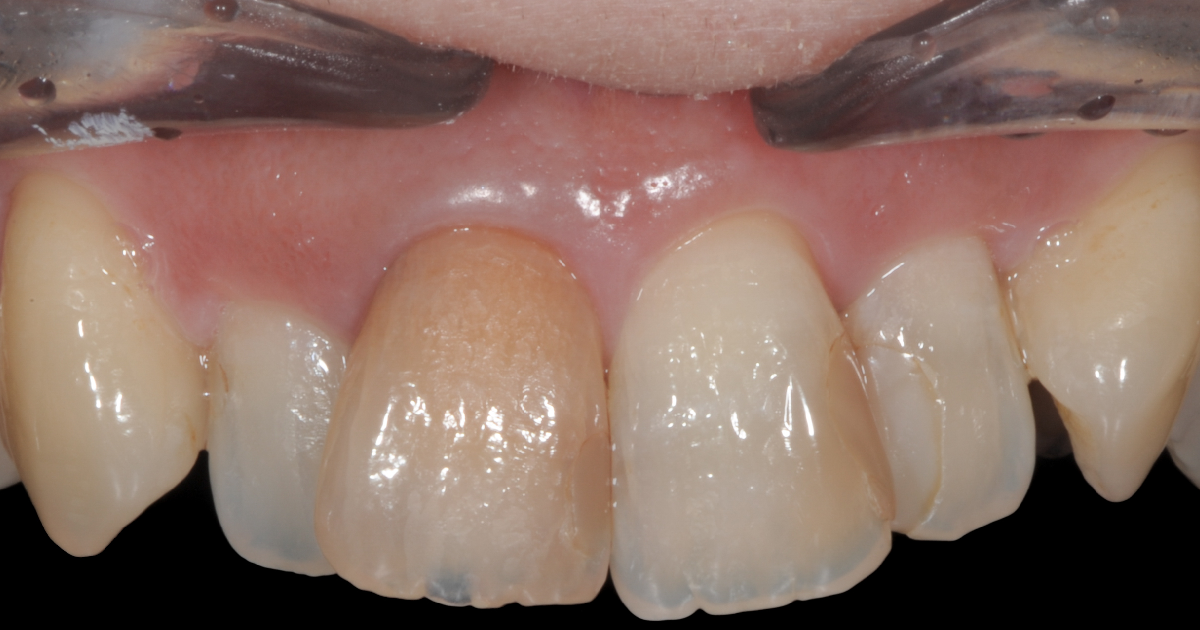
Fig. 1 : Case example: Color change with composite – initial clinical situation.

Fig. 2.: Case example: Color change with composite – treatment outcome.

Fig. 3: Case example: Shape correction with composite – initial clinical situation.

Fig. 4:  Case example: Shape correction with composite – immediate treatment outcome.

Kiyoko Ban, Technical Consultant at Kuraray Noritake Dental, talking about the development of Noritake Super Porcelain AAA. The product

An interview with Ms. Ban - 30 years of dental ceramics development.

The development of ceramic dental materials has a long tradition at Noritake Co., LIMITED (Noritake). It started in 1978, when Kiyoko Ban, who is a Technical Consultant at Kuraray Noritake Dental today, was a member of the teaching staff at the Tokai College of Dental Therapy in Nagoya, Japan. There, she trained her students in producing porcelain-fused-to-metal (PFM) restorations, and encountered the problem of porcelain fractures and cracks that often occurred after the firing process. Her desire to solve this problem resulted in the first dental porcelain development project at Noritake.
Image 1: Kiyoko Ban, Technical Consultant at Kuraray Noritake Dental, talking about the development of Noritake Super Porcelain AAA.

Failure analysis
Kiyoko Ban gives an account of her early activities: “I received many inquiries from dental technicians on why cracks occurred inside veneering porcelains of PFM during firing. I wanted to find out what was causing this problem. Hence, I started analyzing the available materials and manufacturing procedures. In the course of my research, I concluded that in order to obtain better results, it would be necessary to develop a new porcelain material with fundamentally different physical properties. The reason was that the physical properties of the
available porcelain materials were unstable. One problem was that the coefficients of thermal expansion of the porcelain were changing under varying firing conditions, and sometimes fluctuated even if the firing temperature remained constant. Due to the differences in the coefficients of thermal expansion of the metal framework and the veneering porcelain, high stresses inside of veneering porcelain were generated, which ultimately led to the observed cracks.”

Joining forces with Noritake
For support in her research, Kiyoko Ban approached a leading expert in the measurement of residual stress in ceramics, Dr. Hiroshi Inada. He was the Manager of the Research & Development Department at Noritake. Together, they decided to initiate a
joint development project. In the first phase, the market research was conducted in order to define the project aims. “We found that there were three factors that troubled dental technicians fabricating PFM restorations: cracks and fractures in the porcelain layer, limited reproducibility of the natural tooth colors and yellowish discoloration caused by silver in the framework material. Consequently, we decided to develop a crack-free material that was resistant to yellowish discoloration and matched the colors of natural teeth by offering a tooth-like fluorescence,” states Kiyoko Ban. She continues: “The first steps in the development process were relatively easy. We soon were able to ensure constancy of the coefficient of thermal expansion. The most complicated part, however, was to develop different material shades. As understanding and reproducing tooth color is a highly complex task, we collaborated with dentists and dental technicians. They evaluated the optical properties of our trial formulations and helped us improve them until they were satisfied with the outcomes. This process took us three years and finally resulted in the 16 material shades launched in 1987.”

Image  2: The product launched more than 30 years ago: Noritake Super Porcelain AAA.

The name – Noritake Super Porcelain AAA – was suggested by the former Vice President of Noritake and at that time Managing Director, Motoki Nawa. It refers to the three basic needs it satisfies, and expresses that the product aim for becoming class A. Noritake Super Porcelain AAA became available in Japan, where Morita Corporation became the distributor. Soon, a network of instructors was established and training courses were offered to ensure technicians would use the product in the best possible way. Within a very short time, the product got a market share of approximately 30 percent. At this time, Noritake Super Porcelain AAA also started to conquer overseas markets (where it was given the product name Noritake Super Porcelain EX-3). Until today, many dental technicians around the world favor the porcelain material.

Additional shading options
One of the instructors who taught the use of the material worldwide was Hitoshi Aoshima, a representative of Perla Aoshima. He was famous for his excellent technique in the fabrication of porcelain restorations. Kiyoko Ban approached him at the 15th anniversary symposium of the international journal of dental technology in Tokyo in 1988, and initiated what would soon become a fruitful collaboration: “I decided to visit him in his laboratory soon after our meeting and provided him with a complete Noritake Super Porcelain AAA kit. One month later, during my second visit, he suggested developing porcelain stains, which do not generate air bubbles during the firing process even when you stain inside the veneering porcelain. This would enable dental technicians to imitate the complex color of natural teeth easily. We started working on the project immediately. With the support of Hitoshi Aoshima, our efforts came to fruition, resulting in the introduction of the product Internal Live Stain.”

Eyeing the next step: Research into zirconia
With the growing interest of dental technicians in porcelain materials, Kiyoko Ban was moved to predict that in the future, ceramics would evolve to become the preferred restoration material. She began investigating suitable ceramics and mmanufacturing technologies. In November 1998, Noritake’s Development Division and Noritake Dental Supply initiated a joint project to develop a new dental zirconia. “As a ceramics company with 15 years of experience in the field of industrial zirconia, Noritake foresaw that zirconia was going to be the next leading dental material. Consequently, we started developing the raw materials. Thanks to our high level of know-how in ceramic materials, we were soon able to present a new dental zirconia having less deformed after sintering. We observed the material trends and market needs for a while, and finally decided to go for finer esthetic properties and develop multi-layered disc. The product – KATANATM Zirconia ML – was introduced at the International Dental Show 2013 in Cologne, where it made a spectacular debut. The product received worldwide recognition. Today, three variants of the multi-layered discs are available. They offer different levels of flexural strength and translucency to meet the requirements oof various clinical situations.

Image 3: Launch of KATANA™ Zirconia ML at the IDS 2013.

Towards the future
More than 30 years after its launch, Noritake Super Porcelain AAA is still the product of choice for many ceramists around the globe. “With satisfied users in approximately 100 countries, I am happy to conclude that we have succeeded in developing a PFM porcelain that is virtually trouble-free,” says Kiyoko Ban. “Due to the success of the development projects, so far, in the field of dental ceramics, we are highly motivated to keep on developing new products that satisfy the needs of dentists, dental technicians and patients alike.” Kiyoko Ban, Kuraray Noritake Dental’s Technical Consultant, is still working hard to help enhance treatment outcomes in dentistry and contribute to an improvement of oral health.

“Simply apply and dry, and you’re done”: CLEARFIL™ CERAMIC PRIMER PLUS

Combining ease of use and excellent viscosity, CLEARFIL™ CERAMIC PRIMER PLUS is a stable and universal prosthetic primer designed for all restorations. By incorporating Kuraray Noritake Dental’s original MDP monomer and a silane monomer, it is able to provide an enhanced adhesive surface for ceramics, hybrid ceramics, composites and even metals. CLEARFIL™ CERAMIC PRIMER PLUS is best used in conjunction with the adhesive resin cement PANAVIA™ V5 to ensure durable restorations.


The key to CLEARFIL™ CERAMIC PRIMER PLUS’s performance is in the monomers it possesses. The MDP monomer strongly bonds to metals and zirconia, while the silane coupling agent MPS efficiently adheres to composites and all silica-based ceramics. “What makes CLEARFIL™ CERAMIC PRIMER PLUS different to other primers is its stability,” says Peter Schouten, Technical Manager at Kuraray Noritake Benelux. “Normally, activated silanes are very unstable. However, the well-balanced formula of CLEARFIL™ CERAMIC PRIMER PLUS provides it with a shelf life of three years after production, making it easy and predictable to use.”


Procedural simplicity

Every element of CLEARFIL™ CERAMIC PRIMER PLUS is designed to deliver maximal procedural simplicity. It is packaged in an easy-to-squeeze bottle that dispenses the solution easily and accurately. Whereas other similar products need to be left in place for one minute or more, this primer is immediately effective upon application. “CLEARFIL™ CERAMIC PRIMER PLUS benefits the dentists by offering a reliable primer for all materials, without being difficult to apply or use,” says Schouten. “From titanium to zirconia, from lithium disilicate to composite—simply apply and dry, and you're done.”


PANAVIA™ V5

A resin cement with unrivalled procedural simplicity and predictability, PANAVIA™ V5 is a member of Kuraray Noritake Dental’s PANAVIA family. It sets a new standard for adhesion, allowing for self-cure dentine bond strengths equal to our gold-standard light-cure bonding agent, CLEARFIL SE BOND. PANAVIA™ V5 offers natural aesthetic stability in shading through its amine-free paste, which is available in five shades and has been scientifically proven to demonstrate a lower level of post-curing colour variance than amine-based cements.


CLEARFIL™ CERAMIC PRIMER PLUS and PANAVIA™ V5

Providing strong bonding to not just hydroxyapatite, but to metals and zirconia as well, PANAVIA™ V5 is designed for use in conjunction with CLEARFIL™ CERAMIC PRIMER PLUS. The cementation procedure is efficient and effective: use PANAVIA V5 Tooth Primer for the pretreatment of the tooth, CLEARFIL™ CERAMIC PRIMER PLUS for the priming of the restoration, and PANAVIA™ V5 for the cementation.


Technical information update - KATANA Zirconia Block

NOW 18 Minutes Sintering using the CEREC SpeedFire


KATANA™ Zirconia Block, the innovative multi-layered zirconia block*1, can be used with Dentsply Sirona's CEREC system*2. Now the 18 minutes sintering program*3 is developed and installed into CEREC SpeedFire. New sintering technology makes it possible to fabricate full zirconia restoration in approx. 35 minutes.

*1 CL shade is not a multi layered block.
*2 For using this product, CEREC software 4.5.2 or later is required, and for 18 minutes sintering, software 4.6 or later is required.
*3 In case that wall thickness is less than 3mm using dry milling.
*4 Dry milling is recommended.

If wet milling/grinding is performed by using cooling water contaminated by silica-based glass ceramics (lithium disilicate glass, etc.), the translucency of the zirconia may be reduced after baking. Before wet milling/grinding, clean the milling/grinding chamber, cooling water tank and filter insert. The cooling water must be changed in order to assure optimum results.

The official announcement can be found here

Create natural gloss instantly with CLEARFIL MAJESTY™ ES Flow

An ideal composite material should satisfy three basic requirements: function, aesthetics and biocompatibility. A member of the CLEARFIL MAJESTY family, Kuraray Noritake Dental’s CLEARFIL MAJESTY™ ES Flow combines excellent handling, polishability and mechanical strength to provide a solution for all cavity classes. This universal flowable composite employs silane and filler technologies to maximise both its procedural and aesthetic outcomes, allowing dentists to create long-lasting restorations with reduced chairside time.


A new standard for flowable composites

Traditionally, a composite’s flowability has been inversely related to its filler content. When flowable composites were first introduced in the mid-1990s, their lower viscosity was enabled by a filler level much lower than that of conventional composites. This, however, meant that these flowables fared poorly in a clinical setting, demonstrating inferior mechanical properties when compared to traditional hybrid composites.


With CLEARFIL MAJESTY™ ES Flow, dentists can now use a flowable composite with mechanical properties comparable to those of conventional alternatives. Thanks to Kuraray Noritake Dental’s silane technology, millions of submicron filler particles fit into the composite, reliably adhering to the resin and maintaining long-term stability. CLEARFIL MAJESTY™ ES Flow possesses a scientifically tested flexural strength of over 150 MPa, similar to that of a universal nano hybrid composite, making it suitable for use in Class I and II restorations.


Aesthetic restorations

However, the small, durable particles of CLEARFIL MAJESTY™ ES Flow provide more than just mechanical reliability. Special cluster fillers provide a light diffusion effect that is similar to that of natural teeth, meaning that the material blends effortlessly with the existing tooth structure. Unlike other flowables, CLEARFIL MAJESTY™ ES Flow is glossy immediately after curing. This gloss can be improved with remarkable simplicity—simply wipe the cured resin with an ethanol-moistened gauze or cotton roll to produce a smooth surface that is proven to maintain its gloss over time.


Ideal handling

CLEARFIL MAJESTY™ ES Flow’s low viscosity monomers ensure that it has excellent handling characteristics, promising better sculpting for the dentist. The flowable composite does not stick to the needle tip or to any instruments, only adhering to the area to which it is applied, while the proprietary design of the syringe itself minimises air bubbles when dispensing. Once dispensed, the paste possesses great consistency with its non-slumping formula, ensuring that it can maintain its shape. A truly universal composite, CLEARFIL MAJESTY™ ES Flow allows dentists to create highly aesthetic restorations with ease.


Obtain results in four simple steps

Creating aesthetic and durable restorations has never been more achievable. Simply prepare the cavity and apply bonding, dispense and sculpt the CLEARFIL MAJESTY™ ES Flow, light-cure and, finally, polish. It’s as easy as that.

The choice for professionals

How To: Cementing Veneers using PANAVIA™ V5

Paul de Kok, Authorized Restoritive Dentist(KvPA), teaches Indirect restoritive dentistry(ACTA) , Researcher at Materials Science department (ACTA), demonstrates in this instructional video how excellent lasting aesthetic results are achieved by using PANAVIA™ V5.

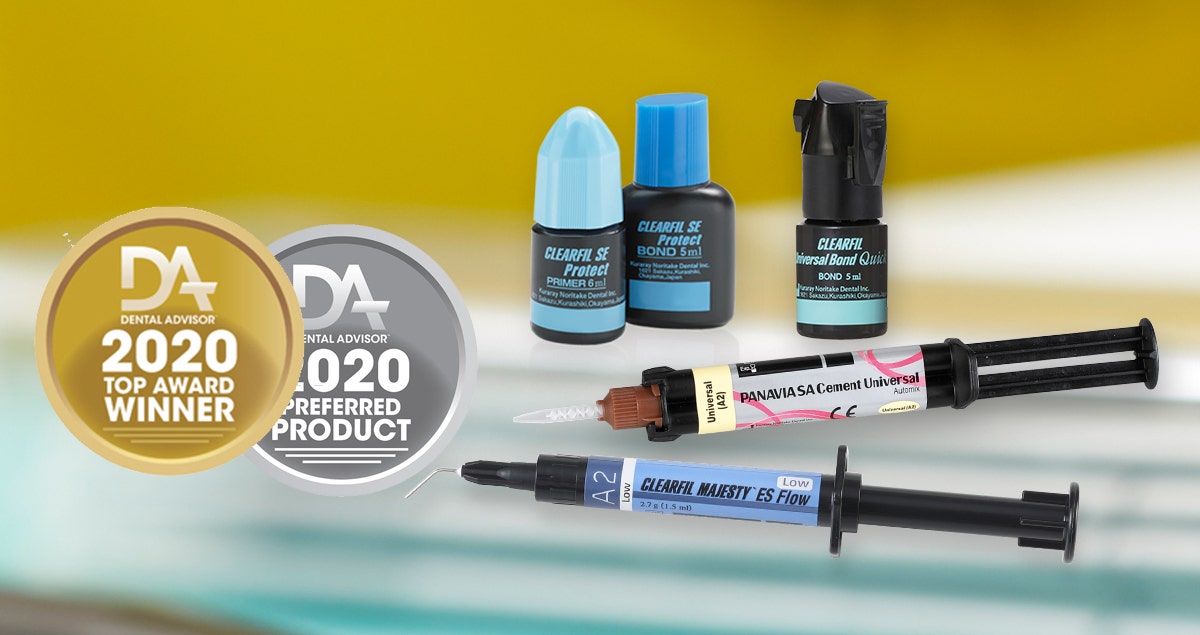
CLEARFIL Universal Bond Quick with CLEARFIL MAJESTY ES Flow rated excellent

DENTAL ADVISOR SIX-MONTH PROGRESS REPORT


Summary
Over a six-month period, 96 restorations were placed. The clinical performance at the time of placement was excellent for esthetics, handling, ease of adjustment, and ease of finish/polish. There were no reports of post-operative sensitivity or debonding. Based on the placement period, CLEARFIL Universal Bond Quick with CLEARFIL MAJESTY ES Flow received a clinical performance rating of 100%.


Description:

CLEARFIL MAJESTY ES Flow is a light-cured, universal flowable composite.

It contains submicron fillers that are treated with a proprietary silane

coupling agent to provide for low shrinkage and high mechanical

properties. The submicron fillers and high filler load provide for esthetics.

CLEARFIL Universal Bond Quick is a single-bottle, universal bonding agent

that contains a novel rapid bond technology and releases fluoride. It is

compatible with total-, self- and selective-etch techniques and with light-,

self- and dual-cured materials (with CLEARFIL DC Activator).


Clinical Evaluation Protocol (Six Months):

A total of 96 CLEARFIL Universal Bond Quick with CLEARFIL MAJESTY ES

Flow restorations were placed in 44 molars, 26 premolars and 26 anterior

teeth (Figure 1). The classification of restorations was recorded as 44 Class

I, 7 Class II, 1 Class III, 30 Class V, and 14 Class VI restorations (Figure 2).

Kuraray Noritake Dental Inc.


Results at Six Months:

There were no reports of post-operative sensitivity for CLEARFIL Universal

Bond Quick with CLEARFIL MAJESTY ES Flow. All 96 restorations received

excellent ratings of five for esthetics, handling, ease of adjustment, and

ease of finish/polish (Figure 3). No debonding was observed.


All restorations were evaluated at placement in the following areas: lack
of post-operative sensitivity, esthetics, handling, ease of adjustment, and
ease of finish/polish. Restorations were evaluated on a 1-5 rating scale:
1 = poor, 2 = fair, 3 = good, 4 = very good, 5 = excellent.


Consultants’ Comments
• “I love flowables - CLEARFIL MAJESTY ES Flow is in a class of its own.”
• “I use CLEARFIL MAJESTY ES Flow regularly in areas of incipient decay
- flows well, very esthetic and polishes easily.”
• “CLEARFIL MAJESTY ES Flow is my go-to flowable to repair small chips
in anterior teeth. It blends seamlessly with the tooth.”
• “Great to use in abfraction areas in conjunction with CLEARFIL
Universal Bond Quick. CLEARFIL MAJESTY ES Flow bonds well and is
very easy to finish and polish. Patients love the outcome.”


Interview with dr. Imad Ghandour

“The multi-layered aspect of KATANA Zirconia is excellent”


In recent years, zirconia has emerged as the preferred choice for dentists who wish to perform restorative procedures with a reliable and metal-free material. With the recent development of multi-layered aesthetic high-translucency options, zirconia’s popularity has further increased. In comparison to the opaque whiteness of older generations of zirconia, these newer versions have an enhanced appearance and functionality that makes them suitable for natural-looking anterior restorations.


Kuraray Noritake Dental’s KATANA Zirconia disc range is made with a proprietary zirconia powder—processed in-house—that gives it its natural appearance. Suitable for zirconia prostheses, from single crown to full arch, it is an ideal option for restorations in both the anterior and posterior regions. We spoke with Dr Imad Ghandour, a prosthodontist with a strong scientific background and a private practice in Le Cannet in France, about his experiences with the KATANA Zirconia range in restorative procedures.


Dr Ghandour, when did you first start using zirconia as a material for your restorations?

In 1998, when I was still sintering manually, I began using zirconia alumina. It was nice to have an alternative to metal alloys that was much more aesthetic. From 2003, however, I started with VITA blocks, but only for frameworks—I would still build up with ceramics. Now, with so much of dentistry being digitally focused, there is a need for a material that can be milled without changing anything in the morphology of the teeth. Why? Because we need to be able to reproduce the treatment plan as accurately as possible. Simply put, the KATANA Zirconia range solves this need for me.


With respect to dentistry being digitally focused, how has this changed the role of the dentist regarding performing restorative procedures?

Well, it is clear that we have entered the age of digital dentistry. Around 80 per cent of restorations are conducted via CAD/CAM systems and without dentists even touching the materials themselves. There are great advances being made in the technologies that are available for everyday use in dental practices worldwide, and many of them can be used to assist dentists performing restorative procedures. It is important, though, to keep in mind that these technological advancements alone will not lead to better results—they should supplement the requisite hands-on skills and techniques that all dentists must first learn. With this base of fundamentals, we can then use digital dentistry to make restorative procedures more predictable and reproducible. Of course, to ensure the best results in restorative procedures, dentists also need to use the materials that have the best aesthetic and mechanical properties.


For how long have you been using Kuraray Noritake Dental’s KATANA Zirconia range, and what has your experience been?

I have been using KATANA Zirconia for a little bit more than one year. In that time, I have primarily used the KATANA Zirconia STML (Super Translucent Multi Layered) line and have been pleasantly surprised by how natural-looking the restorations I have made with the material are. For example, when I sinter a crown made of Katana Zirconia STML, I am amazed at how much the sintered material is reminiscent of a pearl—it truly brings to mind the idea of one’s teeth being one’s pearly whites.


When using KATANA, how do you ensure that you select the correct shade to achieve a natural look?

Firstly, no one—not a dentist nor a dental technician—can be absolutely certain that the shade and chroma of the restoration that is in one’s hand will be the same once it is in position in the oral cavity. This is due to the complexities of the oral environment—the pinkness of the gingivae, for one, can have a large impact on how the restoration appears, often making it seem far duller than it does in the light of a dental laboratory. This can cause dental practitioners to compensate and make prostheses that appear far brighter than they will when they are in place.


With a product like KATANA and its related glazing materials, however, I can create crowns and other restorations that have an optimal fluorescence and translucency and are able to maintain their shading better than any other ceramic material I have used. I am able to select a shade with the confidence that it will look exactly the same once placed inside the mouth, with its chroma remaining unabsorbed by the gingiva. Achieving a natural look, then, depends on choosing a shade that is as close to that of the surrounding dentition as possible. Since KATANA Zirconia UTML (Ultra Translucent Multi Layered) is available in 16 standard shades and a further four enamel shades, there is no shortage of options in this regard.


How does the multi-layered technology of KATANA Zirconia help you to achieve optimal and natural-looking aesthetic results?

Well, firstly, the layering of the material is designed to replicate the colour and translucency progression of natural teeth, which allows for restorations to blend in as much as possible. This multi-layered technology has also proved itself to be very handy when I am sintering crowns made of KATANA Zirconia. Simply put, if one sinters a crown quickly, it will be a little more opaque. If one sinters it at a higher temperature and quite slowly, it will be much more translucent. The multi-layered aspect of KATANA Zirconia is excellent in that it gives me the ability to make restorations more or less translucent depending on what is required.