How to polish a composite restoration in posterior area?

By Dr. Aleksandra Łyżwińska, Warsaw, Poland.


Every dentist aims to polish to a high gloss without damaging the freshly modeled occlusal surface. Firstly, use high-quality polishing rubbers. The plural form is not accidental (Fig. 1). In my opinion, a single rubber systems are not capable of achieving an impeccable gloss in a safe manner. Be patient and gentle. Polishing requires time and a delicate touch.


Fig. 1.


Immediately after polymerization the composite is covered with an oxygen inhibition layer (Fig. 2). It is imperative to remove it by a brush and any polishing paste or a prophylactic sandblaster. The next step is to remove excess composite using abrasive discs, burs and firm polishing rubber points.


Fig. 2.


During polishing without water cooling, the rubber leaves crumbling on the composite surface (Fig. 3). These fragments can be spread across the restoration surface using a fine nylon brush. This allows for the polishing of each fissure and pit (Fig. 4).


Fig. 3.


Fig. 4.


The key to long lasting shine is polishing with gradation. Time to change a rubber point to the dark blue TWIST DIA for Composite rubber, which is more abrasive than light blue one (Fig. 5). Remember to apply gentle pressure and maintain a maximum speed of 8000 revolutions per minute. This way, you will achieve fine particles without the risk of overheating the pulp. The particles were once again spread over the entire surface. The thinner the bristle, the better the polishing effect in the grooves (Fig. 6).


Fig. 5.


Fig. 6.


Third round: use the light blue TWIST DIA for Composite rubber for a mirror-like gloss (Fig. 7). A beautiful gloss emerges beneath the particles. An alternative to thin nylon brushes is brushes made from natural goat hair (Fig. 8).


Fig. 7.


Fig. 8.


Polishing is not only a matter of aesthetics but, above all, function. The adherence of bacterial biofilm to a polished composite is significantly lower than to a rough surface (Fig. 9). My recipe for achieving a mirror-like gloss polish: high-quality diamond rubber points with gradation, used with sensitivity over an extended period (Fig. 10).


Fig. 9.


Fig. 10.


Dentist:

DR. ALEKSANDRA ŁYŻWIŃSKA
Warsaw, Poland


Dr. Aleksandra Łyżwińska is a restorative dentist. She graduated from the Warsaw Medical University in 2017, where she was an assistant professor at the Department of Conservative Dentistry and Endodontics. Her focus lies in modern adhesive techniques, resin composites and biomaterials.


Kuraray Noritake Dental receives top honors as innovative company of the year

We are proud and delighted to announce that Kuraray Noritake Dental has been honored as the INNOVATIVE COMPANY OF THE YEAR by DENTAL ADVISOR.


DENTAL ADVISOR conducts annual practice-based clinical evaluations and product performance tests. The results are published online in the January/February issue, aiding potential users in identifying high-quality new dental materials and selecting those best suited to their individual requirements.


Quoting DENTAL ADVISOR: “Kuraray Noritake was chosen as innovative company of the year because of their constant ability to adapt to market needs and change. Their products are universally accepted by dental professionals as market leaders due to their ease of use and consistently high laboratory performance, making them ideal choices for long-term clinical results.”


In addition to being recognized as an innovative company, our products underwent testing and received prestigious DENTAL ADVISOR medals:


We extend our heartfelt gratitude to the dedicated practitioners worldwide who have placed their trust in Kuraray Noritake Dental products. Your unwavering commitment to excellence fuels our ongoing pursuit of innovation and quality. We are honored to stand alongside you in advancing dental care, and we look forward to continuing this journey together.


Thank you for choosing Kuraray Noritake Dental – where innovation meets trust, and quality meets precision.


REALITY bedømmer PANAVIA Veneer LC

“Meget behagelige håndteringsegenskaber”

PAVANIA™ Veneer LC modtager vurdering på 4.6 i REALITY’s Five Star Award


Efter en ”FirstLook” evaluering publiceret i maj 2022, har et hold af bedømmere fra REALITY RATING & REVIEWS gennemtestet PANAVIA™ Veneer LC i klinisk praksis – dette med gode resultater til følge. Den rent lyshærdende resincement modtog en bedømmelse på 4.6 ud af 5 stjerner i Five Star Award, hvor de mest overbevisende faktorer var dens håndteringsegenskaber og viskositet.


Imens de fleste bedømmerne benyttede PANAVIA™ Veneer LC til permanent cementering af facader, var der også nogle der testede den til cementering af onlays (dog begrænset til høj-translucente materialer med en specifik materialetykkelse). Dem der valgte at polere langs krone-cementgrænsen (43%) syntes at resincementen var meget let at polere flot op. Iblandt de fremhævede håndteringsegenskaber nævntes særligt let placering uden betydningsfuld forskydning, ikke klistrende og nem overskudsfjernelse - dette både efter punkthærdning og i cementens uhærdede stadie. Derudover roste bedømmerne den minimale cementfilmtykkelse og fordelagtige viskositet, hvilket har en væsentlig indflydelse på hvor let det er at placere restaureringen. Arbejdstiden var sufficient for alle bedømmere uafhængigt af deres arbejdsgang (filtrering/blokering af unit-lampens lys eller ej, placering af flere facader samtidigt eller enkeltvis).


PANAVIA™ Veneer LC findes i farveudvalget; Clear, Universal/A2, Brown/A4 samt  White. Udvalget blev anset som fyldestgørende af de fleste bedømmere (79%) og den mest populære nuance var ”Clear”. En bedømmer nævnte "Jeg tror "Clear" nuancen er min nye favorit. Den lader til at have en øget lyshed, sammenlignet med andre klare eller translucente cementer". ”White” er den eneste nuance med en høj opacitet, og havde derfor den mest betydningsfulde rolle i forhold til udseendet på den endelige restaurering. Try-in pastaerne i de tilsvarende nuancer blev desuden vel modtaget for deres håndteringsegenskaber og nemhed til at blive skyllet af.


PANAVIA™ Veneer LC kittet, der er tilgængeligt i Europa består af PANAVIA™ Veneer LC pasta, PANAVIA™ V5 Tooth Primer og CLEARFIL™ CERAMIC PRIMER PLUS.

Det giver tillid at primerne er de samme som benyttes til PANAVIA™ V5, alt imens den lange arbejdstid og de særlige håndteringsegenskaber tilføjer ekstra fordele, der er værdifulde ved facadecementering. Klik her for at læse den fulde evaluering!


Wishing you a powerful new year!

2024 MARKS THE YEAR OF THE DRAGON


  • Dragons, those mythical beings, embody innate courage, unyielding tenacity, and boundless intelligence. They fearlessly embrace challenges and eagerly venture into uncharted territories.
  • The Year of the Dragon is hailed as a time of great power, auspicious beginnings, and transformative possibilities.
  • This image, inspired by the traditional Japanese art of kirigami, combines age-old craftsmanship with cutting-edge AI technology. Just like the dragon, it represents a harmonious blend of ancient wisdom and modern innovation.


EMBRACE 2024 WITH OPEN ARMS –
IT BRINGS FORTH A YEAR OF NEW POSSIBILITIES


The enduring legacy of MDP monomer

It is probably the best-known component of a dental product Kuraray Noritake Dental Inc. (Kuraray Noritake Dental) has ever developed: 10-Methacryloyloxydecyl Dihydrogen Phosphate, in short, the MDP monomer. Invented more than 40 years ago – the first product containing it was introduced in 1983 – MDP is still the leading functional monomer used to establish a long-term, durable and stable bond to hydroxyapatite in tooth structure and to metal oxides in restorative materials (oxide ceramics and metal alloys).


Nowadays, it is found in every dental adhesive and every component of a resin cement system with adhesive properties from Kuraray Noritake Dental. These include:

In addition, MDP has become an integral part of most universal adhesives and many adhesive cementation systems of other manufacturers as well. However, not all MDP is alike …


MDP: Chemical structure and mechanism of adhesion


The MDP monomer consists of three essential parts: A polymerizable group, a hydrophobic group and a hydrophilic group. The co-polymerizable methacrylate group has a terminal double bond enabling polymerisation. The large hydrophobic alkylene group – also referred to as the spacer – has the task to maintain a delicate balance between hydrophobic and hydrophilic properties of the monomer and offers great resistance to degradation. Finally, the hydrophilic phosphate group is responsible for acidic demineralisation, for chemical bonding with calcium in hydroxyapatite and for bonding with zirconia1 (as well as with metal).


Bonding performance


Lots of in-vitro studies have been carried out to investigate the bonding behaviour of 10-MDP in the context of direct and indirect restorative procedures. No matter whether a cavity is to be filled with resin composite or an indirect restoration is to be placed, a strong and long-lasting bond to tooth structure needs to be established.Chemical structure of adhesive monomer 10-Methacryloyloxydecyl Dihydrogen Phosphate (MDP).


The critical substrate in this context is dentin, while bonding to enamel is found to be less challenging. That is why it is so important that (self-etch) adhesives containing 10-MDP show an extraordinarily high bond strength to tooth structure, particularly to dentin2. In fact, 10-MDP also provides for a high bond stability over time by establishing an acid-base resistant zone on the adhesive interface3. This means that a great long-term performance may be expected. Fortunately, a great clinical long-term performance of products containing the MDP monomer has already been confirmed: A group from the University of Leuven (Belgium) has presented excellent results of a thirteen-year clinical trial involving the use of CLEARFIL™ SE Bond in 20154.


When bonding to indirect restorations made of zirconia, the surface area of the ceramic should be increased by sandblasting5. Pre-treated in the recommended way, the bond strength to zirconia tends to be particularly high when MDP-based resin cement systems are used6. It is thus widely recommended by experts in the field of adhesive dentistry to employ MDP-containing primers or resin cements for the placement of zirconia-based restorations, especially those with a non- or less retentive preparation. The fact that products containing 10-MDP work well in this context has been confirmed in different clinical studies with observation periods of up to 10 years7,8. The products used in these studies were PANAVIA™ 21, PANAVIA™ F2.0 and the latest version of the multi-component cementation system from Kuraray Noritake Dental, PANAVIA™ V5, which performed best.


Not all MDP is alike


Ever since the basic patent for MDP has expired, other manufacturers of dental adhesives and adhesive resin cements have started integrating the functional monomers in their own products. However, it has been revealed that there are differences in the purity of the MDP monomers synthesized and used, and that these differences have an impact on the long-term bonding performance of the products containing the MDP9. According to in-vitro test results, the Original MDP Monomer synthesized by Kuraray Noritake Dental stands out due to an unmatched level of purity. This purity has a positive effect on the microstructure and thickness of the hybrid layer formed on dentin, the intensity of nano-layering and the bond strength measured immediately as well as after artificial aging9.


Conclusion


The data summarized above reveals that after 40 years in clinical service, the Original MDP Monomer from Kuraray Noritake Dental is still a class of its own. It has everything needed to establish a strong and long-lasting bond to tooth structure, resin composite and metal oxides, and is therefore a valuable component in virtually every adhesive system. In order to provide for a high bond quality, however, it may be best to use an MDP monomer with a confirmed high purity – the Original MDP Monomer.


References


1. Nagaoka N, Yoshihara K, Feitosa VP, Tamada Y, Irie M, Yoshida Y, Van Meerbeek B, Hayakawa S. Chemical interaction mechanism of 10-MDP with zirconia. Sci Rep. 2017 Mar 30;7:45563.
2. Fehrenbach J, Isolan CP, Münchow EA. Is the presence of 10-MDP associated to higher bonding performance for self-etching adhesive systems? A meta-analysis of in vitro studies. Dent Mater. 2021 Oct;37(10):1463-1485.
3. Carrilho E, Cardoso M, Marques Ferreira M, Marto CM, Paula A, Coelho AS. 10-MDP Based Dental Adhesives: Adhesive Interface Characterization and Adhesive Stability-A Systematic Review.
4. Peumans M, De Munck J, Van Landuyt K, Van Meerbeek B. Thirteen-year randomized controlled clinical trial of a two-step self-etch adhesive in non-carious cervical lesions. Dent Mater. 2015 Mar;31(3):308-14.
5. Kern M, Barloi A, Yang B. Surface conditioning influences zirconia ceramic bonding. J Dent Res. 2009; 88: 817–822.
6. Özcan M, Bernasconi M. Adhesion to zirconia used for dental restorations: a systematic review and meta-analysis. J Adhes Dent. 2015 Feb;17(1):7-26.
7. Kern M, Passia N, Sasse M, Yazigi C. Ten-year outcome of zirconia ceramic cantilever resin-bonded fixed dental prostheses and the influence of the reasons for missing incisors. J Dent. 2017 Oct;65:51-55.
8. Bilir H, Yuzbasioglu E, Sayar G, Kilinc DD, Bag HGG, Özcan M. CAD/CAM single-retainer monolithic zirconia ceramic resin-bonded fixed partial dentures bonded with two different resin cements: Up to 40 months clinical results of a randomized-controlled pilot study. J Esthet Restor Dent. 2022 Oct;34(7):1122-1131.
9. Yoshihara K. et al. Functional monomer impurity affects adhesive performance. Dent Mater. 2015 Dec;31(12):1493–1501.


Scientific information

Is it safe to use the single-component PANAVIA™ SA Cement Universal to lute virtually all your indirect restorations?


Did you ever ask yourself how many components are really needed to safely cement your silicate-ceramic, zirconia or resin-based restorations? With PANAVIA™ SA Cement Universal, a single component is usually sufficient. Containing an unreacted silane coupling agent – the LCSi monomer – and the original MDP monomer, the dual-cure, self-adhesive resin cement adheres to tooth structure and to various restorative materials including the popular silica-based ceramics without the need for a separate primer.


For those wondering how it works and if it really works as well as desired, Kuraray Noritake Dental Inc. has created a scientific brochure. It contains in-depth information about the drivers of chemical adhesion contained in PANAVIA™ SA Cement Universal and its characteristic properties. The main part, however, focuses on the results of scientific studies – most of which have been conducted in external laboratories. With the aid of artificial aging, different testing devices and various experimental set-ups, the researchers have checked the resin cement thoroughly. The study results shed light on the behaviour of the material when used in the context of bonding to different restorative materials and different types of tooth structure. Self- and light-curing modes are compared, aging effects investigated and different moisture conditions taken into account.


As a whole, the collected data allows for a precise prediction of the clinical behaviour of PANAVIA™ SA Cement Universal. This valuation has already been confirmed by clinical experience of dental practitioners from all around the world. Moreover, the results of a first clinical study, which is also found in this compilation, are a proof of its exceptional performance.


Download the brochure to learn more about the properties and behaviour of the single-component universal resin cement!


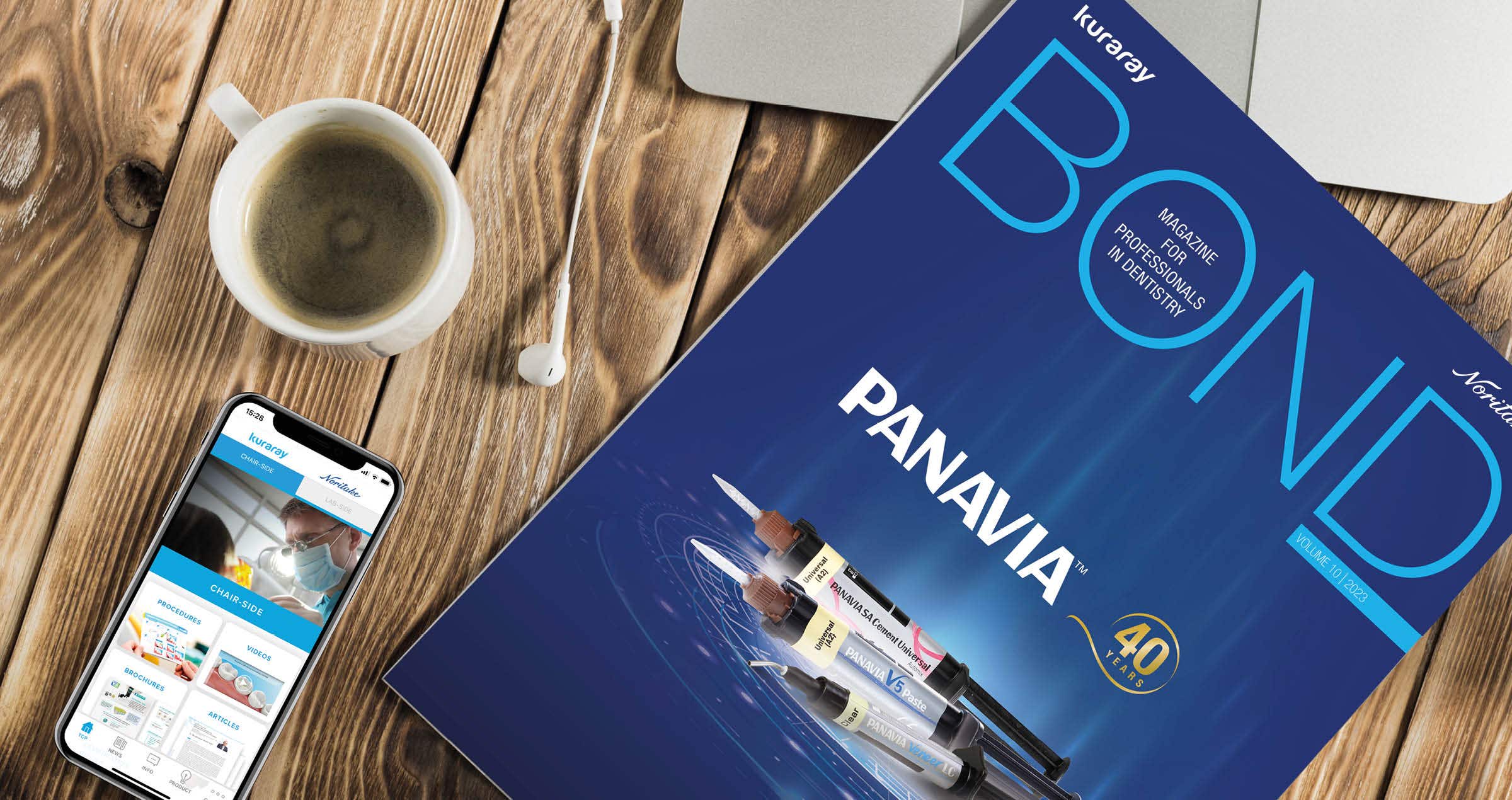
BOND Magazine, 10th edition

ADHESIVE LUTING: A DRIVER OF INNOVATION


What would modern restorative treatments be like without the availability of high-performance (self-)adhesive resin cements? Tooth preparations would still be much more invasive due to the need for sufficient mechanical retention between the tooth and the restoration. At the same time, it would be impossible to restore teeth with many innovative, tooth-coloured materials such as low-strength ceramics and composite. In short, restorative dentistry would be much less developed than it is today.


When the first resin cements were introduced several decades ago, however, the achieved progress came at the expense of simplicity: Adhesive luting procedures were highly complex and the many different components quite technique sensitive. Luckily, this has changed over the years due to continued development efforts ultimately resulting in the products that are currently available. The resin cement line-up of Kuraray Noritake Dental Inc. consists of three main products: the dual-cure three-component system PANAVIA™ V5, the single-component dual-cure universal resin cement PANAVIA™ SA Cement Universal and the light-curing PANAVIA™ Veneer LC.


For those who would like to learn more about the three systems, this 10th issue of the BOND Magazine is definitely worth reading. It reveals important details about the 40-year history of the PANAVIA™ brand, sheds light on the strengths of each resin cement to facilitate indication-specific cement selection and provides in-depth information about their clinical use. In addition, two articles are dedicated to hot topics around the luting of restorations made of zirconia, a popular restorative material that some still consider to be unsuitable for adhesive luting procedures. For everyone wondering how it is possible to successfully lute minimally invasive restorations made of zirconia, the article titled “Innovative resin cements forming the basis of minimally invasive prosthodontics” is highly recommended. Those unsure about how to proceed with 5Y-TZP should read the article “How to cement restorations made of high-translucency zirconia”. Interesting information about cleaning options prior to adhesive luting rounds out the content of this magazine.


Click here to read. Enjoy reading!


Start Reading: BOND | VOLUME 10 | 10/2023


Previous versions:


BOND | VOLUME 9 | 08/2022

BOND | VOLUME 8 | 12/2021

BOND | VOLUME 7 | 10/2020


10 years KATANA™ Zirconia multi-layered series

Photo credits to Giuliano Moustakis


Can you imagine a world without multi-layered zirconia? The invention of a zirconia material with natural colour gradation and well-balanced translucency and strength led to fundamental changes in the way zirconia-based restorations are produced. When the first product of its kind – KATANA™ Zirconia ML – was introduced to the dental market exactly ten years ago, dental technicians all over the world suddenly started rethinking their manufacturing concepts.


Since then, the trend towards a decreased thickness of the porcelain layer, a limiting of this layer to the vestibular area and the production of monolithic restorations is clearly perceivable. Technicians have developed their own concepts of micro-layering, which allow for more patient-centred approaches. This is also due to the fact that the total wall thicknesses of the restorations may be decreased without compromising the aesthetics. The line-up of multi-layered zirconia currently available from Kuraray Noritake Dental Inc. (KATANA™ Zirconia UTML, STML, HTML Plus and KATANA™ Zirconia YML with additional translucency and strength gradation) enables users to make indication-related material choices for the production of restorations that are precisely aligned to the individual demands of each case.


The reasons to choose KATANA™ quality


But why choose KATANA™ Zirconia instead of any other multi-layered zirconia disc? According to experienced users of the KATANA™ Zirconia Multi-Layered series, there are many reasons to opt for KATANA™.


For Jean Chiha, owner at North Star Dental Laboratories and Milling Center in Santa Ana, California, it is the combination of optical and mechanical properties that makes the difference: 


“KATANA™ Zirconia is the game changing material with well-balanced esthetics and strength!”. 


Naoki Hayashi, president of Ultimate Styles Dental Laboratory in Irvine, California, aesthetics is the most decisive argument to opt for the discs from Kuraray Noritake Dental Inc. He states:


“KATANA™ Zirconia discs offer trusted esthetics which gives me confidence in my clinical cases”.


Naoto Yuasa, chief ceramist at Otani Dental Clinic in Tokyo, adds predictability as an important factor:


“KATANA™ sustains my passions for aesthetic restorations and those of a predictable future in the long run”
, whereas dependability is the key element.


For Hiroki Goto, the laboratory manager at Sheets and Paquette Dental Practice in Newport Beach, California reports:


“Without KATANA™ there is no pride. Haven’t experienced it yet? You have to see how reliable it is!”


Finally, we have asked Kazunobu Yamada, a pioneer in making porcelain laminate veneers using complementary color techniques and a first-hour user of KATANA™ Zirconia, what comes to his mind when thinking about KATANA™ Zirconia. According to the president of CUSP Dental Laboratory in Nagoya City, there is a clear link between the product name and its characteristics:

“Did you know that the word "KATANA" also means "protection against misfortune and evil"? Katana zirconia, the culmination of many years of research and development by Kuraray Noritake, has an unparalleled quality. KATANA™, for me, is truly "Protection for all technicians".”


The origin of well-balanced properties


It seems that the KATANA™ Zirconia Multi-Layered line-up stands out due to set of valuable properties enabling a dental technician to produce beautiful, high-quality restorations every time. The secret of success lies in meticulous raw material selection and controlled processing from the powder to the pre- sintered blank carried out at the production facilities of Kuraray Noritake Dental Inc. in Japan. They provide for the high product quality that is responsible for the materials’ outstanding behaviour supporting the best possible outcomes.


Cementering af indirekte restaureringer


Nogle virksomheder bruger hovedsageligt grundlæggende teknologier, som andre har udviklet, til at forbedre deres produkter og indføre nye produkter, mens andre virksomheder udfører grundlæggende forskning og teknologiudvikling internt. Er denne forskel relevant for en person, som til dagligt bruger de heraf følgende produkter i en tandlægepraksis eller på et laboratorium? Det er den, fordi virksomheder med en dyb forståelse for de underliggende komponenter, kemi og teknologier er i stand til at løse eksisterende problemer og reagere fleksibelt og hurtigt på markedets behov. Denne artikel beskriver virkningen af flere grundlæggende teknologier, der er udviklet af Kuraray Noritake Dental Inc. til cementering af indirekte restaureringer.


Adhæsive cementer før og nu


Fræsning af forskellige typer keramiske tandrestaureringer har åbnet op for nye muligheder inden for protetik. Man kan producere og placere meget æstetiske restaureringer. Det, der ofte undervurderes i denne sammenhæng, er den rolle adhæsive cementer spiller, da de ikke kun understøtter de gennemsigtige, tandfarvede restaureringers æstetiske udseende, men også baner vejen for mindre invasive præparations- og restaureringsdesign. Tidlige produkter, der sikrede kemisk adhæsion mellem tænder og indirekte restaureringer, havde desværre en tvivlsom adfærd og en høj teknisk følsomhed på lang sigt, samtidig med at appliceringsproceduren var ekstremt kompleks. Teknologiudviklingen hos Kuraray Noritake Dental Inc. har bidraget væsentligt til en forbedret, langtidsholdbar bindingsevne og en forenklet applicering.


Optimering af den langtidsholdbare bindingsevne


For at opnå en langtidsholdbar binding af tidlige cementeringssystemer til tandstrukturen (især dentin) besluttede Kuraray, et moderselskab til Kuraray Noritake Dental Inc., i 1970‘erne at fokusere på udviklingen af en mere kraftig adhæsiv monomer. Det første skridt på vejen mod ”excellence” var at indføre fosfatmonomeren Phenyl-P i 1976. Fem år senere førte fortsatte bestræbelser på at forbedre og forfine dens molekylære struktur til indførslen af den populære
MDP-monomer, der er i stand til at skabe en særlig kraftig og langtidsholdbar binding til emalje, dentin, metal og zirkonia.


Det, at den stadig er en del af alle Kuraray Noritake Dental Inc.’s adhæsiver og adhæsive cementer og samtidig også bruges af andre producenter til at optimere deres produkters bindingsstyrke og -holdbarhed, understreger opfindelsens genialitet. Sammenlignet med MDP, der er syntetiseret andre steder, skiller Kuraray Noritake Dental Inc.’s originale MDP-monomer sig ud for sit uovertrufne renhedsniveau. Uafhængige undersøgelser viser, at dette renhedsniveau har en positiv effekt på bindingsadfærden1. MDP-monomeren har, ved at tilbyde stabilitet i et fugtigt miljø, bidraget til en mere ensartet ydeevne for de produkter, der indeholder den.


Forskellige MDP-monomerer tilbyder forskellige renhedsniveauer og forskellige bindingsevner.


Der blev klargjort tre eksperimentelle, selvætsende primere bestående af 15 wt % 10-MDP fra forskellige kilder: KN (Kuraray Noritake Dental), PCM (Tyskland) eller DMI (Designer molecules Inc., USA). Data venligst udlånt af Dr. Kumiko Yoshihara.


For at adhæsive resincementer skal kunne give en kraftig binding med en enestående marginal forsegling, er det dog ikke nok at indeholde en adhæsiv monomer. En effektiv polymerisering af denne monomer er ligeledes nødvendig - men det er ikke altid så let at opnå. For at kunne sikre en effektiv lys- og mørkhærdning af PANAVIA™ V5 har Kuraray Noritake Dental Inc. udviklet sin Touch-Cure Technology. Denne teknologis vigtigste del er en nyudviklet, meget aktiv polymeriseringsaccelerator i PANAVIA™ V5 Tooth Primer, som kan eksistere sammen med den sure MDP-monomer, der fremmer polymerisering ved grænsefladen mellem tanden og cementen, så snart PANAVIA™ V5 Paste påføres på den forbehandlede tandoverflade. I PANAVIA™ Veneer LC - en lyshærdende resincement, der fungerer med de samme primere - viser polymeriseringsacceleratoren i PANAVIA™ V5 Tooth Primer den samme virkningsmekanisme. Det bidrager til polymeriseringen af den adhæsive grænseflade, mens PANAVIA™ Veneer LC Paste har en fremragende omgivende lysstabilitet og polymeriseres ved lyshærdning.


Dette eksempel blev for eksempel evalueret for PANAVIA™ F2.0, forgængeren til PANAVIA™ V5. Resultatet af forsøget: PANAVIA™ F2.0 viste meget bedre marginale forseglingsegenskaber end de andre evaluerede cementer2. Denne dokumenterede sikre forsegling af grænsefladen giver en lavere forekomst af marginal lækage, en meget høj polymeriseringsratio, selv i selvhærdende tilstand (uden lyshærdning eller hvor lyset måtte være blokeret af restaureringsmaterialet) og dermed en særlig kraftig binding.


En ekstra fordel ved indføjelsen af polymeriseringsacceleratoren er, at den fungerer som et kraftigt reduktionsmiddel. Den neutraliserer natriumhypochlorit, som ofte bruges som skylleopløsning under endodontisk behandling, og eliminerer dermed dens negative effekt på bindingsstyrken af den efterfølgende cementpasta.


Forenkling af glaskeramisk cementering


Færre flasker, færre trin og strømlinede cementeringsprocedurer. Det er derfor de selv-adhæsive resincementer blev udviklet og indført i starten af 00’erne. De fleste af disse produkter har dog et begrænset indikationsområde. De fungerer godt på zirkonia, metal, emalje og dentin, men anbefales enten ikke eller kræver en ekstra silanprimer til glaskeramisk binding. PANAVIA™ SA Cement Universal med MDP er anderledes, fordi det er en anden patentbeskyttet teknologi fra Kuraray Noritake Dental Inc.: LCSi-monomer er et silankoblingsmiddel med en lang kulstofkæde. Denne monomer danner en kraftig kemisk binding med resinkomposit, porcelæn og silica-keramik (såsom lithiumdisilikat), hvilket fjerner behovet for en separat silankomponent (en primer eller et adhæsiv). PANAVIA™ SA Cement Universal skiller sig klart ud fra andre selv-adhæsive resincementer som en ægte enkomponentscement, ved at udnytte fordelene ved denne teknologi, selv til restaureringer af glaskeramik.


Hvis det ønskes, kan produktets bindingsstyrke til tandstrukturen øges ved at bruge det populære universaladhæsiv CLEARFIL™ Universal Bond Quick med Rapid Bond Technology. Denne teknologi er udviklet af Kuraray Noritake Dental Inc. for at løse problemer med langsom indtrængning af tandstrukturen, især våd dentin, som er typisk for universaladhæsiver. For at sikre korrekt indtrængning skal disse adhæsiver gnides aktivt ind i tandstrukturen i lang tid, eller brugerne skal vente i et stykke tid, før produktet er lyshærdet. Den patenterede Rapid Bond Technology, der består af den originale MDP-monomer, kombineret med hydrofile amidmonomerer, giver en høj affinitet til vand, hvilket giver en hurtig og dyb indtrængen af våd dentin. Som følge heraf forkortes appliceringstiden, og håndteringen forenkles, uden at det påvirker bindingens ydeevne negativt.


Konklusion


Teknologier, der er udviklet af Kuraray Noritake Dental Inc., har i høj grad bidraget til en forbedret bindingsevne for adhæsive cementer og en meget universel brug af selv-adhæsive resincementer. Som følge heraf tilbyder virksomheden en strømlinet portefølje af højtydende resincementer til alle brugere og til typiske kliniske situationer. Der er behov for færre komponenter og færre trin og procedurerne forenkles - hvilket giver færre fejl og æstetiske restaureringer, der holder. Udover de teknologirelaterede fordele tilbyder de nævnte produkter mange andre fordelagtige funktioner. En detaljeret beskrivelse findes online på kuraraynoritake.eu.   


Referencer


*) Functional monomer impurity affects adhesive performance.; Yoshihara K, Nagaoka N, Okihara T, Kuroboshi M, Hayakawa S, Maruo Y, Nishigawa G, De Munck J,
Yoshida Y, Van Meerbeek B. Dent Mater. 2015 Dec;31(12):1493-501.
**) Touch-Cure Polymerization at the Composite Cement-Dentin Interface.; Yoshihara K, Nagaoka N, Benino Y, Nakamura A, Hara T, Maruo Y, Yoshida Y, Van Meerbeek
B.J Dent Res. 2021 Aug;100(9):935-94


 

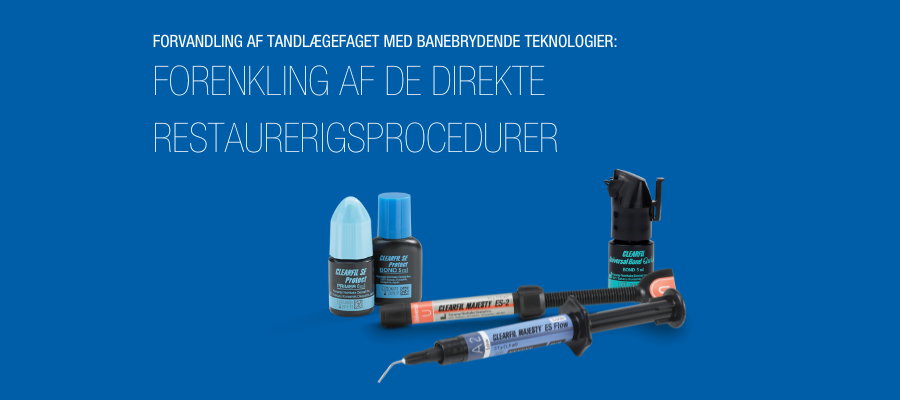
Forenkling af de direkte restaurerigsprocedurer

Nogle virksomheder bruger hovedsageligt grundlæggende teknologier, som andre har udviklet, til at forbedre deres produkter og indføre nye produkter, mens andre virksomheder udfører grundlæggende forskning og teknologiudvikling internt. Er denne forskel relevant for en person, som til dagligt bruger de heraf følgende produkter i en tandlægepraksis eller på et laboratorium? Det er den, fordi virksomheder, der udvikler alt fra bunden, som regel kender produkterne og fremstillingsprocedurerne bedre, hvilket gør det lettere for dem at ændre specifikke funktioner, løse eksisterende problemer og reagere på markedets behov. Denne artikel beskriver virkningen af flere grundlæggende teknologier, der er udviklet af Kuraray Noritake Dental Inc., på arbejdsprocessen med at skabe direkte restaureringer i komposit.


Direkte restaureringer - fra komplekst til simpelt

Adhæsiv genopbyggende tandpleje, der anvender højtydende dentaladhæsiver og resinkompositter er lige nu en af de mest populære måder at behandle tænder med kariesangreb på. I dag er en enkelt flaske universaladhæsiv og en eller to nuancer og opaciteter af universalkomposit normalt nok til at skabe smukke og holdbare resultater, forudsat at de rigtige materialer er valgt. Dette har dog ikke altid været tilfældet. De teknikker, der blev brugt til at lave direkte restaureringer, har i lang tid været ret komplekse: Adhæsiver var teknisk krævende og krævede flere flasker og flere trin med lange appliceringstider. Omvendt giver kompositfillere kun naturtro resultater, når mange forskellige nuancer og opaciteter kombineres på den rigtige måde. Og selvom de komplekse procedurer blev udført korrekt, var risikoen for mikrolækage, misfarvning og i sidste ende sekundær caries forholdsvis høj. Kuraray Noritake Dental Inc. fokuserede ret tidligt på at løse disse problemer og startede med at bruge den originale MDP-monomer, der blev udviklet i 1981.


Optimer af bindingsevnen


Den originale MDP-monomer var i stand til at løse problemet med adhæsivernes begrænsede langtidsholdbare bindingsevne. MDPs hydrofile (fosfat) gruppe danner en særlig kraftig og holdbar kemisk binding med calcium, der findes i hydroxyapatit, som er hovedbestanddelen i emaljeog dentin. Det MDP-Ca-salt, der dannes, danner grundlaget for et stabilt, kraftigt og holdbart hybridlag. Sammen med resin i bindemidlet opnås en tæt forsegling af kaviteten efter lyshærdning. MDP har hidtil været en vigtig komponent i enhver adhæsiv fra Kuraray Noritake Dental Inc. og det er den nøglekomponent, der har gjort CLEARFIL™ SE Bond til den gyldne standard for selvætsende adhæsivsystemer.

Den originale MDP-monomer skaber en kraftig kemisk binding til emalje, dentin, metallegering og zirkonia.

Kuraray Noritake Dental Inc. var dog overbevist om, at dentale adhæsiver burde give mere end blot en kraftig og langvarig binding, og begyndte derfor at fokusere på at løse et andet problem: risikoen for demineralisering og kavitation forårsaget af resterende bakterier i kaviteten. På baggrund af sin erfaring med at udvikle andre adhæsive monomerer opfandt Kuraray Noritake Dental Inc. MDPB-monomeren, der har en antibakteriel kavitetsudrensende effekt. I modsætning til antibakterielle midler, der kan forringe bindingsstyrken af et efterfølgende appliceret adhæsiv, dræber MDPB-monomeren de resterende bakterier uden at påvirke bindingsevnen. Den følger med primeren til det 2-trins selvætsende adhæsiv CLEARFIL™ SE Protect og immobiliseres ved polymerisering.


MDPBs bakteriedræbende mekanisme formodes at være den samme som det velkendte antibakterielle stof CPC (Cetylpyridiniumchlorid), der findes i mange typer tandpasta og mundskyl.


Selvom de 2-trins selvætsende adhæsiver allerede har forenklet klæbeproceduren, går 1-trins universaladhæsiver lige skridtet videre. Det er en udfordring at samle ingredienser, fordelt på flere trin, i én flaske uden at gå på kompromis med produktets stabilitet. Takket være moderne teknologi er dette nu muligt. For hurtigst muligt at forsegle overfladen efter appliceringen skal gennemtrængningen af monomererne i tandvævet være hurtig og effektiv. Men gennemtrængningen bremses normalt af monomerer, der har brug for tid til at trænge ind i tandstrukturen - især våd dentin - og sommetider endda skal gnides ind. Derfor fokuserede Kuraray Noritake Dental Inc. på at udvikle Rapid Bond Technology. Den går ud på kombinere den originale MDP-monomer med nyudviklede hydrofile tværbindende amid-monomerer og er integreret i CLEARFIL™ Universal Bond Quick. De hydrofile amid-monomerer giver en hurtig, dyb og fuldstændig gennemtrængning af dentinen og danner ved hærdning et tæt tværbundet polymernetværk, der er ansvarligt for en kraftig og holdbar binding. Tiden der går med at vente og gnide fjernes derfor, og der skabes en tæt og langvarig forsegling af kaviteten efter lyshærdning.


DENTIN KLARGJORT MED SMEAR-LAG.
På grund af dentinens hydrofilitet har vi brug for en meget hydrofil binding for at kunne trænge optimalt igennem.
BINDING AF DENTIN MED CLEARFIL™ UNIVERSAL BOND QUICK.
Under hærdning danner CLEARFIL™ Universal Bond Quick et effektivt tværbundet polymernetværk. Resultatet af dette netværk er, at bindingen har en meget lav vandoptagelse, hvilket giver en langtidsholdbar restaurering.


Deres hydrofilicitet (evnen til at blande sig med vand) betyder, at Rapid Bond-teknologiens amidmonomerer trænger meget godt gennem dentinen. Efter lyshærdning har bindingen en lav vandoptagelse og derfor en høj
modstandsdygtighed over for aldring.


Optimering af direkte restaurering

Kombination af flere lag, nuancer og opaciteter: Brugen af meget komplekse layeringteknikker til at skabe naturtro kompositrestaureringer hører heldigvis fortiden til i mange kliniske situationer. Dette skyldes højt udviklede resinkompositter, der blender perfekt sammen med den omkringliggende tandstruktur. For at opnå denne gode egenskab har Kuraray Noritake Dental Inc. udviklet sin egen Light Diffusion Technology (LDT). Denne teknologi bruges i særlige præpolymeriserede fillers, der fungerer som millioner af mikroprismer, der transmitterer og bryder lys og farve fra den omkringliggende tandstruktur. Fillerne er optimeret i størrelse, fordeling og brydningsindeks i forhold til matrixen og giver en uovertruffen naturlig blending. Hele CLEARFIL MAJESTY™ kompositdelen indeholder den patenterede fillerteknologi. Det nyeste produkt – CLEARFIL
MAJESTY™ ES-2 Universal – hvor Kuraray Noritake Dental Inc. gør brug af den næste generation af LDT, giver mulighed for at benytte en enfarvet teknik med et forenklet farvevalg. Produktet fås i to nuancer til den forreste del og i én nuance til den bagerste del, men blender så godt ind at det dækker stort set alle nuancer i VITA classical A1-D4-farveguiden.


Korrekt brydning og transmission af lys for at opnå en god optiskintegration: lysdiffusionsfillere i CLEARFIL MAJESTY™ ES-2 fra Kuraray Noritake Dental Inc.


Da en smuk optisk fremtoning ikke kun afhænger af optisk integration og usynlige restaureringsmarginer, har Kuraray Noritake Dental Inc. også udviklet fillers, der sørger for resten - en naturlig overfladeglans og holdbar polering. Løsningen, der er integreret i CLEARFIL MAJESTY™ ES Flow med dens tre flydeevnegrader, kaldes Submicron Filler Technology, som består af blanke submikrone fillers. Disse fillers er så små, at lysets refleksion virker naturlig også efter nogen tid. Kuraray Noritake Dental Inc.’s exceptionelle silanteknologi bruges til at samle millioner af disse submikrone fillers og sørge for at holde dem sammen over tid. Det giver mulighed for høje fillermængder i kompositter med lav viskositet og begrænser vandoptagelsen, som ellers ville føre til nedbrydning af den hærdede komposit. Den perfekte balance mellem de blanke submikrone fillers, lysdiffusionsfillers, resinmatrix og patenteret silanteknologi sikrer en balanceret kombination af mekaniske og optiske egenskaber.


Voorbeeld van een eenkleurige restauratie, vervaardigd van CLEARFIL MAJESTY™ ES-2 Universal.


Konklusion

Adhæsive monomerer, fillerteknologier og silanteknologi, der giver en solid kombination af fillers, clusters og resinmatrix: Kuraray Noritake Dental Inc. er uden tvivl en pålidelig ekspert inden for adhæsive restaureringer. De patenterede teknologier, der er udviklet inden for de seneste årtier, har i høj grad bidraget til at skabe en bedre (og mere holdbar) ydeevne af direkte restaureringer, hvor pålidelige og æstetiske resultater er meget nemmere at opnå.