No Author Selected

Preserving tooth structure: from individual prophylaxis to flowable injection

Interview with Dr. Ludivine Facon


Individual prophylaxis, early defect detection and treatment, minimally invasive restorative techniques: In her joint dental practice in Anstaing, France, Dr. Ludivine Facon does everything in  her power to keep her patients’ teeth healthy for their lifetime. When we met her at the International Dental Show in Cologne, where she was a speaker for Kuraray Noritake Dental Inc., we asked her to share information about her treatment philosophy and how flowable injection fits into her overall approach.


Your treatment philosophy seems to be minimally invasive. Would you please tell us a bit more about it?

Ever since I started treating patients, my priority has always been to preserve the dental tissues and to be as minimally invasive as possible when restoration is required. My interest in prevention started with my thesis in 2000, which focused on oral health prevention in Quebec, Canada, a country where prophylactic care is an integral part of dental treatment. I have always been highly interested in individual prophylaxis, which naturally led me to focus on minimally invasive treatments. My goal is to stay as low as possible on the therapeutic gradient, always thinking about the long-term benefits for the patient.


What are the benefits of this approach for your practice?

Integrating prophylaxis for every patient into my practice allows me to work with excellent surface conditions for bonding. The oral environment is sanitized before applying conservative restorations, and carious lesion removal is kept to a minimum.


When defects – be it a carious lesion or severe tooth wear – are present, I use the following instruments and materials that allow for truly minimally invasive interventions:

  • Rondoflex 50-micron sandblaster to roughen the surface,
  • Micro diamond burs to remove what is necessary,
  • Layered composites for single-tooth restorations,
  • Injected composites when multiple teeth are involved.


Case predestined for composite injection, as multiple teeth in the maxilla need to be treated (smile makeover).


What dental materials do you use for your restorative procedures?

I am a hands-on dentist, and in my daily practice, I strictly follow surface preparation and bonding protocols recommended for CLEARFIL™ Universal Bond Quick 2 (Kuraray Noritake Dental Inc.). In addition, I use high-quality composites from Kuraray Noritake Dental Inc. For layering, CLEARFIL MAJESTY™ ES-2 Premium Enamel and Dentin are my got-to solution, while I use CLEARFIL MAJESTY™ ES Flow Low for injection.


What are the benefits of a conservative approach for your patients?

Patients appreciate the fact that my treatment approach is as conservative as possible while still allowing for easy reintervention if necessary, preserving as much healthy dental tissue as possible. Another significant advantage is the moderate cost, which makes the treatment more accessible.


How does composite injection fit into this philosophy?

This technique allows for an easy reconstruction of multiple teeth by transferring a wax-up designed in the lab into the mouth via an injection of modern flowable composite into a transparent silicone index. Patients like this technique because it is aesthetic, reliable, reproducible and minimally invasive. A major advantage is that it allows for touch-ups and repairs, making it a reassuring solution. In some cases, no tooth preparation is needed at all—we simply add material, making the whole treatment truly non-invasive.


Why do you think this technique is promising?

It is a trendy and promising technique because:

  • It is non-invasive --> preserves tissues --> aligns with minimally invasive dentistry.
  • It is predictable --> due to the index, the technique is reproducible.
  • It is easier than traditional layering --> saves chair time and improves patient comfort.
  • It is cost-effective --> a cheaper alternative to ceramic veneers.
  • It allows for repairs at any time, making it a reassuring option.


How did you proceed before knowing this technique?

In the anterior region, I used traditional composite layering with a wax-up and a palatal silicone index. It allowed me to rebuild the palatal wall and provide for precise incisal edge placement. In the posterior region, I used inlays, onlays, or overlays made of lab-processed reinforced composite or lithium disilicate.


Transparent silicone index with injection hole used to inject the flowable composite and restore the tooth to its planned shape.


What made you start using the new technique?

There has been an explosion in demand for smile enhancements, especially among young adults. The composite injection technique is an appealing alternative for reshaping smiles in young patients with intact teeth but unsatisfactory size or shape. It is less invasive than veneers, which have gained popularity due to social media trends, but often require significant tooth preparation.


How did you proceed in the beginning?

I first discovered the technique in a specialized journal in 2019, then trained myself using online tutorials. Of course, there were some trial-and-error moments, but it is a very accessible technique—even for beginners. To achieve optimal results, I believe that proper case selection and treatment planning are key. One of the most important preconditions for aesthetic outcomes is that the patient’s teeth have a simple shade structure. If the shade structure of the teeth is complex or the required restoration is large, it is better to layer the dentin before injecting the enamel. Moreover, it is essential to produce two models in the wax-up phase, not just one: An “intermediate wax-up model” with every other tooth featuring the wax-up, while the remaining teeth remain unmodified. The second is a “full wax-up model” with all teeth reshaped.


Considering these aspects, it is possible to obtain great outcomes quite quickly. The learning curve is steep, however – as with every new technique to be implemented – you need to step out of your comfort zone.


Apart from CLEARFIL™ Universal Bond Quick 2 and CLEARFIL MAJESTY™ ES Flow Low you already mentioned, what instruments and materials do you use?

For treatment planning including the wax-up, I use digital technology via Smilecloud, but a traditional wax-up works just as well. The production of the silicone index is the most delicate part when doing it in-house. I recommend using EXACLEAR (GC), the only truly effective transparent silicone currently available. Adjacent teeth are isolated with PTFE tape. Finishing instruments that have proven their worth are:

  • Scalpel Blade No. 12,
  • 3M™ Sof-Lex™ Contouring and Polishing Discs (Solventum),
  • Red-ring fine diamond burs,
  • TWIST™ DIA for Composite polishers (Kuraray Noritake Dental Inc.).


Intermediate wax-up model: One tooth with wax-up followed by one tooth without.


Full wax-up model.


Do you believe that the quality of the outcome is affected by the composite material you use?

Absolutely! New high-filled flowable composites, like CLEARFIL MAJESTY™ ES Flow Low, offer excellent mechanical properties and polishability, making them very promising.


Highly aesthetic treatment outcome after injection of CLEARFIL MAJESTY™ ES Flow Low.


What material characteristics impact overall quality?

First of all, the optical properties or shade matching ability of the material are crucial. I like the fact that I can select from a variety of shades when using CLEARFIL MAJESTY™ ES Flow. Once the right shade is selected and the thickness of the injected layer does not exceed 1 mm, the optical properties of the restorations may be expected to be exceptional.


Moreover, we need a material with great flow properties (fluid, but not too runny), which is virtually void-free. I prefer using low viscosity flowable composites like CLEARFIL MAJESTY™ ES Flow Low (two other flowabilities – HIGH and SUPER LOW – are also available). The physical properties (mechanical strength) and polishability plus polish retention are also important. They are usually excellent with premium flowable composites.


What are your most important clinical tips and tricks?

For beginners:

  • Press firmly on the cervical area of the silicone index to reduce excess material upon removal.
  • Finish the proximal area thoroughly before moving to the next injection step. This way, you provide for perfect key positioning for the following teeth.

If you follow the protocol, the technique is very beginner friendly!


What is your opinion about the emerging hybrid "layering & injection" technique?

This hybrid technique complicates the original injection technique, which is meant to simplify composite restorations. However, it is very useful in cases where aesthetic complexity requires layering. For maximum mimicry with this technique, I would love to have injectable composites in an enamel shade at my disposal.


Would you please share your final thoughts with us?

Take your time planning! Observe, document, take photos, use digital tools! Less is more.


Dr. Facon, thank you very much!

Dentist:


LUDIVINE FACON


Dr. Ludivine Facon graduated from the University of Lille, where she developed a solid foundation in dentistry. Passionate about periodontology and dental aesthetics, Dr. Facon pursued specialized training to refine her skills in these fields. In 2007, she completed clinical periodontology training at the Charon Clinic, followed by individual dental prophylaxis training with Michel Blique in 2008. From 2013 to 2014, she attended the long cycle program at the Académie du Sourire in Aix-en-Provence, enhancing her expertise in dental aesthetics. Dr. Facon continued to build on her knowledge with international training, including at the International Institute of Periodontology in Montreal in 2015, and a veneer training course at the GAD Center in Bordeaux the same year. In 2016, she further advanced in mucogingival surgery at the Académie de Parodontologie in Aix-en-Provence. Always keeping up with the latest developments, she participated in the CIDAE training in Brussels in 2022. More recently, in 2024, Dr. Facon completed a course in composite layering and injection, led by Guillaume Piskorski, the French specialist in injected composite technique, in Lille. With extensive expertise, Dr. Facon is also an educator in direct aesthetic composites, having taught at the University of Lille in 2020, 2022, 2023, and 2024.


Finishing Veneers with CERABIEN™ MiLai Lusters on KATANA™ Zirconia YML

In part two of this veneer workflow, Roberto Rossi completes the restoration by applying CERABIEN™ MiLai lusters to the pre-stained and sintered KATANA™ Zirconia YML. Watch as he enhances surface texture, gloss, and lifelike detail through precise finishing techniques.


With just a few simple steps, Roberto creates depth, dynamic light effects, and natural contours that rival real enamel. The process is intuitive and efficient, delivering a high-end finish—culminating in a final self-glazing fire for a polished, natural result.


An intelligent solution for dental technicians seeking efficiency without compromising on aesthetics.


Veneer Characterization with CERABIEN™ MiLai Internal Stains on KATANA™ Zirconia YML

In the first part of this aesthetic veneer workflow, dental technician Roberto Rossi demonstrates how to apply internal stains to KATANA™ Zirconia YML. This crucial step enhances the restoration by adding depth, translucency, and natural character from within.


After refining the anatomy and surface texture, Roberto skillfully blends and applies selected shades such as A+, Fluoro, and Incisal Blue. These shades create depth, opalescence, and inner vitality that radiate through the final restoration.


A must-watch for dental technicians looking to elevate their zirconia restorations with advanced, yet straightforward, internal staining techniques.


It was truly a lifetime experience

EUROPEAN KOLS EXPERIENCE INNOVATION AND CRAFTSMANSHIP IN JAPAN

This September, seventeen of Kuraray Noritake Dental’s Key Opinion Leaders (KOLs) from across Europe—representing nine countries—embarked on a remarkable journey to Japan. The program offered a rare opportunity to experience the heart of Kuraray Noritake Dental’s culture of innovation, craftsmanship, and collaboration.


A JOURNEY OF INSIGHT AND INSPIRATION

The tour began in Tokyo, where the group traveled by bullet train to Nagoya to explore some of Japan’s cultural and professional landmarks. Visits to Nagoya Castle and the historic Noritake Garden provided glimpses into the artistry and heritage that continue to inspire our company’s ceramic technologies today.


Nagoya castle.


That evening, an official dinner in Nagoya brought together the European guests and key members of the Kuraray Noritake Dental team, including Ms. Kiyoko Ban, Mr. Yoshihisa Yamada, and Mr. Kazuhiro Yamada. It was an evening filled with rich conversations, meaningful connections, and a shared vision for the future of dental excellence.


FROM CONCEPT TO CREATION: VISITING THE MIYOSHI AND NIIGATA FACTORIES

The following day, the KOLs visited the Miyoshi Factory, where the company’s ceramic products such as KATANA™ Zirconia are manufactured, and  attended insightful presentations by their European peers — including Jorgen Gad, Sophie Dallem, Dumitru Leahu, Marios Georgoulis, Stratos Chatzichristos, and Kamila Krzepkowska — followed by a comprehensive factory tour and in-depth discussions  with R&D experts on zirconia and dental lab materials, providing unique professional insights.


Discussion with Kuraray Noritake Dental team at Miyoshi Factory.


Presentation given by DT Sophie Dallem and DT Dumitru Leahu at Miyoshi Factory.


Presentation given by DT Marios Georgoulis at Miyoshi Factory.


The tour also brought our KOLs to Niigata, where participants experienced firsthand the research and development process behind Kuraray Noritake Dental’s renowned products. A highlight was the hands-on demonstration of CLEARFIL MAJESTY™ ES Flow Universal, allowing each participant to engage directly with the materials and processes that define the company’s quality.


Hands-on course at Niigata plant.


CONNECTING THROUGH COLLABORATION

Between technical sessions, the group visited the Tokyo office and showroom, sharing open discussions with our Japanese colleagues at the headquarters, followed by a sightseeing tour through Tokyo’s landmarks — from the Imperial Palace to Tokyo Tower. These shared experiences strengthened the sense of partnership and mutual respect not only between the European and Japanese teams but also between the KOLs themselves and the company.


“It was an incredible experience meeting exceptional people worldwide, among them top specialists.” 
—    DT Kamila Krezpkowska, Poland


Discussion with Kuraray Noritake Dental team at the Tokyo headquarters.


WORDS FROM OUR KOLS

The feedback from participants was overwhelmingly positive:


“It was truly a lifetime experience — both inspiring and invaluable for me as a dental technician. Witnessing how the materials we use every day are created gave me an even deeper appreciation for the craft behind them.”
DT Marios Georgoulis, Greece


“I’m so impressed by the organization, the endless friendliness, the openness, and the willingness to answer all my questions. It was a wonderful time, filled with so many experiences.” 
Dr. Bernhild Stamnitz, Germany


“It was a life experience I will never forget and I am very grateful I got this opportunity to be there.[…] The drive and compassion of all the workers in office, but also at the factory were very impressive to see. The view I had about the quality of your product improved more than it already was.” 
—  Dr. Mark Laske, Netherlands


A SHARED COMMITMENT TO EXCELLENCE

The KOL Japan Tour 2025 was more than a professional visit—it was a bridge between continents, uniting people through shared values of precision, innovation, and artistry. Kuraray Noritake Dental extends heartfelt thanks to all participants and to the teams in Japan who made this unforgettable experience possible.


Group picture at the Kuraray Noritake Dental office in Tokyo.


Arigato!


Micro-layering with CERABIEN™ MiLai

Case by Andreas Chatzimpatzakis


A CONCEPT EVEN FOR AESTHETICALLY DEMANDING CASES

The micro-layering technique is regarded as a more efficient, streamlined approach used as an alternative for full porcelain layering. It requires aesthetic, high-strength ceramics like lithium disilicate or zirconia as a base and – ideally – a set of porcelains specifically designed for reduced layer thicknesses that allows users to focus on imitating the characteristics of enamel. A high-quality example is CERABIEN™ MiLai (Kuraray Noritake Dental Inc.). Consisting of a set of internal stains and porcelains with a firing temperature of just 740 °C and a coefficient of thermal expansion in the range of 9.5~11.0×10⁻⁶/K (50 °C – 500 °C), this product works well on lithium disilicate and zirconia.


Its aesthetic potential is surprisingly high: Depending on case-specific requirements, users are given the choice between maximum efficiency using a single-bake technique and maximum aesthetics achieved with more complex layering. The latter option is demonstrated below using the example of six maxillary anterior veneers.


Fig. 1. Lithium disilicate frameworks (Amber Press) on the model.


Fig. 2. CERABIEN™ MiLai Value Liner 1 applied to the framework. This porcelain is typically used on lithium disilicate for wash baking.


Fig. 3. First build-up with CERABIEN™ MiLai CCV2 in the cervical section, …


Fig. 4. … Value Liner 2, …


Fig. 5. … Creamy Enamel in the middle area …


Fig. 6. … and Tx used to add ultimate translucency.


Fig. 7. Appearance of the restorations after the first bake.


Fig. 8. Outcome of the internal staining procedure.


Fig. 9. Application of CERABIEN™ MiLai LT1 for a standard translucency and opalescence effect, …


Fig. 10. … E2, …


Fig. 11. … a mixture of E2 and ELT1 (mixing ratio: 50:50) for translucency and brightness and along the marginal ridges, …


Fig. 12. … Tx mixed with Royal Blue (mixing ratio 70:30) for a blueish translucency in the incisal area…


Fig. 13. … as well as a final layer of LTx to add ultimate translucency and opalescence to the whole enamel surface.


Fig. 14. Outcome of the third bake.


Fig. 15. Cutback for the final layer of porcelain.


Fig. 16. Final layer of CERABIEN™ MiLai added to the central and lateral incisors for translucency.


Fig. 17. Situation after the fourth bake, grinding and use of a rubber polisher.


Fig. 18. Outcome of the fifth bake (self-glaze).


Fig. 19. Beauty shots …


Fig. 20. … of the restorations …


Fig. 21. … on the model.


TRULY BEAUTIFUL OUTCOMES POSSIBLE

This case example reveals that CERABIEN™ MiLai is much more than just a maximum-efficiency solution: With the current line-up of porcelains and internal stains, truly beautiful restorations can be produced. Hence, users are given high flexibility regarding not only the high-strength framework material they prefer, but also the effort and time they would like to invest. This makes CERABIEN™ MiLai a versatile porcelain system that meets many needs and covers a wide range of applications in the dental laboratory.

Dental technician:

ANDREAS CHATZIMPATZAKIS


Andreas graduated from the Dental Technology Institute (TEI) of Athens in 1999. During his studies he followed a program at the Helsinki Polytechnic Department of Dental Technique, where he trained on implant superstructures and all ceramic prosthetic restorations. As of 2000, he is running the ACH Dental Laboratory in Athens, Greece, specialized on refractory veneers, zirconia and long span implant prosthesis. In 2017 Andreas visited Japan where he trained under the guidance of Hitoshi Aoshima, Naoto Yuasa and Kazunabu Yamanda and become International Trainer for Kuraray Noritake Dental Inc..


Twee kleuren voor al uw restoraties

CLEARFIL MAJESTY™ ES Flow Universal WINT RESEARCH AWARD

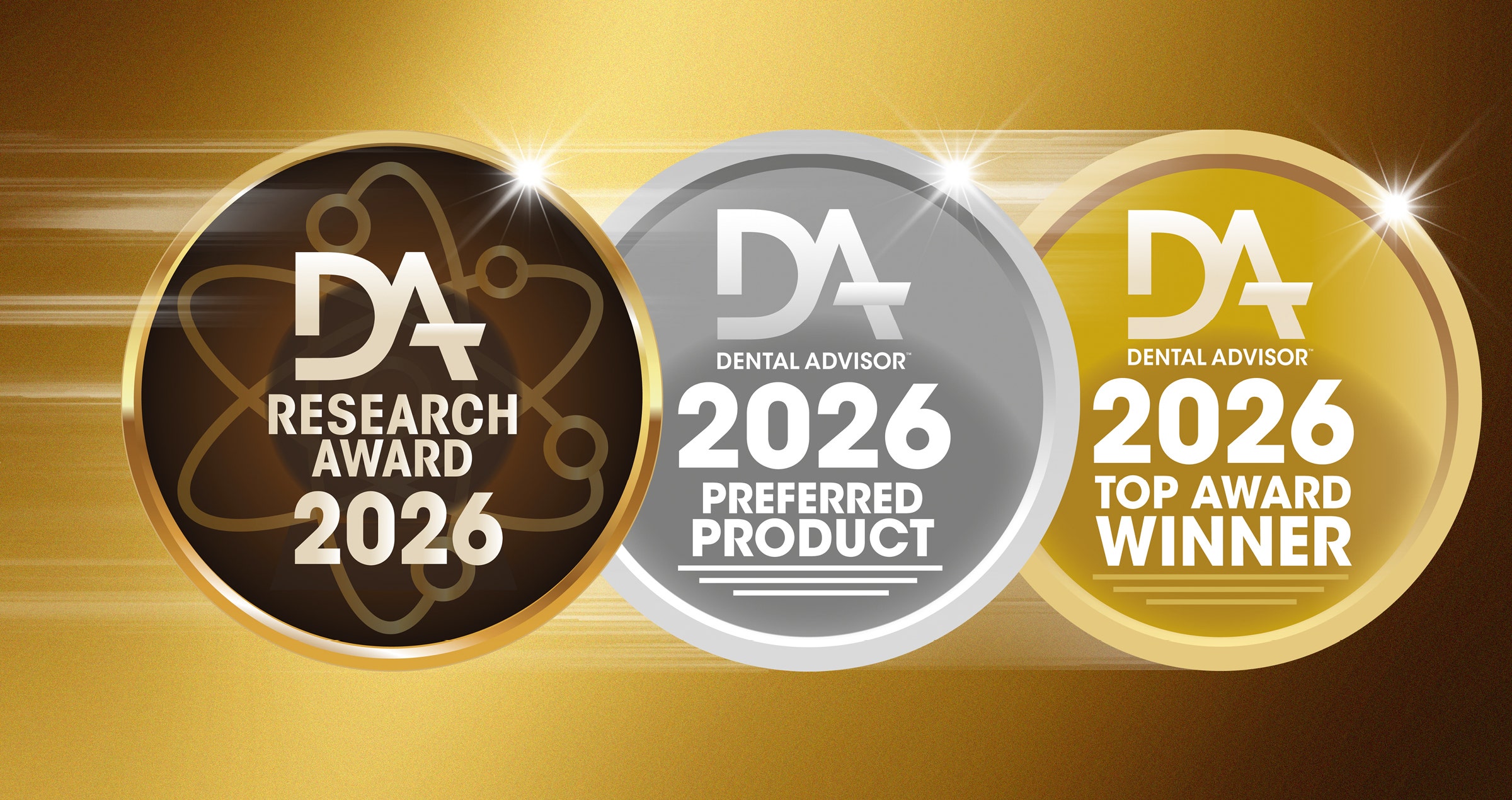
Kuraray Noritake Dental Inc. heeft onlangs een flowable composiet geïntroduceerd met een vereenvoudigd kleurconcept: CLEARFIL MAJESTY™ ES Flow Universal. In de editie van januari/februari 2025 van het Amerikaanse tijdschrift Dental Advisor werd het nieuwe product bekroond met een prestigieuze Research Award voor de overtuigende in-vitro prestaties.


EIGENSCHAPPEN IN HET KORT

In Europa is CLEARFIL MAJESTY™ ES Flow Universal onlangs geïntroduceerd met twee viscositeiten – Low and Super Low – terwijl in de VS de Super Low variant beschikbaar is. Voor een probleemloze kleurselectieprocedure is het materiaal voorzien van een slimme combinatie van glazuurachtige translucentie, dentine-achtige chroma en de unieke Light-Diffusion Technology (LDT). Dit zorgt voor uitzonderlijke mogelijkheden voor kleuraanpassing, en dat met een minimale kleurenreeks van slechts twee aanvullende kleuren – Universal (U) and Universal Dark (UD). Na het uitharden sluit het materiaal op natuurlijke wijze aan bij de omliggende tandstructuur.


Naast de intuïtieve kleurselectie biedt het flowable composiet nog een enorm voordeel: de uitzonderlijk hoge sterkte. Met een buigsterkte van 152 MPa en een compressiekracht van of 374 MPa is CLEARFIL MAJESTY™ ES Flow Universal (Super Low) net zo sterk als veel pasta-achtige composieten. Het is zodoende ook te gebruiken voor belaste delen en wordt geïndiceerd voor:

  • Directe restauraties voor alle caviteitsklassen, cervicale laesies (bijvoorbeeld worteloppervlakcariës, V-vormige defecten), gebitsslijtage en tanderosie
  • Caviteitsbasis/voering
  • Correctie van positie en -vorm (bijvoorbeeld sluiting van diasteem, malformatie van elementen)
  • Intra-orale reparatie van gefractureerde restauraties
  • Cementeren van inlays, onlays en veneers – keramisch en composiet – met een dikte van minder dan 2 mm


VERBLUFFENDE IN-VITRO PRESTATIES

De in de Verenigde Staten aangeboden variant met Super Low vloeibaarheid is bij het Dental Advisor Biomaterials Research Center getest en vergeleken met twee andere flowable composieten. Bij de beoordeelde eigenschappen werden onder andere de buigsterkte, elasticiteitsmodulus, breukweerstand, compressiekracht en radiopaciteit van het materiaal geëvalueerd. Daarnaast werd door onderzoekers gekeken naar het kleuraanpassend vermogen van de materialen in de context van restauratie van caviteiten in Klasse V in A1-, B2-, C3- en D4-kleurige tandprotheses. Ten slotte werden ook nog de radiopaciteit en vloei-eigenschappen getest.


CLEARFIL MAJESTY™ ES Flow Universal wist op alle vlakken uitstekende prestaties neer te zetten. De fysieke eigenschappen hoorden bij de allerbeste voor flowable composieten en het niveau was vergelijkbaar met dat van pasta-achtige composieten. Geconstateerd werd dat de radiopaciteit ideaal was, net als de viscositeit; het materiaal behoudt na het aanbrengen zijn aanvankelijke vorm. En hoewel er slechts twee kleuren beschikbaar zijn, constateerden ook de onderzoekers dat met CLEARFIL MAJESTY™ ES Flow Universal een breed scala aan natuurlijke tandkleuren gerealiseerd kan worden.


OVER DENTAL ADVISOR

De onderscheidingen Top Product en Preferred Product – toegekend door de organisatie Dental Advisor in de VS – zijn bedoeld als hulpmiddel voor drukke praktijkbeoefenaren om hun weg te vinden binnen het brede aanbod nieuwe tandheelkundige oplossingen, vooral voor minder invasieve technieken en gestandaardiseerde procedures. Met de onderscheidingen wil men producten aanwijzen die zorgen voor een consistente verbetering van resultaten. Dental Advisor verricht zijn klinische evaluaties en prestatietests altijd kort na de introductie van een product en publiceert de jaarresultaten online als hulpmiddel voor tandartsen bij het vinden van kwalitatief hoogwaardige tandheelkundige materialen die aansluiten bij hun specifieke behoeften. De Research Awards zijn in het leven geroepen als onderscheidingen voor producenten van tandheelkundige producten die zich blijvend inzetten voor het onderzoeken en (door)ontwikkelen van tandheelkundige materialen voor een nog betere behandeling.


Voor meer informatie kunt u bij Dental Advisor kijken op: www.dentaladvisor.com

Durably strong, highly aesthetic

PANAVIA™ Veneer LC WINS PREFERRED PRODUCT AND RESEARCH AWARDS

PANAVIA™ Veneer LC has been singled out for a Research Award in the category Research – Veneer Cement by Dental Advisor and for a Preferred Product Award in the category Cement: Esthetic Resin. Published in the January/February 2025 issue of the US-based organisation, the annual Top Product, Preferred Product or Research Awards are given to those materials and devices deemed by the publication’s consultants to deliver the best practice-based or lab-based performance in their categories.


BENEFITS IN A NUTSHELL

PANAVIA™ Veneer LC is a specialized veneer cement designed to provide exceptional bond strength to various substrates, along with outstanding gloss retention and wear resistance. The resin cement utilizes smaller-diameter spherical filler particles, facilitating easy dispensing from the syringe and excellent flowability for minimal film thickness. All of these attributes contribute to virtually no change in gloss or surface appearance of veneer margins over time.


EXCELLENT PROPERTIES IN VITRO

To assess the scientific performance of PANAVIA™ Veneer LC, its features and physical properties, specifically its bond strength to various substrates after artificial aging and its wear resistance, were tested in the Dental Advisor Biomaterials Research Center. The investigators’ testing of these attributes reflects the challenges such products must meet – “Ideally, esthetic veneer cements should have a long working time, curing on demand, excellent color stability, and high strength”.


To assess bond strength to dentin, enamel, IPS e.max CAD, and zirconia, the cements were subjected to six months of artificial aging using thermocycling. To test wear resistance after toothbrush abrasion, the testing method involved measuring depth of wear, change in surface roughness, and change in gloss based on a simulation of about 5.5 years of regular toothbrush use.


The investigators reported that PANAVIA™ Veneer LC “had the best gloss retention of the three cements tested and a very even wear pattern,” noting further that “having limited surface roughness after toothbrush abrasion can help lower staining and bacterial adhesion.” Overall, they said, “The PANAVIA™ Veneer LC cement system showed excellent adhesion properties and exceptional gloss retention and wear resistance,” concluding:


OUTSTANDING RATING OF 96 PERCENT

In addition, the product was tested in the clinical setting. 25 clinical evaluators used PANAVIA™ Veneer LC cement system in their dental offices. After a total of 166 uses, the light-curing resin cement received “excellent” to “very good” ratings with regard to completeness of the kit, the shade of the try-in pastes, ease of clean-up of the try-in pastes and excess cement, viscosity, working time and lack of shade shift after curing.


The evaluator’s clinical tips included:

  • „Use a micro brush or rubber tip to clean up excess cement before curing.”
  • „Apply glycerin gel to the margins after placing the veneer with the cement to eliminate the oxygen inhibition layer and ensure a complete cure before light curing through the gel.”


In their comments, they praised the ease of use of the system, the design of the syringes, the shade options and shade match between try-in and cement shades, e.g.:

  • “The white shade of the cement was opaque enough for efficient masking of discolored tooth structure.”
  • “Great esthetics, very easy to use, complete system.”


This resulted in an overall clinical rating of 96 percent and an equally high recommendation rate.

ABOUT DENTAL ADVISOR

The Top Product and Preferred Product Awards from Dental Advisor, a US-based organization, were initiated to help busy practitioners navigate the variety of new dental solutions available, particularly for less invasive techniques and standardized procedures. These awards aim to identify products that improve outcomes consistently. Dental Advisor conducts clinical evaluations and product performance tests shortly after a product’s launch and publishes annual results online to help practitioners identify high-quality dental materials suited to their specific needs. Research Awards were initiated to honour those manufacturers of dental products with an ongoing commitment to research, development and advancement of dental materials to enhance treatment quality.


For more information, visit Dental Advisor at: www.dentaladvisor.com


Een simpeler bonding proces zonder afbreuk te doen aan de kwaliteit?

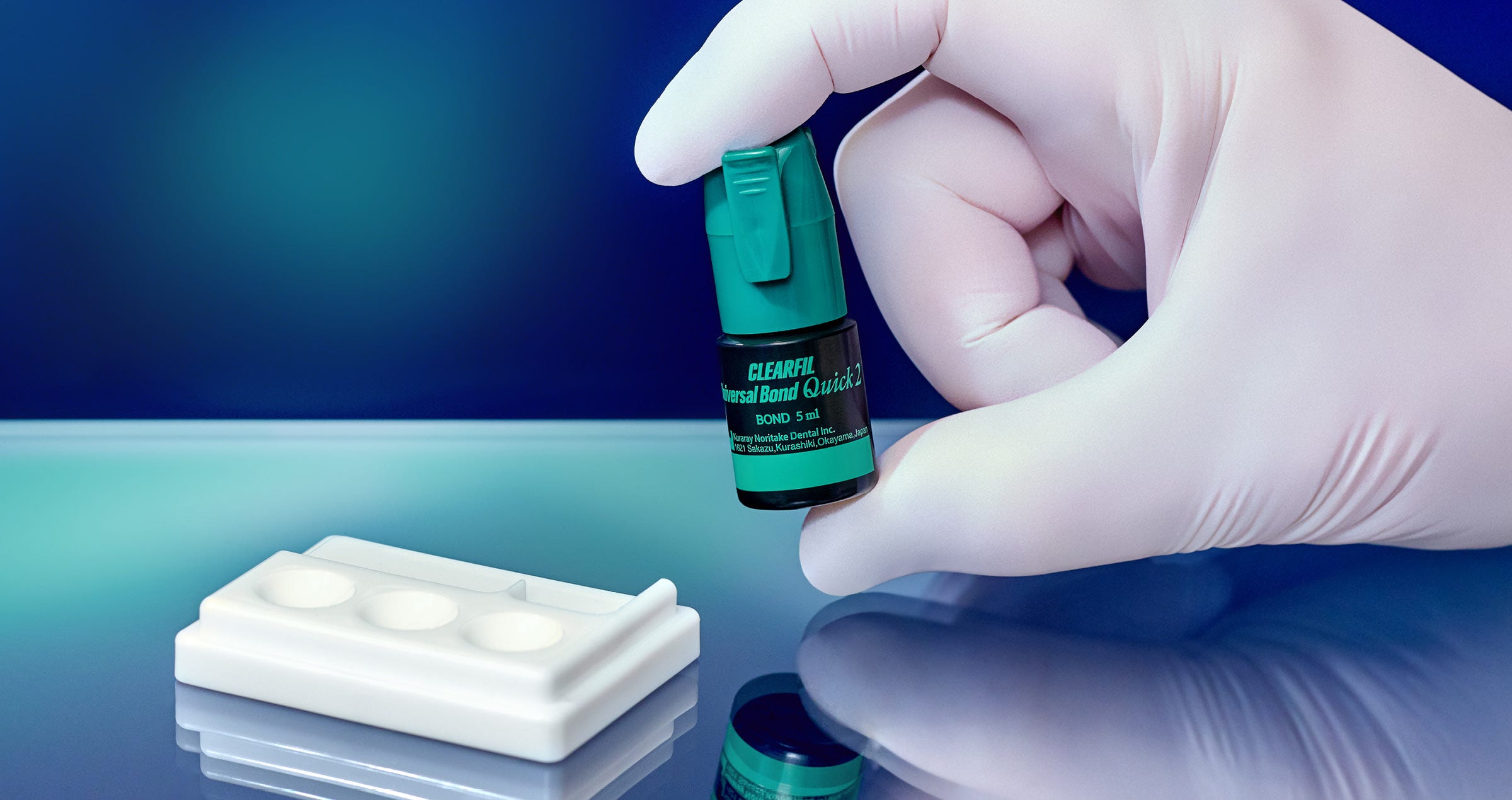
CLEARFIL™ Universal Bond Quick 2

Bij veel moderne tandartspraktijken zijn efficiency en betrouwbaarheid erg belangrijk. CLEARFIL™ Universal Bond Quick 2 biedt een eenvoudige en hoogwaardige oplossing voor bonding met uitzonderlijke resultaten. Dankzij Kuraray Noritak’s Advanced Rapid Bond Technology biedt dit adhesief u snelheid, veelzijdigheid en betrouwbaarheid voor al uw restauratiebehoeften.

Wat is CLEARFIL™ Universal Bond Quick 2?

CLEARFIL™ Universal Bond Quick 2 is een geavanceerd tandheelkundig adhesief dat is ontwikkeld voor het stroomlijnen van restauratieve procedures. Het is compatibel met alle etstechnieken en biedt een betrouwbare hechting op zowel glazuur als dentine, wat resulteert in een sterke en uniforme bondinglaag. Door de veelzijdigheid is het geschikt voor zowel directe als indirecte restauraties en voor stompopbouw en intra-orale reparaties.


Wat zijn de indicaties voor CLEARFIL™ Universal Bond Quick 2?

Universal Bond Quick 2? Dit adhesief is ontwikkeld voor diverse klinische toepassingen: 

  • Directe restauraties met lichtuithardende composiet
  • Sealen van een geprepareerde caviteit of abutment als voorbehandeling voor indirecte restauraties
  • Behandeling van blootliggende worteloppervlakken
  • Behandeling van overgevoelige elementen
  • Intra-orale reparatie
  • Stiftcementatie en stompopbouw
  • Cementeren van indirecte reparaties


Waarom werkt CLEARFIL™ Universal Bond Quick 2 zo goed? 

De uitzonderlijke prestaties komen door de Advanced Rapid Bond Technology bestaande uit drie ingrediënten met hoogwaardige prestaties: 

  • Origineel MDP-monomeer: De door KURARAY CO., LTD. ontwikkelde MDPmonomer zorgt voor een uitzonderlijk sterke hechting aan hydroxyapatiet en een breed scala aan andere materialen, waaronder zirconia. Dit resulteert in een uitstekende en duurzame verbinding die zijn prestaties langdurig behoudt.
  • Amidemonomeer: Dit uiterst hydrofiele monomeer zorgt voor snelle penetratie in de tandstructuur, zodat er na het aanbrengen niet hoeft te worden gewacht. Met het oog op een sterke en duurzame bevestiging vormt dit monomeer tijdens de polymerisatie een stabiel en hydrofoob crosslink-netwerk.
  • Urethane Tetra Methacrylate (UTMA) monomeer: Dit uiterst hydrofiele monomeer zorgt voor snelle penetratie in de tandstructuur, zodat er na het aanbrengen niet hoeft te worden gewacht. Met het oog op een sterke en duurzame bevestiging vormt dit monomeer tijdens de polymerisatie een stabiel en hydrofoob crosslink-netwerk.


Samen vormen deze monomeren de basis van CLEARFIL™ Universal Bond Quick 2 en zorgen voor een snel, betrouwbaar en veelzijdig adhesief voor al uw restauratiebehoeften.


Waarom kiezen voor CLEARFIL™ Universal Bond Quick 2?

CLEARFIL™ Universal Bond Quick 2 zorgt voor meer efficiency zonder in te leveren op de kwaliteit. De Advanced Rapid Bond Technology integreert MDP, Amide en Urethane Tetra Methacrylate (UTMA) monomeren om te zorgen voor een sterke en uniforme bondinglaag. Dit zorgt voor een gelijkmatige verdeling en een betrouwbare hechtsterkte op zowel glazuur als dentine. De formule met lage viscositeit zorgt voor een dunne en uniforme bondinglaan en daarmee voor minder kans op pooling. 


Andere voorbeelden zijn:

  • Snel en eenvoudig aanbrengen
  • Een consistent sterke en duurzame bonding
  • Veelzijdigheid voor diverse restauratietechnieken
  • Een geminimaliseerd risico op pooling
  • Compatibiliteit met zelfhechtende composietcementen
  • Opslag op kamertemperatuur


Hoe wordt CLEARFIL™ Universal Bond Quick 2 aangebracht? 

Het aanbrengen gaat gemakkelijk en efficiënt voor diverse klinische scenario‘s. Gebruik het adhesief voor:

  • Self-etch
  • Selective-etch
  • Total-etch

Het is beschikbaar in zowel flesjes als unit doses, waardoor het flexibel aansluit op uiteenlopende praktijkbehoeften en eenvoudig naar wens kan worden toegepast.


De Ultimate Bonding Solution: CLEARFIL™ Universal Bond Quick 2

Als nieuwste innovatie op het gebied van tandheelkundige bonding zorgt CLEARFIL™ Universal Bond Quick 2 voor efficiency, betrouwbaarheid en veelzijdigheid. Geen wachttijd meer, geen uitgebreid inwrijven en geen verschillende lagen meer. Zo zorgt dit adhesief voor versimpelde procedures én voor sterke en duurzame restauraties. Met zijn uitzonderlijke prestaties en vereenvoudigde workflow is het echt de „effortless bond“ voor de moderne tandartspraktijk.

Het hart van de universele portfolio

CLEARFIL™ Universal Bond Quick 2 vormt de verbindende schakel tussen verschillende producten in onze portfolio. Tevens is het compatibel met zelfhechtende cementen van andere fabrikanten, zodat u meer keuzevrijheid heeft. 


CLEARFIL™ Universal Bond Quick 2 vormt de verbindende schakel tussen verschillende producten in onze portfolio. Tevens is het compatibel met zelfhechtende cementen van andere fabrikanten, zodat u meer keuzevrijheid heeft.


A new universal adhesive born in Japan

Interview with the team at Kuraray Noritake Dental Inc., who developed and brought to life this new universal adhesive.


Streamlining, enhancing and refining adhesive procedures – these are the aims of an 5-person team at Kuraray Noritake Dental Inc. in Japan. Recently, the team has developed a next-generation universal adhesive CLEARFIL™ Universal Bond Quick 2 that offers quick and easy application combined with an optimised bonding performance. To learn more about the goals and achievements of the development project, and the benefits of the product, we had a conversation with them.


From left to right: Ryo Matsuura and Ryota Murayama (R&D Department), Kazutoshi Ikeda (Production Department), Marina Okada and Yamato Nojiri (Planning & Development Department).


Why did you decide to improve CLEARFIL™ Universal Bond Quick?

Universal adhesives like CLEARFIL™ Universal Bond Quick are very well received by dental practitioners all over the world mainly due to their versatility and procedural simplicity. In the clinical setting, however, we have identified room for improvement. For example, it can be difficult to establish thin, uniform and strong bonding layers with the currently available products. Water and solvents in universal adhesives often limit the formation of a strong bond layer. A thin bonding layer and the relatively thick oxygen inhibition layer make this type of bonding agent susceptible to degradation by water sorption from dentinal moisture. Highly viscous bonding agents also complicate the ease of application in small cavities and can easily lead to pooling of the adhesive in critical parts of the cavity. Adhesives with a relatively high viscosity may pool or accumulate along margins, and may form a layer that is too thick and may change the morphology of the abutment tooth, a critical factor potentially affecting the fit of an indirect restoration. Generally, bonding agents with a low film thickness and/or are low-filled or unfilled, in turn have a potentially negative effect on the strength of the bonding layer. At Kuraray Noritake Dental Inc., we wanted to address the aforementioned issues and have developed a universal adhesive that is easy to apply and facilitates the establishing of thin, uniform bonding layers exhibiting high strength.


What are the indications of CLEARFIL™ Universal Bond Quick 2?

The new universal adhesive is indicated for bonding procedures in the context of creating direct restorations with light-cured composite, sealing of a prepared cavity or abutment tooth as a pretreatment for indirect restorations, treatment of exposed root surfaces and hypersensitive teeth, and also the intraoral repair of fractured restorations. Furthermore, the product is a suitable adhesive in post-cementation and core build-up procedures as well as in adhesive cementing of indirect restorations. When used in the context of the cementing of indirect restorations, the bonding to tooth structure of PANAVIA™ SA Cement Universal and of other manufacturers’ self-adhesive resin cements improves, leading to higher bond strengths.


What are the corresponding general benefits of CLEARFIL™ Universal Bond Quick AND CLEARFIL™ Universal Bond Quick 2?

The general benefits of both products are that they may be used with any etching procedure, plus the fact that there is no need to wait for the adhesive to penetrate the tooth structure after application. In addition, both products contain the original MDP monomer and the amide monomer, responsible for the formation of a thin and strong surface coating. Both products exhibit low technique sensitivity and are suitable for a wide range of indications. Finally, the adhesive monomers and fluoride offer extra protection to the underlying dentin.


Monomer image from the brochure


You mentioned the original MDP monomer as one of the essential components of the new adhesive and its predecessor. Is there a difference between this original MDP monomer and other MDP monomers available on the market?

Our MDP monomer is the only MDP monomer that is manufactured using the originally developed synthesis and purification process. Research has shown that the way MDP is manufactured has indeed an impact on the performance of the monomer itself1. While impurities and dimers detected in MDP monomers synthesized elsewhere negatively affected the immediate and aged micro-tensile bond strength in the in-vitro study, our MDP monomer shows high purity and more favourable test results.


Most universal adhesives need to be rubbed into the tooth structure extensively for 10 to 20 seconds. What did you do to eliminate the waiting time independent of the etching procedure, which led to an ultra-quick application procedure?

It is the amide monomer which is mainly responsible for an improved penetration speed into the tooth structure. The hydrophilicity of this monomer is much higher than the hydrophilicity of the HEMA monomer that is typically used. This provides for a better penetration into the moist dentin. The amide monomer’s polymerisation characteristics are better, and, following polymerisation, leads to higher stability in a wet environment due to the formation of a highly cross-linked polymer network. In combination with MDP, an efficient long-term performance will likely be achieved. For optimal outcomes, the adhesive is simply rubbed into the tooth structure as described in the IFU: “Apply BOND with a rubbing motion to the entire cavity wall with the applicator brush. No waiting time is required.”


What are the additional benefits that CLEARFIL™ Universal Bond Quick 2 has to offer?

First of all, we improved the viscosity and film thickness by optimizing the manufacturing method. The thin adhesive layer prevents pooling in the cavity, around abutments and along margins, creating a uniform bonding layer. Simply put, the new adhesive is applied thinly and spreads evenly. At the same time, the product offers high mechanical strength and excellent resistance to water sorption. Its bond strength is high in all etching modes and the new formulation allows for the product to be stored at room temperature.


Please explain the clinical benefit of an improved mechanical strength.

The risk of decreasing the film thickness lies in a possible decrease in the strength of the bonding layer which can lead to reduced bond durability. By introducing a new multifunctional urethane methacrylate monomer, we have been able to increase the strength. The effective advantage of the new bonding agent is that it can easily be used in small, difficult-to-access cavities or in cavities with complex morphology. The result is a thin yet strong adhesive layer that also allows for easy placement of any type of restoration.


How did you manage to improve the storage conditions?

Component stability was not an issue with CLEARFIL™ Universal Bond Quick. However, for a stable viscosity, it needed low-temperature storage. By optimizing the manufacturing method and decreasing the viscosity of CLEARFIL™ Universal Bond Quick 2, storage at room temperature became possible.


Was it difficult to integrate the new components and keep the existing benefits? How did you manage?

Integrating new components and removing others always means that the whole formulation needs to be rebalanced properly. This was particularly challenging for the multifunctional urethane methacrylate monomer we wanted to add. It improves the strength and hardness of the universal adhesive, but may affect adhesion depending on the amount of the compound in the formulation. Consequently, we needed to carefully find optimal balance, which took some time and required thorough testing, but in the end, we succeeded.


At the moment, the immediate dentin sealing technique is popular in indirect restoration procedures. What makes CLEARFIL™ Universal Bond Quick 2 suited for this technique?

Immediate dentin sealing is indeed a popular and useful technique that can result in significantly increased retention, reduced marginal leakage, improved bond strength, and less postoperative sensitivity. Using CLEARFIL™ Universal Bond Quick 2 in this context is beneficial as the procedure is quick, the resulting bonding layer is thin and strong, and the dentin is effectively protected.


Why should a dental practitioner switch to CLEARFIL™ Universal Bond Quick 2?

For users of CLEARFIL™ Universal Bond Quick, switching to CLEARFIL™ Universal Bond Quick 2 is worthwhile, as it offers additional advantages and improved performance while retaining the benefits of its predecessor. For users of other universal adhesives, the major benefit lies in the shortened application time: CLEARFIL™ Universal Bond Quick 2 is the only universal adhesive that can achieve a high bond strength and a high-strength bonding layer without any waiting time. In addition, it is suitable for a wide range of indications including core build-up procedures and cementation.


Thank you very much for these insights!


References
1. Yoshihara K, Nagaoka N, Okihara T, Kuroboshi M, Hayakawa S, Maruo Y, Nishigawa G, De Munck J, Yoshida Y, Van Meerbeek B. Functional monomer impurity affects adhesive performance. Dent Mater. 2015 Dec;31(12):1493-501.


Vervanging van amalgaam door flowable composiet met de nieuwe CLEARFIL MAJESTY™ ES Flow Universal

Case by Dr. Julien Molia


Ja, HET WERKT!

In de gedachten van veel tandartsen is het stevig verankerd dat flowable composieten geschikte liner- of basismaterialen zijn onder sterkere packable composieten en indirecte restauraties of als tijdelijk materiaal. Velen van hen nemen echter aan dat het gebruik beperkt is vanwege hun slechte mechanische eigenschappen.


NIEUWE GENERATIE FLOWABLES

Maar gelukkig behoort dat nu tot het verleden: Meerdere van de nieuwste generatie flowable composieten – zoals CLEARFIL MAJESTY™ ES Flow en CLEARFIL MAJESTY™ ES Flow Universal (beide van Kuraray Noritake Dental Inc.) – beschikken over mechanische eigenschappen die niet onderdoen voor de eigenschappen van packables. Als gevolg daarvan is het indicatiespectrum uitgebreid. Zo blijkt uit gegevens van de fabrikant dat CLEARFIL MAJESTY™ ES Flow Universal een hoog vulstofgehalte van 75 tot 78 wt/%, een buigsterkte van meer dan 150 MPa en een compressiekracht boven 370 MPa biedt. Dankzij deze hoge sterkte is het materiaal geschikt als betrouwbare en permanente oplossing die zelfs geschikt is voor belaste gebieden, zoals de occlusale oppervlakken van posterieure tanden.

Deze flowable composiet heeft echter nog meer te bieden: Het is leverbaar in twee niveaus van vloeibaarheid – LOW en SUPER LOW – en kan worden ingezet voor een breder scala aan persoonlijke voorkeuren en individuele indicatiespecifieke behoeften. En dat in slechts twee kleuren (Universal en Universal Dark). Dit laatste biedt het voordeel van intuïtieve kleurselectie, zelfs in het anterieure gebied, en is mogelijk dankzij een mix van technologieën voor kleuraanpassing, waaronder een technologie voor geoptimaliseerde lichtdiffusie en een glazuurachtige translucentie.


De volgende casus laat zien hoe CLEARFIL MAJESTY™ ES Flow Universal mijn leven eenvoudiger maakt bij posterieure restauratieprocedures.


CASUS

Bij deze patiënt moesten twee amalgaam restauraties in de mandibulaire rechter molaren (tanden # 46 en 47 volgens de internationale tandnummering) worden vervangen (afb. 1). Omdat het vulling mogelijk maakt en garant staat voor een voortreffelijke aanpassing op de caviteitswanden werd besloten CLEARFIL MAJESTY™ ES Flow Universal LOW te gebruiken als enig restauratiemateriaal. De positie van de te restaureren tanden maakte de kleurselectie eenvoudig: De kleur U (Universal) is geschikt voor alle posterieure restauraties.

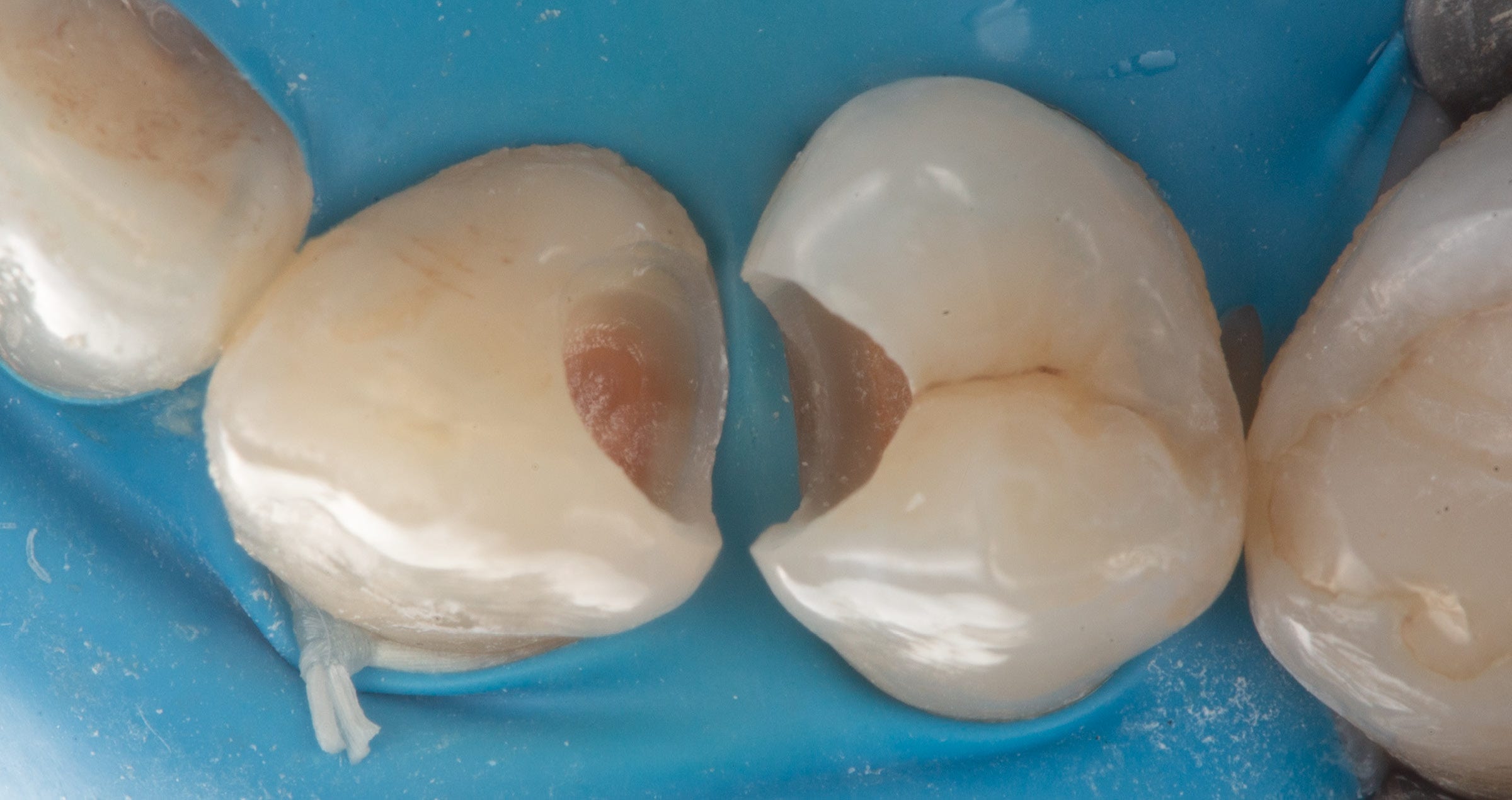
De amalgaam restauraties werden verwijderd en cariës geëxcaveerd waarbij zoveel mogelijk van de gezonde tandstructuur werd behouden (afb. 2 en 3). Er werd een selectieve techniek voor het etsen van glazuur gekozen, gevolgd door het aanbrengen van een universeel adhesief (CLEARFIL™ Universal Bond Quick 2, Kuraray Noritake Dental Inc.). Vervolgens werden CLEARFIL MAJESTY™ ES Flow Universal in de LOW versie en de geselecteerde kleur U aangebracht in de caviteiten (afb. 4). Het innovatieve design van de spuit zorgt dat de aangebrachte flowable composiet zo goed als gatenvrij is. In lijn met de gebruiksaanwijzingen bij het product was de dikte van iedere laag max. 2 mm om volledige uitharding te garanderen (afb. 5 en 6), een beslissende factor voor de langetermijnprestaties van de definitieve restauraties. Iedere laag moet gedurende 10 tot 20 seconden (afhankelijk van de uithardingslamp) grondig uitharden voordat de volgende laag wordt aangebracht. Zoals getoond in afbeelding 7 maakt de lage vloeibaarheid van het geselecteerde materiaal enige mate van modelleren van de morfologie van het occlusale oppervlak mogelijk. In situaties waarbij meer anatomische details moeten worden hersteld, kan de stevigere SUPER LOW variant een optie zijn. Het tot hoogglans polijsten van de restauraties nam niet meer dan een paar seconden in beslag (afb. 8).

Afb. 1: Twee te vervangen amalgaam restauraties.


Afb. 2: Situatie na verwijderen van de bestaande amalgaam restauraties.


Afb. 3: Voor amalgaam kenmerkende verkleuring is zichtbaar onderaan in de grotere caviteit.


Afb. 4: Vulprocedure: Aanbrengen van de eerste laag f lowable composiet.


Afb. 5: Tweede molar al gevuld, eerste molar heeft nog een laag flowable composiet nodig.


Afb. 6: Vulprocedure voltooid.


Afb. 7: Mooie morfologie van het oppervlak en vermenging van kleuren.


Afb. 8: Resultaat na verwijdering van de cofferdam. De restauraties voegen zich qua kleur en oppervlakglans mooi naar de omringende gebitsstructuur.


EENVOUDIG ALTERNATIEF VOOR PACKABLE COMPOSIETEN

Met name in de lastig te bereiken gebieden in de mond kan het gebruik van een flowable composiet met uitgebalanceerde mechanische eigenschappen een goed alternatief zijn voor packables. Dankzij geavanceerde kleuraanpassing, vrijwel gatenvrij aanbrengen, eenvoudig aanpassen en modelleren en snel polijsten wordt het leven van de tandarts echt een stuk eenvoudiger.

Dentist:

JULIEN MOLIA


Dr. Julien Molia studeerde in 2008 af met een scriptie over computergestuurde implantologie. Hij heeft een algemene tandartspraktijk opgezet in Saint-Jean-de-Luz en richt zich op implantaatbehandelingen en kaakreconstructies. In 2017 behaalde hij een tweede universitaire graad in de implantologie om zijn expertise bij te werken en te verdiepen. Daarnaast heeft hij geavanceerde trainingen gevolgd op het gebied van digitale tandheelkunde, orthodontische minischroeven en mucogingivale chirurgie. Op basis van zijn toewijding aan weefselbehoud volgde hij privétrainingen bij Dr. Gil Tirlet en Dr. JeanPierre Attal in Parijs. Dr. Molia is een van de oprichters van het Franse Southwest BioTeam, een groep waarbinnen professionals toegewijd aan klinisch onderzoek en innovatie samenwerken.