
No Author Selected

KATANA™ Zirconia multi-layered discs

Interview with Yoshihisa Yamada
General Manager, Technology Division of Kuraray Noritake Dental Inc.


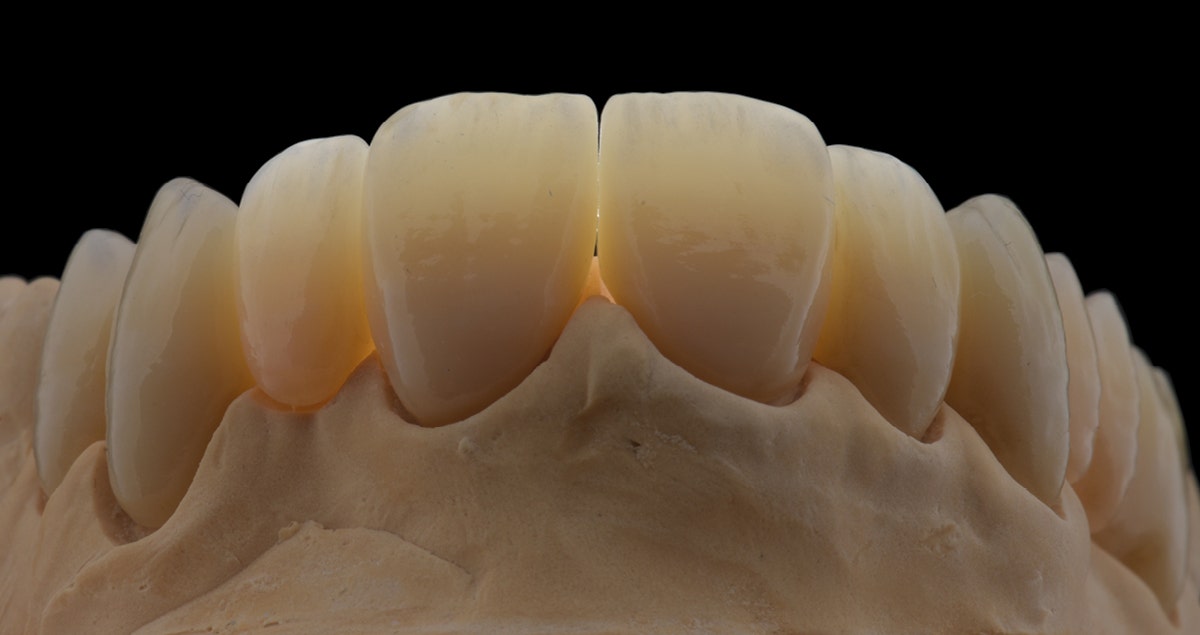
KATANA™ Zirconia ML was introduced ten years ago, at the IDS 2013 in Cologne, as the dental industry’s first zirconia product with a multi-layered colour structure. Since that event, KATANA™ Zirconia ML blanks have become very popular. Continued development efforts have led to the current line-up of multi-layered materials, KATANA™ Zirconia UTML, STML and HTML PLUS, and our latest product – KATANA™ Zirconia YML. Our new technology with colour, translucency and strength gradation is found in KATANA™ Zirconia YML.

Photo credits to MDT Giuliano Moustakis.


How important was the invention of the Kuraray Noritake Dental’s original multi-layered technology for the dental market?

Our impression is that the material has had a significant impact on the dental market. Being the first zirconia material with a multi-layered colour structure, KATANA™ Zirconia ML was our first product of its class to offer the properties needed for the efficient production of full-contour zirconia restorations with a natural look. Before its introduction, the “full-contour zirconia” concept had not been widely accepted due to the aesthetic properties of the zirconia materials available so far: Many of them lacked the desired level of translucency, while others needed to be treated with dyeing liquids or stains in a complex procedure to obtain a natural shade appearance. With the launch of multi-layered zirconia blanks, which successfully added natural colour gradation to the structure, aesthetic full-contour zirconia restorations started to become popular among dental technicians worldwide. The high potential of the technology was confirmed at the IDS 2013 show, when we saw not only end-users, but also engineers from competing companies come to look at this product.


4-layer colour structure of KATANA™ multi-layered discs.

Photo credits to MDT Daniele Rondoni.


What changes were driven forward by the introduction of KATANA™ Zirconia ML?

After the introduction of KATANA™ Zirconia ML, many companies started developing multi-layered zirconia discs, creating a new dental product category with an added technical and clinical value. We are convinced that the invention of Kuraray Noritake Dental has played a major role in the shift from zirconia exclusively used as a framework material to alternative approaches including full-contour zirconia restorations. If only monochromatic zirconia discs had been available, we imagine that an increased number of dental technicians would have embraced the concept of using liquid colourants to achieve a natural appearance of full-contour crowns and bridges. That would have prevented monolithic zirconia restorations from becoming as popular as they are today.


How did the KATANA™ Zirconia ML technology evolve over the past ten years?

Based on our unique core technology developed for inventing KATANA™ Zirconia ML, we have been continuing making efforts to create even better products. One of Kuraray Noritake Dental’s great strengths is its ability to develop all the raw materials for its zirconia products inhouse. This makes it possible for us to adjust the boundaries between the layers as inconspicuously as possible, even when discs consist of multiple layers. This enabled us to provide multi-layered discs with the required strength and aesthetic qualities, and with a stable, predictable shrinkage rate. In the past ten years, we have focused on adding new materials with different levels of translucency and strength to offer a portfolio that meets the demands of virtually every dental technician, practitioner and patient.


For example, the advent of KATANA™ Zirconia STML, which has even better aesthetic qualities than KATANA™ Zirconia ML, has made it possible to use it all by itself to create highly aesthetic restorations, with no need to characterize or individualize the restorations. Of course, if you use KATANA™ Zirconia Multi-Layered discs and treat the restorations with a surface staining agent, such as CERABIEN™ ZR FC Paste Stain, you can create even more aesthetic restorations in a shorter time.


What are the benefits of Kuraray Noritake Dental’s multi-layered technology, as compared with other manufacturer’s solutions?

KATANA™ Zirconia multi-layered discs offer the advantage of delivering the proper colour even when they are sintered at high speed. There are two reasons for this. First, we developed unique raw materials with suitable characteristics for high-speed firing. This allows the creation of restorations with the same strength, stability, and aesthetics to be achieved after both short- and long-time firing. The second reason is that we possess the technical know-how concerning excellent shading that Noritake Dental Supply, one of Kuraray Noritake Dental’s predecessors, cultivated during its many years spent developing ceramic materials. Noritake Co., Ltd., parent company of Noritake Dental Supply, is a long-established ceramic manufacturer that is famous for its tableware and other outstanding products. It is this background that allows us to properly control pigment coloration using our inorganic pigment know-how and to provide unique firing schedules. These two strengths enable us to bring unique advantages to our products. That is, they remain stable and retain appropriate colouration even under rapid firing schedules.


CERABIEN™ ZR FC Paste Stain being applied to KATANA™ Zirconia restoration.

Photo credits to MDT Roberto Rossi.


How did you manage to shorten the sintering times so significantly, resulting in your speedy sintering with uniform protocols?

When shorter sintering times became possible, Kuraray Noritake Dental recommended that KATANA™ Zirconia ML be sintered for seven hours. After that, when a new furnace claiming being capable of short-time firing was launched, we used it to fire KATANA™ Zirconia ML on a trial basis. We found, happily, that our zirconia material was uniquely compatible with rapid firing. This was the beginning of our full-fledged study of short-time firing of our zirconia material. You could say that we began investigating short-time firing almost by accident. Then, while developing KATANA™ Zirconia STML and KATANA™ Zirconia UTML, successors of KATANA™ Zirconia ML, we focused on incorporating short-time firing into their features and made various adjustments, finally achieving the optimal combination of factors for the successful short-time firing of zirconia.


What are the benefits of Kuraray Noritake Dental’s second-generation multi-layered technology, as compared with other manufacturer’s solutions?

One advantage of KATANA™ Zirconia YML is that it can be applied to treat a wider range of cases without complex limitations on position within the disc. The reason: it delivers this high level of aesthetics while still maintaining great strength. This advantage of being appropriate for a wider range of cases also simplifies inventory management. In addition, users benefit from our expertise in developing raw materials and reproducing colour with ceramics. This expertise enabled us to develop a zirconia product in which each layer has a different level of translucency, while great strength and admirable aesthetics are maintained throughout the whole blank.


The sintering recommendation is only a guideline; some adjustments may be required depending on each individual furnace. If the furnace cannot be set according to the 54- or 90-minute sintering schedule, speed sintering cannot be used.

* The restorations may be removed at 800°C or less depending on the circumstances.
** For the sintering schedule of KATANA™ Zirconia HT, please refer to the Handy Chart in product packaging.


Is it really possible to address every case using only KATANA™ Zirconia YML?

For every case that can be treated either with KATANA™ Zirconia STML, KATANA™ Zirconia UTML, or KATANA™ Zirconia HTML PLUS, KATANA™ Zirconia YML is also an option. Hence, it is possible to use only KATANA™ Zirconia YML for all your zirconia cases – which is probably one of the reasons for its great popularity. It features both great strength and excellent aesthetics, and – being so versatile – it helps simplify inventory management. Of course, Kuraray Noritake Dental’s other multi-layered materials feature outstanding properties as well. Depending on the features you need, it would also be an option to select from these products - KATANA™ Zirconia STML, KATANA™ Zirconia UTML, or KATANA™ Zirconia HTML PLUS – to realize your ideal restorations.


KATANA™ Zirconia YML, finished with CERABIEN™ ZR.

Photo credits to MDT Giuliano Moustakis.


Why is the KATANA™ brand in general so popular among dental technicians around the world?

We think that dental technicians choose KATANA™ because they find that they can create highly aesthetic restorations using simple, straightforward steps.


Is there any further development potential in multi-layered technology?

On the basis of our technical know-how, there is always room for improvement. That is why we never stop innovating and listening to the voice of our customers. Developing what supports them in improving their outcomes while providing for more predictable, less stressful procedures is our ultimate goal. Right now, we expect to develop products with even greater strength, increased translucency, and outstanding aesthetics that will have a natural look resembling real teeth, even when the material used is full-contour zirconia.

Dentist:

YOSHIHISA YAMADA


Class II cavities restored with composite raising the margin and re-establishing the contact point

Case by Kokla Thalia, Postgraduate student in Restorative Dentistry program, Faculty of Dentistry, National and Kapodistrian University of Athens, Greece


Restoring Class II cavities can be challenging due to limited access to the posterior area, where the interproximal contact needs to re-established in a proper way. Inadequate contacts tend to result in increased plaque accumulation, food impaction and, as a consequence, the development of caries and irritation of the interproximal gingiva. Therefore, it is essential that the interproximal contact is restored based on the model of nature. A suitable matrix system and a proper clinical protocol can help us succeed in this context. The following clinical case is used to illustrate a possible strategy.


Fig. 1. Initial clinical situation. 23-year-old female patient with caries on the mandibular left second premolar.


Fig. 2. Situation after cavity preparation, isolation of the working field with rubber dam and the placement of a sectional matrix fixed with a ring. It is essential that the matrix imitates the natural shape of the contact area, which is usually rather flat or concave cervically and convex in the middle and occlusal parts.


Fig. 3. Etching of the tooth structure with phosphoric acid etchant. Afterwards, the adhesive needs to be applied (in this case, Universal Bond Quick was used according to the manufacturer’s instructions).


Fig. 4. CLEARFIL MAJESTY™ ES-2 Premium in the shade A3E is applied in the distal box to build up the wall first. In this way, the available space is used to model the most critical part of the restoration before simply filling the cavity in increments with the dentin shade A3D.


FINAL SITUATION


Fig. 5. Final restoration after finishing and polishing. In accordance with the concept behind CLEARFIL MAJESTY™ ES-2 Premium with its pre-defined shade combinations, the final enamel layer was build-up using the shade A3E. However, the use of a single opacity is also possible in the posterior region depending on the aesthetic demands.


CONCLUSION


By elevating deep interproximal margins, it is possible to focus on the critical designing of the contact point when there is still sufficient space available to do so. This simplifies the procedure, while all that is left to do can be managed in a straightforward way like a Class I restoration.


Den nye Business Development Manager Dental for Norge, Fabian Giaever, presenterer seg selv

“Hver eneste dag får jeg bekreftet at Kuraray Noritake står for høyeste kvalitet”


Fabian Giaevers seneste karrieregrep gjør ham glad for hver nye arbeidsdag. For ham, er det tre  faktorer som gjør at jobben hans som den første Business Development Manager for Kuraray Noritake i Norge, skiller seg ut. For det første: det faktum at Kuraray Noritake selger fremragende produkter. For det andre: selskapskulturen som han betegner som ‘ekstraordinær’. Og til sist arbeidsoppgavene i selve jobben, som er varierte og utfordrende. “Alt sammen er morsomt og spennende.”

Kuraray Noritake er allerede et velkjent varemerke i Norge, men frem til nå har alle markedsføringsaktiviteter foregått via depotene. I september tok Fabian Giaever fatt på sin oppgave  med å lære opp norske kunder i alt som har med produktene å gjøre.

Fra sine tidligere stillinger i  Unident og Align hadde han allerede opparbeidet seg solid kunnskap om dentalbransjen. Her ble han også oppmerksom på det gode ryktet som produktene fra Kuraray Noritake  har. “Jeg visste at Kuraray Noritake var helt I toppsjiktet. Det som er enda bedre, er at dette blir bekreftet av dem jeg møter.” Fabian vet nå at ikke bare har produktene et godt rykte, men de viser også gode kliniske resultater . “ CLEARFIL SE Bond for eksempel, har 13 år med kliniske studier bak seg . Den har  96% overlevelse etter 13 år. Det er helt unikt.”


Alt-mulig-mann

Fabian er også veldig fornøyd med bedriftskulturen. “Det er uvanlig. Folk er så vennlige og hjelpsomme . Det føles som et lag, nesten som en familie. Selv om vi anstrenger oss for å oppnå gode resultater,  alltid prøver å forbedre oss, knuse mål osv.,er det alltid med et positivt tankesett og en følelse av samhold. Intensjonene er gode og bidrar til å skape en atmosfære hvor folk føler seg trygge og selvsikre. Det faktum at alle virkelig bryr seg og ønsker å hjelpe, skaper mye energi.”

Fabian arbeider fra sitt hjem i Tønsberg. Majoriteten av kundene kommer fra hans område: Oslo og omegn, men han reiser ofte rundt til møter. Dette passer ham perfekt, han liker det faktum at ingen dager er like. Enten det er en sementerings-workshop på en tannklinikk, å diskutere sintringsprotokoller med et tannteknisk laboratorium eller å diskutere markedsføringsaktiviteter med en forhandler, «Jeg er litt av en alt-mulig-mann og jeg liker den allsidigheten og den variasjonen som slike dager gir meg .”


Mer fornøyde pasienter

Når han blir spurt om sine ambisjoner for den nye jobben, har Fabian en tydelig  visjon. “Jeg vet at vi har de beste produktene. Jeg vil forsikre meg om at jeg, med hjelp av mine kollegaer, kan få det norske markedet til å bli like glad i produktene våre som vi er. Enhver tannlege ønsker det beste for pasientene sine. Jeg vil være sikker på at jeg gjør dem oppmerksomme på hvor unike produktene våre er. Til syvende og sist er jeg overbevist om at dette vil resultere i mer fornøyde pasienter .”


Fabians 7 år gamle datter bor hos ham halvparten av tiden. Hun betyr veldig mye for ham.Han liker også å trene, gå på rulleski og være med venner. Når det gjelder arbeidet, tror Fabian at han er en ganske ambisiøs person . “ Jeg ønsker å kunne bidra med å spre kunnskap om de fantastiske produktene våre, men for meg er det også viktig å glede meg til jobben, og å være entusiastisk over å starte arbeidsdagen. Hos Kuraray Noritake,er dette absolutt tilfelle.”


________________________________________________________________________________

Kontaktinfo:

Tannleger, tannteknikere og depoter fra hele Norge kan kontakte Fabian Giaever for informasjon om alle Kuraray produkter. Har du lyst til å prøve eller teste ut Kurarays produkter? Kontakt Fabian på tlf. eller på  fabian.giaever@kuraray.com .


 Om Kuraray Noritake

Kuraray ble grunnlagt I  1926 i Kurashiki i Japan. I dag er selskapet en ledende, global produsent av medisinske produkter, materialer, tekstiler, kjemikalier, resiner og mye mer . I 2012  slo Kuraray Medical og Noritake Dental Supply seg sammen og dannet Kuraray Noritake Dental. Selskapet har fortsatt å levere dentale bondinger, , keramikk og andre pålitelige produkter til over 90 land over hele verden. Velkjente  produkter er for eksempel  KATANA Zirconia serien, CLEARFIL Universal Bond Quick og  PANAVIA resinsement.


Stratos Chatzichristos CDT on Just color: Esthetic Colorant for KATANA Zirconia

Recording 08.02.2023 - Stratos Chatzichristos

JUST COLOR: ESTHETIC COLORANT FOR KATANA ZIRCONIA


The natural tooth impresses with wonderful light-optical effects - characteristic features that result from the inner structure of the tooth. Imitating these specific effects in zirconia restorations with the staining technique or micro-layering has shown limitations so far. Kuraray Noritake has addressed this problem. Based on solid research and development work, an amazingly simple solution was created - Esthetic Colorant for KATANA Zirconia.


Mr. Stratos Chatzichristos CDT will present Esthetic Colorant in detail in this online webinar. He will show how the aesthetically individual effect of a zirconia restoration can be intensified with the new effect liquids and will showcase practical application and material science basics. Learn how to achieve a zirconia restoration with truly impressive aesthetics.


Topics:

•    basics about Esthetic Colorant for KATANA Zirconia
•    differences to traditional staining and infiltration solutions
•    areas of application of Esthetic Colorant
•    achieving a true color effect
•    masking effect for the zirconia framework (discolored stumps or metallic abutments)
•    economic advantages of using Esthetic Colorant
•    material basics of zirconia


Reality Now review and award

“Very nice handling properties”

PAVANIA™ Veneer LC receives 4.6 rating in REALITY’s Five Star Award


After a FirstLook evaluation published in May 2022, a team of evaluators from REALITY RATINGS & REVIEWS has thoroughly tested PANAVIA™ Veneer LC in the clinical practice environment – with great outcomes. The purely light-cured resin cement received 4.6 out of 5 stars in the Five Star Award, the most convincing features being its handling and viscosity.


While most of the evaluators used PANAVIA™ Veneer LC for the permanent cementation of veneers, some also tested the onlay indication (restricted to high-translucency materials of a material-specific maximum thickness). Those who decided to polish the margins (43 %) found that the resin cement is very well polishable with little effort. Among the handling properties highlighted were easy seating with virtually no drifting, non-stickiness and easy excess removal – both after tack curing and in the cement’s uncured state. In addition, the evaluators praised the minimal film thickness and favourable viscosity, which has a considerable impact on the ease of seating. The working time was sufficient for all evaluators, independent of their way of working (filtering/blocking dental unit light or not, placing multiple veneers simultaneously or one veneer at a time).


The shade offering – PANAVIA™ Veneer LC is available in the four shades Clear, Universal/A2, Brown/A4 and White – was regarded adequate by most evaluators (79 %), the most popular shade being Clear. One evaluator stated that “I think the “clear” shade is my new favorite. It seems to have a brightness to it compared to other clear or translucent cements.”. Being the only shade with a high opacity, White was found to have a decisive impact on the appearance of the final restoration. The try-in pastes were well-received for their handling and easy rinse-off ability.


The PANAVIA™ Veneer LC kit available in Europe consists of PANAVIA™ Veneer LC Paste, PANAVIA™ V5 Tooth Primer and CLEARFIL™ CERAMIC PRIMER PLUS. Hence, it builds confidence by sharing primers with the proven PANAVIA™ V5, while its long working time and specific handling properties add extra benefits that are extremely valuable during veneer cementation. Click here to read the full evaluation!


Composite restorations in the anterior region

HOW MANY SHADES DO WE NEED?


Case by Gasparatos Spyros, Postgraduate student in Restorative Dentistry program, Faculty of Dentistry, National and Kapodistrian University of Athens, Greece


Restoring anterior teeth with large defects using composite seems to be quite challenging. With high-performance materials at hand and a systematic layering concept in mind, however, it is possible to produce highly aesthetic results in a reproducible way. The clinical case below is used to illustrate a dual-shade layering technique with CLEARFIL MAJESTY™ ES-2 Premium, a composite system with pre-defined colour combinations.


CASE EXAMPLE


The patient, a young male, was unhappy with the appearance of his maxillary anterior teeth. Several years ago, his central incisors had been restored with composite. These existing restorations had defective and heavily discoloured margins, while their shade did not match the adjacent natural tooth structure. The maxillary lateral incisors were peg-shaped (microdontia). Economic considerations and the desire to save as much natural tooth structure as possible made the team decide to restore all four maxillary incisors with composite. CLEARFIL MAJESTY™ ES-2 Premium became the material of choice as it eliminates the need for complicated shade combination formulas and supports predictable outcomes.


Fig. 1. The patient’s initial smile.


Fig. 2. Intraoral image of the initial situation with defective composite restorations and microdonts. Two composite buttons on the right lateral incisor are used to verify the determined shade combination.


RESTORING THE CENTRAL INCISORS


We decided to restore the central incisors first and then focus on the lateral incisors. The tooth shade was determined using the VITA™ classical A1-D4 shade guide, while composite buttons were applied to the teeth to verify the determined shade combination. In order to simplify the restoration procedure, a palatal silicon index was produced before removing the existing restorations. During minimally invasive tooth preparation, bevels were created at the margins to provide for a smooth optical transition from the natural tooth structure to the composite.


An adhesive (CLEARFIL™ Universal Bond Quick) was applied after selective etching of the enamel to achieve a strong bond. With the aid of the silicon index, it was easy to create the palatal shells of the restorations with CLEARFIL MAJESTY™ ES-2 Premium in the shade A3E (enamel), which matches the determined tooth shade A3. The dentin core was built up with the same composite in the recommended shade A3D (dentin), mamelons were modelled and some CLEARFIL MAJESTY™ ES-2 Premium in the shade WD added for the incisal halo, while some individual effects (like enamel cracks) were imitated with brown stain. The build-up was finalized in the interproximal and labial areas with composite in the shade A3E. Between the central incisors, a wedge was used to retract the papilla and facilitate the designing of the interproximal contact area. The finished and pre-polished restorations already had a natural appearance.


Fig. 3. Central incisors after removal of the old restorations and the beveling of the enamel.


Fig. 4. Light-cured palatal shells made of CLEARFIL MAJESTY™ ES-2 Premium in the shade A3E.


Fig. 5. Build-up of the dentin core with mamelons individualized with the shade WD and brown stain.


Fig. 6. Situation after finalization of the central incisor restorations with composite in the enamel opacity.


Fig. 7. Central incisor restorations after finishing and initial polishing.


RESTORING THE LATERAL INCISORS


Tooth preparation was not required on the lateral incisors. Instead, they were merely cleaned after a slight roughening of the enamel surfaces. The build-up procedure was similar to the one used for the central incisors. The adjacent tooth was protected with PTFE tape, and the palatal shell was created with the aid of a finger instead of a silicone index. Afterwards, we focused on the build-up of the interproximal walls before a small amount of dentin was placed and the shape was finalized by applying the labial enamel layer.


Fig. 8. Build-up of the left lateral incisor.


Fig. 9. Situation after finishing and polishing.


FINAL SITUATION


Fig. 10. Final smile of the patient's demands.


CONCLUSION


Two different opacities, a single shade combination and some bleached shade plus stain for special effects – in the present patient case, a simple formula allowed us to create lifelike anterior restorations. With one enamel and one dentin paste used, it is possible to simply rebuild the natural anatomy without the risk of ending up with a bulky core that – once reduced – will lose its special optical structure. It is also easy to control the thickness of the final enamel layer with its huge impact on the light-optical properties of the whole restoration. For most patients and teeth with a simple or medium-to-complex internal colour structure, the selected concept is very well suited and will lead to pleasing outcomes.


Flowable Injection Technique

The Flowable Injection Technique

The injection technique using flowable composite is a technique that allows for a quick and easy way to restore the contours and shapes of teeth. 

The technique is minimally or even non-invasive. Accuracy and finishing time are advantageous over direct composite techniques. It is advantageous to work with two different moulds, one with space for every other tooth and one with space for all teeth, two identical wax-ups are needed. It is very difficult to make two identical manual wax-ups; therefore, a digital workflow version of this procedure is recommended.

Choice of flowable

CLEARFIL MAJESTY ES Flow composites are highly filled, wear-resistant and strong, and show exceptionally smooth surfaces. Restorations made with this material offer a cost- and tissue-saving option compared to expensive and often more invasive ceramic veneering options. Even though ceramic solutions are expected to last longer, their composite counterparts can be easily repolished and/or repaired if needed. The light-diffusive properties of CLEARFIL MAJESTY ES Flow composites also blend in with the surrounding tooth structure extremely well and make restorations out of this product very lifelike.  

Combined the Flowable Injection Technique and CLEARFIL MAJESTY ES Flow offer you many benefits in daily practice;

 Quick and easy

  • Minimal- or non-invasive
  • Long-lasting
  • Cost-effective
  • Aesthetically pleasing, lifelike results.

Curious about this technique and the use of CLEARFIL MAJESTY ES Flow in this technique?

Read more!

Successful use of KATANA™ Zirconia Block in single-visit dentistry

Interview with Dr. Karim Nasr


Zirconia is a popular restorative material with highly beneficial mechanical and meanwhile also optical properties. Due to long processing times, especially sintering, the material was initially not suitable for single-visit dentistry. This changed with the availability of zirconia variants with shortened sintering times and special high-speed sintering furnaces.


We discussed with Dr. Karim Nasr, who is senior lecturer at the University of Toulouse in France and head of CAD/CAM postgraduate training, about his actual practice. His passion for CAD/CAM leads him to use CEREC since 2006 (former CEREC trainer) and to found also iAcademy, a training academy about digital dentistry. He shared his experience with us and we talked about his workflow and indication-specific material preferences as well as specific recommendations regarding the use of KATANA™ Zirconia Block in single-visit dentistry.


Dr. Nasr, which chairside CAD/CAM system do you currently use?


Karim Nasr: I am currently using a chairside CEREC Primescan AC system (Dentsply Sirona) combined with a MCXL milling machine (Dentsply Sirona) in my private practice. In my hospital practice and in the specialized esthetic dentistry consultation that I manage, we use a CEREC Primescan AC system combined with a CEREC Primemill milling machine (Dentsply Sirona).


Why did you opt for those components?


Karim Nasr: The choice of this entire system was guided by several criteria. Working on a proprietary chain certainly locks the possibilities of mixing the equipment, but brings real simplicity and fluidity of use. Moreover, the CEREC Software is certainly the most successful CAD software for a chairside use. It offers personalized and easily modifiable restorations in just a few steps. The simultaneous milling of the top (extrados) and bottom (intrados) surfaces without changing the burs ensures a very short milling time. Finally, a large number of materials are available and can be used with this system.


When did you start working with a chairside CAD/CAM system?


Karim Nasr: I discovered and started working with my first chairside system (CEREC 3) in 2005, shortly after graduating. At that time, everything was new in this field. The intraoral scanner, CAD software, milling unit and ceramic materials had just been introduced. All those components allowed us to deliver aesthetic dental treatments within a single treatment session for the first time.


How did the chairside CAD/CAM systems evolve over time?


Karim Nasr: Of course, with the advances in computer technology, the systems have become more efficient. While it was still necessary to powder the surfaces and possible to record one or two teeth in 2005, powder is no longer required in 2022 and complete arches can be scanned in less than two minutes with an accuracy of less than 20 μm. The design process is highly automated and very well assisted – artificial intelligence is used at all stages, making the work easier.


For what purposes do you use your system today?


Karim Nasr: In more than 15 years, the use of my system has evolved a lot. Nowadays, I reserve it for procedures that can be performed in a single session. This is of the greatest utility for my patients and it allows me to optimize my treatment time. For this reason, not only the milling time, but also the time needed for post-processing is crucial for the decision whether to use my chairside CAD/CAM system or to collaborate with a dental laboratory.


What kinds of materials do you process chairside?


Karim Nasr: I think I have tested all the materials available (at least in France), to be able to select the most suitable ones for daily procedures. Currently, I use different kinds of materials depending on the indications encountered: PMMA for temporary restorations, composites for inlays and onlays, glass-ceramics for onlays, overlays and crowns, and finally zirconia for crowns and bridges.


How do chairside CAD/CAM and zirconia go together?


Karim Nasr: In fact, quite simply. For me, a chairside equipment must be able to produce restorations in the same treatment session. Otherwise, it is a labside workflow. Thus, to use zirconia in chairside systems, the milling procedure must be fast and efficient, but above all, the post-processing (especially sintering) process must be fast. For short processing times, dry milling is recommended, as well as the use of a fast-sintering furnace (such as the CEREC SpeedFire from Dentsply Sirona).


What are the benefits of zirconia compared to other ceramic materials?


Karim Nasr: There are many of them. From a biomechanical point of view, the high mechanical strength of zirconia allows us to work with reduced wall thicknesses, which enables us to be more conservative in dental tissues or to choose any placement method (cementation or bonding). From a biological point of view, perfectly polished, zirconia is the most tolerant ceramic, as it is kind to antagonistic teeth and incredibly well tolerated by periodontal tissues. I prefer zirconia for my crowns on implants for this reason.


What was your first impression when you heard about KATANA™ Zirconia Block?


Karim Nasr: I caught a first glimpse of the new material during an event in 2018. KATANA™ Zirconia STML already existed in discs for laboratories and was well known for its aesthetic qualities. Its block version was highly anticipated. But the most amazing feature was the short sintering times announced (with the CEREC SpeedFire in particular). Testing it, I was immediately amazed by the quality of the ceramic and impressed that it is possible to obtain such an aesthetic result (translucency and shade gradation) within such a short time. This is aesthetic zirconia for everyone!


For which indications would you employ KATANA™ Zirconia Block?


Karim Nasr: I reserve the use of KATANA™ Zirconia Block for crowns and for 3-unit bridges. In some cases, I also use it to produce cantilever bridges with a single-retainer design to replace missing incisors (as described by M. Kern). I particularly like it in my cases where I employ a Biologically Oriented Preparation Technique (BOPT) or Vertiprep.


Are there any material features which are particularly interesting for you?


Karim Nasr: Its biomechanical qualities (which are those of zirconia, already mentioned above) already allow me to extend the indications of my chairside restorations. But, in my opinion, the most interesting property is the degree of translucency. Although it is translucent, KATANA™ Zirconia Block is slightly more opaque than glass-ceramics in their lowest degree of translucency. This allows me to use it on discoloured substrates with higher confidence and to avoid the gray effect without having to use an opaque resin cement.


Do you have any recommendations for an ideal processing of KATANA™ Zirconia Block?


Karim Nasr: The use of zirconia in chairside procedures requires certain precautions to be taken in order to achieve the expected results. I have carried out many tests to identify the mistakes not to be made.


First, dry milling is strongly recommended. Nevertheless, it is quite possible to mill in wet environment. However, in this case, it is fundamental to reserve a tank only for the milling of zirconia, never use any lubricant in water (ideally demineralized water), and to have the filters always clean, which means that they need to be cleaned after each milling procedure. After milling, it is important to remove all the powder of zirconia that may have remained on the surface. After dry milling, the restoration must be sprayed with air. The same is the case after the use of burs or polishers to finish the surface. After wet milling, a demineralized water and ultrasound bath may be indicated but is not mandatory.


(Very) fast sintering with CEREC SpeedFire, for example, gives very satisfactory results comparable to conventional slow sintering, which has also been confirmed by scientific literature. Without an appropriate furnace, it is impossible to perform restorations in the same treatment session. However, I do not use CEREC SpeedFire for staining, glazing or micro-layering, but rather a furnace that can be parameterized. Finally, I advise users to finish and glaze only what is necessary (occlusal grooves, vestibular surfaces if visible) and to polish the rest.


Do you have any tips on how to achieve optimal outcomes with KATANA™ Zirconia Block?


Karim Nasr: In anterior cases, I always recommend to perform shading and staining steps in the mouth because there is no better model than the patient himself. Micro-layering in anterior cases makes it possible to improve the aesthetic result with few steps. The 4.4.1. system, which has been specifically developed for KATANA™ Zirconia, makes micro-layering easy to achieve. For polishing, the use of “twist” polishers is recommended. They make it easier to polish all surfaces, especially the occlusal surfaces, both extra-orally and in the mouth. Just like their counterparts for composite, TWIST™ DIA for Zirconia for Zirconia polishers prove to be very effective.


Dr. Nasr, thank you very much.


DR. KARIM NASR


How to cement restorations made of high translucency zirconia

KATANA™ Zirconia STML is a highly popular material used in many dental laboratories around the world. Compared to traditional zirconia framework materials with a mainly tetragonal polycrystalline structure, the material has a higher yttria content, leading to a different material structure with an impact on the optical and physical properties (the translucency is increased, the flexural strength reduced). As a consequence, the indication range is limited to single-tooth restorations and two to three-unit bridges in the anterior and posterior regions. The greatest benefit lies in a much higher aesthetic potential, which is responsible for the fact that the material is predominantly used for the production of monolithic restorations or those with a micro cut-back individualized with a micro-layer of porcelain.

While the indications and technical procedure are wellknown, there seem to be some obscurities regarding the handling in the dental office. Is conventional cementation possible and recommended or is an adhesive luting procedure preferable? Is the surface pre-treatment the same as for tetragonal zirconia or is a different procedure required? And what may be expected regarding the longterm behaviour of KATANA™ Zirconia STML restorations? A close look into the available scientific literature provides some guidance.

DEFINITIVE PLACEMENT OF RESTORATIONS MADE OF KATANA™ ZIRCONIA STML

Conventional cementation or adhesive luting? In principle, both procedures are possible when the restoration to be placed has a retentive design. It is generally accepted that a full coverage crown provides sufficient retention for conventional cementation when the abutment tooth is at least 4 mm high and the convergence angle of the axial walls ranges between 6 and 12 or maximally 15 degrees (1,2). The reason is that the flexural strength of the material is higher than 350 MPa (3), the critical value for conventional cementation. As conventional cements are opaque and available in a single shade, however, the use of a (self-) adhesive resin cement may be preferable with all hightranslucency restorative materials for aesthetic reasons. Anyway, these products are mandatory whenever a macroretentive preparation design is not feasible or wanted. To sum up, the use of a self-adhesive or adhesive resin cement is preferable in many situations. An argument in favour of self-adhesive resin cements is the lower effort involved in their use. But what about the pre-treatment of the zirconia? No matter what type of dental zirconia is used, etching with hydrofluoric acid is ineffective due to the lack of glass matrix in the material. However, it is clear that surface modification is necessary to establish a strong and durable bond to any resin cement system4,5. The method generally recommended for high-strength zirconia is sandblasting with aluminium oxide particles or tribochemical silica coating4. The particle size should be small (≤ 50 μm) and the pressure low (about 1 bar) to avoid a weakening of the material’s mechanical properties (3,4). For lower-strength material variants, this risk of weakening the material seems to be higher (5), so that it becomes even more important to work with a low pressure and particle size (5-8). In the case of KATANA™ Zirconia, however, it was reported that “alumina-sandblasting significantly increased the biaxial flexural strength of KATANA™ STML.” (9) This means that proper sandblasting of restorations made of KATANA™ Zirconia STML did not affect the flexural strength of the material, which was even increased because of the specific properties of zirconia from Kuraray Noritake Dental.


Based on these findings, the following procedures are recommended for high-translucency zirconia:

OPTION 1

Aluminium oxide air-abrasion followed by the use of a selfadhesive resin cement containing 10-MDP (6)

OPTION 2
Tribochemical silica coating followed by silanization of the bonding surface (6)


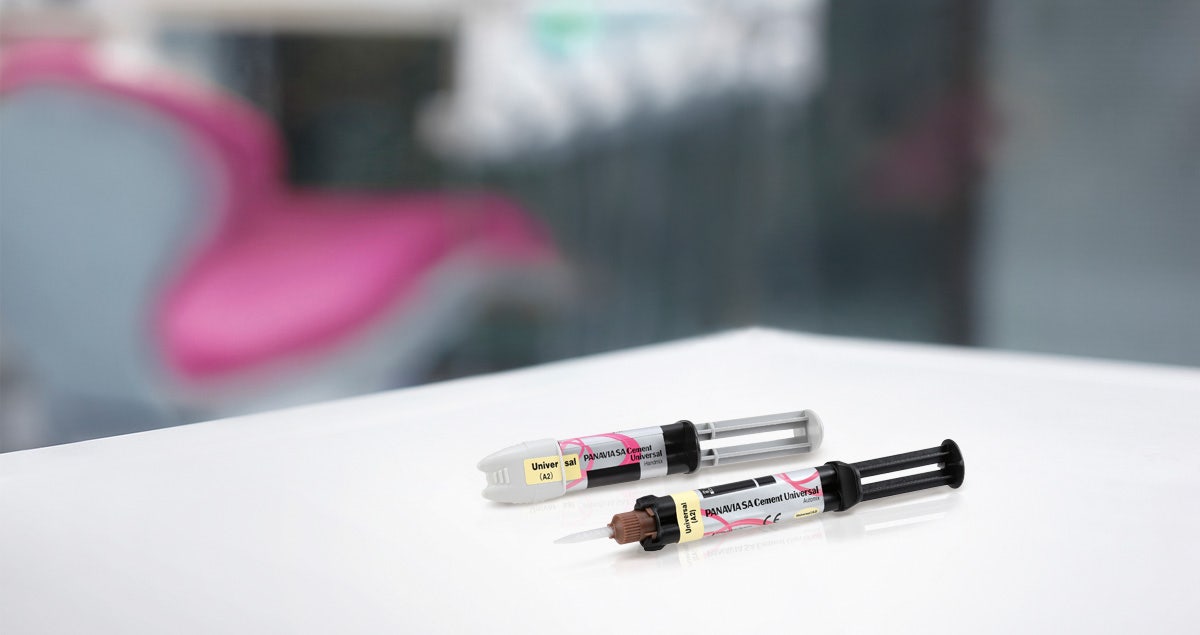
As the dual-cure self-adhesive resin cement PANAVIA™ SA Cement Universal contains the Original MDP monomer and the long carbon-chain silane coupling agent (LCSi Monomer), it is suited for both procedures. PANAVIA™ SA Cement Universal is available in an automix syringe and a handmix system, which consist of a pastepaste formulation. One paste contains the Original MDP monomer in a hydrophilic monomer environment and the other contains the inactive LCSi Monomer in an environment of hydrophobic monomers. When extruding the pastes, they are mixed in the syringe’s mixing tip (automix) or dispensed on a mixing pad and mixed by hand (handmix). Afterwards, the material is simply applied to the intaglio of the restoration and the restoration is placed. Cleanup of excess cement is easiest after tack-curing (2 to 5 seconds).


DOES THIS WORK WELL IN THE CLINICAL ENVIRONMENT?

The best way to check whether the described procedure is successful in the clinical environment is by conducting a clinical study. This is exactly what a group of researchers from the University Complutense of Madrid, Spain, has done with the material combination KATANA™ Zirconia STML and PANAVIA™ SA Cement Universal (10). Within the framework of the prospective clinical trial, 30 posterior crowns made of KATANA™ Zirconia STML were placed in 24 individuals in need of posterior tooth restorations. The teeth were prepared as recommended for all-ceramic restorations, allowing for a wall thickness of approximately 1 mm (recommended minimum wall thickness of KATANA™ Zirconia STML for crowns in the posterior region: 1.0 mm). The restorations were sintered, characterized and glazed as recommended by the material manufacturer and subsequently tried in. Prior to cementation, the intaglio of the restorations was pre-treated with aluminium oxide particles (50 μm, 1 bar pressure) followed by ultrasonic cleaning. The use of PANAVIA™ SA Cement Universal also was in line with the manufacturer’s recommendations. A clinical evaluation of the crowns was performed after 6, 12 and 24 months using the California Dental Association (CDA) quality evaluation system. The parameters evaluated in this system are the surface and colour of the restorations, their anatomical form and the marginal integrity of the crowns. After 24 months, the success and survival rates were 100 percent. Regarding all three parameters, the crowns received a “satisfactory” (Score 3 or 4) rating, marginal integrity (the key parameter to judge the performance of the resin cement) received an “excellent (the highest possible Score 4) in all 30 cases.


CONCLUSION

The researchers concluded that “the excellent results obtained in this study suggest that the third-generation tooth-supported monolithic zirconia crowns in posterior regions seem to be a good alternative to metal-ceramic crowns, second-generation monolithic zirconia crowns, and veneered zirconia crowns. A long-term study is necessary to confirm this short-period study.” Hence, it seems that KATANA™ Zirconia STML and PANAVIA™ SA Cement Universal are a promising team, and that adhering to the recommended abovementioned protocols is likely to produce excellent results that are stable over many years.

References:
1 Edelhoff D, Özcan M. To what extent does the longevity of fixed dental prostheses depend on the function of the cement? Working Group 4 materials: cementation. Clin Oral Implants Res. 2007;18 Suppl3:193-204. 2 Güth JF, Stawarczyk B, Edelhoff D, Liebermann A. Zirconia and its novel compositions: What do clinicians need to know? Quintessence Int. 2019;50(7):512-20. 3 Kern M, Beuer F, Frankenberger R, Kohal RJ, Kunzelmann KH, Mehl A, Pospiech P, Reis B. All-ceramics at a glance. An introduction to the indications, material selection, preparation and insertion techniques for all-ceramic restorations. Arbeitsgemeinschaft für Keramik in der Zahnheilkunde. 3rd English edition, January 2017. 4 Comino-Garayoa R, Peláez J, Tobar C, Rodríguez V, Suárez MJ. Adhesion to Zirconia: A Systematic Review of Surface Pretreatments and Resin Cements. Materials (Basel). 2021 May 22;14(11):2751. 5 Mehari K, Parke AS, Gallardo FF, Vandewalle KS. Assessing the Effects of Air Abrasion with Aluminum Oxide or Glass Beads to Zirconia on the Bond Strength of Cement. J Contemp Dent Pract. 2020 Jul 1;21(7):713-717. 6 Chen B, Yan Y, Xie H, Meng H, Zhang H, Chen C. Effects of Tribochemical Silica Coating and Alumina-Particle Air Abrasion on 3Y-TZP and 5Y-TZP: Evaluation of Surface Hardness, Roughness, Bonding, and Phase Transformation. J Adhes Dent. 2020;22(4):373-382. 7 Alammar A, Blatz MB. The resin bond to high-translucent zirconia-A systematic review. J Esthet Restor Dent. 2022 Jan;34(1):117-135. 8 Soto-Montero J, Missiato AV, dos Santos Dias CT, Giannini M. Effect of airborne particle abrasion and primer application on the surface wettability and bond strength of resin cements to translucent zirconia. J Adhes Sci Technol, Online publication May 2022. 9 Inokoshi M, Shimizubata M, Nozaki K, Takagaki T, Yoshihara K, Minakuchi S, Vleugels J, Van Meerbeek B, Zhang F. Impact of sandblasting on the flexural strength of highly translucent zirconia. J Mech Behav Biomed Mater. 2021 Mar;115:104268. 10 Gseibat M, Sevilla P, Lopez-Suarez C, Rodríguez V, Peláez J, Suárez MJ. Prospective Clinical Evaluation of Posterior Third-Generation Monolithic Zirconia Crowns Fabricated with Complete Digital Workflow: Two-Year Follow-Up. Materials (Basel). 2022 Jan 17;15(2):672. (https://pubmed.ncbi.nlm.nih.gov/35057389/)


Case report: direct cuspal coverage with resin composite

Case by Aleksandra Łyżwińska, Warsaw, Poland.


ABSTRACT


Indirect overlays are the contemporary restoration standard for posterior teeth with extensive hard tissue loss. They provide for cuspal coverage, which decreases the likeliness of coronal and/or root fracture. At the same time and in contrast to crowns, overlay preparations minimize the removal of sound tooth structure especially in the cervical region, which is a critical factor.1 Modern dental resin composites allow for direct cuspal coverage in a single-visit appointment. The results of in-vitro studies suggest that these direct overlays are a suitable alternative to their indirect counterparts in specific situations.2-6 The following case report is used to describe the direct restoration procedure by means of a maxillary right molar with an extensive, deep MOD lesion.


INTRODUCTION


In the context of treating a tooth with an extensive carious lesion, a biomechanical risk assessment should be performed. The primary method of reducing the likeliness of tooth fracture is treatment with a restoration that provides cuspal coverage. The contemporary gold standard for biomechanically compromised teeth are adhesively cemented overlays as an alternative to crowns.1 Another option that does not involve labwork is a direct overlay restoration.2-6 The direct approach is especially suitable for long-term temporization, which may be required during orthodontic treatment, for example.


Interview with Daniele Rondoni to mark the 10th Anniversary of KATANA Zirconia ML

Shortly before KATANA™ Zirconia ML was launched at the IDS in Cologne ten years ago, I had the pleasure to be invited to Japan. We visited the KATANA™ Zirconia production facilities and learned from Kazunobu Yamada and Takuro Nagura how the new material worked. So far, all dental zirconia I had used was white and quite opaque.


I was immediately impressed by the complexity of the production procedure including all the measures taken by Kuraray Noritake Dental to provide for an extremely high material and blank quality. The blanks appeared to have an extremely homogeneous multi-layered structure and a high density responsible for stable edges and smooth surfaces. What we were told in the manufacturing plant was confirmed by Kazunobu Yamada, who shared his experience and showed us several full-contour cases. I was pleasantly surprised by the fact that he was able to produce impressive outcomes without adding any colour. Moreover, Kazunobu Yamada was obviously able to polish the surface of his restorations within seconds. The perfectly smooth surface would allow us avoid the use of glaze, which usually wears off very quickly, leaving a potentially rough surface that may harm the antagonist.


Based on what I had learned in Japan, I went back to Italy and started experimenting with the amazing new material. While Kazunobu Yamada had identified KATANA™ Zirconia ML as the solution for monolithic restorations in the posterior area, I started using it in every region of the mouth – with different design concepts from full-contour to micro-cutback with micro-layering in the vestibular area. The occlusal contact area was always held in plain, polished zirconia.


Fig. 1. Early example of anterior restorations made of KATANA™ Zirconia ML individualized with CERABIEN™ ZR using the new micro-layering technique.


Fig. 2. Possible cutback design.


During the testing period, I learned a lot about the new zirconia, which was so different from earlier generations. The most important insight was that that the processing conditions have a huge impact on the final outcome. Kuraray Noritake Dental provided valuable support e.g. in the form of sintering protocols and processing and finishing recommendations. This helped me develop my own workflow and concept based on a full-contour design in the posterior and different micro-cutback options with micro-layering in the anterior region. For me, this is a perfect combination of the new type of zirconia (KATANA) and the traditional porcelain material (CERABIEN™ ZR Luster Porcelain and Internal Stain).


In May 2013, at a meeting of the Noritake Study Club in Florence, Italy, I presented the new approach for the first time. Many colleagues were enthusiastic about it and started adopting it. While further developments like more translucent (cubic) material variants and a new generation multi-layered zirconia with a flexural strength and translucency gradient increased the application options and aesthetic potential, micro-layering became a truly popular approach used by dental technicians all over the world. In 2016, it was recognized as a relevat workflow during a closed meeting of the European Academy of Aesthetic Dentistry.


Fig. 3. Perfectly polished palatal zirconia surfaces of anterior restorations.


Fig. 4. More recent case showing a patient who received restorations made of KATANA™ Zirconia STML …


Fig. 5. … finished with CERABIEN™ ZR Internal Stains and a micro-layer of CERABIEN™ Luster Porcelain LT1.


But what is the major reason for the success of the concept and of multi-layered zirconia with KATANA™ Zirconia ML as the pioneer? In my opinion, it should not be implemented for greater simplicity or economic reasons, as one might assume at first thought. The time saved in the layering procedure should be spent on other tasks such as surface texturing and a fine-tuning of the processing procedure. The real benefit is that KATANA™ Zirconia ML and its successors allow for better solutions adapted to the patient’s needs. First of all, they enable us to save natural tooth structure, as the required wall thickness is reduced. They also offer mechanical advantages, as chipping is avoided, and the occlusal contact area remains smooth over time. In my dental laboratory, we changed our workflows completely and – preferring a more conservative approach whenever indicated for the case on hand – we often abandon full layering.


KATANA™ Zirconia can be considered as a great contribution to the digital workflow in the dental laboratory and office, which increases the efficiency of prosthodontic procedures. With the KATANA™ Zirconia Multi-Layered series, it is easy to hold our promise of delivering the best possible quality and aesthetics. The reason is that the materials support us in an ideal way, delivering the perfect combination of tradition and innovation.