
Daniele Rondoni and Dr Nicola Scotti about how they found their way into Dentistry

Though one is a master dental technician and the other a dentist, Daniele Rondoni and Dr Nicola Scotti share a passion for discovering new materials and technologies to better provide aesthetic, durable restorations for patients. Here, they discuss their dental journeys and how they have integrated Kuraray Noritake Dental’s KATANA™ Zirconia range into their workflows.

How did you get started in dentistry, and what was it about dentistry that first interested you?
Dr Nicola Scotti: Well, my professional interest goes back 15 or 20 years at this point, but I was first introduced to dentistry as a child through my father, who was a dentist himself. I grew up looking at teeth, looking at models, and it was something that was just in my blood. When I had to decide what to study, I followed my heart and decided to become a dentist, and ever since I have remained dedicated to learning new things about it.

Daniele Rondoni: I have a similar story to Nicola. My uncle was a dental technician and that influenced my decision to become a dental technician and open up my own dental laboratory. Though there were many things that interested me, I have always focused on the major possibility that this profession offers, the opportunity not only to use your hands but also to combine this skill with the newest dental technologies available.

Regarding this combination of manual and digital skills, do you still see a role for the dental professional as a craftsperson in this increasingly digital industry?
Scotti: Dentistry, even if the digital influence continues to grow, will surely continue to be a profession defined by what we can do with our hands. You cannot complete a restoration, for example, without having these manual skills. There is also the matter of personalisation. Though machines can create flawless dental restorations in great numbers, it is the artistry of the dental technician that allows our patients to have customised solutions made with the materials and the shapes that suit them best. If you want to provide natural-looking restorations for your patients, digital dentistry is a great tool to use, but you need to have manual skills and a passion for the work as well.

Rondoni: As a dental technician, it is important to remember that my work depends on technology, and so in this way, digital dentistry and the new-generation dental materials have helped my work greatly. Using this technology for individual situations is an essential part of my role, and excellent materials like Kuraray Noritake Dental’s KATANA™ Zirconia range make my artistic vision regarding these situations more easily achievable.

Scotti: In my opinion, even if 90 per cent of the workflow is digital in nature, you need that artistic input and vision for the remaining 10 per cent in order to really create a successful restoration. With KATANA™ Zirconia, these two aspects come together and allow you to create something really amazing.

Speaking of the KATANA™ Zirconia range from Kuraray Noritake Dental, is this material a part of your everyday workflow at this point? What do you see as its benefits?
Rondoni: It is definitely a part of my everyday workflow. I have worked with Noritake materials for many years, but when Kuraray released its newest generation of zirconia, it totally changed my approach in the dental laboratory. Over the last five years, KATANA™ Zirconia has greatly influenced my workflow; it allows me to use certain technologies without forgoing artistic needs, and since it’s available in different translucencies and shades and so on, I can create aesthetic restorations for individual cases with ease.

Scotti: In the past, I didn’t regard zirconia as a material for dentists. We used to take the impression and then ask the dental technician to use zirconia to make a restoration, but we didn’t use the material ourselves. What the KATANA™ Zirconia Block for chairside has introduced is a totally new concept of how zirconia can be used by dentists themselves. Having a material that can create monolithic full-contour restorations, even single crowns, is incredible. Its aesthetic qualities are fantastic as well, as Daniele mentioned, and it gives us a truly new option for treating patients.

The KATANA Zirconia Block - Clinical experiences from Italy

Earlier this year, Kuraray Noritake Dental invited dental professionals from all over Europe to a symposium in Berlin that highlighted the newest research and clinical findings with the KATANA™ Zirconia Block, the latest addition to the KATANA™ family. Among those to present was Dr Nicola Scotti, an assistant professor at the Department of Cariology and Operative Dentistry at the University of Turin’s Dental School and operator of his own private practice.

Dr Scotti began working with Kuraray Noritake Dental’s range of products in 2012, having been asked to test the CLEARFIL MAJESTY™ ES-2 composite resin before its launch, and soon afterwards began what he terms a “close collaboration” with the company. “I consider Kuraray Noritake Dental to be a very serious company, one built on strong scientific foundations and with a great interest in innovation and consulting with opinion leaders,” he added.

When Dr Scotti was presented with the opportunity to use the KATANA™ Zirconia Block in April 2018, it required a significant learning curve as he had never used zirconia for restorations before. “I am not a dental technician, and when I received the Block for the first time, I realised that I would have to add some skills to be able to work the material in the best possible way,” he said. With the assistance of master dental technician Daniele Rondoni—facilitated by Kuraray Noritake Dental—Dr Scotti was able to learn how to process and characterise zirconia, as well as understand the optical behaviour of KATANA™. “I must say that the material, overall, is easy to use and provides amazing aesthetic results,” he added.

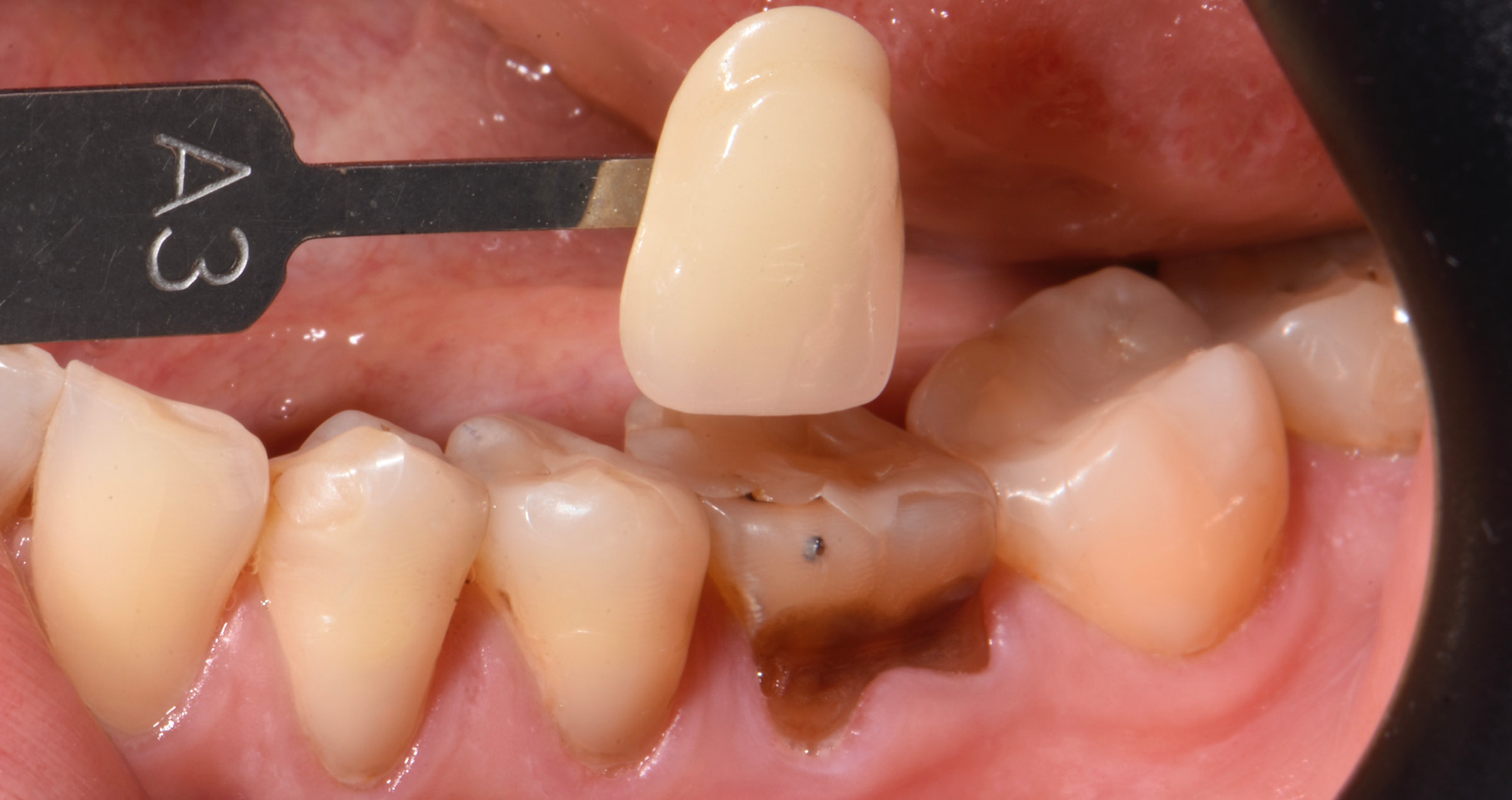
As part of his presentation, Dr Scotti showed several case studies that had been conducted with KATANA™ Zirconia Block. One of these focused on a 24-year-old male patient referred to him with a discoloured upper incisor resulting from blunt trauma. “The patient had a fairly immediate aesthetic need, but in this case I was unable to perform external whitening to lessen the discolouration,” explained Dr Scotti. “However, I was able to solve the case by creating an adhesive crown made from a KATANA™ Zirconia Block. Though the cervical area still showed a slight colour difference to the neighbouring teeth, it was not visible in the patient’s smile and he was extremely happy with the result,” Dr Scotti continued.

Overall, Kuraray Noritake Dental’s KATANA™ Zirconia Block is a great step forward for zirconia restorations, according to Dr Scotti. “Ten years ago, no one would have imagined being able to make a central incisor restoration out of zirconia,” he said. “Thanks to the multi-layered technology behind the natural aesthetics of this block, today this is no longer a dream.”

Interview: “The future of dentistry will be digital”

As the operator of his own dental practice in the German town of Laer and a member of the Digital Dental Academy in Berlin, Dr Hendrik Zellerhoff is clearly a very busy man. Fortunately, his integration of Kuraray Noritake Dental’s KATANA Zirconia Block into his daily workflow means that he is able to deliver high-quality restorations to his patients faster than ever. In this interview, Dr Zellerhoff explains how he uses the block and how his patients have responded to it.

Dr Zellerhoff, can you tell us a little bit about your background as a dentist?
In 2003, I began working as an assistant and at this time I worked with the CEREC system, a system for which I am now a certified trainer. In 2005, I opened my own dental practice in Laer, which I continue to operate to this day.

When did you first begin to work with Kuraray Noritake Dental’s range of products?
I think it was about four or five years ago that the laboratory that I worked with told me how good Kuraray Noritake’s KATANA Zirconia discs were for sintering and fabricating full-zirconia crowns. At that point, however, I was only looking for materials that would work with CEREC, and so it wasn’t until early 2018, when I went on a course in Leipzig in Germany where the KATANA Zirconia Block was being demonstrated, that I really saw how I could use this product in my practice. The block’s integration with the CEREC system means that it is now possible for me to provide high-strength aesthetic zirconia restorations for my patients accurately and quickly.

How frequently do you use the KATANA Zirconia Block during your daily work as a dentist?
I think around once a day, on average. It varies—sometimes I may make restorations for three different patients on one day, and then it’s four days until I use it again. My CEREC is only able to conduct wet milling, however, which is obviously slower than the 15-minute time span made possible through dry milling, and this limits how often I can use it.

What do you like most about this zirconia solution?
For me, it both feels and looks very real, so it has this aesthetic function going for it. Its multilayered, highly translucent appearance definitely helps to achieve more natural-looking restorations. However, the mechanical strength of the material is also something that I like, as it means that it can be used for restorations with thinner walls and sharper margins than those made with glass-ceramics.

With the release of the KATANA Zirconia Bridge Block, do you expect to use this zirconia solution more?
Oh, absolutely! The ability to make aesthetic bridges in the molar area and in a single visit is a revelation to me.

What has the response from your patients been?
They love it! These procedures can be realised on the same day as their initial appointment, and this means that my practice has patients coming from far outside of the small town in which I live. We even get people coming all the way from Switzerland to receive KATANA-based treatments—that’s how positive the response has been.

With this focus on digital dentistry, is there still a role for the dentist as a craftsperson?
I love to work with an entirely digital workflow. If a machine can do something better or faster than I am able to, then that is all right with me. As far as I can see, the future of dentistry will be digital. At the end of the day, the goal stays the same—to provide my patients with results that they are happy with.

Dr Paolo Baldissara: “The KATANA™ Zirconia Block is an extremely promising technology”

With over 30 years of experience as a dentist and researcher, Dr Paolo Baldissara of the University of Bologna in Italy could be forgiven for slowing down a bit. This is far from happening, however, as he continues to be at the forefront of ceramic restoration material developments and their integration into CAD/CAM workflows.


When presenting at a symposium held in Berlin in Germany by Kuraray Europe earlier this year, Dr Baldissara highlighted how the company’s patented multilayered zirconia technology allows the KATANA™ Zirconia Block to effectively mimic the shade gradation of natural teeth. He commenced his presentation by outlining the general shift towards metal-free restorations, which in his opinion has been driven by a number of factors, the high value now placed on aesthetics in dentistry chief among them.


“I began using zirconia back in 2005 for prosthodontics in my department at Bologna, and it has greatly improved in quality since then,” said Dr Baldissara. “Generally speaking, the shift towards zirconia only started when a high-strength substitute for metal that was able to be processed with CAD/CAM systems with high accuracy became available.”


It was at the 2015 International Dental Show in Cologne in Germany where Dr Baldissara was first introduced to KATANA™ Zirconia UTML and STML, both of which impressed him with their high levels of translucency. “I started to use them almost immediately, mainly in their monolithic form, for research and in clinical practice,” he said. “My opinion of them was very high, as they allowed me to make cost-effective single crowns and multi-unit restorations with excellent aesthetic properties with scattered and diffused light. This is, ultimately, what patients want.”


Dr Baldissara began using the KATANA™ Zirconia Block in 2018 and expressed his excitement with how its high-speed sintering allows for fast processing of restorations. He recommended dry milling for a number of reasons: not only does it allow for the translucency of the zirconia to be maintained, it also helps to avoid contamination from other ceramic powders that may persist in the milling unit. In addition, he encouraged attendees to frequently replace the burs of their milling units for optimal results and reduced risk of chipping.


“Dry milling and high-speed sintering of the KATANA™ Zirconia Block is an extremely promising technology,” said Dr Baldissara. “In my opinion, it is the correct way to make aesthetic and mechanically strong restorations for the patient.”

Steve Meeze: Passion for Dentistry

Steve Meeze on the passion for dentistry

Steve Meeze definitely has it: a passion for dentistry. Yet, there was a time when he was unhappy in his job as a dental practitioner. Fundamental changes were necessary to lay the foundations for finding personal fulfillment in his work. We spoke to him about his motivation to do things differently and about the path he has chosen and is following down to the present day.


Many students of dentistry would like to run their own dental office one day. For you, this dream came true, but you ultimately decided to take a different path. Why did this change seem necessary?


After graduation in 1983, running my own dental office seemed to be a great plan: I wanted to be independent, grow my patient base, and become successful, which went very smoothly in the beginning. This economic success, however, did not protect me against starting to feel unhappy and burned-out after several years. Once I began to take my negative emotions seriously and to search for the underlying causes, I realized that is was not merely the workload that troubled me. The truth was that I was missing a sense of purpose in many of my daily tasks. This seemed to be the reason for my lack of energy and motivation to proceed with what I had started. Luckily, I was able to find my personal “why” after some time.


Where did you find your own fulfillment or sense of purpose?


I ultimately found it in the field of conservative dentistry. The reason is that direct restorative treatments with composite allow me to do amazing things in a non-invasive or minimally invasive way. Doing no harm and always being able to go back simply feels good, and my patients are incredibly grateful for what I do. Their gratitude is my reward. This is why I decided to dedicate myself exclusively to treating patients with composite.


How do you do this?


In 2009, I sold my own dental office and started working in different practices in Flanders. In this process, I established some highly valuable partnerships with colleagues, who appreciate my skills and refer their patients to me mainly in the course of interdisciplinary treatment. These orthodontists or surgeons need someone who puts the finishing touches to their work. And this is exactly what I do: I create a beautiful smile at the end of an often complex treatment. Other patients approach me on their own accord with fractured or misshaped teeth and the desire for esthetic improvement. In any case, I listen to them carefully before I start planning. Knowing what is on their minds, I can treat them with confidence. The most precious moment for me is when I hand over the mirror and let them evaluate my work. Their positive reaction, the glint in their eyes is what motivates me every day.


Is there a specific technique you use in your daily work?


Yes, I use the Light Facing Concept I developed to solve esthetic issues in the anterior region. This technique focuses of creating a harmony without the need to sacrifice large amounts of healthy tooth structure. With this concept, a fractured anterior tooth, for example, is restored in three steps: Initially, a single dentin shade of composite of the same color as the fractured tooth is used to create the desired tooth shape and make the fracture line disappear. In this step, shade selection is independent of the final color I would like to reach. Subsequently, I correct the color with an opaque material and try to match the shade of the adjacent teeth as exactly as possible. If necessary, I create mamelons and other individual characteristics in this layer. The final step is carried out on all anterior teeth whenever the appearance of the treated tooth differs from the others: A light facing – i.e. a very thin layer of more or less translucent composite – is added to mask the differences. In cases with minimal shade differences, a composite with a high translucency is used, while a more opaque material is preferable whenever the differences are more apparent.


What is your preferred material for the Light Facing Concept?


My personal experience shows that the best results are obtained with CLEARFIL MAJESTY ES-2 Premium composite from Kuraray Noritake. It simply offers the best mimetic (chameleon) effect of all composite materials I have tested so far, and I have tested many of them. The material tends to blend in with the surrounding tooth structure, and only four shade combinations are usually sufficient to cover the whole range of my patients’ tooth shades. I love this virtually magical effect!


What is your personal conclusion?


When I made the decision to start doing what really makes me happy, I could not be sure that I had chosen the right path. Retrospectively, I know that giving up my present career and taking steps towards personal fulfillment has been exactly the right thing to do. I love the fact that I can satisfy my patients’ desires without sacrificing healthy tissue, and my Light Facing Concept implemented with MAJESTY ES-2 make it easy for me to obtain the results they have been dreaming of.


CASE EXAMPLES

Fig. 1 : Case example: Color change with composite – initial clinical situation.

Fig. 2.: Case example: Color change with composite – treatment outcome.

Fig. 3: Case example: Shape correction with composite – initial clinical situation.

Fig. 4:  Case example: Shape correction with composite – immediate treatment outcome.

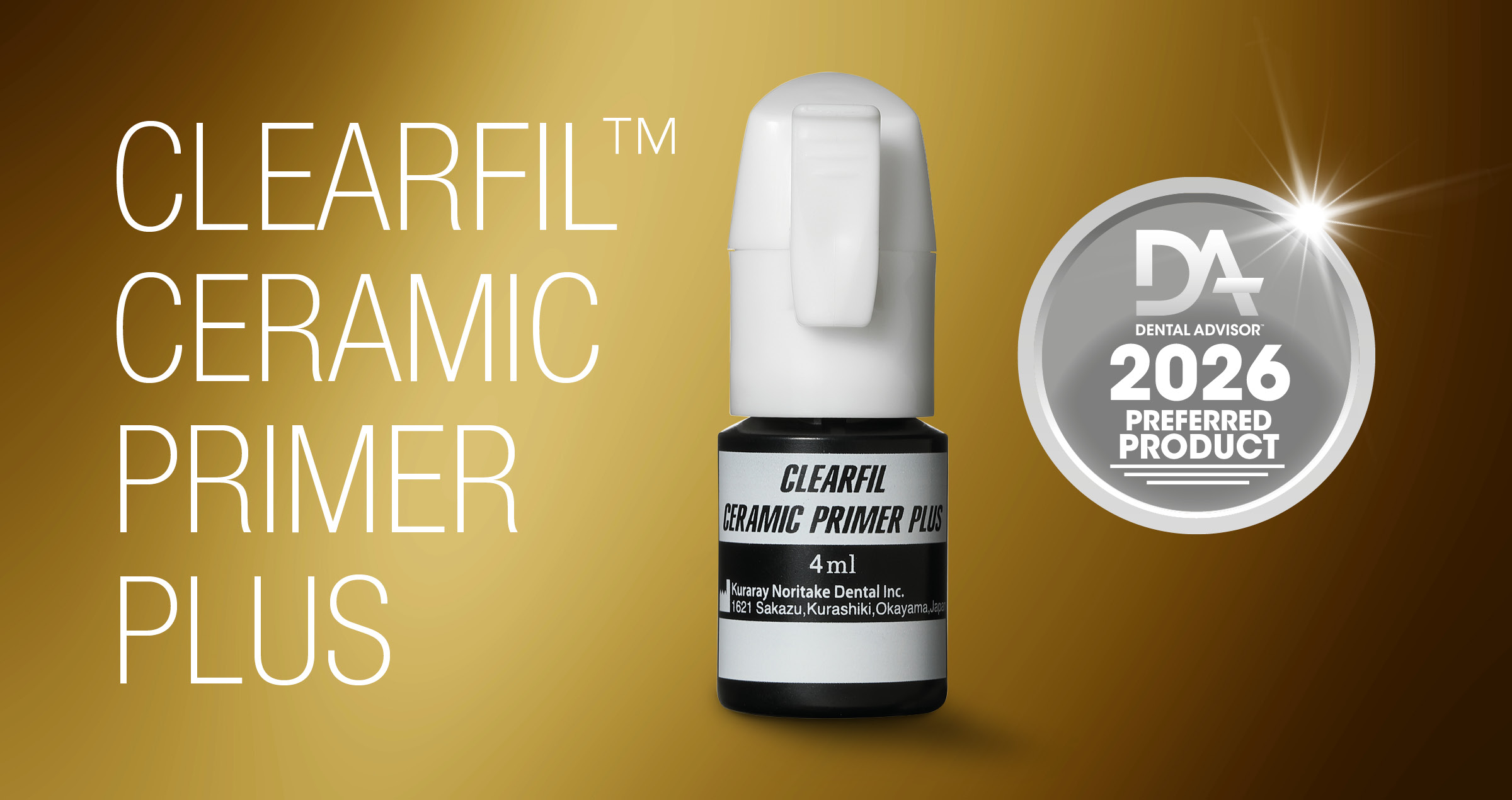
“Simply apply and dry, and you’re done”: CLEARFIL™ CERAMIC PRIMER PLUS

Combining ease of use and excellent viscosity, CLEARFIL™ CERAMIC PRIMER PLUS is a stable and universal prosthetic primer designed for all restorations. By incorporating Kuraray Noritake Dental’s original MDP monomer and a silane monomer, it is able to provide an enhanced adhesive surface for ceramics, hybrid ceramics, composites and even metals. CLEARFIL™ CERAMIC PRIMER PLUS is best used in conjunction with the adhesive resin cement PANAVIA™ V5 to ensure durable restorations.


The key to CLEARFIL™ CERAMIC PRIMER PLUS’s performance is in the monomers it possesses. The MDP monomer strongly bonds to metals and zirconia, while the silane coupling agent MPS efficiently adheres to composites and all silica-based ceramics. “What makes CLEARFIL™ CERAMIC PRIMER PLUS different to other primers is its stability,” says Peter Schouten, Technical Manager at Kuraray Noritake Benelux. “Normally, activated silanes are very unstable. However, the well-balanced formula of CLEARFIL™ CERAMIC PRIMER PLUS provides it with a shelf life of three years after production, making it easy and predictable to use.”


Procedural simplicity

Every element of CLEARFIL™ CERAMIC PRIMER PLUS is designed to deliver maximal procedural simplicity. It is packaged in an easy-to-squeeze bottle that dispenses the solution easily and accurately. Whereas other similar products need to be left in place for one minute or more, this primer is immediately effective upon application. “CLEARFIL™ CERAMIC PRIMER PLUS benefits the dentists by offering a reliable primer for all materials, without being difficult to apply or use,” says Schouten. “From titanium to zirconia, from lithium disilicate to composite—simply apply and dry, and you're done.”


PANAVIA™ V5

A resin cement with unrivalled procedural simplicity and predictability, PANAVIA™ V5 is a member of Kuraray Noritake Dental’s PANAVIA family. It sets a new standard for adhesion, allowing for self-cure dentine bond strengths equal to our gold-standard light-cure bonding agent, CLEARFIL SE BOND. PANAVIA™ V5 offers natural aesthetic stability in shading through its amine-free paste, which is available in five shades and has been scientifically proven to demonstrate a lower level of post-curing colour variance than amine-based cements.


CLEARFIL™ CERAMIC PRIMER PLUS and PANAVIA™ V5

Providing strong bonding to not just hydroxyapatite, but to metals and zirconia as well, PANAVIA™ V5 is designed for use in conjunction with CLEARFIL™ CERAMIC PRIMER PLUS. The cementation procedure is efficient and effective: use PANAVIA V5 Tooth Primer for the pretreatment of the tooth, CLEARFIL™ CERAMIC PRIMER PLUS for the priming of the restoration, and PANAVIA™ V5 for the cementation.


KATANA™ Zirconia Block possesses excellent mechanical properties

Manufactured from Kuraray Noritake Dental’s proprietary zirconia powder, new KATANA™ Zirconia Block delivers aesthetic, natural-looking restorations. However, it is not only aesthetic value that this all-ceramic solution provides. Its superior mechanical properties were designed for reliable, repeatable fabrication of full-contour prostheses.


Impressive flexural strength

The multi-layered KATANA™ Zirconia Block possesses a flexural strength of 763 MPa, which is far higher than that of lithium silicate (LS) glass-based ceramics. This means that restorations made with the KATANA™ Zirconia Block can be designed to have thinner walls than those made with LS glass. This has now resulted in great mechanical properties and beautiful aesthetics that are now possible for all single-unit anterior and posterior restorations.


Fast chairside processing

Thanks to its integration with Dentsply Sirona’s CEREC® CAD/CAM system and SpeedFire™ ovens, the KATANA™ Zirconia Block is perfect for chairside processing and the fabrication of prostheses. Dentists only require 15 minutes for dry milling a crown with the CEREC milling unit and an additional 18 minutes is required for the sintering of the block.


A highly precise material

Dr Hendrik Zellerhoff runs a dental practice in Laer, located in the North Rhine-Westphalia district of Germany. As a digital dentistry and CEREC specialist, he has used the KATANA™ Zirconia Block for more than 40 cases in his practice since March 2018 and praises its perfect balance of aesthetics and mechanical performance. “Its strength is a major advantage—the bend strength totals 763 MPa,” says Dr Zellerhoff. “This means that it can even be used to create extremely thin walls, which in turn means minimally-invasive work. In addition, the margins are even more slender than on glass ceramics.” 


Due to the fact that zirconia shrinks to the final size during the sintering process, an approximately 25 per cent oversized restoration needs to be milled out,” continues Dr Zellerhoff.


“This is executed using very fine milling cutters. Therefore, a larger workpiece is processed using smaller instruments. This leads to high-precision margins and occlusal surfaces. Only after this does dense sintering take place. The exact shrinkage factor is stored in the barcode on the block. Almost no rework is required in the occlusal or approximal areas. We even do without a try-in after sintering—we glaze immediately. This fact alone is really fascinating, even for long-standing, ‘pampered’ CEREC users.”

Create natural gloss instantly with CLEARFIL MAJESTY™ ES Flow

An ideal composite material should satisfy three basic requirements: function, aesthetics and biocompatibility. A member of the CLEARFIL MAJESTY family, Kuraray Noritake Dental’s CLEARFIL MAJESTY™ ES Flow combines excellent handling, polishability and mechanical strength to provide a solution for all cavity classes. This universal flowable composite employs silane and filler technologies to maximise both its procedural and aesthetic outcomes, allowing dentists to create long-lasting restorations with reduced chairside time.


A new standard for flowable composites

Traditionally, a composite’s flowability has been inversely related to its filler content. When flowable composites were first introduced in the mid-1990s, their lower viscosity was enabled by a filler level much lower than that of conventional composites. This, however, meant that these flowables fared poorly in a clinical setting, demonstrating inferior mechanical properties when compared to traditional hybrid composites.


With CLEARFIL MAJESTY™ ES Flow, dentists can now use a flowable composite with mechanical properties comparable to those of conventional alternatives. Thanks to Kuraray Noritake Dental’s silane technology, millions of submicron filler particles fit into the composite, reliably adhering to the resin and maintaining long-term stability. CLEARFIL MAJESTY™ ES Flow possesses a scientifically tested flexural strength of over 150 MPa, similar to that of a universal nano hybrid composite, making it suitable for use in Class I and II restorations.


Aesthetic restorations

However, the small, durable particles of CLEARFIL MAJESTY™ ES Flow provide more than just mechanical reliability. Special cluster fillers provide a light diffusion effect that is similar to that of natural teeth, meaning that the material blends effortlessly with the existing tooth structure. Unlike other flowables, CLEARFIL MAJESTY™ ES Flow is glossy immediately after curing. This gloss can be improved with remarkable simplicity—simply wipe the cured resin with an ethanol-moistened gauze or cotton roll to produce a smooth surface that is proven to maintain its gloss over time.


Ideal handling

CLEARFIL MAJESTY™ ES Flow’s low viscosity monomers ensure that it has excellent handling characteristics, promising better sculpting for the dentist. The flowable composite does not stick to the needle tip or to any instruments, only adhering to the area to which it is applied, while the proprietary design of the syringe itself minimises air bubbles when dispensing. Once dispensed, the paste possesses great consistency with its non-slumping formula, ensuring that it can maintain its shape. A truly universal composite, CLEARFIL MAJESTY™ ES Flow allows dentists to create highly aesthetic restorations with ease.


Obtain results in four simple steps

Creating aesthetic and durable restorations has never been more achievable. Simply prepare the cavity and apply bonding, dispense and sculpt the CLEARFIL MAJESTY™ ES Flow, light-cure and, finally, polish. It’s as easy as that.

PANAVIA and KATANA: The perfect combination

PANAVIA and KATANA: The perfect combination


Scientific research has demonstrated that, when bonding zirconia, optimal bond values can only be achieved with resin cements—specifically, MDP monomer-based resin cements. With PANAVIA V5, we offer a dual-cure resin cement with dentine bond strengths equal to our gold standard light-cure bonding agent CLEARFIL SE BOND, even when used in self-cure mode. Through our KATANA Zirconia range, Kuraray Noritake Dental presents a ceramic material for restorative procedures that has excellent translucency and shade options. Together, PANAVIA V5 and KATANA Zirconia make an ideal team for durable and reliable indirect restorations.


PANAVIA V5

In 1983, Kuraray introduced its patented MDP monomer in PANAVIA EX cement. With its clinically proven adhesion, our PANAVIA family has set the industry standard for adhesion for over 30 years. As the newest addition to the PANAVIA cement line, PANAVIA V5 provides strong bonding not just to zirconia but to hydroxyapatite and metals as well. Unlike other dual-cure resin cements, PANAVIA V5 offers improved bond strength to all tooth structures. Simple to use and with predictable results, PANAVIA V5 is unique in its user friendliness and procedural consistency. 


KATANA Zirconia

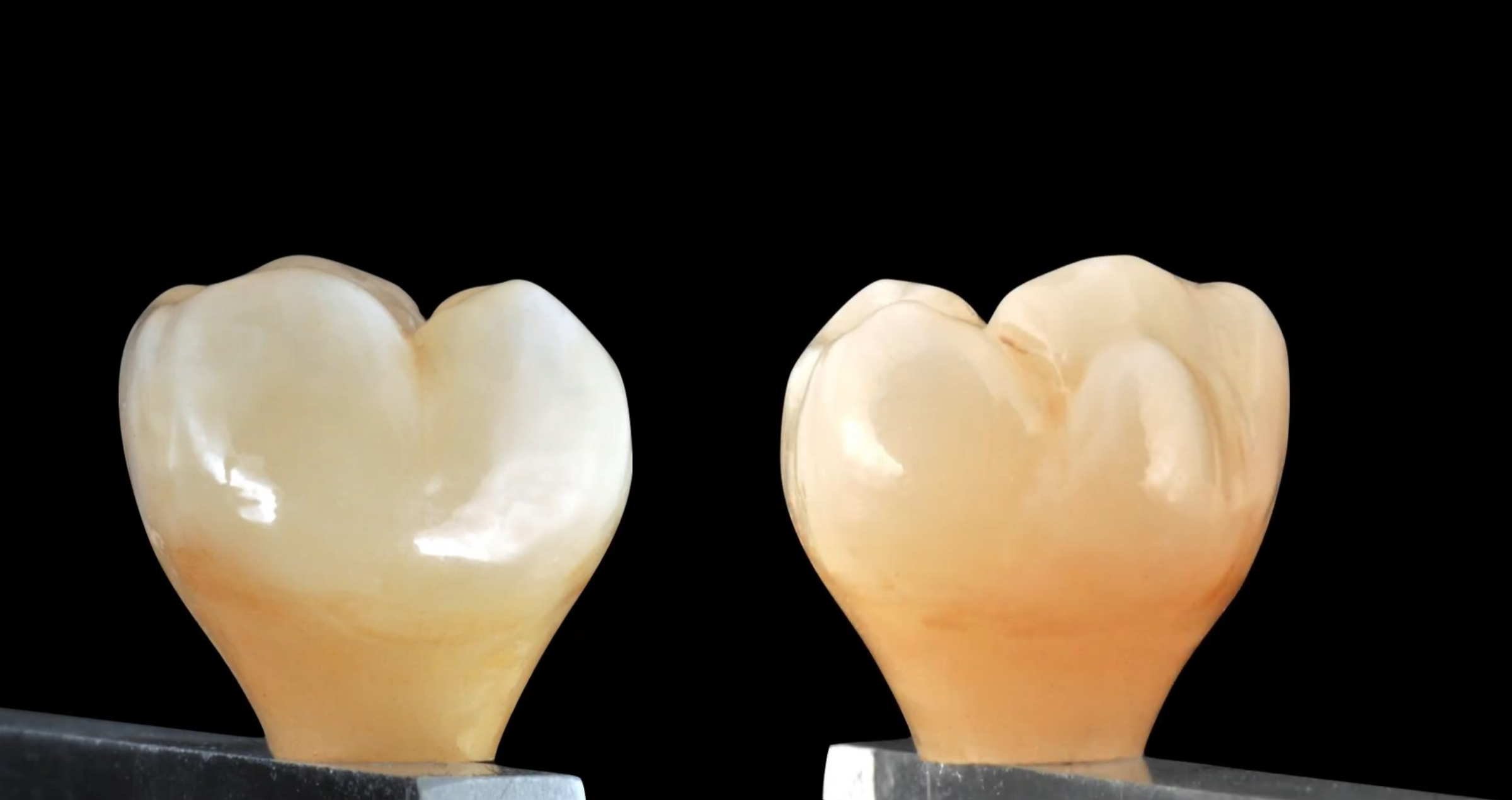
Our KATANA Zirconia discs are processed using a proprietary zirconia powder, allowing it to have as natural a translucency and colour as possible. The KATANA range consists of several options designed for full-contour zirconia prostheses, from single crown to full arch: KATANA Zirconia UTML (Ultra Translucent Multi Layered), STML (Super Translucent Multi Layered), ML (Multi Layered) and HT (High Translucent). The multilayered build-up of KATANA Zirconia STML provides a translucency and chroma that gradually decrease from the cervical to incisal regions, just like natural dentition. KATANA Zirconia UTML is perfect for anterior restorations, such as veneers, owing to its natural translucency and colour gradient. With a flexural strength considerably higher than that of lithium disilicate, KATANA Zirconia has the mechanical and aesthetic properties to achieve well-balanced restorations between natural teeth in the anterior zone.


An ideal team

PANAVIA V5 provides a strong and durable bond between KATANA Zirconia-based restorations and the tooth structure. PANAVIA V5 resin cement offers optimal margins and predictable restorations. Always use PANAVIA V5 Tooth Primer for the pretreatment of the tooth and CLEARFIL CERAMIC PRIMER PLUS for the priming of the restoration.


“We’re thrilled by the possibilities presented from the combination of PANAVIA V5 and KATANA Zirconia,” said Mitsuru Takei, Head of Technical Services at Kuraray Europe. “Together, they make achieving natural-looking restorations easier than ever.”


Teethmate Desensitizer

TEETHMATE DESENSITIZER: A natural solution for sensitive teeth


Kuraray Noritake Dental’s TEETHMATE DESENSITIZER is designed to provide an immediate and long-lasting solution for dentine sensitivity. Owing to a specially modified powder free of potential irritants like methacrylates and colophony resins, TEETHMATE DESENSITIZER is biocompatible and harmless to tissue. The first desensitiser to form hydroxyapatite, TEETHMATE DESENSITIZER possesses a neutral taste that will please patients. Since its introduction in 2013, dentists have hailed the product for its safe tubule sealing and for providing patients with immediate relief.


TEETHMATE DESENSITIZER consists of a powder, composed mainly of calcium phosphate, and a liquid, whose chief component is water. The powder and liquid simply need to be mixed. After the paste has been applied with a superfine brush to the affected area for 30 seconds, the material sets into hydroxyapatite, providing an instant reduction of hypersensitivity by sealing the dentinal tubules and microcracks in the enamel.


Hydroxyapatite: The human body’s strongest mineral

The presence of hydroxyapatite encourages tooth remineralisation, protecting teeth against hypersensitivity and after professional tooth cleaning. TEETHMATE DESENSITIZER is composed of two different calcium phosphates that react under water to form hydroxyapatite. Since Kuraray Noritake Dental’s technology ensures the right calcium–phosphate ion ratio with a suitable pH level, the newly formed hydroxyapatite acts as if it were the patient’s own, crystallising so that it can neatly seal dentinal tubules and enamel cracks.


Suitable for most sensitivity issues

TEETHMATE DESENSITIZER has a wide range of indications, from whitening-related dentine sensitivity to the treatment of dentine exposed by periodontitis, abraded by harsh toothbrushing, or prepared for fillings and/or restorations.


TEETHMATE DESENSITIZER is an invisible and durable form of treatment. When applied, it occludes open dentinal tubules without leaving a film on the tooth. It is fast and easy to use—simply mix the powder and liquid, apply with a rubbing motion to the sensitive region for 30 seconds and rinse lightly with water. No air blowing or light curing is required, as the calcium phosphates in the substance harden on their own, providing patients with fast relief from sensitivity-related pain.


Proven effectiveness

In a survey conducted by Kuraray Noritake Dental, Japanese dentists were asked to rate the effectiveness of TEETHMATE DESENSITIZER. Of the 285 respondents, 92 per cent said that they were satisfied with the product’s effectiveness.


No impact on bond strength

TEETHMATE DESENSITIZER has been clinically proven not to reduce the bond strength of adhesives or cements when it is used prior to their application. This is a considerable advantage for dentists using etch and rinse adhesives, for instance, as they can apply TEETHMATE DESENSITIZER without any concerns about potentially deleterious effects on restorations. A smart, invisible and durable form of dentine sensitivity treatment, TEETHMATE DESENSITIZER promises to satisfy both dentists and patients.