
No Author Selected

CLEARFIL™ SE Protect: A uniquely antibacterial adhesive system

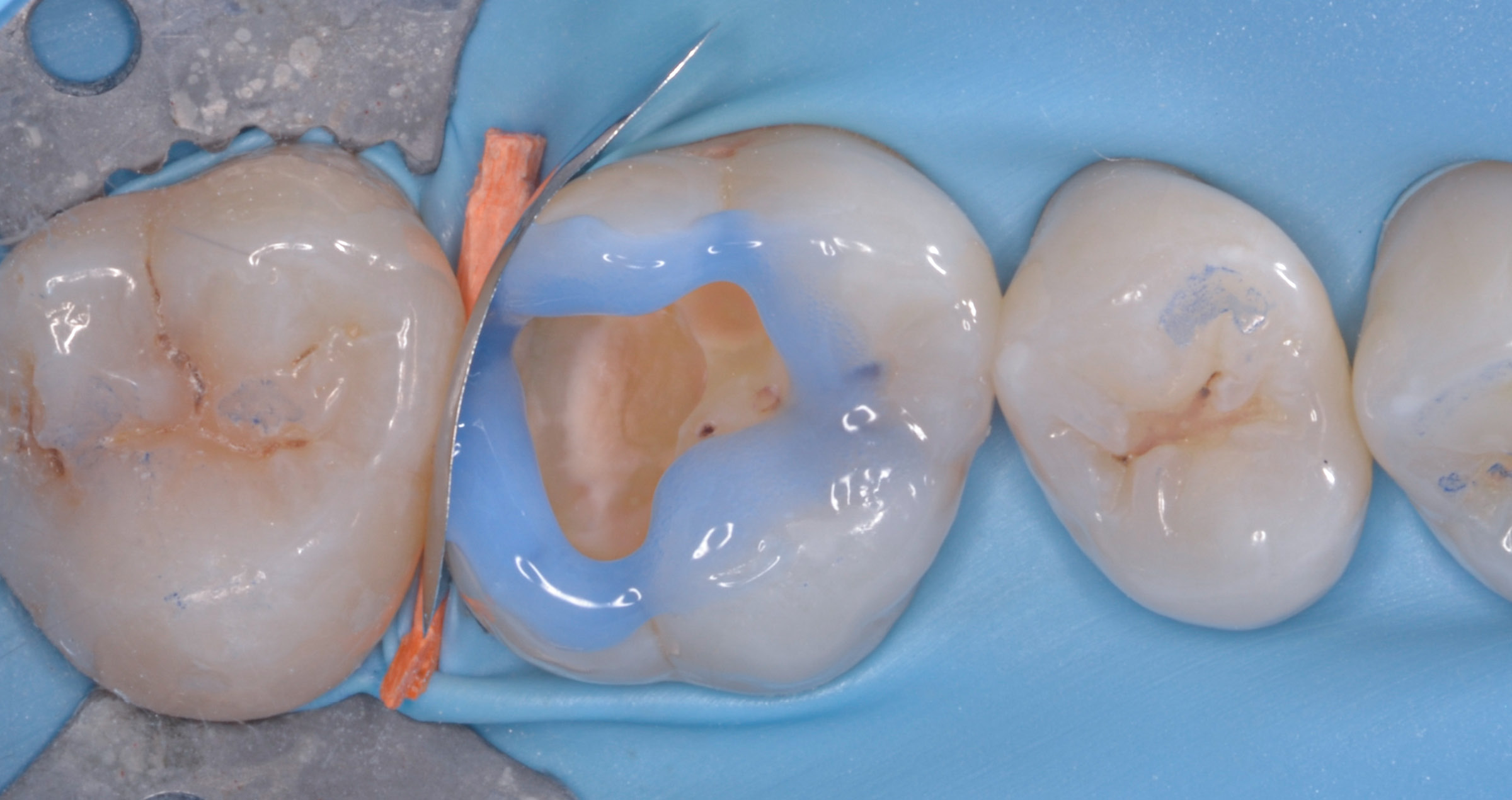
In the early 1990s, Kuraray introduced CLEARFIL™ LINER BOND 2, the first self-etching adhesive, to the world. Among the products that this system has led to is the award-winning CLEARFIL™ SE Protect, which was introduced in 2004 and remains highly valued by dental professionals across the world. By combining Kuraray Noritake Dental’s famed original MDP monomer with the antibacterial 12-methacryloyloxydodecylpyridinium bromide (MDPB) monomer, this self-etching adhesive is able to kill bacteria on contact. How is this possible? Let’s find out.


Pyridinium holds the key


The crucial element that provides CLEARFIL™ SE Protect with its antibacterial cavity cleansing ability is contained in the MDPB monomer. The pyridinium group in this monomer is positively charged, whereas the cell structures of bacteria are, generally speaking, negatively charged. This means that they are automatically attracted to the positively charged contact points of the MDPB monomer, causing these bacteria cell membranes to lose their electrical balance and be destroyed. This process—bacteriolysis—kills the bacteria.


The bactericidal mechanism of MDPB is presumed to be similar to that of the well-known antibacterial agent cetylpyridinium chloride, which is in many toothpastes and mouthwashes.


Certified biocompatibility


The MDPB monomer is immobilised during the polymerisation of the bonding and remains latently active without affecting the dental patient’s own cells. Unlike the situation when other cavity hygiene products are used, this process—patented by Kuraray Noritake Dental—does not have a negative impact on the bond strength and even ensures that there are no long-term cytotoxic effects on the patient’s own body cells such as odontoblasts. These results have been confirmed by the official biological evaluation for medical devices known as the ISO 10993 series.


Award-winning results with CLEARFIL™ SE Protect


With its antibacterial effect, high bond strength to enamel and dentine and long-term fluoride release, CLEARFIL™ SE Protect is reliable, versatile and future-proofed. This tried-and-tested two-step self-etching bonding system is fast and easy to use for direct restorations. For bonding indirect restorations and core build-ups, simply mix it with Kuraray Noritake Dental’s CLEARFIL™ DC Activator according to the instructions for use.


Thanks to its combination of MDP and MDPB monomers, CLEARFIL™ SE Protect leads to predictable, durable restorations—and it has received plenty of accolades from dental experts as a result. In 2022, this adhesive again received a Top Product Award in the Direct Restoratives, Bonding Agent: Self-Etch category from DENTAL ADVISOR. This was the fourth year in a row that it earned such recognition, and in addition, the 13 DENTAL ADVISOR consultants and editors gave CLEARFIL™ SE Protect a stunning 98% overall clinical rating.


Premolar case with CLEARFIL MAJESTY™ ES-2 Universal

Case by Dr. Clarence P. Tam, HBSC, DDS, AAACD, FIADFE


Case background


A stable ASA 2 65 year old female presented to the practice for restorative dentistry with a medical history significant for a non-descript immunoglobulin deficiency, for which she receives regular infusions. She reports no known drug allergies. Clinically, she was diagnosed with an occlusal peripheral rim fracture leaving a food trap on tooth 14 (FDI notation). Tooth 15 featured an extensive amalgam with extreme proximity to the distal marginal ridge, which exhibited distal vertical axial fractures as a result of cyclic expansion-contraction over time. The restorative goal of minimally invasive direct dentistry would be complicated by the undoubtedly dark dentin substrate under the amalgam. A material was sought that featured both an excellent chameleon mechanism as well as physical properties to maximize the prognosis of direct restorations in this area.


Restorative procedure


The patient was subjected to topical anesthetic prior to buccal infiltration using 1 carpule of 2% Lignocaine with 1:100,000 epinephrine. A rubber dam was affixed prior to preparation of tooth 15MO with dissection of the distal vertical marginal ridge fracture. The margins of tooth 14O and 15MOD were refined before bevelling as the ends of enamel rods facilitate better bonding relative to the sides of enamel rods. A 27 micron aluminum oxide micro air abrasion treatment was completed prior to affixing, wedge and matrix to reconstruct the mesial marginal ridge of tooth 15. A matrix-in-matrix solution was used to recreate the proximoaxial contour of 15D. This provided hermetic closure at the proximogingival cavosurface margin as well as an ideal contour for the missing axial wall.


Following a total etch technique, a 2% Chlorhexidine scrub was completed for 30 seconds and the dentin blot dried to a moist state. A 5th generation bond was applied, air thinned and cured as per manufacturer instructions. Microlayers are important during the delicate first 5 minutes of hybrid layer formation, and were completed using 0.25 mm increments of CLEARFIL MAJESTY™ Flow (Kuraray Noritake Dental Inc.). This technique can be expected to increase significantly the shear bond strength to dentin1,2.


This was completed both in the proximal box floor area as well as mid-occlusally. The marginal ridge was completed using CLEARFIL MAJESTY™ ES-2 Universal (Kuraray Noritake Dental Inc.). Since the dentin base was heavily stained, CLEARFIL MAJESTY™ Flow was used before utilizing CLEARFIL MAJESTY™ ES-2 Universal in a lobe-by-lobe creation of occlusal anatomy. Post-operative occlusal checks verify that the restoration is conformative to occlusion and esthetically excellent with no visible marginal show.


Rationale for material choice


The marginal ridges were micro-layered horizontally as was the floor of the resulting Class I preparation as per a reduced layer thickness-technique modification of Nikolaenko et al3, whereas the highest shear bond strengths were found when a 1mm horizontal layering technique was used.


CLEARFIL MAJESTY™ ES-2 Universal is at the forefront of a simplified restorative armamentarium for the modern practice. It takes cloud-shading one step further by offering a “Universal” shaded composite featuring Light Diffusion Technology (LDT) with simultaneous ideal sculptability, optical metamerism and physical properties for use in any restorative situation in the mouth. Featuring barium glass nano fillers and proprietary pre-polymerized nanoparticle fillers, the latter boasts a high refractive matrix that is able to disperse light and fool the eye with even the thinnest of layers, obviating the need for opaquer composites in cases like the one featured. When paired with CLEARFIL MAJESTY™ Flow in a conservative layered technique, the 81% filled flowable produces a radiographically well-demarcated layer, and the superficial CLEARFIL MAJESTY™ ES-2 Universal boasts an easy-to-polish robust single shade restorative solution that will virtually fulfil all of your restorative needs for non-bleaching patients. Physically, with compressive strength is rated at 348 MPa and flexural strength at 116 MPa, CLEARFIL MAJESTY™ ES-2 Universal is in the range of natural enamel and dentin. The built-in fluorescence is very enamelomimetic, which is excellent for nightclub social situations.


FINAL SITUATION


Dentist:

DR CLARENCE P. TAM, HBSC, DDS, AAACD, FIADFE


Clarence is originally from Toronto, Canada, where she completed her Doctor of Dental Surgery and General Practice Residency at the University of Western Ontario and the University of Toronto, respectively. Clarence’s practice is limited to cosmetic and restorative dentistry and she is well-published to both the local and international dental press, writing articles, reviewing and developing prototype products and techniques in clinical dentistry. She frequently and continually lectures internationally. Clarence is the Immediate Past Chairperson of the New Zealand Academy of Cosmetic Dentistry.


She is currently one of two individuals in Australasia to hold Board-Certified Accredited Member Status with the American Academy of Cosmetic Dentistry. Clarence is an Opinion Leader for multinational dental companies Kuraray Noritake, J Morita Corp, Henry Schein NZ, Ivoclar Vivadent, Dentsply Sirona, 3M, Kerr, GC Australasia, SDI and Coltene and is the only Voco Fellow in Australia and New Zealand. She holds Fellowship status with the International Academy for DentoFacial Esthetics and is a passionate and approachable individual, committed to having an interactive approach with patients in all of her cases to maximize predictability.


References


1. Bertschinger C, Paul SJ, Luthy H, Scharer P. Dual application of dentin bonding agents: effect on bond strength. Am J Dent. 1996;9(3):115-119.
2. Magne P, Kim TH, Cassione D, Donovan TE. Immediate dentin sealing improves bond strengths of indirect restorations. J Prosthet Dent. 2005;94(6):511-519.
3. Nikolaenko SA, Lohbauer U, Roggendorf M, Petschelt A, Dasch W, Franenberberger R. Influence of C-Factor and layering technique on microtensile bond strength to dentin. Dental Mater. 2004;20(6):579-585.


HIGHLIGHTS september 2022 (LT)

Naujoviška „PANAVIA Veneer LC“ technologija

Šioje apžvalgoje aptariame technologijas ir tai, kaip jos prisideda prie daugelio naujojo „PANAVIA Veneer LC“ privalumų.


PANAVIA™ cements

Testimonial article by Dr. Troy Schmedding, USA


From PANAVIA™ EX to PANAVIA™ V5, Kuraray Noritake Dental Inc.‘s flagship product line of cements continues to evolve to offer reliable adhesion, enhanced ease of use, and superior esthetics.


Dentistry has certainly evolved in the years since Kuraray Noritake Dental Inc. developed the phosphate monomer MDP. But over the past 4 decades, it has rooted itself in restorative dentistry as the tried-and-true ingredient that clinicians rely on for strong adhesion to tooth structure as well as metals and zirconia. MDP is a key ingredient in the manufacturer’s flagship PANAVIA™ line of cements, which continues to evolve in line with a growing variety of indirect restorative materials from which to choose.


One example of this evolution is PANAVIA™ SA Cement Universal, one of the first true universal self-adhesive resin cements to hit the market. In addition to the original MDP monomer, it incorporates the LCSi monomer, a silane-based carbon chain in a dual-barrel system that forms a chemical bond with glass and ceramic materials.


“PANAVIA™ SA Cement Universal allows you to achieve a strong bond no matter which substrate is being used.”

- Troy Schmedding, DDS –


A STRONG BOND THAT’S SIMPLE TO CREATE


But all chemistry aside, what’s in it for the clinician? As dental educator and author Dr. Troy Schmedding points out, the key benefit of PANAVIA™ SA Cement Universal is eliminating the confusion over how to treat different substrates. This is because the material adheres to virtually every material without the need for a separate primer. “The plus side for the practitioner is that the confusion of ‚how do I condition zirconia‘ or ‚how do I condition glass ceramics‘ is no longer an issue because the paste formulation allows you to achieve a strong bond no matter which substrate is being used - whether it is the MDP monomer allowing strong adhesion to zirconia or the LCSi monomer forming a chemical bond with glass ceramics,” he shared.


DIALING UP THE AESTHETICS


Kuraray Noritake Dental Inc. considers PANAVIA™ V5 the most esthetic cement it has ever created. Available in 5 shades - White, Brown, Universal, Clear, and Opaque – it took researchers over 10 years to develop and features an anime-free catalyst that allows for superior colour stability and improved bond strength to dentin. And like its predecessors, PANAVIA™ V5 offers a simple cementation procedure that is compatible with all indications, from crown-and-bridge and implant abutments to ceramic inlays and laminate veneers.


“Kuraray Noritake Dental Inc. has an incredibly strong reputation in adhesive dentistry, so it should offer clinicians a lot of comfort and flexibility to partner with not only a reputable company, but one that continues to research and evolve their key products,” concluded Dr. Schmedding.


Dentist:

DR. TROY SCHMEDDING, DDS
USA


Article from Dental product shopper, vol. 14 No. 5


Nauja „PANAVIA Veneer LC“ švirkšto konstrukcija

Naujasis švirkštas ir antgalis garantuoja itin gerą aplikavimo kontrolę!
Lengvas dozavimas ir gera aplikavimo kontrolė pasiekiama dėl specialiai sukurto „PANAVIA Veneer LC“ švirkšto ir aplikavimo antgalio. Visos naujos savybės parodytos toliau pateiktame paveikslėlyje


Work flow PANAVIA Veneer LC with PANAVIA V5 Tooth primer

Minimally invasive procedures using highly aesthetic restorations is what patients expect when they seek restorative treatment. With the various types of restorations available today, it is possible to meet these expectations – provided that the right materials are used.


For the placement of veneers, a resin cement must be selected that supports long-lasting aesthetics, is easily applied, offers a working time sufficient for simultaneous cementation of multiple restorations and provides excellent bond strength. The new “PANAVIA™ Veneer LC” is precisely what you need.


What is the workflow you ask? Check out the video to see the full workflow using PANAVIA V5 Primer and CLEARFIL Ceramic Primer Plus.


Excess removal with PANAVIA Veneer LC

One of the key features when talking about cements is the ease of removal of excess cement. Our newest cement - PANAVIA™ Veneer LC - offers the ideal paste consistency, a low film thickness and long working time.


But how about excess removal? Do you wonder how do we compare to other similar products?


Check out this video demonstrating an excess removal comparison between PANAVIA Veneer LC and other brands.


Dr Jorge Espigares on PANAVIA Veneer LC

Webinar recording Panavia Veneer LC - Dr Jorge Espigares

PANAVIA™ Veneer LC

Great solution for challenging task

PANAVIA™ family just got bigger! We are introducing the new PANAVIA™ Veneer LC – the specialist cement that offers aesthetics, excellent paste viscosity, easy handling and 200 seconds(!) working time under ambient light (8000 lux.). Coming in four different shades with matching try-in pastes from PANAVIA™ V5 system, it allows users to take into account the individual shade requirements and deliver highly aesthetic outcomes when cementing veneers, inlays and overlays.

Join our free webinar now and be the first to learn all the details about this new and exciting product from Kuraray Noritake Dental Inc..


ABOUT DR JORGE ESPIGARES, DDS, PHD

Dr. Jorge Espigares received his DDS degree at the Faculty of Dentistry, University of Granada in Spain and obtained his PhD degree under the supervision of Prof. Tagami at Tokyo Medical and Dental University in Japan. Specialized in Cariology and Operative Dentistry, Dr. Jorge Espigares has clinical experience in Spain and UK, and has authored and coauthored full-length research publications with his colleagues at TMDU.


Clinical Report about PANAVIA Veneer LC

PRESENTATION OF A STUDY WITH ILLUSTRATIVE CASES

by Dr. Yohei Sato, DMD, PhD and Dr. Keisuke Ihara, CDT.


INTRODUCTION


In recent years, the application and advancement of digital technology in dentistry has made it possible to accomplish the fabrication of highly accurate prosthetic zirconia appliances that were difficult to mill using the previously available technology. In addition, thanks to advances in adhesive dentistry and the advent of cements that bond strongly to a diverse range of materials, cements have come into wide clinical use that can cope with the many types of materials used for the fabrication of prosthetic appliances.


At our hospital, we select the treatment method most suitable for each case by appropriately specifying various types of prosthetic appliance according to the status of each case. For example, we may specify zirconia prosthetic restorations fabricated by the CAD/CAM system, or silica-based ceramic prostheses, or those made of lithium disilicate glass, as the case dictates.


PANAVIA™ V5 is a resin cement system that bonds strongly to various types of prosthetic appliance, as well as to tooth structure. PANAVIA™ Veneer LC, a new resin cement system developed by Kuraray Noritake Dental Inc., has suitable characteristics for bonding laminate veneers, using two types of primer that can be used in common with PANAVIA™ V5. Here are some clinical examples of its advantages as a resin cement system used for laminate veneers restorations.


PANAVIA Veneer LC - DARNA IR ESTETIKA

NAUJI UŽPILDAI
„PANAVIA™ Veneer LC“ naudojimą palengvina naujai sukurti sferiniai silicio dioksido ir nanoklasterių užpildai (užpildo kiekis: 66 proc. pagal svorį, 47 proc. pagal tūrį). Dėl tiksotropinių savybių cementas nenuslenka ir nenubėga. Naudojant „Panavia Veneer LC“ cementą galima kontroliuoti aplikavimą. Cementas lieka toje vietoje, kurioje buvo įleistas, bet gerai pasiskirsto tekėdamas paviršiumi uždėjus laminatę (-es). Dėl savo konsistencijos ir plono išstūmimo sluoksnio (≈ 8 μm) „PANAVIA™ Veneer LC“ sukuria ploną, tolygų cemento sluoksnį. Tai lemia lengvą uždėjimą be jokių trikdžių. Be to, tik mažų sferinių užpildų naudojimas (dalelių dydis 0,05–8 μm) leidžia sukurti labai estetiškus ir lygius kraštus ir palengvina poliravimą, taip pat padeda ilgą laiką išlaikyti blizgesį

SILICIO DIOKSIDO UŽPILDAS
Dėl naujai sukurtų sferinių silicio dioksido užpildų cementas išlieka ten, kur naudojamas, bet gerai teka, kai dedama laminatė. Dėl to laminatę lengva uždėti, ji nepasislenka ir nenusmunka. Aplikuojant ant viso lipdomojo paviršiaus, dervinis cementas nelimpa prie aplikavimo antgalio – ši savybė pasiekta į sudėtį įtraukus sferinių nanoklasterių užpildų.

Šie naujo tipo užpildai užtikrina
puikų glotnumą, blizgesio
išlaikymą ir lengvą valdymą.

KLAMPUMAS IR TIKSOTROPIŠKUMAS
Cemento klampumas turi būti pakankamai mažas, kad apsaugotų protezą nuo lūžio uždedant. Kita vertus, jis turi būti ne per skystas, kad nenubėgtų aplikuojant ir dedant protezą. Kadangi užpildo ir dervos santykis „PANAVIA™ Veneer LC“ sudėtyje yra optimalus, jo klampumas kinta spaudžiant. Šis reiškinys vadinamas tiksotropija. Spaudžiant pasta laminatės uždėjimo ir pozicionavimo metu tampa skystesnė. Nustojus spausti, klampumas vėl padidėja. Dėl „PANAVIA™ Veneer™ LC“ tiksotropinių savybių pastą lengva dozuoti, protezui pozicionuoti reikia nedidelio spaudimo, o perteklių lengva pašalinti. Trumpai tariant, užtikrinama maksimali kontrolė..


Vienodo klampumo medžiagos nebūtinai bus vienodo tiksotropiškumo. Įtakos turi temperatūra ir spaudimas. Nuo medžiagos tiksotropiškumo priklauso, iki kokio lygio ir kokiu greičiu grįžta pradinis medžiagos klampumas sumažinus spaudimą.

Our DNA as a Key Success Factor in the Past, Present and Future

- A commemoration of the company’s 10th anniversary -


Kiyoyuki Arikawa


After graduating from Kyushu University Faculty of Agriculture, Mr. Kiyoyuki Arikawa joined Kuraray. He has been involved in the dental materials business since joining the company, and this year marks his 38th anniversary.


Initially, he led the planning and development of products from the head office, and has won Kuraray's Merit Award for three products, including CLEARFILTM SE Bond. In addition, since 2006, he has managed the dental materials business as General Manager of each subsidiary in Europe and the United States.


After that, he returned to Japan and served as president of Kuraray Noritake Dental from 2014 to 2020. Currently, he has handed over the president to his junior and is working as CTO.


In the early 1980s, shortly after Kuraray entered the dental materials market, Noboru Makino, then Director of the Mitsubishi Research Institute, a major think tank in Japan, made a sensational announcement. He said: "The denture industry will overtake the automobile industry with the advent of an aging society." Many companies, including leaders in the chemical industry that were more or less involved with dental materials, paid attention to this announcement and joined the dental materials market in Japan, one after another.


Now that 40 years have passed since Mr. Makino predicted this thriving dental materials business, we notice that the patient's perception of dentures and the structure of the dental materials market have changed dramatically. First, as the population’s average age gets higher, patients no longer simply accept that inevitably they will end up using dentures. They want to use their own teeth, retaining their natural teeth as long as possible. This has led to an increased demand for implants and resin restorations. Furthermore, patients also began demanding more esthetic effects from their dental treatment and the dental materials market shifted its focus to the more esthetic aspects of adhesion-based dentistry and the development of new types of dental materials, such as those used for the fabrication and bonding of all-ceramic restorations. In parallel, with rapid advances in digital technology, it has become possible to fabricate made-to-order restorations using CAD/CAM systems, instead of using the metal casting method. Under these circumstances, new types of materials, such as zirconia suitable for the fabrication of restorations using CAD/CAM systems, were created to meet the esthetic drive-in dentistry.


This sequence of events illustrates that new technologies are fusing with existing market forces to create new markets based on shifting patient needs, suggesting that the winner in the market will be the company that quickly identifies user needs, creates new technologies, and meets those users' needs. In other words, both Kuraray and Noritake have formed new markets as a result of their earnest efforts to address and solve the problems users have presented to them. In fact, after Kuraray Medical merged with Noritake Dental Supply, I concluded that one thing the two companies had in common was the attitude of taking good care of their products’ users. We all understood their manner of use and the circumstances in which they used the products. We were all making all-out efforts to solve users' problems both before and after the marketing of products. Our determination to stand at the users’ sides and resolve any problems they have with our products as quickly and completely as possible seemed to me to differentiate our approaches from others.


The spread of the novel coronavirus, which caused a global pandemic, has drastically changed patients’ values as related to dental treatment. In the U.S., demand for chair-side zirconia blocks increased as a way to reduce the number of clinic visits, and there was a shift to more expensive treatment options, which was also seen during the Lehman Shock. Therefore, the preference for same-day treatment may become a major trend in dental treatment in the future. In addition, there are many other signs of changing patient needs, such as the widespread use of remote treatment and the rise of ethical consumption in support of sustainability.


In order for us to make further progress and continue to grow for another 20 or 30 years, we have to identify user needs correctly and in a timely manner, and continue to retain these same shared values held by Kuraray and Noritake, embodied in the statement: "We are determined to satisfy user needs”. That is, we need to root our ‘DNA’ within the company’s longstanding body of values, and retain our eternal enthusiasm for developing new markets. I think these ‘genes’ will be indispensable to our future growth.