No Author Selected

Women in dentistry - Dr Anne Longuet Tuet

Though traditionally a male-dominated discipline, dentistry is increasingly welcoming women into the fold, and female dental students now outnumber their male counterparts in many countries. The Paris-based dental surgeon Dr Anne Longuet Tuet recently spoke with Kuraray Noritake Dental about the challenges that women may face in dentistry and what it takes to succeed in this environment.


Dr Longuet Tuet, how did you decide to enter the field of dentistry?

I have always wanted to work in a medical profession. Initially, I wanted to be a veterinarian, but then, at a certain point, I spent a lot of time in a dentist’s office. She was also a woman, a teacher at the local university, and I saw what she could do and was inspired to help people in a similar way in order to let them smile again.


In your experience, are there any advantages or disadvantages to being a woman in dentistry? Has the situation changed over time?

I regularly lecture, and this still tends to be a very male-dominated arena. For example, at a lecture last year in Tunis, there were ten of us on stage and I was the only woman. Being a female lecturer can sometimes be a bit of a disadvantage, as we often have to work harder than the average male lecturer to prove ourselves and receive the same level of recognition. However, this will hopefully change in the future as more women prove themselves to be highly capable in this field.


Do you have any female mentors or role models in dentistry that you look up to?

Someone I really admire is Dr Francesca Vailati, who has contributed so much to modern adhesive dentistry through her lectures and research articles.


How important is it to have peers and mentors with whom you can have discussions?

I think it’s very important to have female peers and mentors, but it’s also worth remembering that men should also be part of your network. It’s nice to see other women when I give lectures or attend conferences, of course, but I also have plenty of male peers I admire and who help me grow professionally.


If you don’t consider men for mentorship, you can really limit yourself in the dental world, so it’s better to be open-minded in this respect. Good mentorship isn’t necessarily related to sex but instead to knowledge, experience, charisma and a willingness to share your expertise.


What do you need to succeed in the dental world?

I think the most important quality is a commitment to lifelong learning. It’s dangerous to think that you know everything there is to know about dentistry—there’s always an area in which you can improve. Even when you’re at a certain level and have been practising for many years, there’s always some new technology or technique that you can learn or something that you can improve on.


Of course, this is not just on the personal level. Dental materials and technologies are constantly evolving, and if you stop learning about them, you stop being up to date, right?

This is especially true if you work in adhesive dentistry. You need to be aware of the new bonding products and materials that are introduced to the market, since this can be a way of improving your work and the cases you treat.


How were you first introduced to Kuraray Noritake Dental’s wide range of adhesive solutions?

It was about four years ago, just after I really began to develop my restorative and adhesive dentistry skills. I was looking for a way to improve my composites and the way I bonded my ceramic restorations, and a friend of mine told me that the company’s CLEARFIL MAJESTY™ range of composites was very good. I was sent some samples soon afterwards and have been using the company’s products ever since.


Which Kuraray Noritake products do you use in your daily workflow?

Since 80% of my work at the practice is now restorative dentistry, I use the CLEARFIL MAJESTY™ ES-2 composite every day, as well as Kuraray’s PANAVIA™ adhesive cement. In addition, the dental lab that I work with uses KATANA™ Zirconia regularly to manufacture dental crowns.


Clinical Case of KATANA AVENCIA Block and PANAVIA SA Cement Universal

To achieve excellence it is crucial to know the properties of modern materials and their correct clinical procedure. With this premise, surprising clinical results can also be achieved by combining different materials in the same clinical case.


This clinical case follows the aesthetic request of the patient who wanted to solve the pathology concerning the incisors with a direct composite restoration on 2.1 and a KATANATM STML crown on 1.1.


Following the mock-up the patient wanted larger incisor shapes with a strong character. The 2.1 was restored only with the MAJESTYTM ES-2 Classic A2 mass exploiting the extraordinary ability of mimicry that comes from the Kuraray Noritake Dental light diffusion technology - LDT. The restoration on the 2.5 was performed with a CAD/CAM hybrid ceramic block - KATANATM AVENCIATM.


KATANATM AVENCIATM Block was characterized with a staining resin before cementation with the new PANAVIATM SA Cement Universal. PANAVIATM SA Cement Universal includes in its formulation a new type of silane coupling agent – LCSi monomer and this ensures strong and durable chemical bond to glass ceramics and composite resins without pretreatment with silane.


katana cleaner, intra and extra oral

Innovation - Optimising bond quality with Katana Cleaner from Kuraray Noritake dental

A strong and durable bond between the tooth and the restoration is a decisive factor influencing the long-term performance of dental restorations. The quality of the bond, however, is not only affected by the bonding agent or cementation solution used, but also by the condition of the bonding surface. For those who would like to ensure clean tooth and restoration surfaces in an easy way, Kuraray Noritake Dental has developed KATANA™ Cleaner, a universal cleaner with MDP salt and a pH of 4.5 for intra- and extra-oral application.


It has been proven that proteins present in saliva and blood have a negative effect on the performance of dental adhesives. Especially in indirect procedures, however, it is impossible to keep the bonding surfaces free of oral fluids. At try-in at the latest, the prepared tooth and the restoration are contaminated and need to be cleaned. Rinsing with water does not have the desired effect, and even with many available cleaners, a certain amount of proteins are usually left on the surface. Tests show that by using KATANA™ Cleaner or by sandblasting, the desired high cleaning effect needed is obtained, without compromising bond strength. This is true for KATANA™ Zirconia restorations, while KATANA™ Cleaner also leads to the desired results on dentin and enamel – surfaces in the oral cavity for which sandblasting and most of the other cleaners are not indicated.


The use of KATANA™ Cleaner offers yet another advantage: the cleaning procedure is extraordinarily simple, quick and neat. The universal cleaner comes in a bottle with an innovative flip-top cap, enabling single-handed dispensing onto the dish. It is then rubbed into the surface of the restoration and the prepared tooth structure or the abutment for ten seconds, rinsed with water and dried. Thanks to the high surface activity of MDP salt, these ten seconds are sufficient to remove the proteins on the substrate almost completely, creating conditions very similar to those found on a non-contaminated bonding surface. Subsequently, the selected bonding agent or cementation solution – e.g. PANAVIA™ V5 or PANAVIA™ SA Cement Universal – is applied according to the maufacturer’s usage instructions.


The result is a strong long-lasting bond, which gives users a peace of mind. Pilot users who have already tested the product agree that KATANA™ Cleaner is the easy way to optimise bond quality and streamline any adhesive procedure.


The past, present and future of adhesive dentistry - Interview with Prof. Bart Van Meerbeek


As co-editor-in-chief of the Journal of Adhesive Dentistry, Prof. Bart Van Meerbeek is one of the most respected authorities on the topic of dental bonding agents. Here, he discusses how they have advanced over the last three decades and what the future of adhesive dentistry might look like.


Prof. Van Meerbeek, how have bonding agents changed and advanced since you first began studying them?

I believe that the great progress dental adhesive technology has undergone in the last 30 years, and the progress in bonding agents in particular, has had a great impact on the field of dentistry and particularly on restorative dentistry, of course. Many of the current restorative dental procedures make use of adhesive materials and techniques and have advanced greatly compared with when I wrote my dissertation more than two decades ago on the topic of adhesion to dentine. Adhesion to enamel is, of course, relatively easy to achieve in comparison with adhesion to dentine, and when I first started researching this topic, I was limited to conducting clinical trials in which we were confronted with a relatively high number of restoration losses in the short term. I was lucky to have been able to witness first-hand the fast advancements dental bonding has made, having conducted research in this field now for nearly 30 years.

At a certain point, the research community started to realise that there is a smear layer in-between, which is created through cavity preparation, and that this layer interferes with bonding. If you want to achieve successful micromechanical and chemical bonding to the substrate, you first need to do something with this smear layer.

After this, we entered the era of conditioners and primers. In the past, the restorative community had been a little bit afraid of using phosphoric acid owing to its potential for pulp irritation. More and more, however, dental professionals began to use etchants with this chemical in them, as well as primers that effectively promoted bonding between the adhesive resin and dentine. While having achieved excellent bonding performance with multistep adhesives in the laboratory, as was later confirmed in clinical studies, further design and development of adhesive materials next focused on simplification and shortening of bonding procedures.

Out of this, two kinds of adhesives, making use essentially of two different bonding modes, arose: the etch-and-rinse adhesives and the self-etch, or etch-and-dry, adhesives. The newest generation of universal adhesives now enables dental practitioners to choose which of the two bonding modes to apply with one single adhesive formulation.


What advantages do bonded restorations offer over more traditional methods?

Bonded restorations are minimally invasive—the dentist doesn’t have to remove non-diseased tissue to create undercuts to keep the restoration in place, allowing for a more conservative approach. Keeping as much enamel as possible should be a goal of any restorative procedure, as it is simply the best tissue to bond to. Although bonding to dentine has always remained more challenging and has actually slowed down our adhesive endeavours for a long time, adhesively restoring teeth, involving also effective bonding to dentine, can today be achieved in a reliable, predictable and durable way.

Along with highly successful implantology to replace missing teeth, lessening the need for bridges, solitary tooth restorations have substantially increased in number. Bonding promoted the additional shift from conventional tissue-invasive crowns to tissue-preserving partial tooth restorations, as modern adhesives can hold such partial restorations in place on rather flat and even non-retentive surfaces. In addition, bonding procedures allow for more natural-appearing restorations to be achieved by techniques to adhesively lute aesthetic restorations made of glass-ceramics and even the strong zirconia ceramics that no longer can be considered non-bondable.


What is your opinion regarding the current generation of universal adhesive solutions?

I think that this generation is very good, but that they are still not always as good as the more traditional gold standard two-step self-etch and three-step etch-and-rinse adhesives when it comes to their intrinsic bonding potential to dental tissue. However, I do see it as a positive that many of these universal adhesives integrate the MDP monomer, which should be considered to be one of the best functional monomers available today, though it needs to be present at a high concentration and purity level.

The MDP monomer is, generally speaking, excellent at bonding to zirconia as well. When it comes to bonding to different kinds of ceramic as well as resin-based composite restorative materials, it is always helpful to know which universal adhesives contain silane and are claimed to no longer need further treatment of the restoration. This has the advantages of lower technique sensitivity and fewer procedural steps—provided that it does, of course, work. There is current scientific evidence that the silane incorporated in today’s acidic aqueous universal adhesives is, however, insufficiently stable. Fortunately, research is underway to develop new universal adhesives that contain other silanes with higher stability in water at higher acidity.

Overall, I believe that a restoration primer that contains a high concentration of silane along with the MDP monomer is still more effective than many universal adhesives for bonding to restorative materials, since these universal adhesives can contain many other ingredients that create a kind of competition within the material to reach and interact with the substrate surface, leading to lesser bonds.

Another shortcoming of universal adhesives is their thin film thickness and relatively high hydrophilicity, promoting water uptake and hence making them sensitive to hydrolytic degradation. In this light, it’s important to note that, when a viscous and hydrophobic flowable composite is applied on top of a universal adhesive, it can make up for this somewhat and allow for durable bonding to take place.


Is the MDP monomer crucial to the ultimate success of universal adhesives? Are there other factors that can influence this?

Well, it’s very clear that the MDP monomer is one of the most effective monomers available, given its primary chemical binding potential to hydroxyapatite. However, there are significant differences in the MDP monomer purity and concentration levels between these products, factors that are affected by whether or not the monomer is synthesised by the company itself or whether this process is outsourced. Essentially, a universal adhesive that contains a high concentration of very pure MDP monomer should perform the best.


Are there any specific advantages that a self-etch adhesive possesses?

The biggest advantage is that it doesn’t remove all hydroxyapatite and minerals present in dentine and so keeps the weaker dentinal collagen protected. Phosphoric-acid etching results in relatively deep and complete demineralisation with collagen exposure, making the bond more prone to degradation. Partially maintaining minerals around collagen using a mild self-etch adhesive additionally allows for strong ionic bond formation to take place when the adhesive in particular contains the functional monomer MDP. In addition, one should be aware that, while chemical binding doesn’t necessarily lead to higher bond strength, it can create better long-term bond durability.


What do you see as the next step in adhesive dentistry?

One possibility is to reduce the number of steps in the adhesion process with the final goal of having self-adhering restorative materials. There have been developments in this direction, including studies and commercial products, though the products haven’t always proved to be very effective and their bond durability is unclear. Now, however, there are newer materials coming to market with claims that they can be used with no pretreatment. Their clinical effectiveness, nevertheless, still needs to be proved and guaranteed before such self-adhering restorative materials could be used as true amalgam alternatives in routine dental practice.

Another possibility, and current R & D hype, is the development of bioactive adhesives. Many dental researchers and many companies want adhesives not only to deliver good bonding performance but also to have certain therapeutic benefits. What exactly a bioactive adhesive is depends on who you’re talking to. Some researchers believe that they should have antibacterial qualities, whereas others state that remineralisation of dentine and pulpal cell interaction are needed to qualify for the term “bioactive”. We certainly need to investigate whether we can give these materials these additional properties, but on one condition: that the adhesive material does not lose any of its original bonding abilities. That, in my opinion, is the biggest challenge for the future of adhesive dentistry.

Monolithic Posterior Crowns and micro layering Anterior Crowns with KATANA™ Zirconia HTML

By Japanese Dr. Shigeru Adachi, Cusp Dental Supply Co. Ltd


Initial situation


Checking of the shade (Posterior Crowns: FC Paste Stain, Anterior Crowns: Micro layered CERABIEN™ ZR)


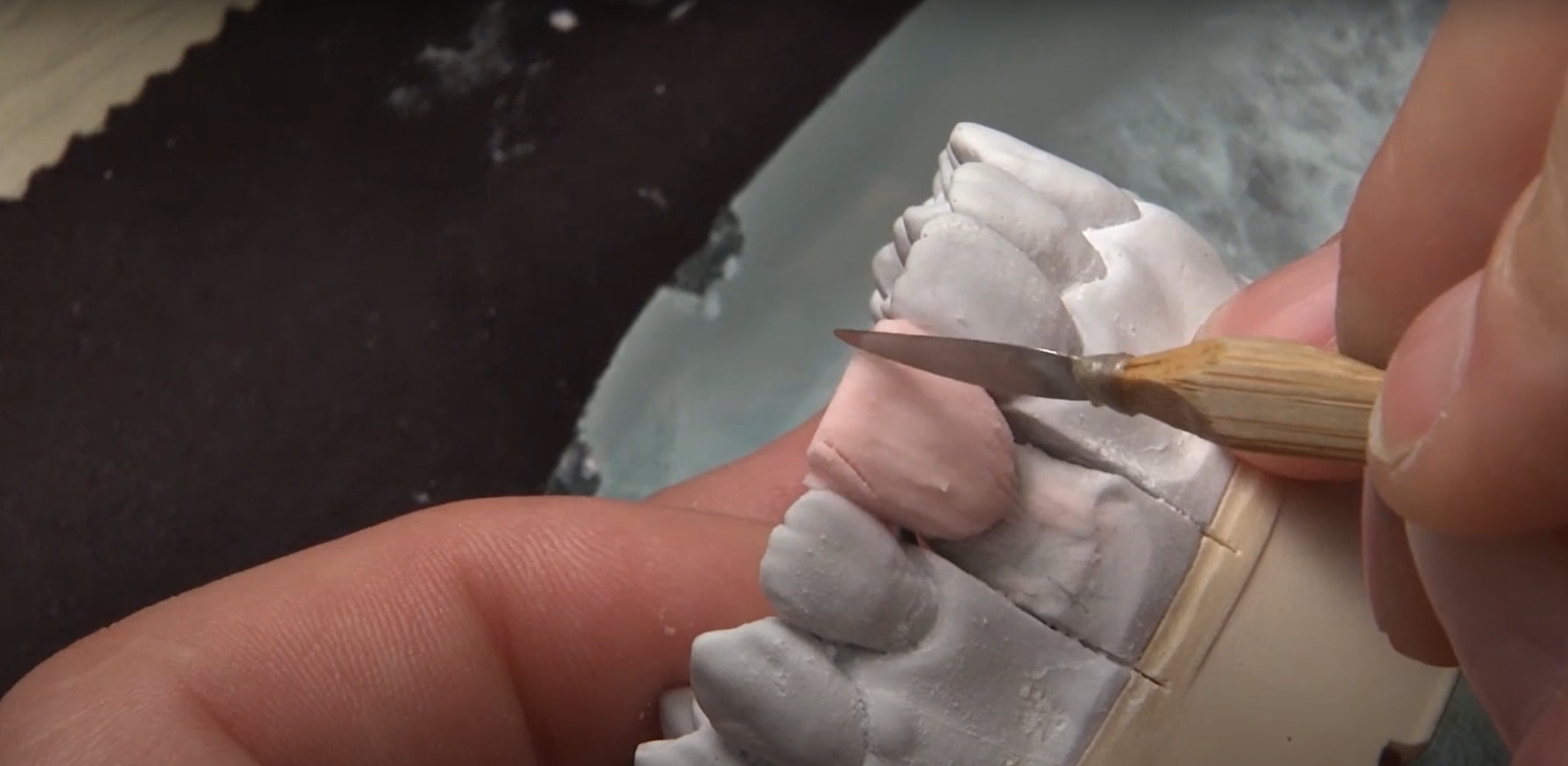
Checking the restoration on the model


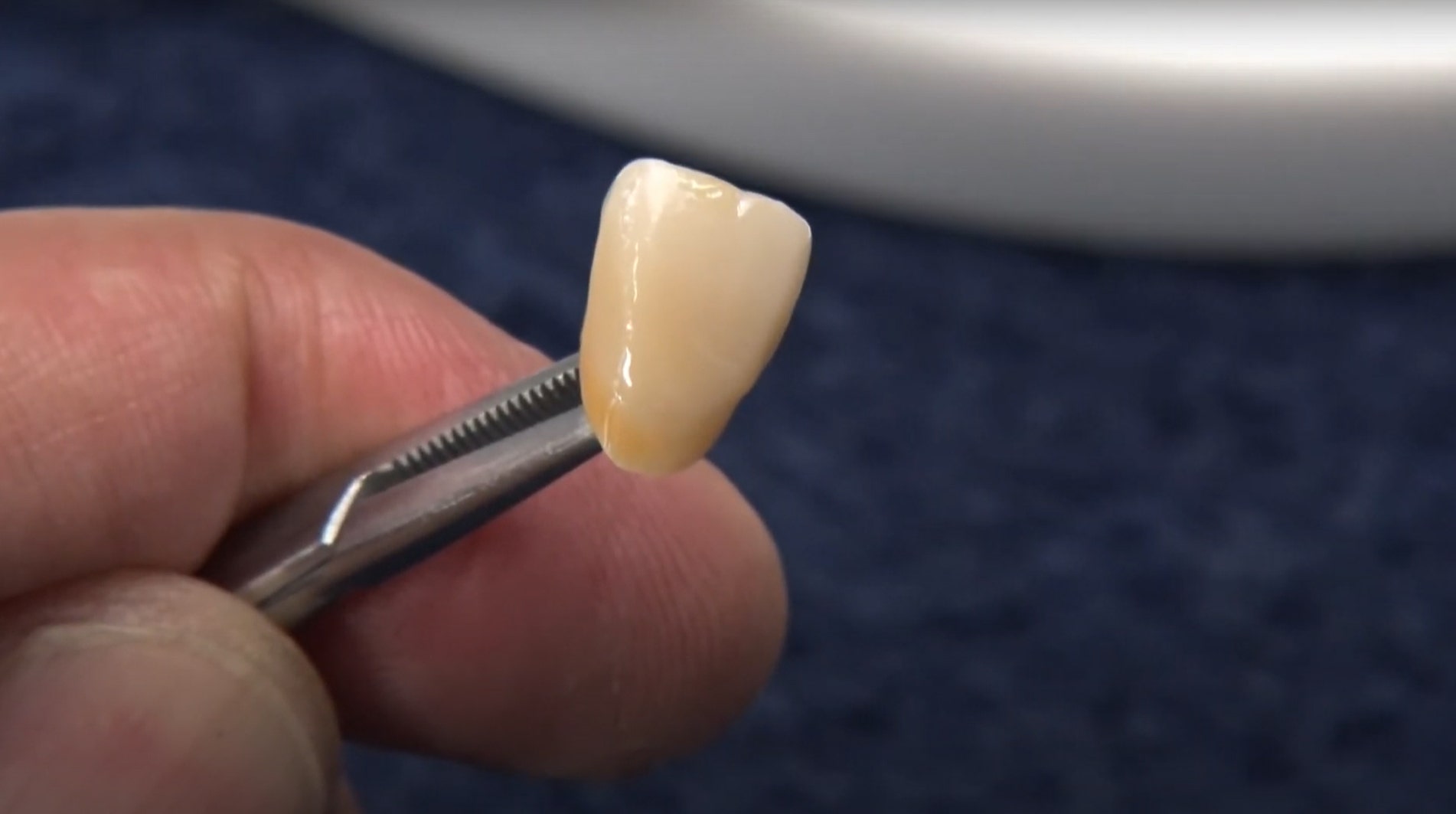
Final situation


Ceramist:


MDT Shigeru Adachi, Cusp Dental Supply Co. Ltd

MDT Adachi is a promising ceramist of the new generation, who has been working for Cusp Dental Supply Co. Ltd. since 2013. He received the Award of Excellence 2018 at QDT TECHNICAL CONTEST.


April, 2013 - Present
Working for Cusp Dental Supply Co., Ltd.
March, 2013
Graduated from the Osaka Ceramic Training Center
April, 2009 - March, 2011
Worked for Tsuruga Denatal Laboratory
March, 2009
Graduated from the Aishi Dental Technician College


MDT SHIGERU ADACHI USED KATANA™ ZIRCONIA HTML AND CZR FC PASTE STAIN FOR HIS CASE STUDY


Clinical case - Central incisor veneers with PANAVIA V5

By Irfan Abas
Dental implantologist & restorative dentist

Irfan Abas is a specialist in the field of oral implantology & restorative dentistry and an international speaker on the subject. He has given more than 20 presentations, workshops and live surgery courses throughout the world. TP - a dutch dental magazine, of which he is also editor, has published multiple articles under his name. Another highlight is a publication in the NTvT, in collaboration with Prof. Gert Meijer (Radboud UMC), under whose supervision Abas successfully completed the four-year postdoctoral training Reconstructive Dentistry in 2014. He is also an instructor and lecturer for the AAIE and chair of MINEC Netherlands. Irfan Abas has his own practice in Bussum, the Netherlands (tandartsabas.nl).

A healthy 42 year-old male patient requested reconstruction of his central incisors, which were badly worn.

Pre-Treatment

After producing the mock-up, grooves were prepared through the mock-up.

To fit two lithium disilicate veneers, a preparation of 1 mm was required. After removing the mock-up, the preparation was perfected.

Checking the space using a silicone mold.

Definitive preparation (frontal)

Temporary veneers made from temporary resin based material (Protemp)

Spot-etching before bonding the temporary veneers in place.

A small amount of flowable composite applied to the etched surfaces.

Light curing the entire surface of the temporary veneers.

Finished temporary veneers.

The veneers constructed by the dental technician.

Checking the fit of the veneers

Rubber dam fitted to enable controlled adhesive cementation.

Etching with 35% phosphoric acid K-Etchant Syringe for 10 seconds.

Treatment with selfetching primer PANAVIA™ V5 Tooth Primer (left on for 20 sec.)

Etching of the lithium disilicate veneers with hydrogen fluoride.

Clearfil Ceramic Primer Plus MDP-silane primer applied to the veneers.

Veneers secured to a placement instrument before definitive cementation

PANAVIA V5 Paste applied to the inner surface of the veneer.

PANAVIA V5 Paste spread over the veneer.

Veneer fitted and excess removed.

Light curing (minimum 10 sec.).

Immediately after the adhesive cementation with PANAVIA V5.

Immediately post-op.

Immediately post-op.

Two months post-op.

One year post-op.

One year post-op.

Interview: “The future of dentistry will be digital”

As the operator of his own dental practice in the German town of Laer and a member of the Digital Dental Academy in Berlin, Dr Hendrik Zellerhoff is clearly a very busy man. Fortunately, his integration of Kuraray Noritake Dental’s KATANA Zirconia Block into his daily workflow means that he is able to deliver high-quality restorations to his patients faster than ever. In this interview, Dr Zellerhoff explains how he uses the block and how his patients have responded to it.

Dr Zellerhoff, can you tell us a little bit about your background as a dentist?
In 2003, I began working as an assistant and at this time I worked with the CEREC system, a system for which I am now a certified trainer. In 2005, I opened my own dental practice in Laer, which I continue to operate to this day.

When did you first begin to work with Kuraray Noritake Dental’s range of products?
I think it was about four or five years ago that the laboratory that I worked with told me how good Kuraray Noritake’s KATANA Zirconia discs were for sintering and fabricating full-zirconia crowns. At that point, however, I was only looking for materials that would work with CEREC, and so it wasn’t until early 2018, when I went on a course in Leipzig in Germany where the KATANA Zirconia Block was being demonstrated, that I really saw how I could use this product in my practice. The block’s integration with the CEREC system means that it is now possible for me to provide high-strength aesthetic zirconia restorations for my patients accurately and quickly.

How frequently do you use the KATANA Zirconia Block during your daily work as a dentist?
I think around once a day, on average. It varies—sometimes I may make restorations for three different patients on one day, and then it’s four days until I use it again. My CEREC is only able to conduct wet milling, however, which is obviously slower than the 15-minute time span made possible through dry milling, and this limits how often I can use it.

What do you like most about this zirconia solution?
For me, it both feels and looks very real, so it has this aesthetic function going for it. Its multilayered, highly translucent appearance definitely helps to achieve more natural-looking restorations. However, the mechanical strength of the material is also something that I like, as it means that it can be used for restorations with thinner walls and sharper margins than those made with glass-ceramics.

With the release of the KATANA Zirconia Bridge Block, do you expect to use this zirconia solution more?
Oh, absolutely! The ability to make aesthetic bridges in the molar area and in a single visit is a revelation to me.

What has the response from your patients been?
They love it! These procedures can be realised on the same day as their initial appointment, and this means that my practice has patients coming from far outside of the small town in which I live. We even get people coming all the way from Switzerland to receive KATANA-based treatments—that’s how positive the response has been.

With this focus on digital dentistry, is there still a role for the dentist as a craftsperson?
I love to work with an entirely digital workflow. If a machine can do something better or faster than I am able to, then that is all right with me. As far as I can see, the future of dentistry will be digital. At the end of the day, the goal stays the same—to provide my patients with results that they are happy with.

Dr Paolo Baldissara: “The KATANA™ Zirconia Block is an extremely promising technology”

With over 30 years of experience as a dentist and researcher, Dr Paolo Baldissara of the University of Bologna in Italy could be forgiven for slowing down a bit. This is far from happening, however, as he continues to be at the forefront of ceramic restoration material developments and their integration into CAD/CAM workflows.


When presenting at a symposium held in Berlin in Germany by Kuraray Europe earlier this year, Dr Baldissara highlighted how the company’s patented multilayered zirconia technology allows the KATANA™ Zirconia Block to effectively mimic the shade gradation of natural teeth. He commenced his presentation by outlining the general shift towards metal-free restorations, which in his opinion has been driven by a number of factors, the high value now placed on aesthetics in dentistry chief among them.


“I began using zirconia back in 2005 for prosthodontics in my department at Bologna, and it has greatly improved in quality since then,” said Dr Baldissara. “Generally speaking, the shift towards zirconia only started when a high-strength substitute for metal that was able to be processed with CAD/CAM systems with high accuracy became available.”


It was at the 2015 International Dental Show in Cologne in Germany where Dr Baldissara was first introduced to KATANA™ Zirconia UTML and STML, both of which impressed him with their high levels of translucency. “I started to use them almost immediately, mainly in their monolithic form, for research and in clinical practice,” he said. “My opinion of them was very high, as they allowed me to make cost-effective single crowns and multi-unit restorations with excellent aesthetic properties with scattered and diffused light. This is, ultimately, what patients want.”


Dr Baldissara began using the KATANA™ Zirconia Block in 2018 and expressed his excitement with how its high-speed sintering allows for fast processing of restorations. He recommended dry milling for a number of reasons: not only does it allow for the translucency of the zirconia to be maintained, it also helps to avoid contamination from other ceramic powders that may persist in the milling unit. In addition, he encouraged attendees to frequently replace the burs of their milling units for optimal results and reduced risk of chipping.


“Dry milling and high-speed sintering of the KATANA™ Zirconia Block is an extremely promising technology,” said Dr Baldissara. “In my opinion, it is the correct way to make aesthetic and mechanically strong restorations for the patient.”

Steve Meeze: Passion for Dentistry

Steve Meeze on the passion for dentistry

Steve Meeze definitely has it: a passion for dentistry. Yet, there was a time when he was unhappy in his job as a dental practitioner. Fundamental changes were necessary to lay the foundations for finding personal fulfillment in his work. We spoke to him about his motivation to do things differently and about the path he has chosen and is following down to the present day.


Many students of dentistry would like to run their own dental office one day. For you, this dream came true, but you ultimately decided to take a different path. Why did this change seem necessary?


After graduation in 1983, running my own dental office seemed to be a great plan: I wanted to be independent, grow my patient base, and become successful, which went very smoothly in the beginning. This economic success, however, did not protect me against starting to feel unhappy and burned-out after several years. Once I began to take my negative emotions seriously and to search for the underlying causes, I realized that is was not merely the workload that troubled me. The truth was that I was missing a sense of purpose in many of my daily tasks. This seemed to be the reason for my lack of energy and motivation to proceed with what I had started. Luckily, I was able to find my personal “why” after some time.


Where did you find your own fulfillment or sense of purpose?


I ultimately found it in the field of conservative dentistry. The reason is that direct restorative treatments with composite allow me to do amazing things in a non-invasive or minimally invasive way. Doing no harm and always being able to go back simply feels good, and my patients are incredibly grateful for what I do. Their gratitude is my reward. This is why I decided to dedicate myself exclusively to treating patients with composite.


How do you do this?


In 2009, I sold my own dental office and started working in different practices in Flanders. In this process, I established some highly valuable partnerships with colleagues, who appreciate my skills and refer their patients to me mainly in the course of interdisciplinary treatment. These orthodontists or surgeons need someone who puts the finishing touches to their work. And this is exactly what I do: I create a beautiful smile at the end of an often complex treatment. Other patients approach me on their own accord with fractured or misshaped teeth and the desire for esthetic improvement. In any case, I listen to them carefully before I start planning. Knowing what is on their minds, I can treat them with confidence. The most precious moment for me is when I hand over the mirror and let them evaluate my work. Their positive reaction, the glint in their eyes is what motivates me every day.


Is there a specific technique you use in your daily work?


Yes, I use the Light Facing Concept I developed to solve esthetic issues in the anterior region. This technique focuses of creating a harmony without the need to sacrifice large amounts of healthy tooth structure. With this concept, a fractured anterior tooth, for example, is restored in three steps: Initially, a single dentin shade of composite of the same color as the fractured tooth is used to create the desired tooth shape and make the fracture line disappear. In this step, shade selection is independent of the final color I would like to reach. Subsequently, I correct the color with an opaque material and try to match the shade of the adjacent teeth as exactly as possible. If necessary, I create mamelons and other individual characteristics in this layer. The final step is carried out on all anterior teeth whenever the appearance of the treated tooth differs from the others: A light facing – i.e. a very thin layer of more or less translucent composite – is added to mask the differences. In cases with minimal shade differences, a composite with a high translucency is used, while a more opaque material is preferable whenever the differences are more apparent.


What is your preferred material for the Light Facing Concept?


My personal experience shows that the best results are obtained with CLEARFIL MAJESTY ES-2 Premium composite from Kuraray Noritake. It simply offers the best mimetic (chameleon) effect of all composite materials I have tested so far, and I have tested many of them. The material tends to blend in with the surrounding tooth structure, and only four shade combinations are usually sufficient to cover the whole range of my patients’ tooth shades. I love this virtually magical effect!


What is your personal conclusion?


When I made the decision to start doing what really makes me happy, I could not be sure that I had chosen the right path. Retrospectively, I know that giving up my present career and taking steps towards personal fulfillment has been exactly the right thing to do. I love the fact that I can satisfy my patients’ desires without sacrificing healthy tissue, and my Light Facing Concept implemented with MAJESTY ES-2 make it easy for me to obtain the results they have been dreaming of.


CASE EXAMPLES

Fig. 1 : Case example: Color change with composite – initial clinical situation.

Fig. 2.: Case example: Color change with composite – treatment outcome.

Fig. 3: Case example: Shape correction with composite – initial clinical situation.

Fig. 4:  Case example: Shape correction with composite – immediate treatment outcome.

Kiyoko Ban, Technical Consultant at Kuraray Noritake Dental, talking about the development of Noritake Super Porcelain AAA. The product

An interview with Ms. Ban - 30 years of dental ceramics development.

The development of ceramic dental materials has a long tradition at Noritake Co., LIMITED (Noritake). It started in 1978, when Kiyoko Ban, who is a Technical Consultant at Kuraray Noritake Dental today, was a member of the teaching staff at the Tokai College of Dental Therapy in Nagoya, Japan. There, she trained her students in producing porcelain-fused-to-metal (PFM) restorations, and encountered the problem of porcelain fractures and cracks that often occurred after the firing process. Her desire to solve this problem resulted in the first dental porcelain development project at Noritake.
Image 1: Kiyoko Ban, Technical Consultant at Kuraray Noritake Dental, talking about the development of Noritake Super Porcelain AAA.

Failure analysis
Kiyoko Ban gives an account of her early activities: “I received many inquiries from dental technicians on why cracks occurred inside veneering porcelains of PFM during firing. I wanted to find out what was causing this problem. Hence, I started analyzing the available materials and manufacturing procedures. In the course of my research, I concluded that in order to obtain better results, it would be necessary to develop a new porcelain material with fundamentally different physical properties. The reason was that the physical properties of the
available porcelain materials were unstable. One problem was that the coefficients of thermal expansion of the porcelain were changing under varying firing conditions, and sometimes fluctuated even if the firing temperature remained constant. Due to the differences in the coefficients of thermal expansion of the metal framework and the veneering porcelain, high stresses inside of veneering porcelain were generated, which ultimately led to the observed cracks.”

Joining forces with Noritake
For support in her research, Kiyoko Ban approached a leading expert in the measurement of residual stress in ceramics, Dr. Hiroshi Inada. He was the Manager of the Research & Development Department at Noritake. Together, they decided to initiate a
joint development project. In the first phase, the market research was conducted in order to define the project aims. “We found that there were three factors that troubled dental technicians fabricating PFM restorations: cracks and fractures in the porcelain layer, limited reproducibility of the natural tooth colors and yellowish discoloration caused by silver in the framework material. Consequently, we decided to develop a crack-free material that was resistant to yellowish discoloration and matched the colors of natural teeth by offering a tooth-like fluorescence,” states Kiyoko Ban. She continues: “The first steps in the development process were relatively easy. We soon were able to ensure constancy of the coefficient of thermal expansion. The most complicated part, however, was to develop different material shades. As understanding and reproducing tooth color is a highly complex task, we collaborated with dentists and dental technicians. They evaluated the optical properties of our trial formulations and helped us improve them until they were satisfied with the outcomes. This process took us three years and finally resulted in the 16 material shades launched in 1987.”

Image  2: The product launched more than 30 years ago: Noritake Super Porcelain AAA.

The name – Noritake Super Porcelain AAA – was suggested by the former Vice President of Noritake and at that time Managing Director, Motoki Nawa. It refers to the three basic needs it satisfies, and expresses that the product aim for becoming class A. Noritake Super Porcelain AAA became available in Japan, where Morita Corporation became the distributor. Soon, a network of instructors was established and training courses were offered to ensure technicians would use the product in the best possible way. Within a very short time, the product got a market share of approximately 30 percent. At this time, Noritake Super Porcelain AAA also started to conquer overseas markets (where it was given the product name Noritake Super Porcelain EX-3). Until today, many dental technicians around the world favor the porcelain material.

Additional shading options
One of the instructors who taught the use of the material worldwide was Hitoshi Aoshima, a representative of Perla Aoshima. He was famous for his excellent technique in the fabrication of porcelain restorations. Kiyoko Ban approached him at the 15th anniversary symposium of the international journal of dental technology in Tokyo in 1988, and initiated what would soon become a fruitful collaboration: “I decided to visit him in his laboratory soon after our meeting and provided him with a complete Noritake Super Porcelain AAA kit. One month later, during my second visit, he suggested developing porcelain stains, which do not generate air bubbles during the firing process even when you stain inside the veneering porcelain. This would enable dental technicians to imitate the complex color of natural teeth easily. We started working on the project immediately. With the support of Hitoshi Aoshima, our efforts came to fruition, resulting in the introduction of the product Internal Live Stain.”

Eyeing the next step: Research into zirconia
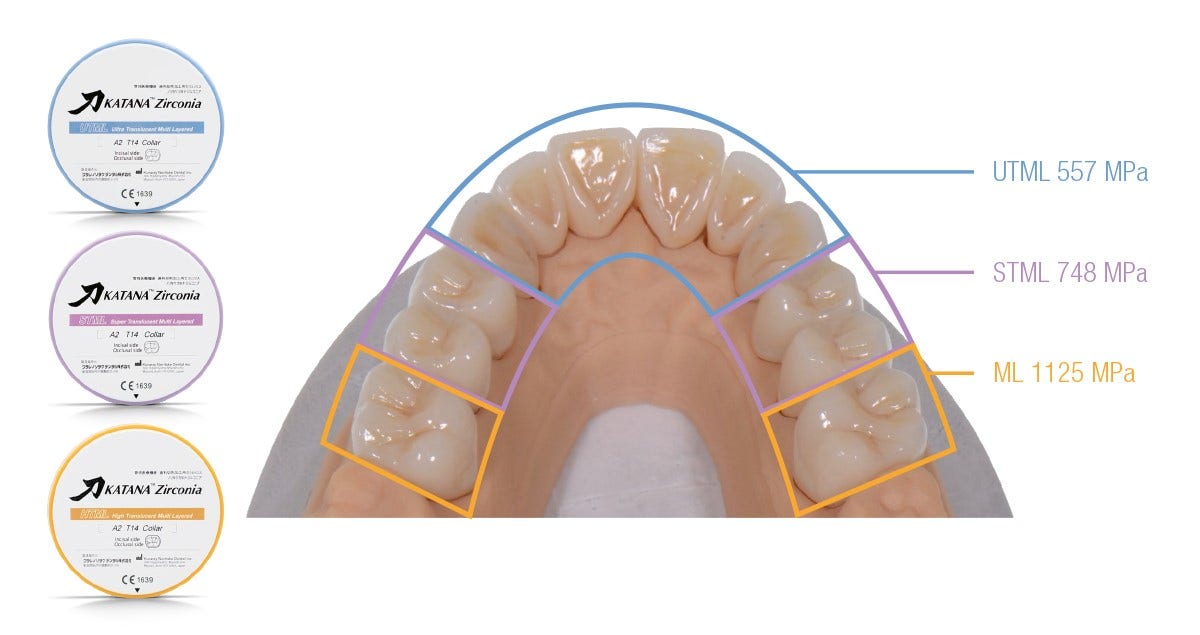
With the growing interest of dental technicians in porcelain materials, Kiyoko Ban was moved to predict that in the future, ceramics would evolve to become the preferred restoration material. She began investigating suitable ceramics and mmanufacturing technologies. In November 1998, Noritake’s Development Division and Noritake Dental Supply initiated a joint project to develop a new dental zirconia. “As a ceramics company with 15 years of experience in the field of industrial zirconia, Noritake foresaw that zirconia was going to be the next leading dental material. Consequently, we started developing the raw materials. Thanks to our high level of know-how in ceramic materials, we were soon able to present a new dental zirconia having less deformed after sintering. We observed the material trends and market needs for a while, and finally decided to go for finer esthetic properties and develop multi-layered disc. The product – KATANATM Zirconia ML – was introduced at the International Dental Show 2013 in Cologne, where it made a spectacular debut. The product received worldwide recognition. Today, three variants of the multi-layered discs are available. They offer different levels of flexural strength and translucency to meet the requirements oof various clinical situations.

Image 3: Launch of KATANA™ Zirconia ML at the IDS 2013.

Towards the future
More than 30 years after its launch, Noritake Super Porcelain AAA is still the product of choice for many ceramists around the globe. “With satisfied users in approximately 100 countries, I am happy to conclude that we have succeeded in developing a PFM porcelain that is virtually trouble-free,” says Kiyoko Ban. “Due to the success of the development projects, so far, in the field of dental ceramics, we are highly motivated to keep on developing new products that satisfy the needs of dentists, dental technicians and patients alike.” Kiyoko Ban, Kuraray Noritake Dental’s Technical Consultant, is still working hard to help enhance treatment outcomes in dentistry and contribute to an improvement of oral health.

The universal alternative to cleaning with phosphoric acid

Phosphoric acid is not only used for etching enamel and dentin surfaces within dental bonding procedures, but also frequently as an intra- and extra-oral cleaning agent for tooth structure and dental restorations. But is phosphoric acid always the right choice?


Direct Restorations

Many bonding procedures are performed using self-etch adhesive systems. When applied to the prepared tooth surface, the acidic monomers in the primer and/or the bond partially remove and modify the smear layer, resulting in a thin hybrid layer. A substantial amount of hydroxyapatite crystals remain on the slightly etched surface, enabling both chemical and mechanical adhesion between the adhesive and the dental tissue. If the bonding surface in the cavity is contaminated e.g. with blood or saliva, and phosphoric acid is applied for cleaning and decontamination, it etches the tooth structure, too, resulting in the removal of HAp. This will prevent the desired chemical adhesion, between the bonding system and the tooth, which may lead to compromised bond strength. Hence, cleaning with phosphoric acid may have a negative effect in this context and cannot be recommended.


Great cleaning results with no negative effect on the performance of the dental adhesive are obtained with the universal cleaning solution KATANA™ Cleaner. It contains an MDP salt of triethanolamine (MDP-TEA), as well as 'free' MDP. With a pH of 4.5, KATANA™ Cleaner is essentially neutral, meaning that, unlike phosphoric acid, it does not remove hydroxyapatite from the tooth. However, it does still effectively eliminate any saliva and/or blood contamination.


Indirect Restorations

For materials containing glass, such as lithium disilicate and feldspathic porcelain, phosphoric acid is a tried-and-tested agent for removing contamination, such as deposits produced when etching these materials with hydrofluoric acid. However, routine use of phosphoric acid to remove contamination from indirect restorations may not be wise. In fact, its use on zirconia is not recommendable, as it could inhibit the desired chemical adhesion of phosphate monomers in the bonding agent to the surface of the zirconia restoration.


When cementing prosthetics using self-adhesive resin cements like PANAVIA™ SA Cement Universal or cements that use self-etching primers (e.g. PANAVIA™ F2.0 or PANAVIA™ V5), the use of phosphoric acid on dentin is not recommended for the same reasons as in the case of direct restorations.


No pitfalls, no restrictions

Unlike 35% phosphoric acid, KATANA™ Cleaner is a product that cleans reliably without inducing negative side effects – independent of the type of tooth structure, kind of restorative material and planned bonding procedure. Hence, it is a universal cleaning solution that allows you to streamline your procedures.