No Author Selected

3-Unit anterior maxillary bridge

Case by Dr. Kristine Aadland.


Fig. 1. Preparation.


The patient’s old PFM bridge (shown here) was removed, and the existing preps for teeth #6 and #8 were modified with a medium chamfer with smooth and rounded edges to accommodate a 3-unit KATANA™ Zirconia bridge. There was no abutment for tooth #7, as that space serves as the pontic. Tooth #9 was similarly prepared to receive a single-unit KATANA™ crown.


Fig. 2. Define Restorations.


To begin, each restoration type is defined in the CEREC software, as the design mode (Biogeneric Individual), material type (KATANA™ Zirconia Block), and milling device (CEREC MC XL).


Fig. 3. Digital Impression.


A digital impression of the upper arch was performed using CEREC Primescan.


Fig. 4. Restoration Design.


The patient did not like the size of her centrals and wanted them smaller. She also didn’t like that her smile was slanted/canted. While designing, it really helps to use the patient’s old smile as a reference. This is why I used Bioindividual when designing the restorations, and added a BioCopy folder in the acquisition screen. I can ghost over the previous smile and readily see where I am.


Fig. 5. Restoration Design: Occlusal.


The BioCopy design function is also utilized to ensure a correct occlusal profile.


Fig. 6. Milling.


A KATANA™ Zirconia Block for bridge (14Z L) was used for the 3-unit bridge, and a KATANA™ Zirconia 12Z single-unit block was used for the single crown. The bridge block mills out in about 18 minutes, which is the fastest-milled chairside bridge block currently available.


Fig. 7. Characterization & Sintering.


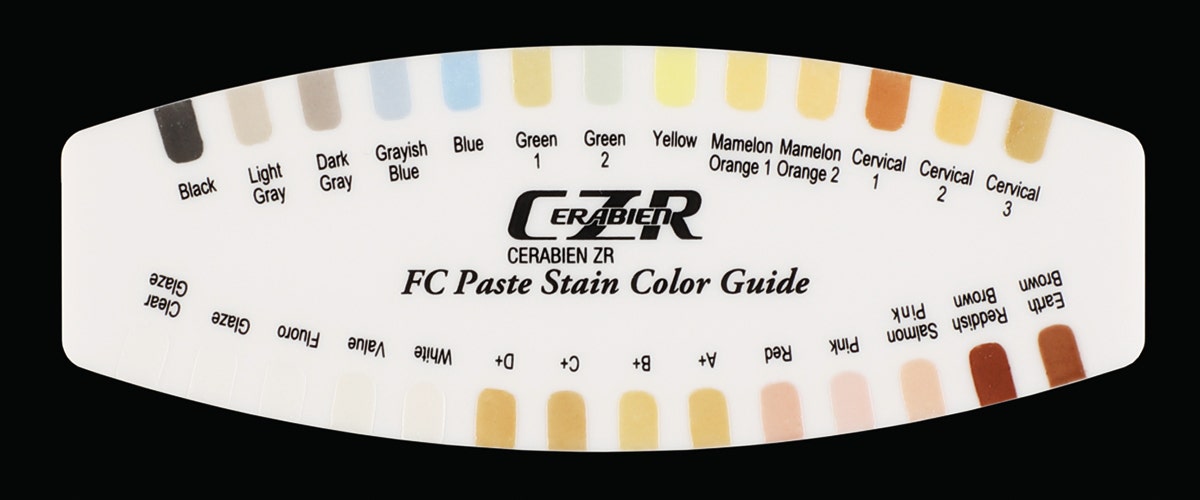
Kuraray Noritake CERABIEN™ ZR FC Paste Stain and Glaze Kit was used for characterizing. The colors are very natural and it is not simply a metal oxide like other stains, but actually adding porcelain, giving the restorations more vitality. The oven cycle is quick at approximately 10 minutes, which means multiple fires are easy to do without excess time.


Fig. 8. Seating & Final Smile.


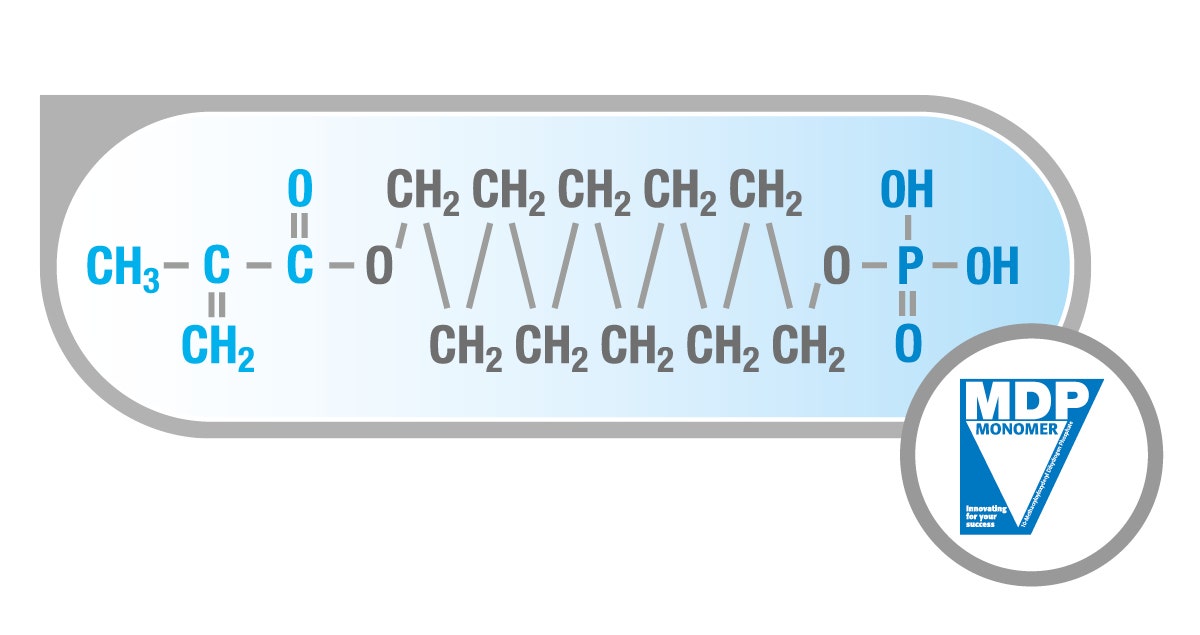
PANAVIA™ SA Cement Universal and CLEARFIL™ Universal Bond Quick were used for cementation and bonding. I love the ease of use and clean-up with PANAVIA™ SA Cement Universal, and its MDP monomer creates a strong chemical bond to the tooth structure and zirconia. CLEARFIL™ Universal Bond Quick has a quick technique without reducing bond strengths, releases fluoride and has a low film thickness. I simply rub CLEARFIL™ Universal Bond Quick into the tooth for a few seconds and air dry. There is no need to light-cure, since it cures very well with PANAVIA™ SA Cement Universal. The patient was very happy with the results. She loved that she no longer saw metal margins, and her smile was much more uniform and lifelike.


DR. KRISTINE AADLAND


Recordings 03-07-2021 - YML Symposium Video Recordings

Virtual Kick-Off KATANA Zirconia Symposium


Lecture 1 of 3, Prof. Dr. Beuer
Watch how Prof. Dr. Beuer explains his experience with the new material. Two in one: Combining High Strength and High Translucent Zirconia.


Lecture 2 of 3, MDT Rondoni + MDT Rossi
Watch the recording of the KATANA Zirconia YML Online Symposium on July 3rd 2021, the second lecture plus hand-on which details the experience of MDT Rondoni and MDT Rossi with this new material.


Lecture 3 of 3 + Q&A, MDT Nondas Vlachopoulos
Mister Vlachopoulos deepdives in to a full procedure executed with the new material and demonstrates how liquid ceramics compliment the material establishing a very high-end aesthetic result.


YML VERENIGT DE UITSTEKENDE EIGENSCHAPPEN VAN KATANA™ ZIRCONIA IN ÉÉN PRODUCT

YML verenigt de uitstekende eigenschappen van Katana™ Zirconia in één product


“ KATANA™ ZIRCONIA YML IS ONS ANTWOORD OP DE WENSEN VAN ONZE KLANTEN”


De familie KATANA™ Zirconia van meerlaagse CAD/CAM blanks is uitgebreid met een nieuw product: KATANA™ Zirconia YML (yttria multi-layered). Dit nieuwe materiaal bevat meerdere lagen met verschillende niveaus van chroma en translucentie én verschillende concentraties yttria in elke blank. Twee experts van de afdeling R&D van Kuraray Noritake Dental in Japan, Atsushi Matsumoto en Yuta Tajima, leggen uit wat deze nieuwe disc zo bijzonder maakt. “Met KATANA™ Zirconia YML kunnen klanten alle mogelijke restauraties vervaardigen uit één disc, van enkele kronen tot volledige bruggen.”


Kuraray Noritake Dental biedt al een breed programma van zirkoniummaterialen aan, waarmee vrijwel alle indicaties zijn afgedekt. Waarom besloten jullie om nóg een tandheelkundig zirkonium te ontwikkelen?


“De KATANA™ Zirconia-serie wordt inderdaad erg gewaardeerd door tandartsen en tandtechnici. De gebruikers waarderen vooral de opmerkelijke sterkte van
KATANA™ Zirconia HTML (High Translucent Multi Layered), de uitgebalanceerde esthetische- en sterkte-eigenschappen van STML (Super Translucent) en de hoge mate van translucentie van UTML (Ultra Translucent). Hoewel de afgelopen tijd veel nieuwe zirkoniummaterialen op de tandheelkundige markt zijn gekomen, horen we van onze klanten een grote vraag naar een meer universeel materiaal dat de uitstekende eigenschappen van alle varianten van KATANA™ Zirconia verenigt in één product. Met dat product zouden de klanten dan alle mogelijke restauraties kunnen vervaardigen uit één disc, van enkele kronen tot volledige
bruggen. Dit met behoud van de hoogwaardige esthetische en mechanische eigenschappen voor zowel anterieure als posterieure restauraties. De uitvinding van KATANA™ Zirconia YML is ons antwoord - als bedenkers van de KATANA™ Zirconia-serie - op deze wensen van onze klanten.”


Wat is het belangrijkste verschil tussen KATANA™ Zirconia YML en de overige producten van de multi-layered serie KATANA™ Zirconia?


“Alle lagen van KATANA™ Zirconia UTML, STML en HTML zijn gemaakt van dezelfde samenstelling op poederbasis en bieden dan ook dezelfde sterkte binnen de gehele blank. Afhankelijk van de specifieke eisen dienen de gebruikers het meest geschikte materiaaltype te kiezen: hoogsterk zirkonium óf een hoogtranslucente variant. KATANA™ Zirconia YML is een alles-in-1 zirkonium dat geschikt is voor elke casus; het bestaat uit een hoogtranslucente glazuurlaag, een tussenlaag die garant staat voor uitgebalanceerde sterkte, translucentie en kleur, en een hoogsterke bodylaag. De voor dit product gebruikte grondstoffen zijn exclusief voor YML ontwikkeld en geproduceerd door Kuraray Noritake Dental. Opnieuw zien we hier een mijlpaal in de geavanceerde productontwikkeling
van KATANA™ Zirconia.”


Wij hebben talrijke verzoeken van onze klanten
ontvangen voor een universeler materiaal.


In het algemeen worden de momenteel beschikbare zirkoniummaterialen met ingebouwd sterkteverloop niet erg positief beoordeeld door tandtechnici en specialisten omdat de materialen in het incisale gebied niet sterk genoeg zouden zijn. Dit kan, vooral bij inadequate positionering in de blank, leiden tot fracturen in longspan-restauraties. Hoe gaat Kuraray Noritake Dental hiermee om?


“De huidige multilayer-producten op yttria-basis die momenteel worden aangeboden, stuiten op ingewikkelde beperkingen van de positie van de connector bij uitgebreide ingrepen, bijvoorbeeld full-arch restauraties. Dat komt door het ontbreken van een ideale combinatie van esthetiek en sterkte. Om die uitdaging het hoofd te bieden, heeft Kuraray Noritake Dental uitgebalanceerde hoogsterke en hoogesthetische grondstoffen ontwikkeld, die zijn ingebouwd in de laag tussen de glazuur- en bodylagen. Het resultaat is dat de positionering van de connectors zelfs bij longspan-restauraties heel gemakkelijk verloopt dankzij de uitstekende balans tussen hoogsterke en hoogesthetische eigenschappen. Dankzij de bundeling van deze unieke eigenschappen in ons nieuwe product is het risico van deformatie en breuk uitgesloten.”


Een ander probleem is de vaak duidelijk zichtbare lijn tussen de verschillende lagen met uiteenlopende yttriumoxidegehalten, die na het sinteren zichtbaar wordt als je goed kijkt. Hoe heeft u dit probleem aangepakt?


“Bij Kuraray Noritake Dental hebben we, zelfs voor zirkoniumlagen met een uiteenlopend yttriagehalte, beide gerealiseerd, dus een adequaat verloop van translucentie én onzichtbare transitielijnen. Dit is mogelijk dankzij onze productietechnologie voor meerlaags zirkonium, die gedurende vele
jaren is verfijnd. Hierbij wordt de juiste hoeveelheid gemengd voor de grens van elke laag, zodat transitielijnen doelbewust worden vermeden. Bovendien waren de nieuw ontwikkelde grondstoffen voor de tussenlaag en een nieuw uitgedacht sinterschema sleutels tot succes.”


Hoe is het mogelijk dat er via een sinterprotocol voor verschillende zirkoniumcomponenten binnen de KATANA™ Zirconia YML blank kan worden gewerkt met de kortste sintertijden ooit?


“De mate van krimp tijdens het sinteren wordt bepaald door verschillende factoren, zoals het aantal additieven en de hoeveelheid yttria en alumina en dergelijke. Als de krimpverhouding van elke laag anders is, verschijnen er waarschijnlijk overgangslijnen tussen de lagen, die spanningen in de materiaalstructuur kunnen veroorzaken. Dankzij de nieuw ontwikkelde grondstof voor KATANA™ Zirconia YML kunnen we de krimpverhouding voor alle lagen beheersen en uniform houden, zelfs voor grondstoffen met uiteenlopende yttriagehalten.”


“Het gebruik van in eigen huis ontwikkelde en geproduceerde grondstoffen met uitstekende eigenschappen voor sinteren op hoge snelheid was de belangrijkste
voorwaarde voor de ontwikkeling van het KND-schema voor sinteren op hoge snelheid (54 min. voor restauraties tot 3-unit bruggen), dat beschikbaar is voor alle producten van de KATANA™ Zirconia multilayered serie. Dankzij deze optie wordt de efficiency van het werk van de tandtechnicus verbeterd, en de workflow vereenvoudigd.”


Enamel Layer
To provide high translucency that harmonizes with the anterior teeth.

Body Layer 1
To provide seamless color and translucency towards the Enamel Layer.

Body Layer 2, 3
To provide deep and vivid color while reducing whitening.


Zijn er verschillen in het frezen en bijwerken van KATANA™ Zirconia YML in vergelijking met producten van concurrenten?


“Dankzij de in eigen huis geproduceerde en verfijnde grondstoffen hebben alle KATANA™ Zirconia-producten de juiste hardheid - met minder chipping - tijdens
het freesproces. Ook hebben deze producten na de sinterprocedure een uitstekende weerstand tegen chipping, vooral tijdens heel lastige randaanpassingen.”


Is er nog iets dat KATANA™ Zirconia YML onderscheidt van andere producten met ingebouwd sterkteverloop?


“Ja, KATANA™ Zirconia YML vertoont minder sinterdeformatie dankzij de in eigen huis ontwikkelde grondstoffen, die zijn gebaseerd op een propriëtaire
technologie om de mate van krimp te beheersen. Bovendien bieden wij een brede keuze aan kleuren aan: maar liefst 14 kleuren. Ook dit is een belangrijk aspect voor het realiseren van levensechte restauraties, naast de uitgebalanceerde esthetische eigenschappen van het materiaal en de afwezigheid van transitielijnen. Tot slot zijn er weinig beperkingen voor de ontwerpmogelijkheden van de voorziening, aangezien drie van de vier lagen voldoen aan de
voorwaarden voor een ISO Klasse 5-classificatie.”


Waarom zou een tandtechnicus volgens u KATANA™ Zirconia YML moeten overwegen in plaats van een ander tandheelkundig zirkonium?


Atsushi Matsumoto:

“Tandtechnici kunnen voortaan sterke en esthetische restauraties vervaardigen met slechts één materiaal, namelijk KATANA™ Zirconia YML. Dat vermindert de
voorraden en daarnaast wordt de doorlooptijd aanzienlijk verkort dankzij de mogelijkheid van sinteren op hoge snelheid.”


Yuta Tajima:

“Volgens mij zijn de meest overtuigende eigenschappen de voortreffelijke bakprecisie dankzij de uitgebalanceerde materiaaleigenschappen door alle lagen heen, de beschikbaarheid van een brede kleurkeuze en de fantastische ontwerpflexibiliteit, zelfs bij de vervaardiging van longspan-bruggen. En zeker niet op de laatste plaats; de vertrouwde kwaliteit van het merk KATANA™ en het label ‘Made in Japan’ zijn redenen om dit nieuwe product te kiezen.”


Alle blanks van de KATANA™ Zirconia-serie onderscheiden zich van andere tandheelkundige zirkoniummaterialen vanwege hun bijzonder
fijnkorrelige, dicht geperste microstructuur, die de basis vormt voor een superieure oppervlaktekwaliteit, randstabiliteit en de daarmee samenhangende pasprecisie. Wat is het geheim achter deze uitzonderlijk hoge kwaliteit van de blanks?


“Aangezien we niet bekend zijn met het verband tussen de eigenschappen van randstabiliteit, zoals chipping, en materiaalsamenstellingen, structuren en dergelijke, is het heel lastig om deze vraag te beantwoorden. Er kan een verband zijn met de structuur van de zirkoniumkristallen, de grondstof zelf, het juiste sterkteniveau na voorsinteren of andere kleine factoren die een rol spelen bij het productieproces van de schijven. Uiteraard zijn al deze factoren bij elkaar van belang.”


Wij gebruiken door KND ontwikkelde pigmenten, die een uitstekende
kleurstabiliteit hebben en - zelfs na de laatste sinterprocedure - niet
verflauwen.


Zelfs als de restauratieranden tot een zeer dun profiel zijn afgefreesd, zien we nog steeds gladde randen zonder enige chipping.


Een duidelijk voordeel van de KATANA™ Zirconia-serie is de kleurstabiliteit en kleurenmatch met de ‘VITA classical shade guide’. Waarom is een in eigen huis ontwikkelde toevoeging van additieven en kleurpigmenten in de vorm van metaaloxiden zo belangrijk?


“Wij gebruiken door Kuraray Noritake Dental ontwikkelde pigmenten, die een uitstekende kleurstabiliteit hebben en - zelfs na de laatste sinterprocedure - niet verflauwen. De deeltjesgrootte wordt scherp gecontroleerd. Bovendien heeft ons professionele ‘kleurmengpaneel’, met inachtneming van de meningen van klinisch ervaren tandtechnici binnen en buiten het bedrijf, een pigmentmengsel gerealiseerd dat - zelfs in casussen met verschillende dikten - slechts een geringe kleurverandering vertoont.”


Hoe kijkt u aan tegen de toekomstige ontwikkelingen voor tandheelkundig zirkonium?


“Vanaf de introductie van zirkonium in de tandheelkundige industrie zijn er op materiaalgebied veel grote stappen gemaakt. Momenteel zijn er hoogsterke
zirkoniummaterialen met een lage lichttransmissie op de markt, maar ook laagsterke zirkoniumtypes met een hoge lichttransmissie. Bovendien worden er nu ook laagsterke zirkoniummaterialen met een hoge lichttransmissie aangeboden in gemengde systemen (YML-serie). Ons grootste doel is de ontwikkeling in de nabije toekomst Zelfs als de restauratieranden tot een zeer dun profiel zijn afgefreesd, zien we nog steeds gladde randen zonder enige chipping. van het ultieme zirkonium, met een combinatie van hoge sterkte en dito lichttransmissie; een keerpunt binnen de algemene verwachting van een compromis tussen sterkte
en translucentie bij zirkoniummaterialen.”


Atsushi Matsumoto  Yuta Tajima


Video: Voorpolijsten en glazen van de nieuwe Katana Zirconia YML

Hier zien we de meester aan het werk; geregistreerd tandtechnicus Kazunobu Yamada, bezig met het voorpolijsten en glazen van een kroon die is gemaakt met de nieuwe Katana Zirconia YML disc. Maak kennis met zijn tips en handigheidjes voor de beste resultaten en een hoogesthetische restauratie via de eenvoudige voorpolijst- en glazing-technieken.
 

Video: De nieuwste multi-layertechnologie; Katana Zirconia YML

Wij verwelkomen Katana Zirconia YML als nieuwste uitbreiding van de Katana Zirconia-familie. Deze disc staat met zijn ongeëvenaarde eigenschappen garant voor een revolutionair multi-layered systeem, waarmee u de esthetiek van uw restauraties sterk verbetert. Kijk hoe ook úw tandtechnische laboratorium profijt kan hebben van dit hoogwaardige product! Bekijk de video voor een korte samenvatting van deze verbluffende nieuwe disc.


Video: Stainen en glazen van Katana Zirconia YML met FC Paste Stain

In deze video laat tandtechnicus Kazunobu Yamada zijn benadering zien van het stainen en glazen van de nieuwe Katana Zirconia YML. Kijk naar zijn stapsgewijze benadering om een hoogesthetisch en natuurlijk resultaat te bereiken met de verschillende kleuren van FC Paste Stain.


Educational videos - CERABIEN™ ZR (CZR)

We are pleased to share with you short training videos for CERABIEN™ ZR (CZR) porcelain.


Check out the below working steps and learn more about how to achieve outstanding aesthetics using this tried and proven material.


KATANA™ Zirconia HTML Plus: Refined formula for streamlined procedures and even better outcomes

It is strong, it is pre-shaded like natural teeth, and it is reliable: KATANA™ Zirconia HTML, the highest strength version among KATANA™ multi-layered zirconia series. Now, Kuraray Noritake Dental Inc. has carefully optimized the product to further improve its optical properties and to harmonize the sintering schedules with all other materials of the KATANA™ Zirconia Multi-Layered Series.


The new KATANA™ Zirconia HTML Plus offers all popular properties of its predecessor, including the multi-layered colour structure and uniform strength distribution throughout the blank. It is suitable for a variety of indications including long-span bridges with a minimum wall thickness of just 0.4 mm in the anterior and 0.5 mm in the posterior region. This allows for minimally invasive preparations, while the user may choose between a monolithic, cut-back or framework design combined with the preferred finishing technique.


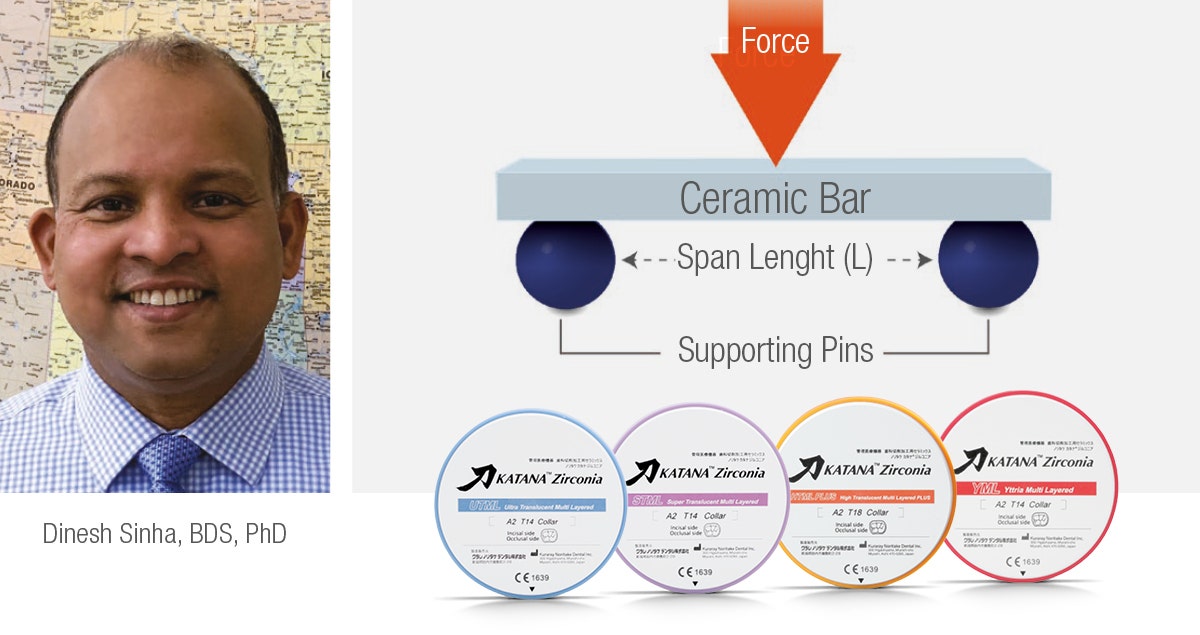
The PLUS refers to additional benefits like the material’s improved optical properties: KATANA™ Zirconia HTML Plus offers an increased translucency of 45 percent (compared to 43 percent KATANA™ Zirconia HTML) and an even more natural shade appearance of the manufactured restorations. “As the colour of the restorations appears deeper, more vivid and more saturated, and the translucency is closer to that of natural teeth, a great optical integration is achieved straight away. This leads to a reduced finishing effort”, says Mathias Fernandez Y Lombardi, EU Scientific Manager Dental Ceramics & CAD/CAM Materials at Kuraray Noritake Dental. At the same time, the high flexural strength (1,150 MPa) is maintained, providing for an unlimited range of indications.


Like its predecessor and all other materials of the KATANA™ Zirconia Multi-Layered Series, KATANA™ Zirconia HTML Plus is the result of an in-house development, powder compilation and blank production process that is able to control every detail. This enabled our specialists to achieve a precise alignment of the desired properties, while maintaining a high blank quality that leads to the accurate milling results with smooth surfaces and regular edges users of KATANA™ Zirconia HTML are familiar with.


The unique powder composition and specific in-house blank production procedure also allowed us to streamline the sintering protocols. For single-tooth restorations and bridges with up to three units, three different protocols are available: a 54-minute high-speed sintering programme specifically developed for remake and rush cases, a 90-minute schedule and the traditional seven-hour sintering programme. The latter is also suitable for long-span restorations.

These three options and identical schedules are available for KATANA™ Zirconia HTML Plus, KATANA™ Zirconia UTML, KATANA™ Zirconia STML and the new KATANA™ Zirconia YML with additional flexural strength and technical translucency gradation. With this feature, it becomes extraordinarily easy to standardize procedures despite an indication-specific selection of the best-suited KATANA™ Multi-Layered Zirconia.


Mathias Fernandez Y Lombardi concludes: “KATANA™ Zirconia HTML Plus is completely in line with our philosophy of developing products that support their users in streamlining and simplifying procedures without limiting choices. Users may choose from a whole range of highly specialized or universal zirconia solutions, may opt for their preferred design and finishing technique, and can select the sintering protocol that suits their individual needs. At the same time, the manual effort is reduced and the risk of starting the wrong sintering programme is eliminated.


KATANA™ Zirconia YML: Three experts classifying a new zirconia

One for all: With KATANA™ Zirconia YML (yttria multi-layered), Kuraray Noritake Dental Inc. has launched a true allrounder covering traditional and new zirconia indications. At the KATANA™ Zirconia YML Virtual Kick-Off Symposium on July 3, 2021, professionals from the clinical and technical field as well as scientific experts from Kuraray Noritake Inc. provided insights into the properties and benefits of the innovation. We had a conversation with three of them about the specific features of KATANA™ Zirconia YML and its potential role in the dental practice and laboratory. Mathias Fernandez Y Lombardi, EU Scientific Manager Dental Ceramics & CAD/CAM Materials, provided insights from inside the company, while Prof. Dr. Florian Beuer MME, Charité – Universitätsmedizin Berlin and MDT Nondas Vlachopoulos, owner of the dental laboratory AestheticLab in Athens, shared their external perspectives.


Prof. Dr. Florian Beuer MME and Mathias Fernandez Y Lombardi during the conversation at the Kick-Off Symposium in Munich.


MDT Nondas Vlachopoulos virtually attended the meeting.


What are the most important features and benefits of the new KATANA™ Zirconia YML?


Mathias Fernandez Y Lombardi: KATANA™ Zirconia YML is a 5th generation zirconia featuring next-generation multi-layered technology: it offers colour, translucency and flexural strength gradation in one disc – for a virtually unlimited indication range. As it may be used as the only zirconia or even ceramic CAD/CAM material in a laboratory or milling centre, it is designed for everyone who would like to simplify and standardize laboratory procedures. It may be sintered within 54 minutes, offers a high accuracy of fit and may be finished using time-saving techniques.


The new discs presented at the KATANA™ Zirconia YML Virtual Kick-Off Symposium.


Multi-layered structure of KATANA™ Zirconia YML.


What are the benefits of using a single zirconia for every indication from the dental technician’s perspective?


Nondas Vlachopoulos: The use of a universal zirconia solution with a high aesthetic potential and well-aligned mechanical properties allows dental technicians to reduce their inventory and streamline their procedures – from designing to finishing. Nowadays, we all know that, in order to optimize the outcomes, it is essential that we develop a deep understanding of a material’s properties, respect its design parameters (like minimum wall thicknesses) and adhere to the sintering protocols. It is much easier to accomplish this for a single material than for many different ceramics, and the potential for errors is minimized with a single-material approach. With KATANA™ Zirconia YML, this approach enables us to produce very different outcomes depending on where the restoration is placed in the multi-layered blank.


What are the benefits of using KATANA™ Zirconia YML as the only ceramic material from the dental practitioner’s perspective?


Florian Beuer: To my mind, the most important benefit of using a single zirconia every time lies in a simplified documentation. When different ceramic materials are used in the dental laboratory, we need to keep track of the material selected in every single case. Only in this way, it is possible to make the right cementation decisions (regarding cement selection and the appropriate pre-treatment of the restoration). In addition, when it comes to failure of the restoration, we need to know which material was used to prove that it has been processed correctly and is suitable for the actual indication. This is much easier when a single material is used every time. Zirconia is predestined for this approach as it is forgiving, supports minimally invasive preparations and – in case of KATANA™ Zirconia YML – almost everything can be done with it.


What are the secrets of KATANA™ Zirconia YML that allow for excellent treatment outcomes despite the one-for-all approach?


Mathias Fernandez Y Lombardi: KATANA™ Zirconia YML is based on a completely new, seamless multi-layer technology combining different, newly developed raw materials with varying yttria concentrations in a single blank. The inhouse development of the powders and their precise adjustment of each other in terms of properties like shrinkage and coefficients of thermal expansion are prerequisites for a smooth transition from one layer to the next. Only if the layers are very well integrated, it will be possible to reliably produce even long-span restorations with a delicate design, perfect fit and flawless aesthetics (without transition lines). The aesthetic properties were also optimized by integrating clinical instead of purely technical translucency.


Please explain the term clinical translucency.


Mathias Fernandez Y Lombardi: Usually, translucency of dental materials like zirconia is measured in its white, pre-shaded state. This so-called technical translucency value is increased by adding yttria to the formulation, which makes the zirconia itself appear brighter (increasing the whiteness). The translucency of the final restoration, however, is also affected by pigments and other additives in the formulation. Consequently, monolithic restorations made of different materials with the same technical translucency value may vary widely in terms of their actual, clinical translucency, which affect the overall aesthetic potential. The formulation of KATANA™ Zirconia YML has been optimized by carefully selecting and combining the right additives to obtain a natural, tooth-like translucency.


Translucency and shade appearance of KATANA™ Zirconia YML (left column) compared to various other 5th generation zirconia materials.


Nondas Vlachopoulos, is this measure of optimizing the clinical translucency a key feature enabling the one-for-all approach of KATANA™ Zirconia YML?


Nondas Vlachopoulos: The positive effect attributed to this measure is noticeable, as KATANA™ Zirconia YML has a particularly warm and natural appearance especially in the body area some other materials with flexural strength gradation are lacking. This leads to an exact colour match with the VITA classical A1-D4 shade guide, and reduces the need for manual shade adjustments. This is important for a one-for-all approach, as the material should be a perfect basis for the production of monolithic restorations, which are not covered by a thick porcelain layer able to mask any imperfections. However, there is another key feature that facilitates the zirconia’s use for virtually every indication: Its exceptional design flexibility. It enables users to control the translucency and overall aesthetics by positioning the restoration quite freely within the blank. For restorations with up to three units, there is a complete freedom of placement. Larger restorations with four or more units need to be positioned in a way that at least 50% of the connector cross-section is in the bottom half of the disc. This is easily accomplished and gives us optimal options to exploit the various properties of each layer depending on the aesthetics and strength needed in each specific case.


Positioning guidelines for KATANA™ Zirconia YML.


What is the recommended finishing procedure?


Mathias Fernandez Y Lombardi: In principle, all designs and finishing options are available for KATANA™ Zirconia YML – from a monolithic design individualized with liquid ceramics to microlayering after a minimal vestibular cutback or even full ceramic layering on frameworks. As the aesthetic potential of the zirconia is already high, however, we believe that in most cases, the first option is absolutely sufficient. In this case, a monolithic restoration is milled and the surface subsequently treated with our liquid ceramic system CERABIEN™ ZR FC Paste Stain. The pastes are easily applied in ultra-thin layers, very well controllable and wear resistant.


Anterior and posterior crown made of KATANA™ Zirconia YML after sintering (left part) and after sintering and finishing with CERABIEN™ ZR FC PASTE STAIN (right part).


Nondas Vlachopoulos, what is your preferred finishing procedure for restorations made of KATANA™ Zirconia YML?


Nondas Vlachopoulos: In the posterior area, I often opt for monolithic restorations individualized with CERABIEN™ ZR FC Paste Stain. The technique leads to beautiful outcomes a large majority of patients would love to see even in the anterior region. However, as orders for the production of anterior restorations coming my way are usually placed by clinicians and patients with the highest possible aesthetic demands, I often go for a framework design and full porcelain layering with CERABIEN ZR Porcelains. The materials (like EX-3 portfolio for metal frameworks) are based on synthetic feldspathic porcelain with a structure and particle distribution very similar to natural dentin and enamel. All in all, I like the fact that I can select the most suitable finishing technique for every individual case, and I believe that it is often possible to reduce the finishing effort to a minimum.


Clinical translucency, design flexibility, mechanical properties: Apparently, the differences between the available zirconia materials – even of the 5th generation – are huge. How can users ensure that the material they select is of high quality and offers favourable mechanical as well as optical properties?


Florian Beuer: When the first-generation zirconia materials appeared on the dental market, laboratory testing revealed that there are huge differences in quality between materials of different manufacturers. Although independent studies comparing the properties and behaviour of 5th generation zirconia are still scarce, it may be assumed that differences do exist. My recommendation is to select a several materials from well-known manufacturers supporting clinical studies, compare the study results already available, and test the selected options in the laboratory setting. Directly comparing design concepts, the processing quality and final appearance will most likely reveal which material is a dental technician’s favourite. I am sure that KATANA™ Zirconia YML is among the materials worth being tested.


Thank you for this insightful conversation.


Special LabLine edition of our “BOND” magazine is available now

The Function that becomes aesthetics


Italian dental technician, CDT Stefano Lograno, demonstrates how it is possible for the medical-technical prosthetic team to adopt a protocol from diagnostics to cementation, in which aesthetics can be functionally guided in a simple, predictable and standardized workflow following the criteria of the gnathological school of Vienna of Prof. Rudolf Slavicek.


Click here to read. Enjoy!


Start Reading: BOND | SPECIAL EDITION | 6/2021


Previous version:

BOND | VOLUME 7 | 10/2020