
Selective Adhesive Luting: A Novel Technique

Selective Adhesive Luting (SAL) is a hybrid technique for universal resin cements. It entails the application of a universal adhesive system only on easily accessible abutment surfaces, enabling simultaneous adhesive and self-adhesive luting in different portions of the abutment. A description of this novel technique and scientific evidence for the achieved effects is provided in this article authored by Prof. Breschi and colleagues from the University of Bologna. Its title:“Selective adhesive luting: A novel technique for improving adhesion achieved by universal resin cements”.


A VERSATILE RESIN CEMENT

PANAVIA™ SA Cement Universal is a universal resin cement that may be applied in the self-adhesive mode – without any additional components – in many clinical situations. It even offers great bonding performance to lithium disilicate without the need for a separate bottle of silane. In-vitro studies have shown that the resin cement is moisture tolerant and versatile, establishing a strong and durable bond to virtually all kinds of restorative materials as well as to enamel and dentin.


ENHANCING THE BONDING PERFORMANCE

On the side of the tooth, however, the best possible bonding performance is obtained by applying CLEARFIL™ Universal Bond Quick as a separate tooth primer. Hence, you may want to settle for this two-component adhesive luting technique in particularly challenging situations. It is still less complex than traditional adhesive luting and produces excellent outcomes.


MOISTURE SENSITIVITY AND WORKING FIELD CONSIDERATIONS

To function properly, however, universal adhesives need a completely dry working field, while self-adhesive resin cements are less sensitive to moisture. Thus, you might wonder which technique is best suited if you need the strongest possible chemical bond to enamel and dentin, but proper isolation with rubber dam is challenging or impossible – for example, because the abutment is short or the preparation margin is in a subgingival position. The solution in this case is termed Selective Adhesive Luting.


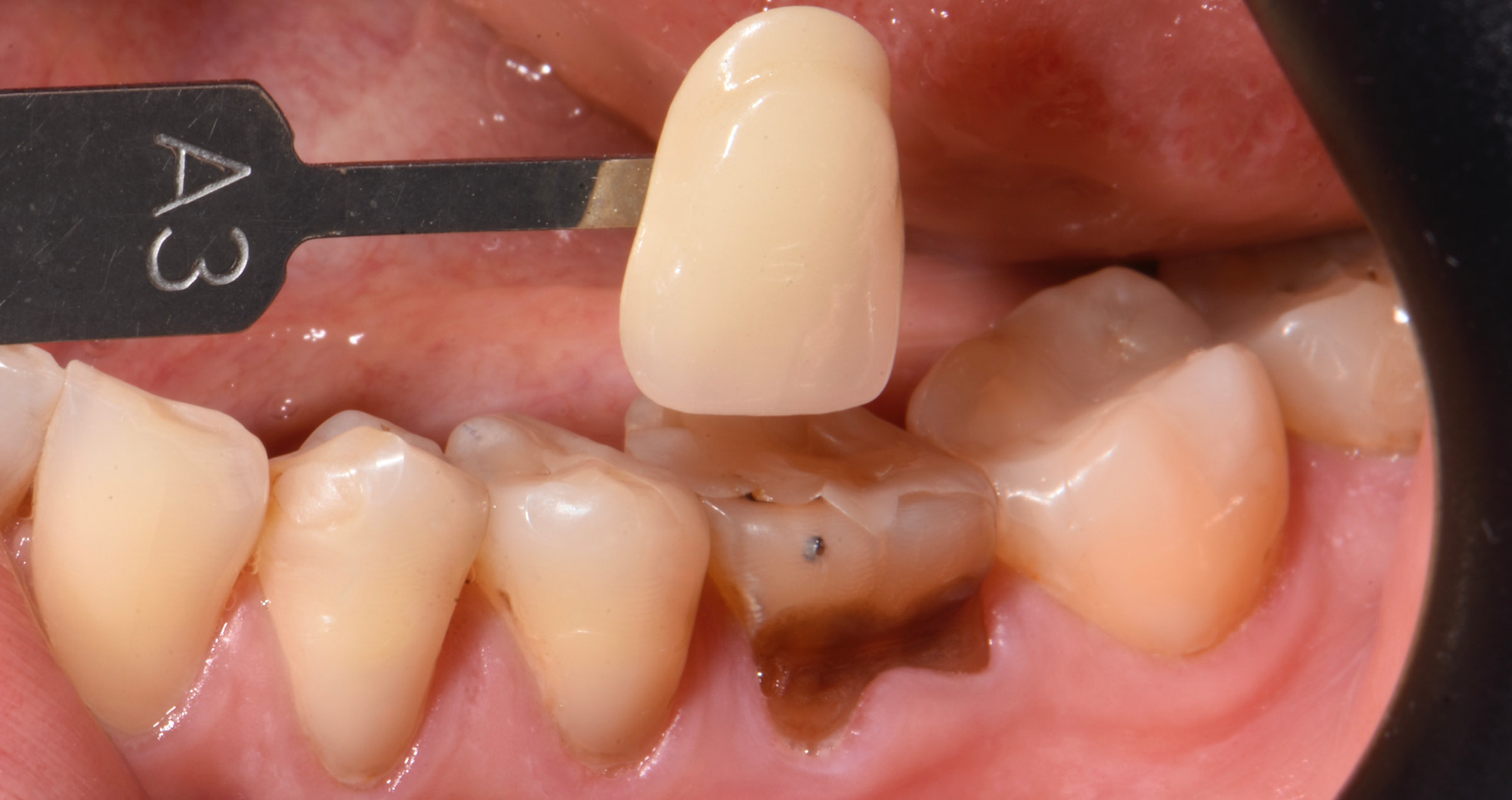
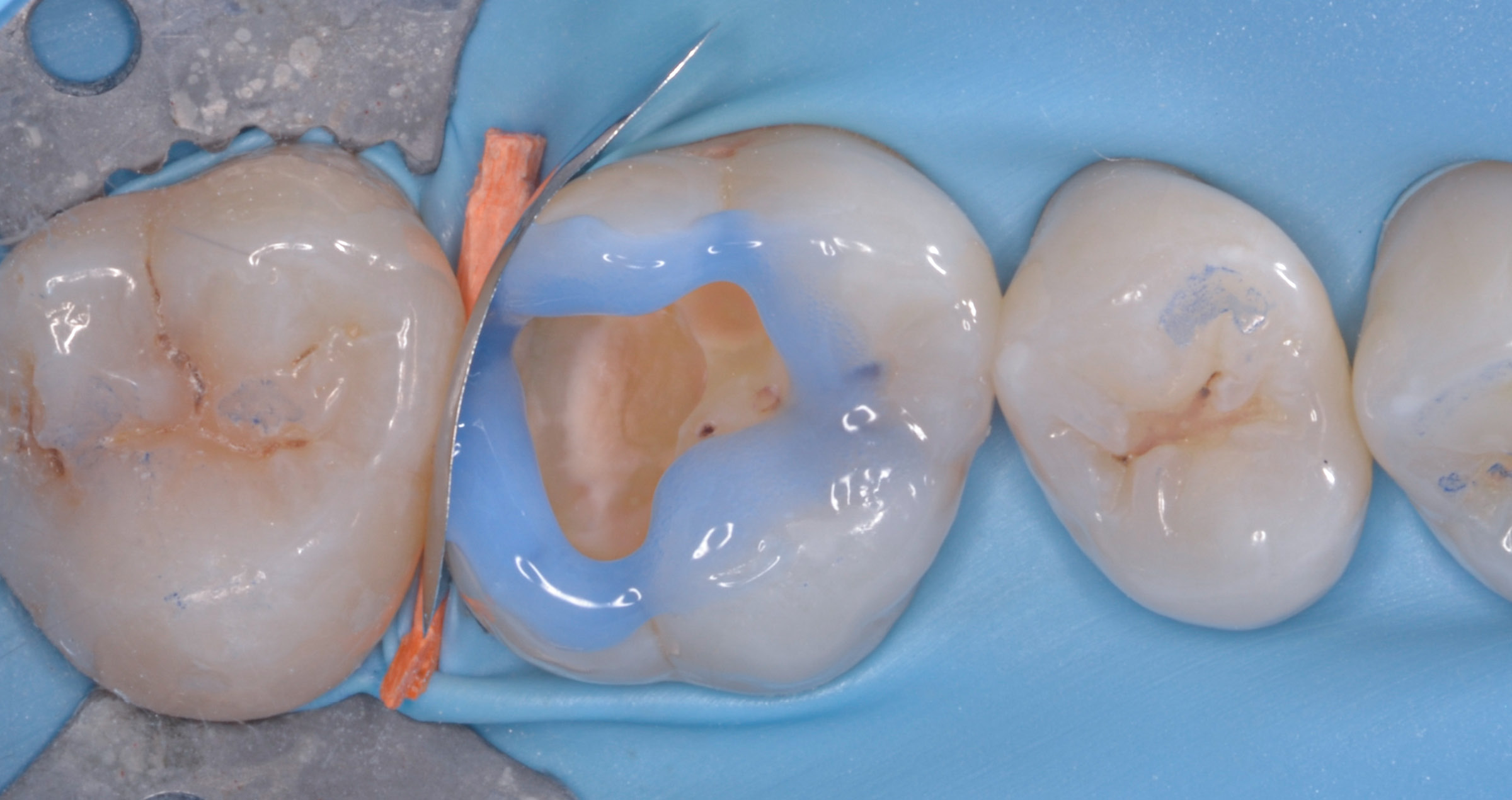
Selective application of a universal adhesive to those areas of etched enamel that are not at risk of being contaminated by moisture.


Flowable Injection Technique. What to do to avoid air bubbles in composite restorations?

Article by Dr. Michał Jaczewski


COMPOSITE RESTORATIONS IN DENTISTRY

Composite restoration is the most common procedure performed by the dentist. There are many restorative techniques and a variety of restorative materials used in dentistry. Regardless of the type of material, the method of restoration and where it is applied, common issue is air bubbles in or at the surface of the composite layers. The composite restoration should be homogeneous to ensure the tightness of the filling and its durability. Repairing bubble defects is tedious and sometimes requires the replacement of the filling or part of it. Depending on the type of composite (flowable or paste composite) and/or the placement technique, the amount of defects may vary, but there are several causing factors.


MATERIAL CHOICE

In the Flowable Injection Technique, we use flowable composites, which obviously flow easily but are also sensitive to incorrect application. The first cause of forming air bubbles is the homogeneity of the material itself. Bubbles can be incorporated in the syringe at the manufacturing stage or during use. By using premium products, we can be sure that the highest quality material is supplied, and that the structure and design of the syringe allows for proper operation to reduce the formation of air bubbles within the material.


IMPORTANCE OF SYRINGE DESIGN 

CLEARFIL MAJESTY™ ES Flow composite is designed to prevent the formation of air bubbles during dispensing. The special design of the syringe and plunger limit the possibility of dripping as well as backflow of the material during or after dispensing.


A unique safety feature inside the syringe is the special O-ring construction which prevents the material from flowing after pressure is released and at the same takes care for minimal retraction but avoiding the plunger from retracting too much.


RETRACTION OF PLUNGER

Another cause of air bubble formation is the incorporation of air into the syringe by deliberate retraction of the plunger. If the practitioner or ancillary staff have a habit of retracting the plunger after administering the composite, they may cause air to enter the syringe. During a following use the air will more than likely show up in the restoration as an air void.


IMPORTANCE OF PRESSURE ON THE INDEX

In the Flowable Injection Technique, we use a silicone index in which we apply the material to build up the tooth. The index should fit tightly to the tooth and should not move or being moved during injection. If it does air bubbles may show up. Pressing and then releasing the index will cause a suctioning effect and pull the composite away from the tooth as well as from the index. To avoid defects, constant pressure on the index should be maintained from the moment the material is injected until polymerisation.


Various modifications of the silicone index can be used to limit its mobility and reduce the risk of uncontrolled pressure on the tooth. Such an example is the index made on the interlip ("one yes one no") model, which provides a very high degree of stability as well as working safety.


WIDTH OF THE INJECTION HOLE

Another cause for getting air in the restoration is the width of the injection hole. If the hole is too tight, the index can be moved by the application tip during insertion or application. To avoid this problem, the hole could be widened to allow free insertion as well as manipulation of the tip during injection. A wider opening also allows any air to escape during dispensing. Most important , however, is to apply the material at continuous pressure and avoiding pulling out and reinserting the tip into the index. This may result in a non-uniform composite layer.


Would you like to know more about Flowable Injection Technique? Read the insightful and inspirational interview with Dr. Michal Jachzewski.


Dentist:

MICHAL JACZEWSKI


Michał Jaczewski graduated from Wroclaw Medical University in 2006 and today runs his private practice in the city of Legnica, Poland. He specializes in minimally invasive dentistry and digital dentistry and is the founder of the Biofunctional School of Occlusion. Here he lectures and runs workshops with focus on full comprehensive patient treatments.


PANAVIA™ Veneer LC: cement for the most challenging esthetic conditions

AWARD WINNING PRODUCT

DENTAL ADVISOR, which annually honors as Top Product or Preferred Products items deemed by the publication’s consultants to deliver the best practice-based performance in their categories, singled out PANAVIA Veneer LC for a Research Award in the Lab Performer: Veneer Cement category in its January/February 2024 edition. This particular award is given to products that performed exceptionally well when tested independently in Dental Advisor Laboratories.


ABOUT THE PRODUCT

PANAVIA™ Veneer LC is a specialized veneer cement designed to provide exceptional bond strength to various substrates, along with outstanding gloss retention and wear resistance. The cement utilizes smaller-diameter spherical filler particles, facilitating easy dispensing from the syringe and excellent flowability for minimal film thickness. All of these attributes contribute to virtually no change in gloss or surface appearance of veneer margins over time.


WHAT WAS RESEARCHED

The basis of PANAVIA Veneer LC’s selection this year was research that compared three esthetic veneer cements, including PANAVIA Veneer LC, for bond strength, adhesion properties, gloss retention, and wear resistance. The investigators’ testing of these attributes reflects the challenges such products must meet – “Ideally, esthetic veneer cements should have a long working time, curing on demand, excellent color stability, and high strength”.


To assess bond strength to multiple substrates, the cements were subjected to six months of artificial aging to dentin, enamel, IPS e.max CAD, and Zirconia using thermocycling. To test wear resistance after toothbrush erosion, the testing method involved measuring depth of wear, change in surface roughness, and change in gloss based on a simulation of about 5.5 years of regular toothbrush use.


EVALUATION RESULTS

The investigators reported that PANAVIA Veneer LC “had the best gloss retention of the three cements tested and a very even wear pattern,” noting further that “having limited surface roughness after toothbrush abrasion can help lower staining and bacterial adhesion.” Overall, they said, “The PANAVIA Veneer LC cement system showed excellent adhesion properties and exceptional gloss retention and wear resistance,” concluding, “Due to its excellent properties, PANAVIA Veneer LC Paste can meet the most challenging esthetic conditions of veneer cementation.”


COMPLETE REPORT

Would you like to read the full report1 shared by Dental Advisor? Download the pdf now!  


ABOUT DENTAL ADVISOR

Awards conferred by US-based DENTAL ADVISOR were originally introduced to help busy practitioners make sense of the numerous new solutions indicated for less invasive techniques and standardized or simplified procedures, ultimately, to achieve better outcomes on a regular basis.


  • To determine items to be named Top Products and Preferred Products, DENTAL ADVISOR conducts practice-based clinical evaluations and product performance tests shortly after product launch. It publishes results annually online in its January/February issue to help potential users identify high-quality new dental materials and determine which among them are best suited to fulfill their individual requirements.


1 Cowen M, Powers JM. Translating the Science: Veneer Cement Bond Strength Durability and Resistance. Dental Advisor. 40:36;2023.


Versatile flowable composite for everyday dental challenges

AWARD WINNING PRODUCT

For the 9th year in a row, CLEARFIL MAJESTY™ ES Flow (Low) has been named a Top Product by Dental Advisor, which announced in its JAN/FEB 2024 issue its choices for dental materials and equipment found to deliver the best practice-based performance based on the publication’s annual review of such products.


ABOUT THE PRODUCT

CLEARFIL MAJESTY™ ES Flow, which is available in three different levels of flowability, was the Top Product honoree in the Direct Restorative Category and was also given Editor’s Choice award for its medium viscosity version - Low.


Rather than limit practitioners to a single viscosity that might not be ideal for all flowable composite indications, CLEARFIL MAJESTY™ ES Flow comes in one version firm enough to stay in place when applied, another malleable enough to fashion a specific shape, and a third runny enough to flow into every corner or undercut. The practitioner would thus be able to select the best version for the job at hand—choosing the high flowability variant for cavity linings and as a resin coat in immediate dentin sealing (IDS) procedures, but instead, the super low flowability option for direct veneer procedures and for the build-up of cusps, etc.

Beyond its handling advantages, this universal flowable composite, which incorporates Kuraray Noritake Dental Inc.’s Light Diffusion Technology, is highly esthetic, with optical properties that enable the practitioner to fashion lifelike restorations that integrate seamlessly with the surrounding tooth structure.


EVALUATION

The flowable composite tested by the 29 DENTAL ADVISOR consultants in 909 uses in their dental practices was the medium flowability variant CLEARFIL MAJESTY™ ES Flow (Low). Their evaluations focused on properties including placement/handling, esthetics, viscosity, and polishability, and they rated all these key features to be “excellent”. This led to a recommendation rate of 100% and a 98% overall clinical rating.


REMARKS FROM EVALUATORS

Among their comments were: “The material blended so well with the tooth structure that you had to really look to find the interface.”. “Readily apparent on radiographs.” and “One of the best flowable composites I have used.”.


ABOUT DENTAL ADVISOR

The Top Product and Preferred Product Awards conferred by US-based DENTAL ADVISOR were initially introduced to help busy practitioners make sense of the numerous new solutions indicated for less invasive techniques and standardised or simplified procedures, ultimately, to achieve better outcomes regularly.


DENTAL ADVISOR conducts its practice-based clinical evaluations and product performance tests shortly after product launch. It publishes results annually online in its January/February issue to help potential users identify high-quality new dental materials and determine which among them are best suited to fulfil their individual requirements.


Kuraray Noritake Dental receives top honors as innovative company of the year

We are proud and delighted to announce that Kuraray Noritake Dental has been honored as the INNOVATIVE COMPANY OF THE YEAR by DENTAL ADVISOR.


DENTAL ADVISOR conducts annual practice-based clinical evaluations and product performance tests. The results are published online in the January/February issue, aiding potential users in identifying high-quality new dental materials and selecting those best suited to their individual requirements.


Quoting DENTAL ADVISOR: “Kuraray Noritake was chosen as innovative company of the year because of their constant ability to adapt to market needs and change. Their products are universally accepted by dental professionals as market leaders due to their ease of use and consistently high laboratory performance, making them ideal choices for long-term clinical results.”


In addition to being recognized as an innovative company, our products underwent testing and received prestigious DENTAL ADVISOR medals:


We extend our heartfelt gratitude to the dedicated practitioners worldwide who have placed their trust in Kuraray Noritake Dental products. Your unwavering commitment to excellence fuels our ongoing pursuit of innovation and quality. We are honored to stand alongside you in advancing dental care, and we look forward to continuing this journey together.


Thank you for choosing Kuraray Noritake Dental – where innovation meets trust, and quality meets precision.


How to polish a composite restoration in posterior area?

By Dr. Aleksandra Łyżwińska, Warsaw, Poland.


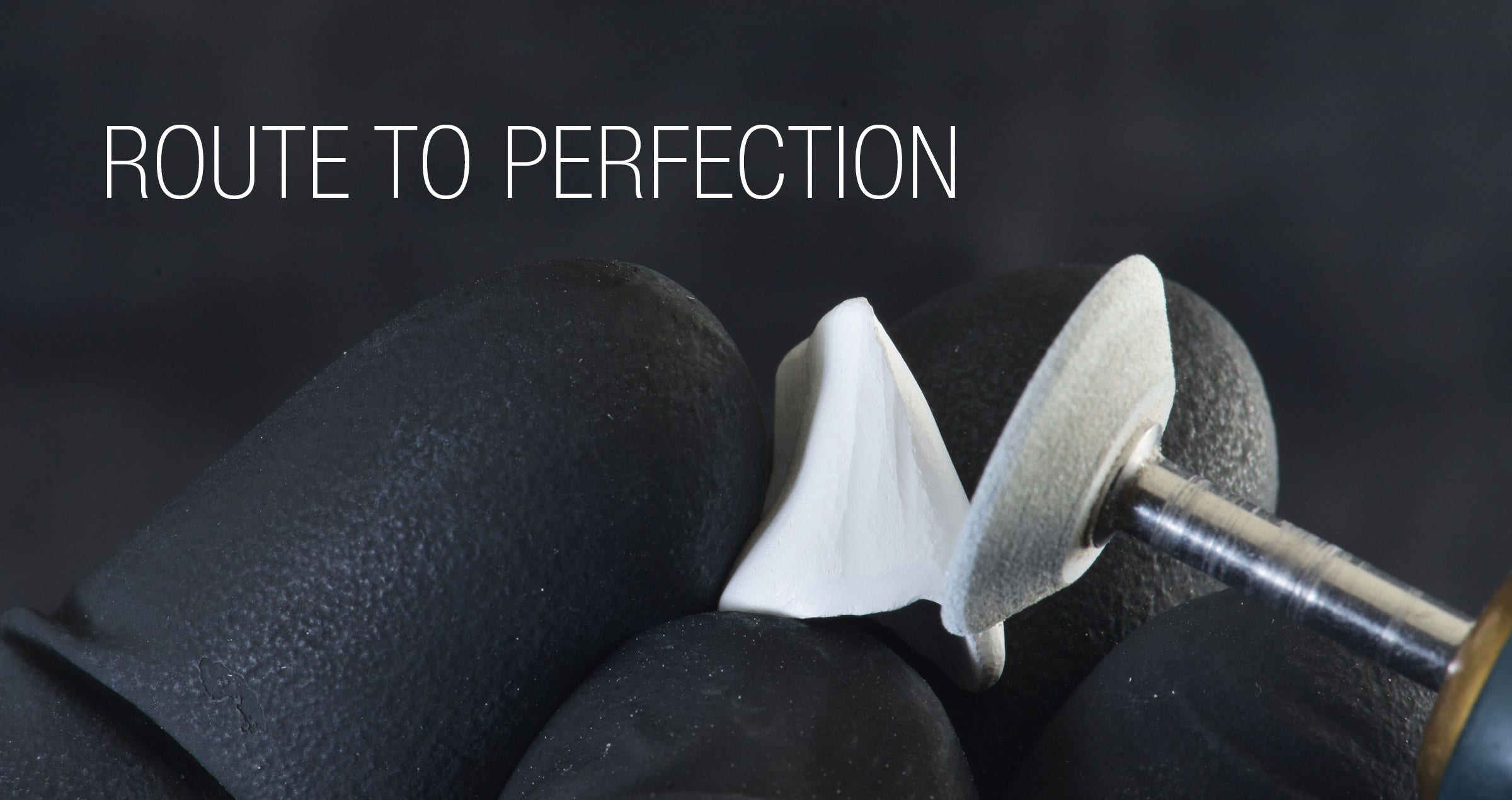
Every dentist aims to polish to a high gloss without damaging the freshly modeled occlusal surface. Firstly, use high-quality polishing rubbers. The plural form is not accidental (Fig. 1). In my opinion, a single rubber systems are not capable of achieving an impeccable gloss in a safe manner. Be patient and gentle. Polishing requires time and a delicate touch.


Fig. 1.


Immediately after polymerization the composite is covered with an oxygen inhibition layer (Fig. 2). It is imperative to remove it by a brush and any polishing paste or a prophylactic sandblaster. The next step is to remove excess composite using abrasive discs, burs and firm polishing rubber points.


Fig. 2.


During polishing without water cooling, the rubber leaves crumbling on the composite surface (Fig. 3). These fragments can be spread across the restoration surface using a fine nylon brush. This allows for the polishing of each fissure and pit (Fig. 4).


Fig. 3.


Fig. 4.


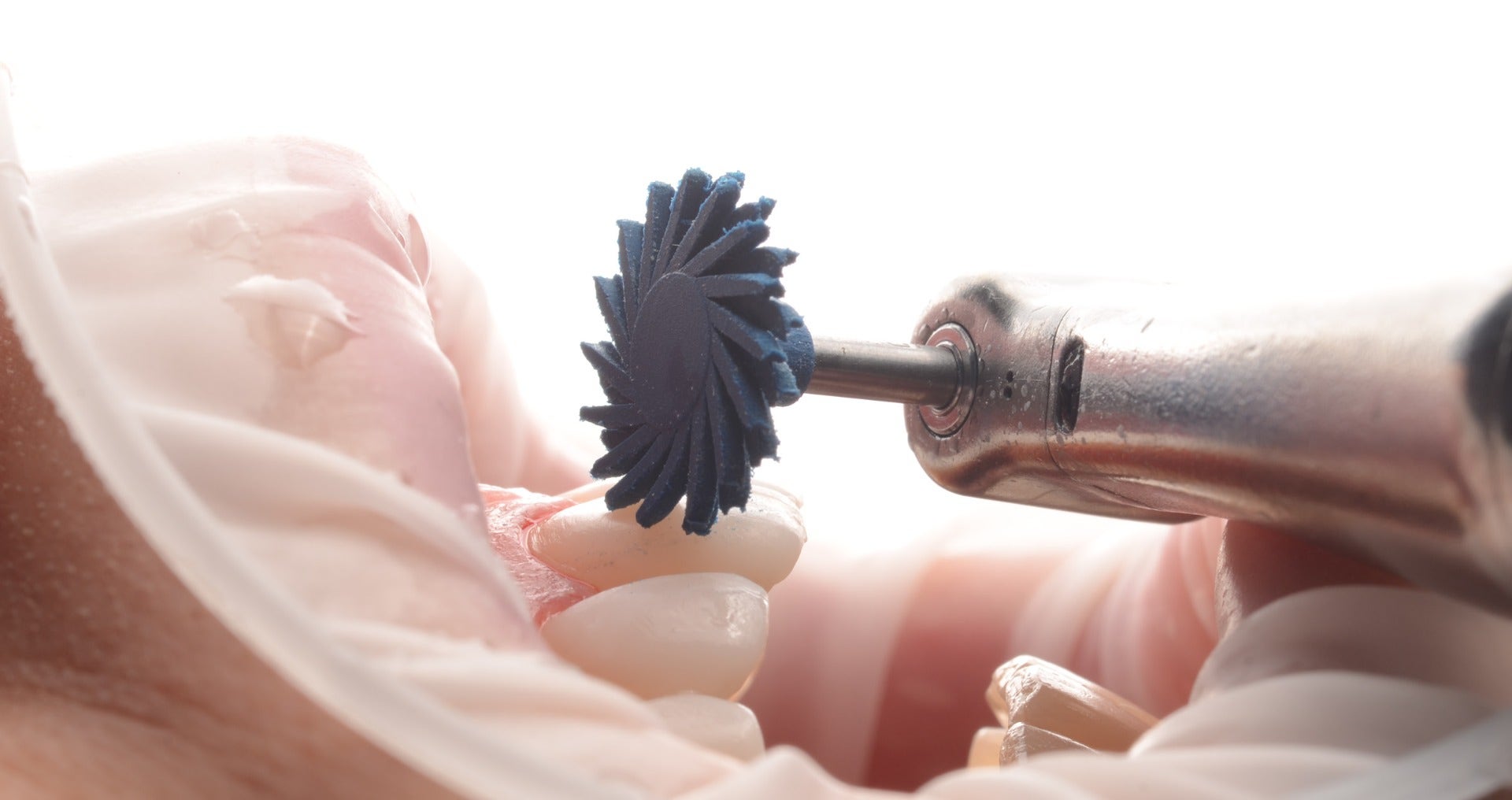
The key to long lasting shine is polishing with gradation. Time to change a rubber point to the dark blue TWIST DIA for Composite rubber, which is more abrasive than light blue one (Fig. 5). Remember to apply gentle pressure and maintain a maximum speed of 8000 revolutions per minute. This way, you will achieve fine particles without the risk of overheating the pulp. The particles were once again spread over the entire surface. The thinner the bristle, the better the polishing effect in the grooves (Fig. 6).


Fig. 5.


Fig. 6.


Third round: use the light blue TWIST DIA for Composite rubber for a mirror-like gloss (Fig. 7). A beautiful gloss emerges beneath the particles. An alternative to thin nylon brushes is brushes made from natural goat hair (Fig. 8).


Fig. 7.


Fig. 8.


Polishing is not only a matter of aesthetics but, above all, function. The adherence of bacterial biofilm to a polished composite is significantly lower than to a rough surface (Fig. 9). My recipe for achieving a mirror-like gloss polish: high-quality diamond rubber points with gradation, used with sensitivity over an extended period (Fig. 10).


Fig. 9.


Fig. 10.


Dentist:

DR. ALEKSANDRA ŁYŻWIŃSKA
Warsaw, Poland


Dr. Aleksandra Łyżwińska is a restorative dentist. She graduated from the Warsaw Medical University in 2017, where she was an assistant professor at the Department of Conservative Dentistry and Endodontics. Her focus lies in modern adhesive techniques, resin composites and biomaterials.


Kuraray Noritake Dental receives top honors as innovative company of the year

We are proud and delighted to announce that Kuraray Noritake Dental has been honored as the INNOVATIVE COMPANY OF THE YEAR by DENTAL ADVISOR.


DENTAL ADVISOR conducts annual practice-based clinical evaluations and product performance tests. The results are published online in the January/February issue, aiding potential users in identifying high-quality new dental materials and selecting those best suited to their individual requirements.


Quoting DENTAL ADVISOR: “Kuraray Noritake was chosen as innovative company of the year because of their constant ability to adapt to market needs and change. Their products are universally accepted by dental professionals as market leaders due to their ease of use and consistently high laboratory performance, making them ideal choices for long-term clinical results.”


In addition to being recognized as an innovative company, our products underwent testing and received prestigious DENTAL ADVISOR medals:


We extend our heartfelt gratitude to the dedicated practitioners worldwide who have placed their trust in Kuraray Noritake Dental products. Your unwavering commitment to excellence fuels our ongoing pursuit of innovation and quality. We are honored to stand alongside you in advancing dental care, and we look forward to continuing this journey together.


Thank you for choosing Kuraray Noritake Dental – where innovation meets trust, and quality meets precision.


Wishing you a powerful new year!

2024 MARKS THE YEAR OF THE DRAGON


  • Dragons, those mythical beings, embody innate courage, unyielding tenacity, and boundless intelligence. They fearlessly embrace challenges and eagerly venture into uncharted territories.
  • The Year of the Dragon is hailed as a time of great power, auspicious beginnings, and transformative possibilities.
  • This image, inspired by the traditional Japanese art of kirigami, combines age-old craftsmanship with cutting-edge AI technology. Just like the dragon, it represents a harmonious blend of ancient wisdom and modern innovation.


EMBRACE 2024 WITH OPEN ARMS –
IT BRINGS FORTH A YEAR OF NEW POSSIBILITIES


The enduring legacy of MDP monomer

It is probably the best-known component of a dental product Kuraray Noritake Dental Inc. (Kuraray Noritake Dental) has ever developed: 10-Methacryloyloxydecyl Dihydrogen Phosphate, in short, the MDP monomer. Invented more than 40 years ago – the first product containing it was introduced in 1983 – MDP is still the leading functional monomer used to establish a long-term, durable and stable bond to hydroxyapatite in tooth structure and to metal oxides in restorative materials (oxide ceramics and metal alloys).


Nowadays, it is found in every dental adhesive and every component of a resin cement system with adhesive properties from Kuraray Noritake Dental. These include:

In addition, MDP has become an integral part of most universal adhesives and many adhesive cementation systems of other manufacturers as well. However, not all MDP is alike …


MDP: Chemical structure and mechanism of adhesion


The MDP monomer consists of three essential parts: A polymerizable group, a hydrophobic group and a hydrophilic group. The co-polymerizable methacrylate group has a terminal double bond enabling polymerisation. The large hydrophobic alkylene group – also referred to as the spacer – has the task to maintain a delicate balance between hydrophobic and hydrophilic properties of the monomer and offers great resistance to degradation. Finally, the hydrophilic phosphate group is responsible for acidic demineralisation, for chemical bonding with calcium in hydroxyapatite and for bonding with zirconia1 (as well as with metal).


Bonding performance


Lots of in-vitro studies have been carried out to investigate the bonding behaviour of 10-MDP in the context of direct and indirect restorative procedures. No matter whether a cavity is to be filled with resin composite or an indirect restoration is to be placed, a strong and long-lasting bond to tooth structure needs to be established.Chemical structure of adhesive monomer 10-Methacryloyloxydecyl Dihydrogen Phosphate (MDP).


The critical substrate in this context is dentin, while bonding to enamel is found to be less challenging. That is why it is so important that (self-etch) adhesives containing 10-MDP show an extraordinarily high bond strength to tooth structure, particularly to dentin2. In fact, 10-MDP also provides for a high bond stability over time by establishing an acid-base resistant zone on the adhesive interface3. This means that a great long-term performance may be expected. Fortunately, a great clinical long-term performance of products containing the MDP monomer has already been confirmed: A group from the University of Leuven (Belgium) has presented excellent results of a thirteen-year clinical trial involving the use of CLEARFIL™ SE Bond in 20154.


When bonding to indirect restorations made of zirconia, the surface area of the ceramic should be increased by sandblasting5. Pre-treated in the recommended way, the bond strength to zirconia tends to be particularly high when MDP-based resin cement systems are used6. It is thus widely recommended by experts in the field of adhesive dentistry to employ MDP-containing primers or resin cements for the placement of zirconia-based restorations, especially those with a non- or less retentive preparation. The fact that products containing 10-MDP work well in this context has been confirmed in different clinical studies with observation periods of up to 10 years7,8. The products used in these studies were PANAVIA™ 21, PANAVIA™ F2.0 and the latest version of the multi-component cementation system from Kuraray Noritake Dental, PANAVIA™ V5, which performed best.


Not all MDP is alike


Ever since the basic patent for MDP has expired, other manufacturers of dental adhesives and adhesive resin cements have started integrating the functional monomers in their own products. However, it has been revealed that there are differences in the purity of the MDP monomers synthesized and used, and that these differences have an impact on the long-term bonding performance of the products containing the MDP9. According to in-vitro test results, the Original MDP Monomer synthesized by Kuraray Noritake Dental stands out due to an unmatched level of purity. This purity has a positive effect on the microstructure and thickness of the hybrid layer formed on dentin, the intensity of nano-layering and the bond strength measured immediately as well as after artificial aging9.


Conclusion


The data summarized above reveals that after 40 years in clinical service, the Original MDP Monomer from Kuraray Noritake Dental is still a class of its own. It has everything needed to establish a strong and long-lasting bond to tooth structure, resin composite and metal oxides, and is therefore a valuable component in virtually every adhesive system. In order to provide for a high bond quality, however, it may be best to use an MDP monomer with a confirmed high purity – the Original MDP Monomer.


References


1. Nagaoka N, Yoshihara K, Feitosa VP, Tamada Y, Irie M, Yoshida Y, Van Meerbeek B, Hayakawa S. Chemical interaction mechanism of 10-MDP with zirconia. Sci Rep. 2017 Mar 30;7:45563.
2. Fehrenbach J, Isolan CP, Münchow EA. Is the presence of 10-MDP associated to higher bonding performance for self-etching adhesive systems? A meta-analysis of in vitro studies. Dent Mater. 2021 Oct;37(10):1463-1485.
3. Carrilho E, Cardoso M, Marques Ferreira M, Marto CM, Paula A, Coelho AS. 10-MDP Based Dental Adhesives: Adhesive Interface Characterization and Adhesive Stability-A Systematic Review.
4. Peumans M, De Munck J, Van Landuyt K, Van Meerbeek B. Thirteen-year randomized controlled clinical trial of a two-step self-etch adhesive in non-carious cervical lesions. Dent Mater. 2015 Mar;31(3):308-14.
5. Kern M, Barloi A, Yang B. Surface conditioning influences zirconia ceramic bonding. J Dent Res. 2009; 88: 817–822.
6. Özcan M, Bernasconi M. Adhesion to zirconia used for dental restorations: a systematic review and meta-analysis. J Adhes Dent. 2015 Feb;17(1):7-26.
7. Kern M, Passia N, Sasse M, Yazigi C. Ten-year outcome of zirconia ceramic cantilever resin-bonded fixed dental prostheses and the influence of the reasons for missing incisors. J Dent. 2017 Oct;65:51-55.
8. Bilir H, Yuzbasioglu E, Sayar G, Kilinc DD, Bag HGG, Özcan M. CAD/CAM single-retainer monolithic zirconia ceramic resin-bonded fixed partial dentures bonded with two different resin cements: Up to 40 months clinical results of a randomized-controlled pilot study. J Esthet Restor Dent. 2022 Oct;34(7):1122-1131.
9. Yoshihara K. et al. Functional monomer impurity affects adhesive performance. Dent Mater. 2015 Dec;31(12):1493–1501.


Scientific information

Is it safe to use the single-component PANAVIA™ SA Cement Universal to lute virtually all your indirect restorations?


Did you ever ask yourself how many components are really needed to safely cement your silicate-ceramic, zirconia or resin-based restorations? With PANAVIA™ SA Cement Universal, a single component is usually sufficient. Containing an unreacted silane coupling agent – the LCSi monomer – and the original MDP monomer, the dual-cure, self-adhesive resin cement adheres to tooth structure and to various restorative materials including the popular silica-based ceramics without the need for a separate primer.


For those wondering how it works and if it really works as well as desired, Kuraray Noritake Dental Inc. has created a scientific brochure. It contains in-depth information about the drivers of chemical adhesion contained in PANAVIA™ SA Cement Universal and its characteristic properties. The main part, however, focuses on the results of scientific studies – most of which have been conducted in external laboratories. With the aid of artificial aging, different testing devices and various experimental set-ups, the researchers have checked the resin cement thoroughly. The study results shed light on the behaviour of the material when used in the context of bonding to different restorative materials and different types of tooth structure. Self- and light-curing modes are compared, aging effects investigated and different moisture conditions taken into account.


As a whole, the collected data allows for a precise prediction of the clinical behaviour of PANAVIA™ SA Cement Universal. This valuation has already been confirmed by clinical experience of dental practitioners from all around the world. Moreover, the results of a first clinical study, which is also found in this compilation, are a proof of its exceptional performance.


Download the brochure to learn more about the properties and behaviour of the single-component universal resin cement!