Laminate veneer restoration

LAMINATE VENEER RESTORATION
USING LITHIUM DISILICATE


WITH PANAVIA™ Veneer LC (Clear)
Case by Yohei Sato (DMD, PhD) and Keisuke Ihara (CDT)

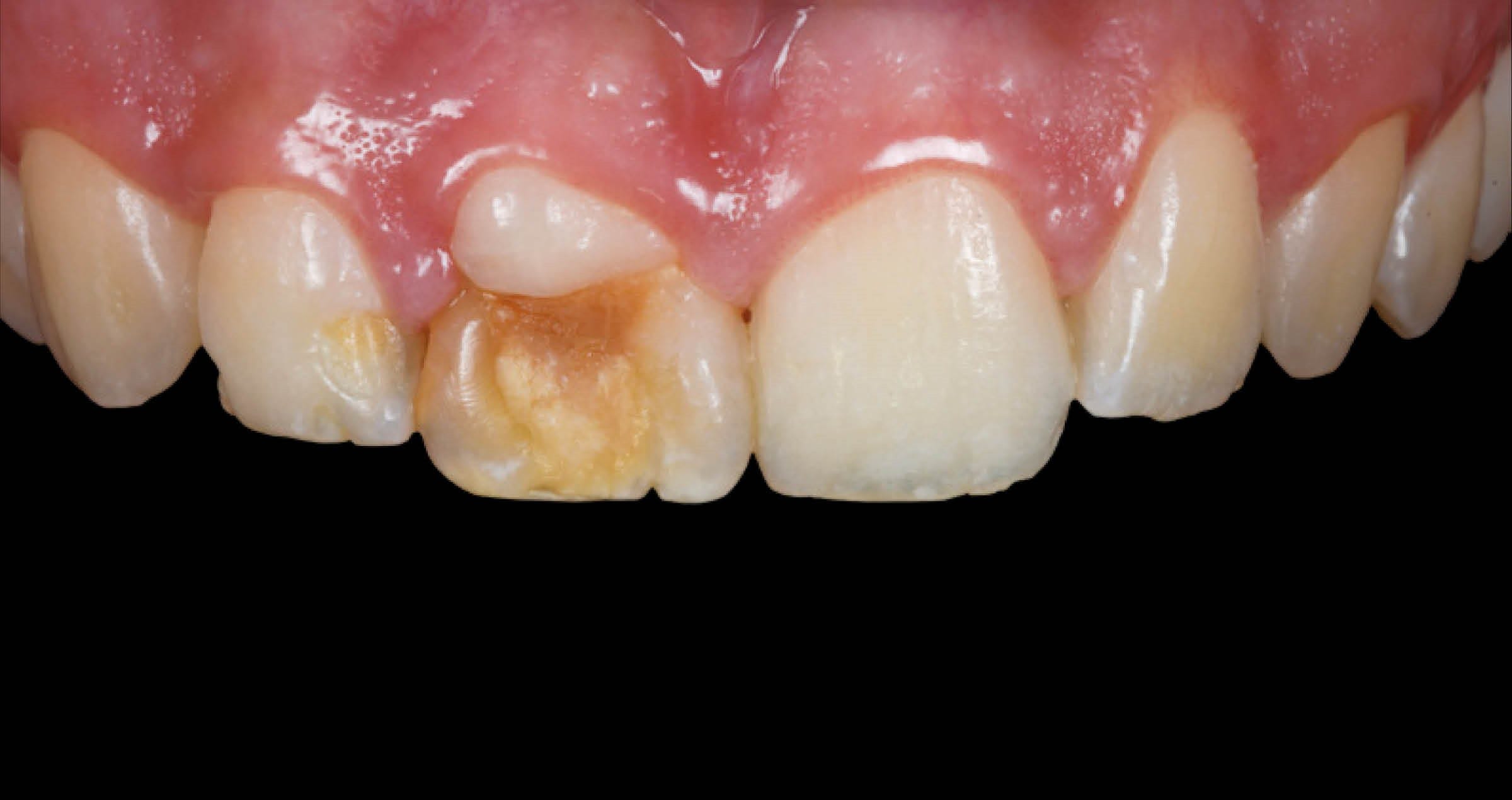
Fig. 1 The patient visited would like to have the a aesthetics
of the maxillary right and left lateral incisors improved.

Fig. 2 A silicon guide fabricated from a diagnostic wax model
was applied and the necessary clearances were determined.

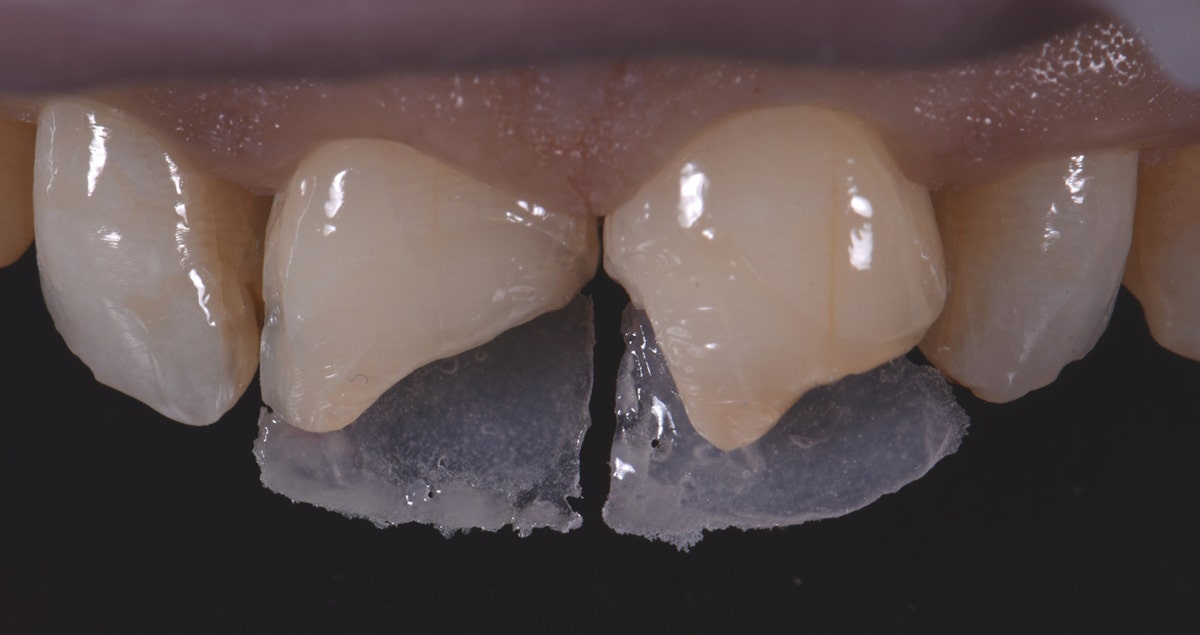
Fig. 3 Since the lateral teeth are microdonts, the
preparation of each abutment was completed by simply
exposing a fresh enamel surface to be covered with
laminate veneers.

Fig. 4 A layer of porcelain was applied on the lithium
disilicate substrate, to complete the laminate veneers.

Fig. 5 The veneer was conditioned according to the
prosthesis‘ IFU. After trial fitting, the intaglio surface of the
laminate veneer was cleaned with KATANA™ Cleaner.

Fig. 6 CLEARFIL™ CERAMIC PRIMER PLUS was applied and
dried to prime the restoration.

Fig. 7 The preparation was cleaned with KATANA™ Cleaner.
Applied and rubbed for more than 10 seconds. Then, it
was washed off sufficiently (until the cleaner color had
completely disappeared), and dried with compressed air.

Fig. 8 K-ETCHANT Syringe was applied and left for 10
seconds before water-rinsing and compressed air-drying.

Fig. 9 PANAVIA™ V5 Tooth Primer was applied and left for 20
seconds before mild compressed-air drying.

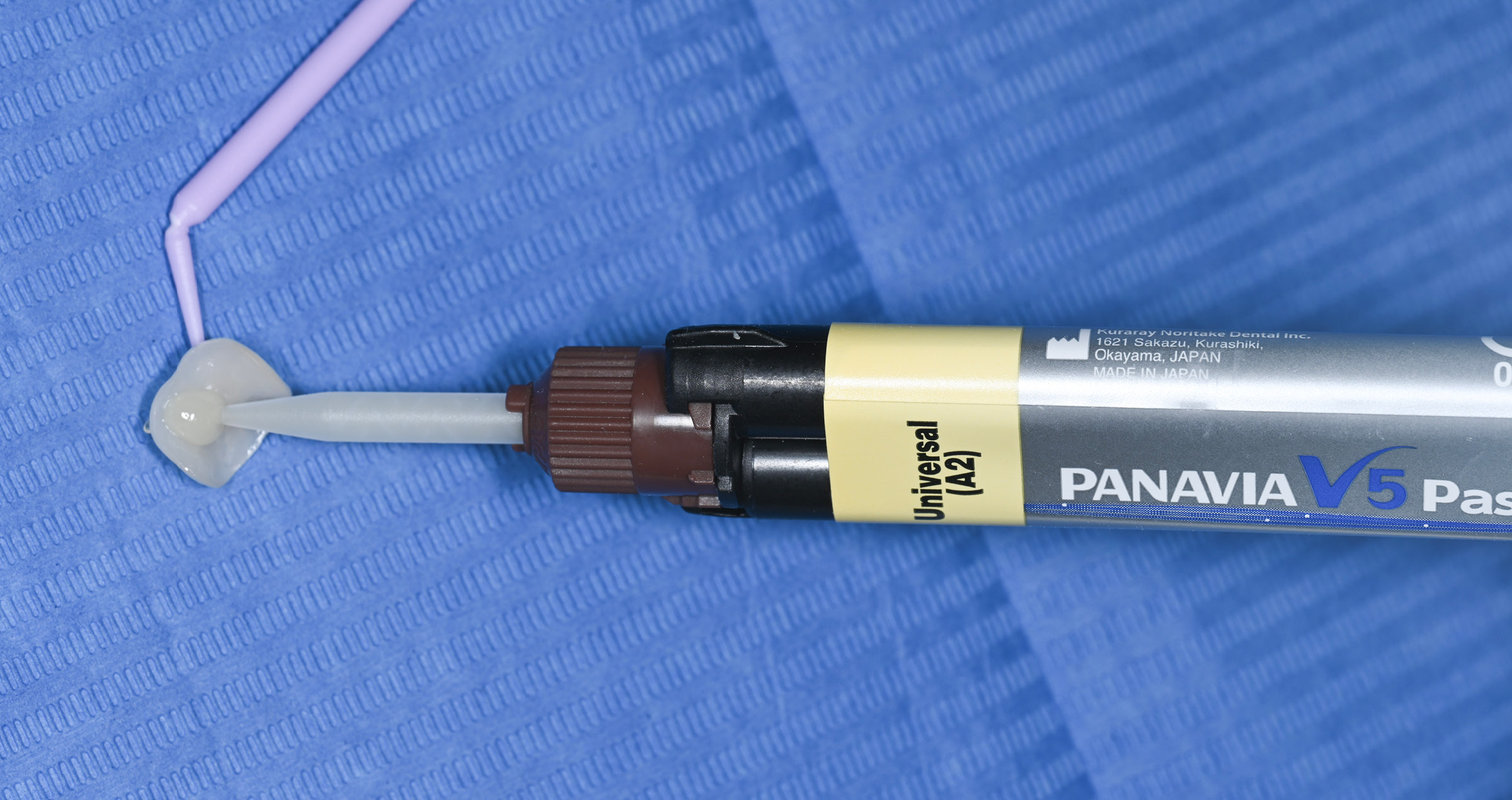
Fig. 10 PANAVIA™ Veneer LC Paste was applied to the
intaglio surface of the laminate veneer.

Fig. 11 The laminate veneer was seated and the fit
checked. Then, the excess cement was tack-cured (not
more than 1 second at each point) and removed. Finally,
the restoration was light-cured and finished.

FINAL SITUATION

Fig. 12 The laminate veneer restorations one month after
placement. The morphology and color of the right and
left lateral incisors have been improved, providing a good
balance to the entire anterior dentition.


LAMINATE VENEER RESTORATION
USING KATANA™ Zirconia STML


WITH PANAVIA™ Veneer LC (Clear)
Case by Yohei Sato (DMD, PhD) and Keisuke Ihara (CDT)


Fig. 1 The patient was referred by an orthodontist. The main
complaints were improper aesthetics of the teeth due to dark
triangles betwen the teeth and incisal wear.

Fig. 2 On the basis of the pre-treatment diagnosis using
a mockup, the teeth were prepared, with keeping in mind
that the enamel should be preserved to the maximal extent
possible.

Fig. 3 A fixation retainer was present at the palatal side,
making it difficult to take coventional silicon impressions.
Therefore, an intraoral scanner was used.

Fig. 4 A layer of porcelain was applied to each KATANA™
Zirconia STML laminate veneer to complete the restorations.
The inner surface of each restoration was sandblasted, being
careful to prevent chipping.

Fig. 5 After trial fitting, bonding inhibiting substances as
blood and saliva were removed using KATANA™ Cleaner.

Fig. 6 CLEARFIL™ CERAMIC PRIMER PLUS was applied and
dried using compressed air.

Fig. 7 The surface of each tooth was cleaned and treated
with K-ETCHANT Syringe for 10 seconds before washing it
away with water and drying with compressed air.

Fig. 8 PANAVIA™ V5 Tooth Primer was applied and left f

Fig. 9 PANAVIA™ Veneer LC Paste was applied and the
laminate veneers were seated. For this case, we placed six
veneers during one session.

Fig. 10 The unpolymerized excess paste was removed with
a brush according to the wet clean-up technique.

Fig. 11 The result after final light curing. Since the excess
cement was easily removed, there were almost no cement
residues.

FINAL SITUATION

Fig. 12 Result one month after placement of the laminate
veneer restorations. The marginal gingiva has been improved
thanks to the good fit of the laminate veneer restorations.


Replacement of Class II restorations with hybrid-ceramic overlays

Case by CDT Daniele Rondoni


When planning to replace Class II restorations, many things need to be considered. In order to select the most appropriate restorative technique and preparation design, it is essential to evaluate the amount and state of the remaining tooth structure, first. After repeated restoration replacement or in teeth originally restored with amalgam, for example, the remaining walls and cusps are often weakened and prone to fractures and cracks. When the cavity walls appear to be too thin or the structure is weak at the time of restoration replacement, it may be better to remove walls and cusps and opt for indirect adhesive restorations (overlays) instead of direct composite restorations. Due to favourable material properties – in particular a high flexural and compressive strength while being gentle to the opposing dentition and not too rigid for the surrounding tooth structures – we often opt adhesive restorations made of KATANA™ AVENCIA™ Block in those situations.


The following clinical case is used to describe the replacement of two composite restorations with overlays made of the innovative hybrid ceramic material.


Fig. 1. Initial clinical situation with composite restorations on the second premolar and first molar in need of replacement. The tooth structure particularly of the first molar was weak, with the distobuccal cusp already fractured.


Fig. 2. Prepared tooth structure ...


Fig. 3. Restorations milled from a KATANA™ AVENCIA™ Block after high-gloss polishing and characterization.


Fig. 4. Finalized restorations on a resin model.


Fig. 5. Adhesively cemented restorations in the patient’s mouth.


FINAL SITUATION


Fig. 6. Treatment outcome with a nice transition from the tooth structure to the restoration.


Dentist:

DANIELE RONDONI, MDT


Born in Savona in 1961 where he lives and has worked in his own laboratory since 1982 with his collaborators. Graduated from the dental technician school IPSIA “P. Gaslini” in Genoa in 1979. He continued his education by attending relevant workshops for the “Italian dental school“ and broadened his professional experience in Switzerland, Germany and Japan. Since 2011 Kuraray Noritake Dental International Instructor.


Posterior restoration procedure for predictable outcomes

Case by Dr. Jusuf Lukarcanin


Restoring posterior cavities is a standard task we perform virtually every day. Yet, it is a challenging procedure as access to the affected teeth is often limited. This fact complicates many steps from working field isolation to material application and sculpting. By streamlining procedures and establishing protocols that are followed every time, it is possible to achieve predictable outcomes even in difficult situations, as shown below.


Fig. 1. Class II cavity in a second molar after caries removal and cavity preparation.


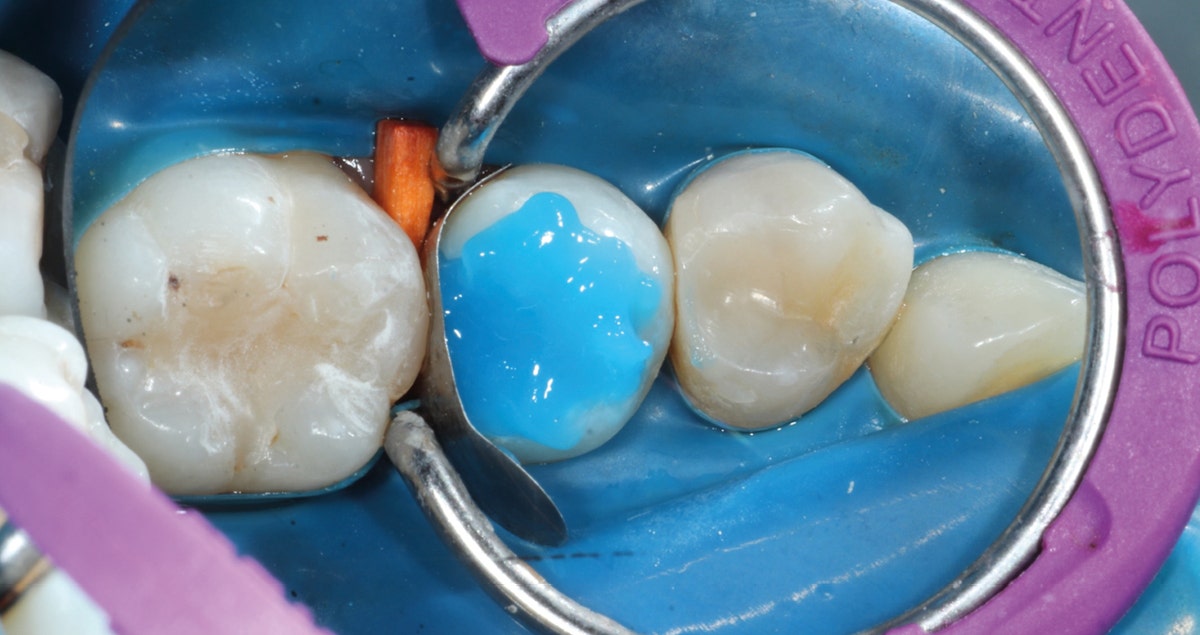
Fig. 2. Working field isolation.


Fig. 3. Application of adhesive (e.g. CLEARFIL S3 BOND PLUS) into the cavity.


Fig. 4. Build-up of the proximal wall with CLEARFIL MAJESTY™ ES-2 Classic (Kuraray Noritake Dental Inc.) in the shade A2.


Fig. 5. Build-up of the dentin core using the incremental technique with CLEARFIL MAJESTY™ ES-2 Premium in the shade A2D.


Fig. 6. Contouring of the occlusal enamel layer made of CLEARFIL MAJESTY™ ES-2 Premium in the shade A2E.


Fig. 7. Polishing of the restoration with Twist DIA for Composite.


FINAL SITUATION


Fig. 8. Treatment outcome.


Dentist:

DR. JUSUF LUKARCANIN


Dr. Jusuf Lukarcanin is a Certified Dental Technician (DCT) and a Doctor of Dental Science (DDS). He studied dentistry at the Ege University Dental Faculty in Izmir, Turkey, where he obtained a Master‘s degree in 2011. In 2017, he received a Ph.D. degree from the Department of Restorative Dentistry of the same university. Between 2012 and 2019, Dr. Lukarcanin was the head doctor and general manager at a private clinic in Izmir. Between 2019 and 2020, he worked at Tinaztepe GALEN Hospital as a Restorative Dentistry specialist, between 2020-2022 he worked at MEDICANA International Hospital Izmir as a Restorative Dentistry specialist. Currently he is an owner of a private clinic for aesthetics and cosmetics in Izmir.


Special MAJESTY ES-2 Universal - Clinical Cases Brochure

Compact, time-saving and aesthetic


How many different shades of composite do you need to create appealing restorations in virtually every clinical situation? If you opt for “CLEARFIL MAJESTY™ ES-2” Universal shade concept, a few shades will do the trick.


With wonderful support of our internationally recognized key opinion leaders, we have prepared a Clinical Case brochure of “CLEARFIL MAJESTY™ ES-2” Universal for you. The brochure highlights a variety of clinical cases in the anterior and posterior region to show the all about excellent properties of our latest composite. Let the pictures speak for themselves!


Click here to view. Enjoy!


Start Reading: Special MAJESTY ES-2 Universal - Clinical Cases Brochure


BEHANDLING AF EN CARIESLÆ- SION MED KOMPOSIT PLAST I EN ENKELT POSTERIOR FARVE

KLINISK EKSEMPEL MED
DR. NICOLA SCOTTI


Når der restaureres posteriore tænder med komposit plast er de funktionelle aspekter endnu vigtigere end en perfekt optisk integration, herunder en tæt og anatomisk korrekt approksimal kontakt mellem tænderne, og en naturligt formet overflade, som er slidresistent og antagonistvenlig. Det er grunden til, at enhver tandlæge bør undgå at bruge meget tid på farvevalg i disse tilfælde og fokusere på de faktorer, der har indflydelse på restaureringens pålidelighed og holdbarhed. Med CLEARFIL MAJESTY™ ES-2 Universal er du godt rustet til denne opgave. Den er en komposit plast med en enkelt universalfarve (U) til den posteriore region, som fjerner behovet farvevalg. Samtidig tilbyder den en god kanttilslutning, en lav krympebelastning og en høj slidstyrke, som er påkrævet for at opnå gode resultater, der holder i længden.


Fig. 1. Præmolar efter isolering af arbejdsfeltet med kofferdam, ekskavering og præparation af kaviteten.


Fig. 2. Anbringelse af sektionsmatricen og en kile til at optimere pasformen. Begge holdes på plads med en ringfjeder, som forøger den interproksimale plads og
sørger for tæt anatomisk korrekt approksimal kontakt.


Fig. 3. Anbringelse af sektionsmatricen og en kile til at optimere pasformen. Begge holdes på plads med en ringfjeder, som forøger den interproksimale plads og sørger for tæt anatomisk korrekt approksimal kontakt.


Fig. 4. Opbygning af den approksimale væg med CLEARFIL MAJESTY™ ES-2 Universal (U farve) efter en selektiv emaljeætsning med fosforsyre (K ETCHANT Syringe) og adhæsion med CLEARFIL™ SE Bond.


Fig. 5. Et tyndt lag flydende komposit (CLEARFIL MAJESTY™ ES FLOW High) påføres kavitetens bund for at danne et resinlag.


Fig. 6. Restaurering afsluttet med CLEARFIL MAJESTY™ ES-2 Universal (farve U). Mens kompositten med universalfarven passer meget godt ind i den omgivende tandstruktur, fuldendes det naturlige look ved at tilføje en lille smule brun farve til fissuren.


Fig. 7. Behandlingsresultat straks efter fjernelse af kofferdam. Den approksimale kontakt er tæt og den okklusale anatomi er godt tilpasset til patientens tyggedynamik. Overgangen mellem tand og restaurering er praktisk talt usynlig, mens den bukkale cuspis ser lysere ud på grund af dehydrering af den naturlige tandstruktur.


AFSLUTTENDE SITUATION


Fig. 8. Behandlingsresultat efter to måneder.


Konklusion

Dette kliniske eksempel viser, at den valgte komposit er velegnet til forenklede restaureringsprocedurer i den posteriore region. Materialet har gode håndteringsegenskaber, byder på samme mekaniske egenskaber som andre materialer fra CLEARFIL MAJESTY™ ES-2-serien og blender harmonisk ind med de omgivende strukturer uden at være for translucent. På denne måde er det muligt at give afkald på farvebestemmelse uden at kompromittere behandlingsresultatet. Den tid, der spares i denne
sammenhæng, kan bruges på funktionelle aspekter – eller endda på en anden patient.


DR. NICOLA SCOTTI


EN NY FORMEL, DER SIKRER ÆSTETISKE RESULTATER VED MONOLITISKE LANGE RESTAURERINGER

EKSEMPEL FRA CDT DANIELE RONDONI


Sædvanligvis kan det æstetiske potentiale i et dentalkeramisk materiale – specielt dets translucens – kun øges på bekostning af en nedsat bøjestyrke. Derfor har der manglet højtranslucente materialer, der er egnede til fremstilling af smukke monolitiske restaureringer, i form af lange broer. Lanceringen af dental zirkonia med forskellige niveauer af translucens og styrke i en enkelt disk har ændret på denne situation.


KATANA™ Zirconia YML fra Kuraray Noritake Dental Inc. er et sådant materiale. Det har en flerlagsstruktur med en høj bøjestyrke på 1.100 MPa, en høj chroma og en reduceret translucens i den nederste halvdel af disken. Selvom bøjestyrken og chroma er reduceret i den øvre del af disken og de incisale områder, øges materialets translucens opefter, ligesom i naturlige tænder. Dette giver et ubegrænset indikations-spektrum – forudsat at nogle design- og positioneringsregler overholdes. For at undersøge, om disse regler begrænser tandteknikerens designfleksibilitet, og om det æstetiske potentiale er højt nok til monolitiske anteriore restaureringer, har vi grundigt gennemtestet materialets bearbejdningsmæssige og optiske egenskaber. Følgende kliniske eksempel giver læserne et indblik i,
hvad der er muligt med dette innovative, flerlagede materiale.


Fig. 1. KATANA™ Zirconia YML 4- og 6-leddede broer efter fræsning og sintring. En naturlig facial overfladetekstur spiller en afgørende rolle, når der skal skabes
æstetiske monolitiske restaureringer.


Fig. 2. Okklusal visning af de to monolitiske broer. Den linguale overflades design sikrer gode muligheder for at opretholde god mundhygiejne.


Fig. 3. En lyskilde bag restaureringerne afslører den incisale translucens.


AFSLUTTENDE SITUATION


Fig. 4. Bukkal visning af den færdige 6-leddede bro, cementeret i patientens mund.


Fig. 5. Bukkal visning af den færdige 4-leddede bro, cementeret i patientens mund.

Med denne nye type af flerlaget zirkonia, er det muligt at producere æstetiske monolitiske restaureringer velegnet selv til brug i det anteriore område. Materialet byder på en høj designfleksibilitet trods dets graduerede styrke, og den høje translucens i incisalområdet sørger for et naturligt udseende efter sintring. Ultra-mikrolag og glasur på den monolitiske overflade vil være tilstrækkeligt til at levere resultater som kan tilfredsstille vores patienter.


DANIELE RONDONI, MDT


Born in Savona in 1961 where he lives and has worked in his own laboratory since 1982 with his collaborators. Graduated from the dental technician school IPSIA “P. Gaslini” in Genoa in 1979. He continued his education by attending relevant workshops for the “Italian dental school“ and broadened his professional experience in Switzerland, Germany and Japan. Since 2011 Kuraray Noritake Dental International Instructor.


komposit restaurering på mindre end 10 minutter

Dr. Elsayed bruger her Clearfil Majesty ES Flow, Clearfil Universal Bond Quick og Clearfil Twist Dia og viser en af fordelene ved dens flydende egenskab i forhold til de konventionelle kompositter. Med stempelteknikken (valgfri) kan der opnås hurtige og nemme restaureringer med Clearfil Universal Bond Quick (ingen ventetid) og forskellige viskositeter. Denne er yderst praktisk til kompositrestaureringer i kindtandsregionen.


FORTANDS FACADER MED PANAVIA™ V5

CASEN ER UDFØRT AF DR. IRFAN ABAS
Tandlæge med speciale i implantater og ekspert i restorativ tandpleje

Irfan Abas er international foredragsholder og specialist på området oral implantologi og restorativ tandpleje. Han har nu holdt mere end 20 foredrag, workshops og live-kurser i tandbehandling verden over. TP – er et hollandsk tidsskrift for tandlæger, som han også er redaktør for, og hvori han har fået udgivet flere artikler. Et andet højdepunkt er publikationen i NTvT, hvor Dr. Abas i samarbejde med og under vejledning fra proff. Gert Meijer (Radboud UMC) med succes afsluttede sin fireårige postdoc-uddannelse i rekonstruktiv tandpleje i 2014. Han er også instruktør og lektor på AAIE og formand for MINEC Netherlands. Dr. Irfan Abas har sin egen tandlæge praksis i Bussum i Holland (tandartsabas.nl).

En rask 42-årig mandlig patient ønskede en rekonstruktion af sine fortænder, som var præget af kraftigt slid.

Forbehandling

Efter fremstilling af en prøvemodel blev der skabt furer via denne model.

For at påsætte to facader af litiumdisilikat blev der forinden foretaget en præparation på 1 mm. Efter at have fjernet prøvemodellen blev præparationen finforarbejdet.

Pladsen kontrolleres ved hjælp af en silikoneskabelon.

Færdig præparation (fortil).

Provisoriske facader af et provisorisk resinbaseret materiale (Protemp)

Punktætsning inden bonding af provisoriske facader på påsætningsstedet.

En lille mængde flydende komposit appliceres på de ætsede overflader.

Lyshærdning af hele overfladen på de provisoriske facader

Færdige provisoriske facader.

Facaderne fremstilles af tandteknikeren.

Afprøvning af facadernes pasform.

Kofferdam anbragt for at sikre en kontrolleret applicering af den adhæsive cement.

Ætsning med 35 % fosforsyre K-Etchant Syringe I 10 sekunder.

Behandling med selvætsende primer PANAVIA™ V5 Tooth Primer (lad det virke i 20 sek.)

Ætsning af litiumdisilikat-facader med hydrogenfluorid.


Clearfil Ceramic Primer Plus MDP-silan-primer appliceres på facaderne.

Facaderne fastgøres på et anbringelsesinstrument inden den endelige cementering.

PANAVIA V5 Paste appliceret på facadens indvendige flade

PANAVIA V5 Paste fördelad på fasaden.

Facaden påsættes, og overskydende materiale fjernes.

Lyshærdning (minimum 10 sek.).

Straks efter den adhæsive cementering med PANAVIA V5.

Straks efter proceduren.

Straks efter proceduren.

To måneder efter behandlingen.

Et år efter behandlingen.


New Paradigm in Aesthetic Restoration

Case by Francesco Ferretti and Marco Nicastro


Aesthetic restoration of anterior teeth using KATANA™ UTML Full anatomical crowns, with vestibular stratification and BOPT*1.

*1 Biologically Oriented Preparation Technique


Initial situation


Final result

Shows excellent aesthetic properties of KATANA™ UTML and the perfect integration in harmony with pink tissues.


Figure 1. The patient requested a solution for an aesthetic problem due to unnatural look of old restorations and black triangles coming from past history of periodontitis. The resulting retraction of the tissues had left the margins of the prosthesis clearly visible, and the loss of the papilla peaks, together with the numerous black spaces between the crowns, required a complex therapeutic approach.


Figure 2. The treatment plan for the periodontal problems con-sisted of a non-surgical approach, with scaling and root planing, and the replacement of the previously fixed prostheses to recondition the marginal tissues and facilitate the restoration of a new, aesthetically pleasing gingival architecture.


Figure 3. From a functional point of view, we decided to reduce the deep frontal bite to restore a correct overjet-overbite ratio. This reduction was also important from an aesthetic point of view, as it allowed us to shape the various elements correctly.


Figure 4. We usually remove old prostheses before beginning a periodontal treatment, and make a first, provisional restoration to create an environment in which the soft tissues can heal. If we have to work beyond the cement enamel joint (CEJ), we prefer a vertical preparation for posts, and the purpose of the provisional restoration is to condition the marginal tissues using Dr. Loi’s BOPT.


Figure 5. For the BOPT, the vertical preparation of the post has a finish line that extends inside the gingival sulcus. The temporary conditioning of the tissues induced by the provisional prosthesis allows us to modify the level of the gingival parables to a certain extent.


Figure 6. The image on the left shows the clinical healing of the tissues one month after the initial periodontal treatment. The role of the provisional restoration, appropriately realigned, is clear. The conditioning of the tissue has been achieved by means of the provisional restoration, which has modified the level and shape of the marginal tissue. Once filled with correctly fitted crowns, the interproximal spaces will be further reduced after the definitive restoration.


Figure 7. The correct management of the provisional restoration is crucial for the healing of the tissues. The placement of a provisional restoration before the periodontal therapy has allowed us to create the right environment for complete healing. At the same time, the vertical preparation has allowed us to gradually condition the marginal gingival tissue by shortening or lengthening the provisional restoration as necessary.


Figure 8. One of the advantages of a vertical preparation is that taking the final impression is easy, because the absence of a horizontal finish line greatly simplifies the procedure. On the other hand, the BOPT also requires the taking of an impression of the sub-gingival portion of the preparation. The dental technician will have to decide marginal shape of restorations according to the position of the gingival line in consultation of the clinician, and based on the tests conducted with the provisional restoration.


Figure 9. After the casting of the model, we prepared the gingival area to accommodate an ideal configuration of gingival parables.


Figure 10. After making a wax model, we assessed whether the height of the gingival zenith level could be further corrected. This photo shows that gingival level of 21 was not yet ideal, so we stretched it distally.


Figure 11. Once the wax model was complete, we extracted the element from the model and evaluated its protrusion. It was only after joining the gingival protrusion to the arbitrary margin of the preparation that we proceeded to a scan and milled the crowns.


Figure 12. The restoration was carried out with Katana™ UTML zirconia based on the new formulation of cubic zirconium oxide. This ultra tralucent material was chosen because we were working with light and non-discolored posts.


Figure 13. We finished the crowns on a positional impression to help to improve the gingival adaptation; we had some dispersion of the tissues in the first precision impression due to the use of retractors. We finished the crowns with CZR FC Paste Stain colours and glaze.


Figure 14. The surface colours and the slight contrast created are highlighted in this black-and-white image taken with a blue filter.


Figure 15. In this translucent image, we can see the natural translucent effect of KATANA™ UTML and invisible fusion between abutments and crowns.


Figure 16. Clinical image one year after cementation made with PANAVIA V5; this shows the good clinical condition of the marginal tissue, with no signs of inflammation or bleeding. The BOPT allowed us to optimise the level of the gingiva without resorting to periodontal surgery, while the shape of the new crowns has made it possible to close all interproximal spaces for an optimally aesthetic result.


Figure 17. The brightness of the restorations (thanks to the use of a particularly translucent zirconia) combined with the shape of the incisors, has greatly im-proved the aesthetic of the restoration, even though the condition initially appeared to be particularly unfavourable.


Figure 18. Compared to the previous prostheses, the incisal reduction allowed not only for the optimisation of the functional phase by reducing the overbite, but also made it possible to achieve a more natural aesthetic, with the contour of the incisal margins following that of the lower lip.


Dentists:


FRANCESCO FERRETTI


Born in Rome on 15th March 1957, Francesco Ferretti gets his degree as dental technician at the Institute “Edmondo de Amicis”, in Rome. In 1980, he starts working and, from 1987 to 1994, he cooperates with IVOCLAR VIVADENT giving consulting as ceramist. In 1992 he starts working exclusively with Prof. Mario MARTIGNONI.


  • After one year cooperation with Prof. Martignoni, he starts working with the ORAL DESIGN CENTER founded in Rome by Mr. Willi Geller, and becomes a partner, improving prosthesis esthetics.
  • Is registered outside the course of dentistry at the University of Rome Tor Vergata.
  • In 2001, he founds ESTECH DENTAL STUDIOS, in cooperation with Pentron for technical training and consulting.
  • He has published articles and studies in Italian and American magazines. He is interested in Metal Free techniques.
  • Winner of the 2004 Polcan Aiop.
  • He is a member of: ANTLO LAZIO ( National Association of Lab Owners) with the president of the Lazio region 2013-2014.
  • National cultural manager ANTLO 2017-2020.
  • Teacher of prosthetics perfectioning at the University of Chieti for the year 2002, he has been re-confirmed for the year 2003, 2004, 2005 to deal with Metal Free.
  • Teacher of prosthetics perfectioning at the University of Naples 2006.
  • He has participated as a speaker at numerous conferences in Italy. ESCD member has participated as a speaker at ten in Florence 2009 and Turin 2013.


MARCO NICASTRO


Marco Nicastro takes a degree in “Odontoiatria e Protesi Dentaria (Dentistry and Dental Prosthesis) at the University of Rome “ La Sapienza in 1989. Since the beginning he is interested in prosthesis restoration dentistry and aesthetic problems.


  • From 1990 to 1996 he attends Prof. Martignoni’s studio, where he develops his prosthesis knowledge.
  • From 1993 to 1998 he cooperates as lecturer with the Oral Design Centre in Rome, directed by Mr. Ferretti and Mr. Felli, giving lectures and courses about aesthetic restoration either in Italy or in foreign countries. In the same period he enlarges his experience in aesthetics, attending training courses at the University of Geneva, in Switzerland.
  • Since 1993 he has been cooperating with Mr. Francesco Ferretti in the organization of Courses and Conferences, paying particular attention to metal free methodology.
  • Vice President of the European Society of Cosmetic Dentistry (ESCD).
  • Founding member and active member of Gimnasium interdisciplinary CAD-CAM (GICC).
  • Active member of the Italian Society of Conservative Dentistry (SIDOC).
  • Partner of the Italian Academy of Prosthetic Dentistry (AIOP).
  • President of Like Mine Dental Education in Rome since 2001.
  • He won, with Francesco Ferretti, the Polcan award of the Italian Accademy of Prosthetic Dentistry in 2004.


Restoration of a class ii occluso-distal cavity with composite

Restoration of a class II occluso-distal cavity with composite

Case by Aleksandra Łyżwińska, DMD


This clinical case concerns a patient with a lesion on the occluso-distal aspect of the mandibular left first premolar. We opted for a direct treatment approach with a combination of flowable and high-viscosity composite resin (CLEARFIL MAJESTY™ ES Flow - Super Low A2, CLEARFIL MAJESTY™ ES-2 Classic A2). In order to establish a strong bond between the tooth structure and the restorative material, we decided to selectively etch the enamel and then apply a clinically proven self-etch adhesive (CLEARFIL™ SE BOND 2).


Fig. 1. Initial clinical situation.


Fig. 2. Appearance of the premolar after caries removal.


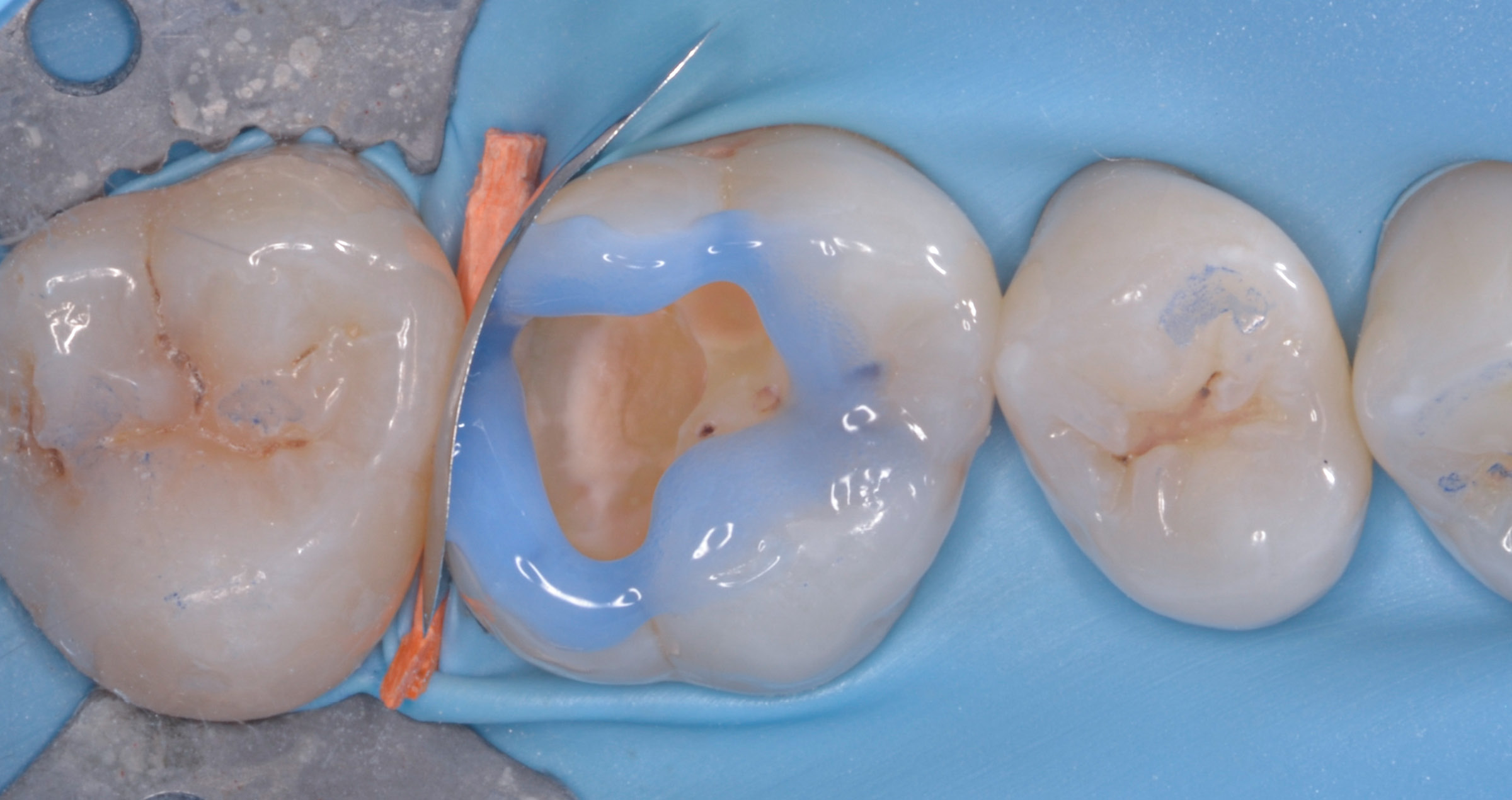
Fig. 3. Placement of a sectional matrix for anatomical shaping, the establishing of tight interproximal contacts and protection of the adjacent tooth.


Fig. 4. Appearance of the tooth structure after selective enamel etching.


Fig. 5. Interproximal wall built up with CLEARFIL MAJESTY™ ES-2 Classic (A2 shade) and cavity filled with CLEARFIL MAJESTY™ ES Flow - Super Low A2.


Fig. 6. After initial polishing.


FINAL SITUATION


Fig. 7. Occlusal view of the treatment outcome after finishing and polishing.


Fig. 8. Follow up after 1 week.


Dentist:

ALEKSANDRA ŁYŻWIŃSKA
Warsaw, Poland


Aleksandra Łyżwińska, DMD, is a passionate aesthetic and adhesive dentist. Driven by Evidence Based Dentistry, her goal includes using modern composite materials and bonding agents in her clinical practise. In addition to her primary job, she worked as a lecturer and an assistant professor at the Department of Conservative Dentistry and Endodontics of Medical University of Warsaw, her alma mater.